If you think the heaviest material is the strongest choice for your sunken driveway, you might be accidentally setting your home up for another failure. In Florida, where our soil is often saturated and unstable, the weight of the material pumped under your concrete is actually your biggest risk factor. Choosing a heavy, traditional fill can lead to a cycle of recurring sinking that leaves you back where you started. You want a level, safe surface that doesn’t become a tripping hazard for your family or an eyesore for the neighborhood.
PolyRenewal is designed to lift and level sunken slabs, which often helps close cracks that have formed due to uneven settlement. By stabilizing the soil underneath, it prevents further movement that would cause new cracks. For homeowners looking for this level of precision in other areas, Foundation Werks provides specialized concrete repair that focuses on long-term structural integrity and aesthetic restoration.
It’s natural to feel concerned about whether a repair will hold up against our frequent heavy rains or if it will simply wash away in a few months. This guide examines the critical differences of PolyRenewal vs mudjacking to help you identify the most durable, cost-effective solution for your property. We’ll compare how these methods interact with local soil, the time it takes for them to cure, and which one offers the protection your home’s structural health deserves. By the end, you’ll know exactly how to achieve a permanent fix with minimal disruption to your yard.
Key Takeaways
- Understand why concrete settlement is a symptom of underlying soil erosion and how modern lifting methods address these hidden voids.
- Compare the structural impact of PolyRenewal vs mudjacking, focusing on drill hole sizes and how each material interacts with your existing slabs.
- Learn why lightweight polyurethane foam offers a more stable solution for Tallahassee’s sandy loam and limestone soils than heavy cement slurries.
- Discover how rapid cure times allow you to return your driveway or patio to service in minutes rather than days.
- Evaluate the total value of your repair by looking beyond the initial price to include the long-term durability and protection of your property.
Understanding Concrete Leveling: What Are PolyRenewal and Mudjacking?
Sunken concrete isn’t just an eyesore; it’s a physical symptom of a deeper issue. When you see a slab tilting, sinking, or cracking, you’re looking at the result of soil voids or erosion beneath the surface. These hollow spaces often form when water washes away the supporting earth or when poorly compacted soil settles over time. Concrete leveling is the professional practice of filling these empty spaces to restore structural integrity. While there are several ways to address this, the decision for most homeowners often comes down to PolyRenewal vs mudjacking. Both techniques aim to fill voids and return the slab to its original height, but they use very different materials and mechanical processes to achieve that result.
The Traditional Approach: How Mudjacking Works
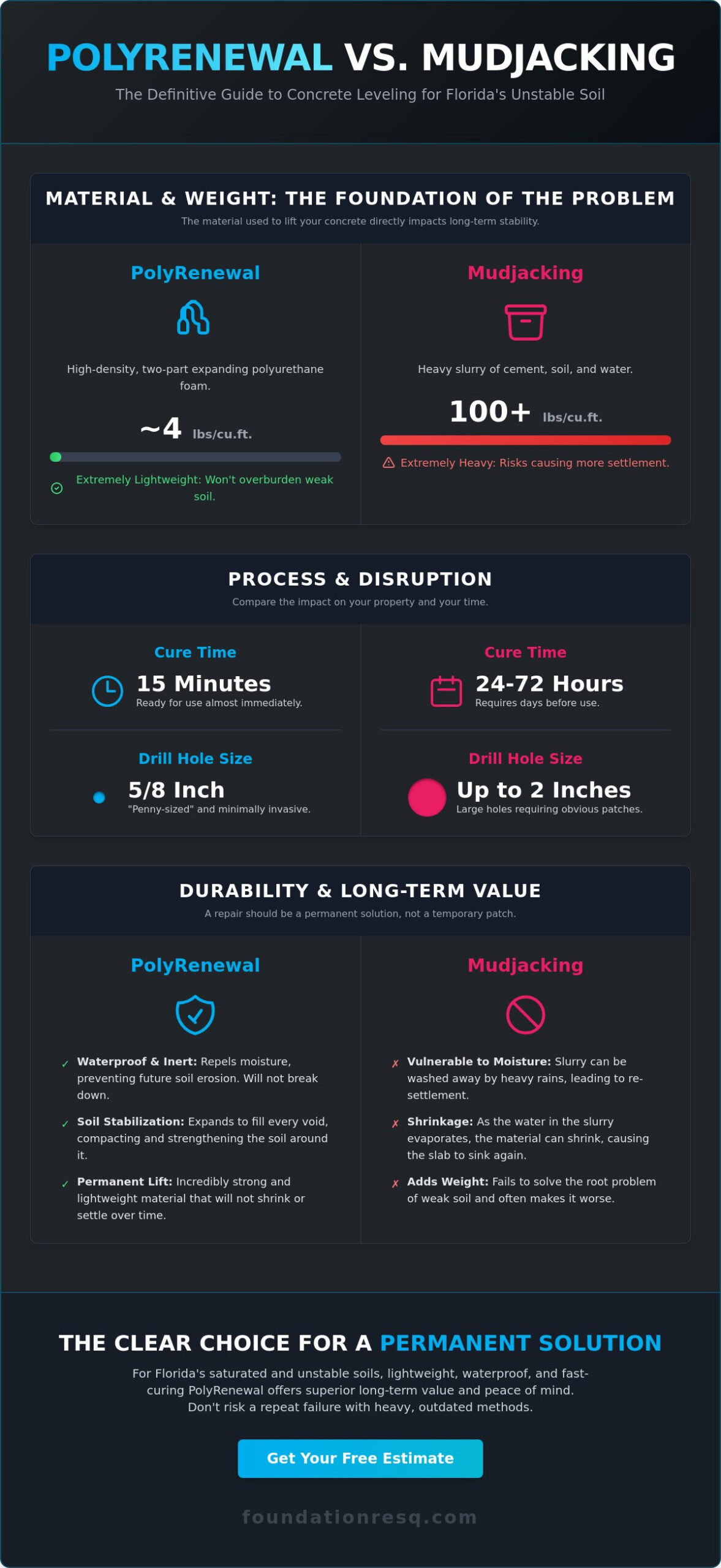
Mudjacking has served as a standard industry practice for over 70 years. This method relies on a heavy, semi-liquid mixture often called “slurry,” which typically consists of water, local dirt, and portland cement. To perform the repair, technicians must drill relatively large holes, often up to two inches in diameter, directly through the concrete slab. A hydraulic pump then forces the thick slurry into the void under high pressure. The sheer volume of the material creates the mechanical force necessary to push the heavy concrete upward. While this technique is a long-standing remedy, the weight of the slurry itself can be a drawback. It adds thousands of pounds of extra weight to the underlying soil, which may already be struggling to support the concrete above it.
The Modern Alternative: The Science of PolyRenewal
PolyRenewal represents a significant shift toward modern geotechnical precision. Instead of relying on a heavy, soil-based mixture, this process utilizes a high-density, two-part polyurethane foam. When these two components meet beneath the concrete, they trigger a chemical reaction that causes the material to expand rapidly. This expansion is powerful enough to lift even the heaviest residential slabs, yet the material itself is remarkably lightweight. One of the most significant benefits is the minimal impact on your property’s appearance. We only need to drill “penny-sized” holes, roughly 5/8 of an inch, which are much less intrusive than the large gaps required for mudjacking. The foam flows into even the smallest crevices before hardening into a rigid structure. This creates a waterproof barrier that stabilizes the soil without adding significant weight to the environment.
The primary goal for both methods is the same: eliminate the safety hazard and stabilize the home’s exterior surfaces. However, the mechanism of the lift matters. While mudjacking uses brute hydraulic force and heavy fill, PolyRenewal uses controlled chemical expansion to achieve a more precise and durable result. Choosing the right path involves looking at how each material will interact with your specific soil conditions over the long term. For a comprehensive overview of how this technology addresses North Florida’s unique geological challenges, our guide to concrete leveling Tallahassee homeowners rely on walks you through every step of the process.
The Great Showdown: PolyRenewal vs. Mudjacking Comparison
When evaluating PolyRenewal vs mudjacking, the most immediate difference is the physical presence of the repair crew on your property. Mudjacking requires heavy machinery and large trucks to mix and pump the thick slurry. In contrast, PolyRenewal is a streamlined process with a much smaller footprint. This isn’t just about convenience; it’s about the long-term health of your concrete and the soil supporting it.
Cure time is another critical factor for busy homeowners. Mudjacking material typically requires 24 to 72 hours to dry before you can walk or drive on the surface. As , the process is labor-intensive and involves significant drying time. Polyurethane foam cures in about 15 to 30 minutes. This means your driveway or patio is ready for use almost immediately after the technicians finish.
The weight of the repair material often dictates the success of the project. Mudjacking slurry weighs roughly 100 lbs per cubic foot. Adding this much weight to soil that has already failed can actually trigger “secondary sinking” because the earth simply cannot support the new load. PolyRenewal is incredibly lightweight, exerting minimal pressure on the underlying earth while still providing maximum lift. If you’re noticing uneven surfaces, exploring PolyRenewal concrete lifting can save you from the structural and aesthetic drawbacks of older methods.
Installation Footprint and Aesthetics
The visual impact of the repair is often a deciding factor for homeowners concerned with curb appeal. Mudjacking leaves behind a “polka-dot” pattern on your concrete because of the large two-inch holes required for the injection nozzle. These patches are difficult to blend and remain visible for years. PolyRenewal uses tiny, 5/8-inch holes that are about the size of a penny. Once we patch these small entry points with a matching concrete color, the repair is nearly invisible. This allows you to maintain a clean, uniform look across your driveway or pool deck.
Durability and ‘Washout’ Resistance
Durability is where the two methods diverge most sharply. Because mudjacking slurry is composed of natural materials like dirt and sand, it’s highly susceptible to erosion. Heavy Florida rains can eventually wash the slurry out from under the slab, leading to recurring settlement. PolyRenewal is hydrophobic, meaning it repels water and won’t wash away even in the most saturated conditions. PolyRenewal will never lose its volume or shape. This chemical stability ensures that once the void is filled, it stays filled, providing a permanent barrier against the elements.
Why Soil Mechanics Matter for Tallahassee Homeowners
Tallahassee sits on a unique geological foundation that presents specific challenges for exterior concrete. Our region’s soil is a complex mixture of sandy loam and underlying karst limestone. While this allows for drainage, it also creates a high risk for void formation. When heavy rains move through North Florida, they can easily wash away the fine particles in sandy loam, leaving your driveway or patio unsupported. Understanding the relationship between PolyRenewal vs mudjacking requires a closer look at how these materials interact with our local geology over time.
Florida’s notorious humidity also plays a significant role in the success of a concrete repair. Traditional cement-based slurries used in mudjacking rely on evaporation to cure and harden. In our moisture-heavy environment, these mixtures can remain soft or “doughy” for an extended period. This delayed drying time prevents the repair from reaching its full structural strength quickly. PolyRenewal bypasses this issue entirely. Because it’s a chemical reaction rather than a drying process, it reaches 90% of its total strength within minutes, regardless of the humidity levels in the air.
Combating Florida’s High Water Table
The high water table in our area is a constant threat to traditional repairs. When heavy tropical storms saturate the ground, the water can actually re-hydrate the mudjacking slurry. This process can turn the hardened “mud” back into a soft liquid, causing it to wash out from under the slab just like the original soil did. This creates a cycle where the repair fails exactly when you need it most. Polyurethane foam is naturally hydrophobic. It acts as a waterproof barrier that repels moisture. It won’t wash away, and it effectively seals the underside of your concrete against future erosion.
The Weight Problem: Don’t Crush Your Own Soil
One of the most overlooked risks in concrete leveling is a phenomenon known as “overburden.” This occurs when the material used to fix a slab is actually heavier than the soil can support. Mudjacking material is incredibly dense, weighing between 100 and 120 lbs per cubic foot. In many cases, this massive weight is what causes the concrete to sink again, as the underlying sandy loam collapses under the new pressure.
Polyurethane foam offers a stark contrast, weighing only 2 to 4 lbs per cubic foot. It provides the necessary lift without the destructive weight. By choosing a lightweight solution, you avoid putting unnecessary stress on your property’s footprint. If your soil is already severely compromised or you notice cracks spreading toward your home, you may need to consult an expert in foundation repair Tallahassee to ensure your entire structure remains stable. Polyurethane doesn’t just lift the slab; it permeates the loose soil, binding particles together to create a more stable base that resists future settlement.
Cost vs. Value: Is Polyurethane Worth the Investment?
When you receive initial quotes for PolyRenewal vs mudjacking, the price difference is often the first thing you notice. Mudjacking typically carries a lower upfront cost, which can be tempting if you’re looking for a quick fix. However, a professional evaluation requires looking beyond the first invoice to the total cost of ownership over five or ten years. In the challenging environmental conditions of North Florida, a cheaper initial choice often leads to higher long-term expenses through recurring repairs and property maintenance.
The impact on your home’s total resale value is another significant factor. Sunken or cracked concrete is a major red flag for home inspectors and potential buyers. It suggests underlying soil instability or neglect. A permanent, clean repair with polyurethane foam preserves your curb appeal and provides a sense of security to the next owner. Investing in a durable solution ensures that the repair remains a one-time event rather than a recurring line item in your home maintenance budget.
Initial Quotes vs. Long-Term Reality
Mudjacking is frequently viewed as a temporary patch because the cement-based slurry is so prone to erosion and settlement. Many homeowners find themselves calling for a second repair within just a few years as the heavy material sinks into the same voids it was meant to fill. Most polyurethane installations come with more robust warranties because the material is chemically inert and waterproof. For a detailed breakdown of the variables that influence your project’s price, you can view our PolyRenewal concrete leveling cost guide specifically for Tallahassee residents. Choosing the right method the first time prevents the frustration of paying for the same repair twice.
The Convenience Factor for Homeowners
Your time and the state of your yard have tangible value. Mudjacking involves heavy trucks, long hoses, and a messy cleanup process that can leave deep tracks in your lawn. Because the slurry needs days to dry, you may lose the use of your driveway for up to 72 hours. PolyRenewal uses a much smaller equipment footprint that protects your landscaping. The most impressive benefit is the speed of the cure. You can drive your vehicle onto the treated surface just 15 minutes after the injection is complete. This minimal disruption is a hallmark of a modern, professional repair. If you’re ready to secure your property with a lasting solution, contact Foundation ResQ for a professional assessment of your concrete surfaces.
The Foundation ResQ Solution: Professional PolyRenewal in Tallahassee
Foundation ResQ provides a methodical approach to concrete restoration that prioritizes long-term stability over quick, superficial fixes. We don’t simply inject material and hope for the best. Instead, our team conducts a comprehensive multi-point inspection to determine the root cause of the settlement. This diagnostic phase ensures that the choice between PolyRenewal vs mudjacking is based on the specific geological needs of your property. Our status as a Groundworks-backed provider means every project adheres to national standards of excellence, offering you a level of structural security that is rare in the local industry.
The path to a safe, level surface starts with a simple, professional evaluation. We provide homeowners with a clear roadmap for repair, moving from uncertainty to an informed resolution. By focusing on the health of the entire building, we act as a final line of defense for your most valuable investment. Our process is designed to be thorough and deliberate, mirroring the precision required for high-stakes structural remediation. We want you to feel confident that your home is in the hands of a steadfast local expert.
Our Specialized Local Process
Our technicians are trained to understand how Tallahassee’s unique soil conditions affect the performance of exterior slabs. Before we begin the lifting process, we assess the voids to ensure the polyurethane foam reaches every corner of the instability. This level of control is essential when working on sensitive areas like pool decks or stamped concrete patios where precision is paramount. We use specialized injection technology that allows for incremental lifting, ensuring we don’t over-correct the slab. Our commitment to professional dependability means we take the time to clean the work area thoroughly, leaving your property in pristine condition once the repair is stabilized.
Taking the Next Step for a Safer Home
It’s important to act when you first notice the warning signs of sinking concrete. Tripping hazards, pooling water after a storm, or widening cracks are all indicators that the soil beneath has failed. Addressing these issues early prevents them from evolving into more expensive structural problems. In many local homes, exterior concrete issues are often accompanied by moisture concerns in the foundation. You might find that your home’s health benefits from a combination of concrete lifting and crawl space encapsulation Tallahassee to create a total protective barrier. Don’t let structural concerns linger. Contact us today for a free, no-obligation inspection and take the first step toward a safer, more stable home.
Secure Your Concrete with a Lasting Solution
Choosing between PolyRenewal vs mudjacking is about more than just the immediate lift. It’s a decision between a temporary patch and a permanent stabilization that respects Tallahassee’s unique soil mechanics. Lightweight polyurethane foam addresses the root cause of sinking without adding the destructive weight of traditional slurries. You deserve a driveway or patio that remains level and safe regardless of how much rain falls on your property.
Foundation ResQ brings over 10 years of structural expertise to every project in our community. As an A+ BBB rated local contractor, we prioritize the longevity of your home’s structural health. Our solutions are built to last; we offer a Groundworks-backed lifetime warranty that provides the long-term peace of mind every homeowner needs.
Don’t let sunken concrete decrease your home’s value or create safety risks for your family. Schedule Your Free Concrete Lifting Inspection with Foundation ResQ today to see the difference professional stabilization makes. We’re ready to help you protect your property for years to come.
Frequently Asked Questions about Concrete Lifting
Is PolyRenewal really better than mudjacking for Florida homes?
Yes, PolyRenewal is generally superior for Florida properties because it’s waterproof and lightweight. Traditional mudjacking uses a heavy slurry that can sink into our sandy loam or wash away during heavy tropical rains. Polyurethane foam creates a stable, hydrophobic barrier that won’t erode or add unnecessary weight to unstable soil. This protective layer ensures the repair remains intact even through our most severe storm seasons.
How long does Polyurethane concrete lifting actually last?
Polyurethane concrete lifting is designed to be a permanent solution for your home. Unlike organic materials that decay or slurries that wash away, this foam is a chemically inert material that does not degrade over time. It maintains its compressive strength and volume indefinitely. As long as the underlying deep-soil conditions remain stable, the lift itself will provide a lasting remedy for your sunken surfaces.
Can PolyRenewal fix a cracked concrete driveway or just lift it?
How much does it cost to level a concrete slab in Tallahassee?
The cost of leveling a concrete slab depends on the size of the void and the amount of material required for the lift. Every project in Tallahassee is unique due to varying soil conditions and slab thickness. We provide personalized inspections to give you an accurate estimate based on your specific property needs. This ensures you only pay for the stabilization your home actually requires without any guesswork. To better understand what factors affect pricing and what the process involves, our complete guide to concrete leveling Tallahassee homeowners use covers the full scope of the PolyRenewal® approach.
What happens if the soil under my concrete keeps sinking after the repair?
If the deep-soil layers continue to settle beyond the reach of the surface repair, it may indicate a larger structural issue. In these cases, we evaluate whether additional stabilization methods like helical piers are necessary. Our multi-point inspection process helps identify these risks before we begin any concrete lifting work. We focus on the ultimate resolution of the problem rather than just treating the visible symptoms.
Is the foam used in PolyRenewal environmentally safe for my yard?
The polyurethane foam used in PolyRenewal is environmentally friendly and won’t leach harmful chemicals into your soil. Once it cures, which happens in minutes, it becomes a stable and solid structure. It’s an inert material that is safe for use around your lawn, landscaping, and local groundwater systems. You don’t have to worry about the health of your yard while we stabilize your driveway or patio.
Can I use my driveway immediately after PolyRenewal injection?
You can typically drive your vehicle onto the concrete just 15 minutes after the injection is finished. This is a significant advantage in the PolyRenewal vs mudjacking debate, as mudjacking requires days of drying time. The rapid cure rate allows for minimal disruption to your daily routine. You won’t have to park on the street or wait for a long, messy curing process to complete.
Does mudjacking work on pool decks?
Mudjacking is rarely recommended for pool decks because the heavy slurry can put too much pressure on delicate pool plumbing. The large two-inch holes also create an eyesore on decorative or stamped concrete surfaces. PolyRenewal is the preferred choice for pool deck leveling near me searches because it’s lightweight and requires only penny-sized injection holes. It stabilizes the deck without risking damage to the underlying infrastructure or the aesthetics of your pool area.