
A reputable foundation contractor is defined by verifiable licensing, adequate insurance, and a documented track record of correct structural repairs. Finding one who is also affordable requires a process, not just a price comparison. Tallahassee homeowners face specific challenges: expansive clay soils, high humidity, and seasonal flooding all accelerate foundation movement. Skipping the vetting process to save money upfront often leads to failed repairs, structural damage, and costly redo jobs. This guide walks you through every step to find a reputable affordable foundation contractor who protects both your home and your budget.
What credentials and insurance should you verify before hiring a foundation contractor?
Licensing and insurance are the first filters every homeowner should apply. Reputable contractors carry workers’ compensation and general liability insurance with minimums of $1 million per occurrence and $2 million aggregate. These numbers are not arbitrary. They protect you from paying out of pocket if a worker is injured on your property or if the repair causes collateral damage.
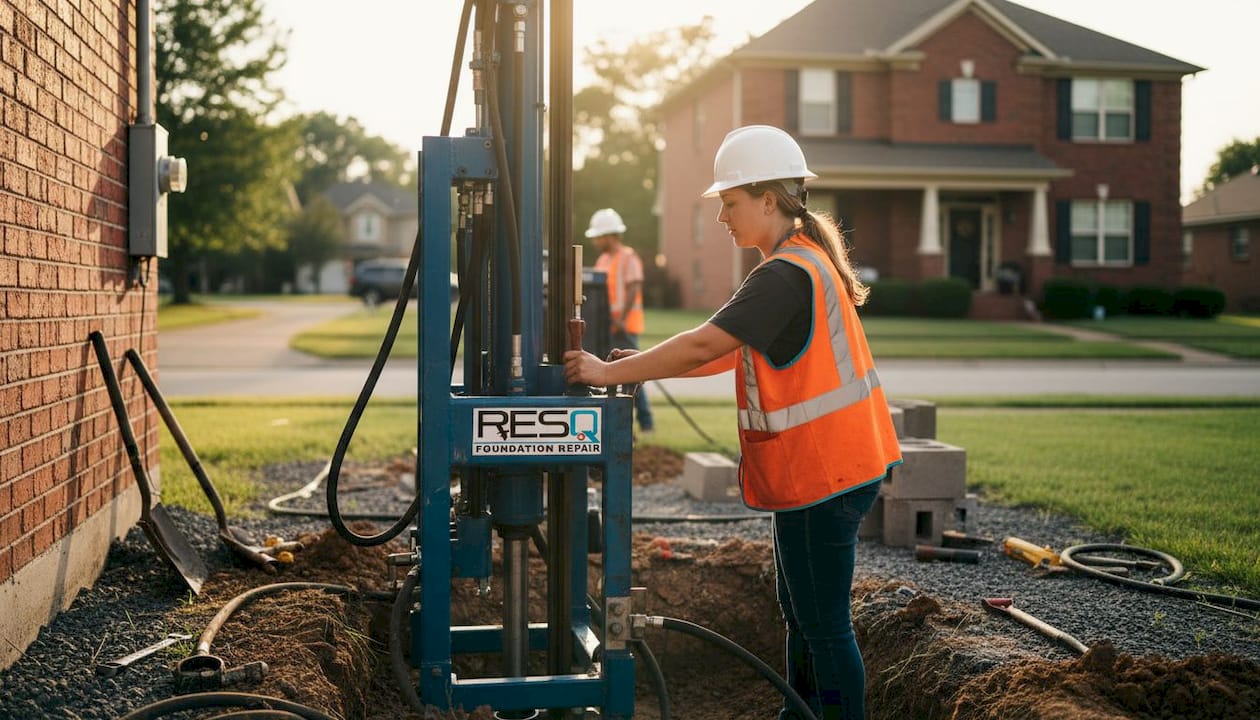
Never accept a contractor’s copy of their insurance certificate at face value. Verify coverage yourself by contacting the insurer directly or using your state’s online license lookup tool. Florida’s Department of Business and Professional Regulation maintains a public database where you can confirm a contractor’s license status in minutes. If a contractor resists providing their license number, that is a disqualifying sign.
Beyond basic licensing, look for specialty credentials:
- State contractor’s license with a foundation or structural repair endorsement
- Manufacturer network membership, which signals that the contractor has completed product-specific training and meets quality standards set by pier or waterproofing system manufacturers
- Industry association affiliations such as membership in the Structural Waterproofing Association or similar bodies
- BBB accreditation, which means the company has agreed to BBB standards and responds to complaints. Check complaint patterns, not just the letter grade.
Pro Tip: Ask the contractor to name the manufacturer of the piers or repair products they plan to use. Then call that manufacturer directly to confirm the contractor is an authorized installer. Unauthorized installers often cannot honor manufacturer warranties.
Understanding roofing certifications for homeowners follows the same logic as foundation credentials. The principle is identical: third-party certification from a manufacturer or trade body is a stronger signal of quality than a contractor’s self-description.
Why should you get an independent structural engineer’s assessment first?
An independent structural engineer’s assessment is the single best investment you can make before contacting any contractor. Independent engineering inspections typically cost between $300 and $800. That fee buys you an objective diagnosis of what is actually wrong, written in a report you own and control.
“Independent assessments by licensed structural engineers allow objective diagnosis and fair bidding, preventing inflated or unnecessary repairs. The report establishes clear scope and specifications so every contractor bids on the same job.”
Without an engineering report, each contractor defines the problem differently. One may recommend helical piers while another pushes carbon fiber straps, and you have no neutral basis to evaluate either recommendation. With a report in hand, you force apples-to-apples bidding across every estimate you collect.
The report also protects you from overselling. Some contractors profit by recommending more piers than a job requires. An engineer’s specification sets a ceiling on scope. If a contractor’s bid exceeds the engineer’s recommended repair plan without a clear technical explanation, ask why in writing.
How to obtain and compare detailed written estimates effectively
Always collect at least three written estimates before making any decision. Verbal quotes are unenforceable and often change once work begins. A written estimate worth trusting includes these components:
- Itemized scope of work describing exactly which repairs will be performed and where
- Materials list naming specific products, pier types, or waterproofing systems with model numbers
- Labor breakdown showing crew size, qualifications, and estimated hours
- Timeline with start date, projected completion, and milestone checkpoints
- Permit plan confirming the contractor will pull required building permits
- Warranty terms specifying duration, what is covered, and whether the warranty transfers to a future buyer
Pro Tip: Request that each contractor reference the structural engineer’s report in their written bid. Any contractor who ignores the report or dismisses it is telling you they plan to define the job on their own terms.
Foundation repairs almost always require building permits under the International Residential Code. Contractors who discourage permits are often non-compliant. Unpermitted work creates title problems when you sell and can void your homeowner’s insurance. Confirm the permit plan in writing before signing anything.
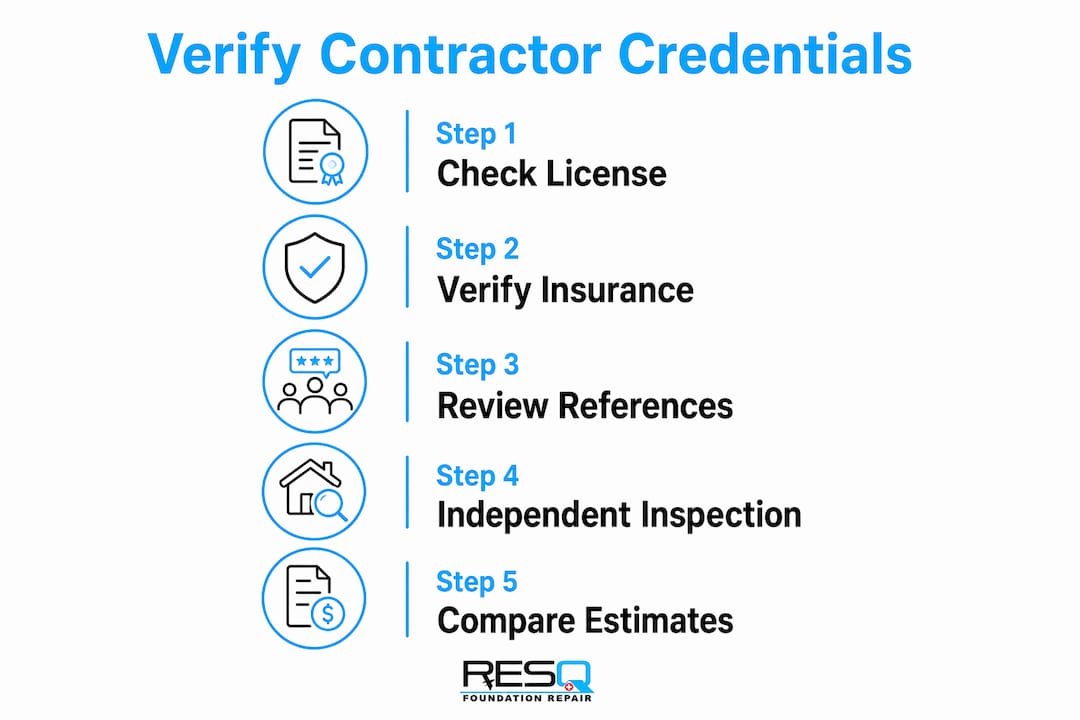
When comparing bids, watch the spread between estimates. Bids that fall 40–50% below the median often reflect fewer piers, cheaper materials, subcontracted labor, or stripped-down warranty coverage. A low number is not a deal. It is a signal to ask harder questions.
| Evaluation factor | What to look for |
|---|---|
| Scope clarity | Specific repair locations and methods named |
| Materials | Brand names and model numbers listed |
| Warranty | Duration, coverage scope, and transferability stated |
| Permits | Contractor confirms they will pull required permits |
| Price spread | Flag bids more than 40% below the median |
What questions should you ask about experience and workmanship?
Vetting a contractor’s experience takes about 30 minutes and can save you thousands. Start with these questions:
- How long has the company operated under its current name? Longevity matters because warranty value depends on contractor longevity. A company that closes after your repair leaves you with worthless paperwork. Manufacturer-backed warranties on pier materials survive company closure, which is why named-brand products matter.
- Have you repaired this specific foundation type before? Slab-on-grade, crawl space, and basement foundations each require different methods. Ask for photos of comparable past projects.
- Who physically inspects my foundation? Many homeowners discover that the “contractor” who visits is a commissioned salesperson with no technical background. Request that a licensed engineer or certified technician perform the inspection and explain the diagnosis in technical terms.
- Can I call three recent customers directly? Evaluating contractor portfolios and calling multiple references gives you direct insight into workmanship quality, crew behavior, and whether the final bill matched the estimate.
- Are your crew members employees or subcontractors? Subcontracted crews often have no accountability to the company’s quality standards. Ask whether the crew who installs your repair is trained and certified by the contractor directly.
Contractors who answer these questions confidently and without hesitation are worth your time. Those who deflect, generalize, or pressure you to decide quickly are not.
What warning signs should you watch for when choosing an affordable contractor?
Red flags in foundation repair are well-documented, and Tallahassee homeowners encounter them regularly. The most dangerous is the salesperson posing as a technical expert. Contractors who send commissioned salespeople to inspect your foundation have a financial incentive to recommend the most expensive repair, not the correct one. Always ask for the inspector’s credentials before the visit.
Watch for these additional warning signs:
- Discouraging building permits. Contractors who avoid permits risk creating title encumbrances and voiding your insurance. This is a legal compliance failure, not a cost-saving favor.
- No verifiable license or insurance. If you cannot confirm coverage through official channels, walk away.
- One-size-fits-all repair methods. Contractors who apply the same repair to every job regardless of soil type, foundation design, or damage cause are not diagnosing. They are selling. Hydrostatic pressure and expansive soil require different solutions.
- Excessive upfront payment demands. A deposit of 10–30% is standard. Requests for 50% or more upfront, or cash-only payment terms, indicate financial instability or a fly-by-night operation.
- Pressure to sign the same day. Legitimate contractors give you time to compare bids and consult your engineer’s report. Urgency tactics are a sales technique, not a reflection of your foundation’s condition.
Reviewing common foundation repair mistakes before you start interviewing contractors gives you a sharper eye for these patterns.
Key Takeaways
Finding a trusted, affordable foundation contractor requires verifying credentials, collecting independent engineering reports, and comparing at least three detailed written estimates before committing to any repair.
| Point | Details |
|---|---|
| Verify insurance and licensing | Confirm $1M/$2M liability coverage and state license status through official lookup tools. |
| Get an engineering report first | A $300–$800 independent assessment sets the repair scope and prevents overselling. |
| Collect three written estimates | Compare itemized bids on scope, materials, warranties, and permit plans, not just price. |
| Ask who inspects your foundation | Confirm a licensed technician, not a salesperson, diagnoses your structural issue. |
| Watch for permit avoidance | Unpermitted foundation work creates title problems and can void homeowner’s insurance. |
What I’ve learned about “affordable” foundation repair after years of watching homeowners get it wrong
The word “affordable” trips people up every time. Homeowners hear it and think “cheapest bid.” That framing costs them far more in the long run.
Affordable foundation repair means doing the correct repair the first time. Sloppy, cheap work causes structural damage, loss of home value, and expensive redo jobs. I’ve seen homeowners in Tallahassee pay twice for the same repair because they chose a contractor based on price alone, skipped the engineering report, and ignored the permit question. The second contractor charged more than the first two bids combined.
The homeowners who get the best outcomes are not the ones who find the lowest price. They are the ones who invest 10 days in the process: getting the engineering report, collecting three written bids, calling references, and verifying every credential independently. That patience is worth thousands of dollars in avoided mistakes.
My honest advice: be skeptical of any contractor who makes the process feel easy or fast. Foundation repair is a serious structural intervention. It should require careful diagnosis, detailed planning, and a written record of every commitment. If a contractor skips any of those steps, they are cutting corners somewhere. The question is only where.
— Kayle
Foundationresq serves Tallahassee homeowners with vetted, licensed foundation repair
Tallahassee homeowners dealing with foundation concerns deserve a contractor who has already passed the vetting process described in this guide.
Foundationresq is a licensed, insured foundation repair specialist based in Tallahassee, FL. Every inspection is performed by a trained technician, not a salesperson. Foundationresq’s full range of services covers foundation repair, crawl space remediation, concrete leveling, basement waterproofing, and mold removal. For homeowners concerned about cost, financing options are available to make quality repairs accessible without cutting corners on materials or workmanship. Contact Foundationresq for a free inspection and a written estimate backed by local expertise and a transferable warranty.
FAQ
What insurance minimums should a foundation contractor carry?
Reputable contractors carry general liability insurance with at least $1 million per occurrence and $2 million aggregate, plus workers’ compensation. Verify these figures directly with the insurer, not from a contractor-provided certificate.
How much does an independent structural engineering report cost?
An independent engineering inspection typically costs between $300 and $800. That report sets the repair scope, enables fair bidding, and prevents unnecessary or inflated repairs.
Why do foundation repairs require building permits?
Foundation repairs fall under the International Residential Code and almost always require permits. Unpermitted work can void homeowner’s insurance and create title problems that complicate a future home sale.
What does a suspiciously low bid usually mean?
Bids that fall 40–50% below competing estimates typically reflect fewer piers, cheaper materials, subcontracted labor, or limited warranty coverage. A low price is a reason to ask harder questions, not a reason to sign quickly.
How do I verify a foundation contractor’s license in Florida?
Use the Florida Department of Business and Professional Regulation’s public online database to search by contractor name or license number. Confirm the license is active and covers the type of structural work your project requires.
Recommended
- Who to Call When Your Foundation Cracks: Expert Contractors – Tallahassee Foundation Repair | Foundation ResQ
- Beyond the Blueprint: Selecting the Right Foundation Construction Partner – Tallahassee Foundation Repair | Foundation ResQ
- Common Foundation Repair Mistakes to Avoid in 2026 – Tallahassee Foundation Repair | Foundation ResQ