
Foundation wall anchors mechanically stop inward movement by tying a bowing wall to stable, undisturbed soil — and when conditions allow, they can gradually pull the wall back toward plumb. They are not a patch or a cosmetic fix. The anchor system creates a genuine counterforce against the lateral soil pressure that caused the problem in the first place.
Here is what you need to know before calling a contractor:
- Anchors are typically recommended when inward displacement reaches or exceeds about 2 inches; smaller movement may qualify for less invasive options.
- They reliably stop further movement. Gradual restoration is possible but depends on wall condition and soil.
- You need roughly 10–15 feet of unobstructed yard clearance for the exterior anchor plate.
- Your first move: schedule a professional inspection that measures displacement and assesses soil conditions before any anchor plan is drawn up.
Table of Contents
- How do foundation wall anchors actually work?
- Do wall anchors really work, and when do they fall short?
- Signs you may need wall anchors: a homeowner checklist
- What should you ask a foundation repair contractor?
- Key Takeaways
- What anchors actually tell you about your foundation
- Foundationresq can assess your wall and build a repair plan
- Useful sources
- FAQ
How do foundation wall anchors actually work?
The system has three components: an interior wall plate, a galvanized steel tie rod, and an exterior anchor plate buried in the soil. Together, they form a tension link between your compromised wall and ground that has not been disturbed by the pressure causing the problem.
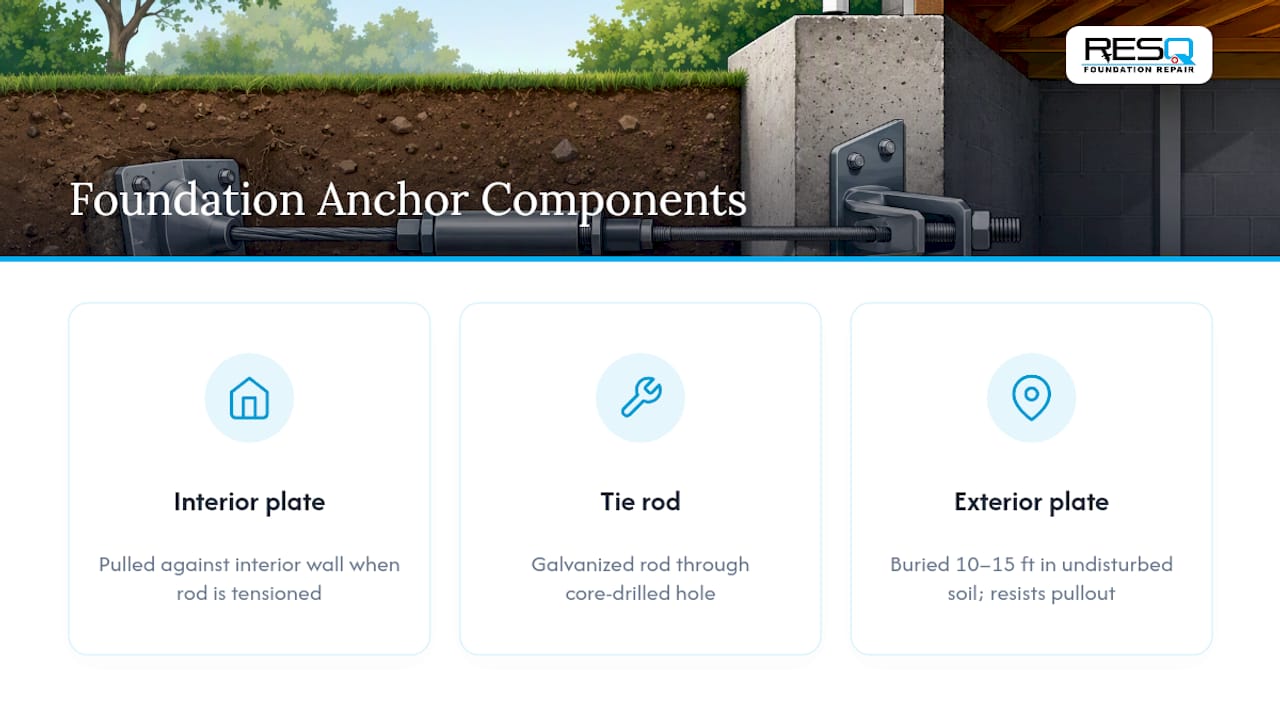
The root cause of most bowing walls is lateral soil pressure, often amplified by expansive clay soils that swell when wet. That pressure pushes the wall inward from the outside. The anchor system bypasses that active pressure zone entirely by reaching past it. The exterior plate is buried 10–15 feet from the foundation, well into undisturbed soil with enough bearing capacity to resist pullout. The tie rod runs through a core-drilled hole in the wall and connects the two plates. When the rod is tensioned, it pulls the interior plate against the wall and transfers the load outward, countering the force that was driving the wall in.
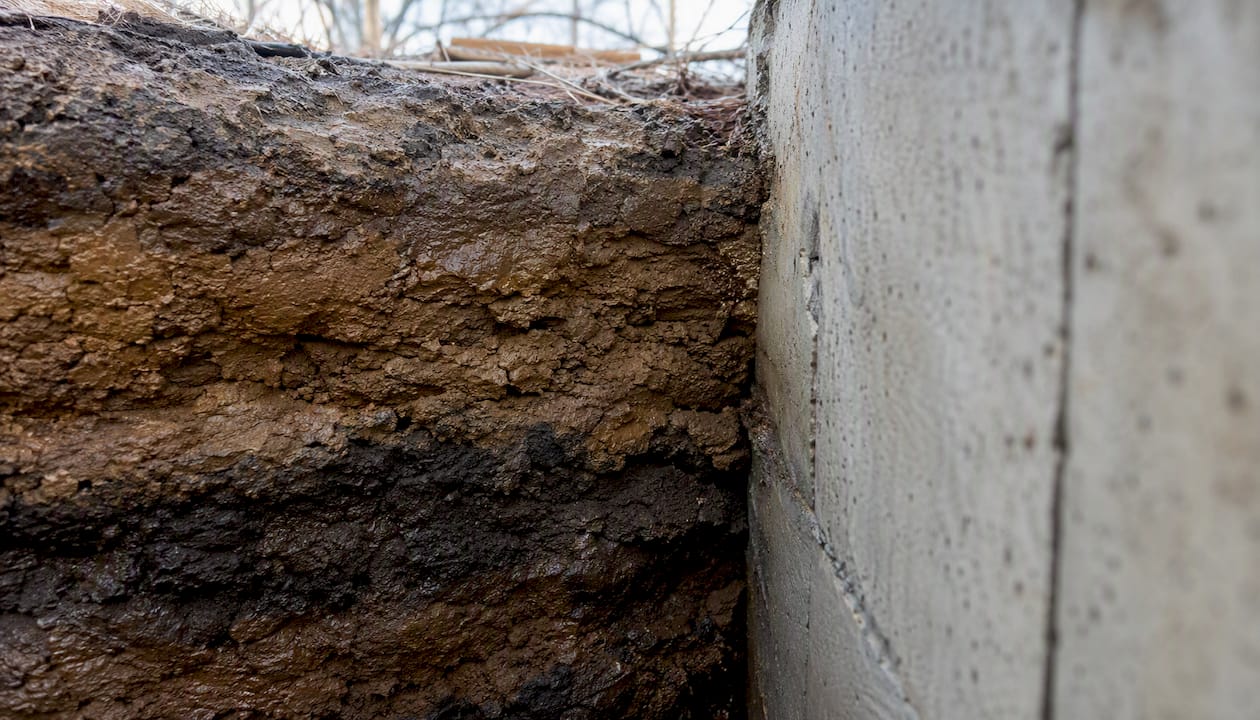
Plate sizing is matched to soil bearing capacity. In softer or low-capacity soils, a larger plate or a concrete-encased anchor is used to prevent pullout under load.
Pro Tip: Tensioning is not a one-time event. Initial torque stabilizes the wall; subsequent small, incremental tightening cycles during dry seasons are what gradually pull the wall back toward plumb over time. Restoration is controlled and seasonal, not instant.
Do wall anchors really work, and when do they fall short?
Anchors reliably stop inward wall movement. That is the consistent outcome when the system is properly engineered and installed. Gradual restoration — actually pulling the wall back toward its original position — is achievable but conditional.
When anchors are a strong fit:
- Inward displacement is roughly 2 inches or more but the wall is not severely fragmented or shattered.
- The wall material (poured concrete or concrete block) is structurally intact enough to hold the interior plate under tension.
- At least 10–15 feet of competent, undisturbed soil is available outside the foundation.
- The yard is clear of utility runs, sidewalks, or neighboring structures that would block excavation.
When anchors may not be enough:
- The wall has severe horizontal cracking across multiple courses with significant displacement (often beyond 3–4 inches), suggesting the structural integrity is too compromised for tension repair.
- Exterior soil is saturated fill, heavily disturbed, or has very low bearing capacity.
- Site constraints (a driveway, a neighboring structure, underground utilities) prevent proper anchor placement.
In those cases, full wall replacement or alternative systems such as helical tiebacks or carbon fiber straps may be more appropriate. Helical tiebacks minimize excavation and are torque-verified for capacity, making them useful on constrained sites. Understanding what causes basement walls to bow in the first place helps you evaluate which repair fits your specific situation.
Pro Tip: Anchors are a permanent mechanical repair, not a maintenance product. When properly installed, they protect property value and avoid the far greater cost of full foundation replacement.
Signs you may need wall anchors: a homeowner checklist
Check your foundation walls for these warning signs, then use the site assessment cues to judge anchor feasibility before calling a contractor.
Visual warning signs:
- Horizontal cracks running along mortar joints in block walls (the clearest indicator of lateral pressure).
- Bowing or leaning walls, visible even without a level.
- Stair-step cracks in concrete block, especially at corners.
- Doors or windows that have become difficult to open, suggesting frame distortion from wall movement.
- Water intrusion along cracks (pressure and moisture often travel together).
How to measure displacement: hold a long straightedge or taut string horizontally across the wall. The gap between the string and the wall face at the midpoint is your displacement measurement. At or beyond 2 inches, anchor consideration is warranted.
Site feasibility cues:
- Less than 10 feet of clear yard between the foundation and a driveway, patio, or neighboring structure may rule out standard plate anchors.
- Utility lines, buried pipes, or irrigation systems within the anchor zone require locating before any excavation.
- Saturated or heavily disturbed fill soil near the foundation may reduce anchor effectiveness.
What should you ask a foundation repair contractor?
The right questions separate a thorough contractor from one cutting corners.
Essential questions:
- Is an engineer involved in the anchor plan, or is placement based on experience alone?
- What anchor type and hardware specifications are you proposing, and why?
- What is the warranty, and does it cover both hardware and labor?
- What is the retensioning schedule, and is follow-up included in the price?
- Can you provide proof of insurance and local licensing?
Red flags:
- Vague warranty language with no written terms.
- Refusal to share hardware specs or load calculations.
- High-pressure tactics or a quote that expires in 24 hours.
- An unusually low bid with no written scope of work.
Documents to request before signing:
- Written proposal with per-anchor pricing and total scope.
- Installation timeline with start and completion dates.
- Post-install inspection and retensioning policy in writing.
Pro Tip: Ask specifically whether the contractor will provide a displacement measurement before and after installation. That documented baseline is your proof the system is performing.
Key Takeaways
Foundation wall anchors stop inward movement by transferring lateral load to stable soil 10–15 feet away, and they can gradually restore walls over time through incremental retensioning during dry seasons.
| Point | Details |
|---|---|
| Stabilization is reliable | Anchors consistently stop inward wall movement when properly engineered and installed. |
| 2-inch threshold | Inward displacement at or beyond 2 inches is the common benchmark for recommending anchors. |
| Clearance requirement | You need roughly 10–15 feet of unobstructed exterior soil for standard plate anchor placement. |
| Maintenance matters | Plan for periodic retensioning and annual visual inspections to maintain performance over time. |
| Foundationresq | Foundationresq provides free inspections, engineered anchor plans, and foundation repair services across North Florida, South Georgia, and Alabama. |
What anchors actually tell you about your foundation
There is a tendency in this industry to frame wall anchors as a last resort before replacement. That framing undersells them. When a wall is caught at the right stage — structurally intact, with competent soil and adequate yard clearance — anchors are not a consolation prize. They are a genuinely effective mechanical solution that avoids excavating the entire exterior of your home.
What homeowners underestimate is the restoration side of the equation. Most people hear “stabilization” and assume the wall stays exactly where it is. The incremental tensioning protocol changes that. Applied carefully over multiple dry seasons, it can measurably reduce displacement. That is not marketing language; it is the physics of a tensioned rod pulling against a plate anchored in stable ground.
The honest caveat: anchors require discipline after installation. A system that is never retensioned after the initial job is a stabilization tool only. The restoration benefit requires follow-through, and that means choosing a contractor who builds retensioning into the plan from day one, not as an aftercharge later.
Foundationresq can assess your wall and build a repair plan
If your foundation wall is showing horizontal cracks, visible bowing, or doors that no longer close right, the gap between “I should look into this” and a real repair plan is usually just one inspection.
Foundationresq serves homeowners across North Florida, South Georgia, and Alabama with free foundation inspections, engineered wall anchor plans, and financing options that make it easier to move forward without waiting for the problem to worsen. The inspection documents your wall’s displacement, soil conditions, and the anchor count and type your situation actually requires — not a one-size estimate. You can also review real repair outcomes before committing. Contact Foundationresq to schedule your free inspection and get a written repair plan specific to your property.
Useful sources
- What Are Wall Anchors, and How Do They Work? | KC Waterproofing
- Wall Anchors: How to Stabilize Bowing Basement Walls
- How Wall Anchor Systems Actually Work | Matthews Wall Anchor
- Everything You Need To Know About Wall Anchors | Fix My Foundation
- Basement wall foundation anchors installation & repair | Spartan Ram Jack Foundation Repair
- How Long Does Foundation Repair Really Last? | Foundation Solutions Group
FAQ
How are foundation wall anchors installed?
A technician excavates a small area outside the foundation, buries an anchor plate in undisturbed soil 10–15 feet from the wall, threads a galvanized rod through a core-drilled hole, and tensions it against an interior wall plate. Most residential jobs complete in 1–3 days.
Do foundation wall anchors really work?
Yes. Anchors reliably stop inward wall movement, and incremental retensioning during dry seasons can gradually pull a structurally sound wall back toward plumb over time.
How long do foundation anchors last?
Lifespan depends on anchor type and soil chemistry. Galvanized plate anchors typically carry 25-year warranties; concrete-encased systems are sometimes rated for a lifetime. Periodic retensioning and annual inspections extend performance.
Do wall anchors go all the way through the wall?
The tie rod passes through a small core-drilled hole in the foundation wall, connecting the interior wall plate to the exterior anchor plate buried in the soil. The hole is small, and modern interior plates are low-profile enough to allow basement finishing after installation.