
Whether your Florida homeowners insurance covers foundation damage comes down to one thing: what caused it. A burst pipe that suddenly undermines your slab? Likely covered. Gradual settling over years? Almost certainly excluded. Storm-driven structural failure? Often covered, unless flood water is the culprit. Florida law draws these lines sharply, and two statutes control most of the analysis: Florida Statute §627.706, which defines catastrophic ground cover collapse (CGCC) and sinkhole loss and sets deductible options, and Florida Statute §627.707, which governs insurer duties, testing requirements, and stabilization payment mechanics.
Three rules determine coverage faster than anything else. First, the cause must be a sudden, accidental covered peril — not gradual earth movement, settling, or wear and tear. Second, sinkhole coverage is an optional endorsement under §627.706; CGCC coverage is mandatory but narrow, requiring four specific conditions to be met simultaneously. Third, the homeowner carries the burden of proving a covered cause, which means documentation is not optional.
Florida leads every other state in sinkhole activity, a direct result of its limestone geology. That fact alone makes sinkhole endorsements worth examining on every Florida policy.
If you discover foundation damage, do these three things before you call your insurer:
- Document everything with timestamped photos and video of every crack, gap, and displaced surface.
- Send written notice to your insurer — verbal calls do not start the statutory clock.
- Get at least two written estimates from licensed Florida foundation contractors.
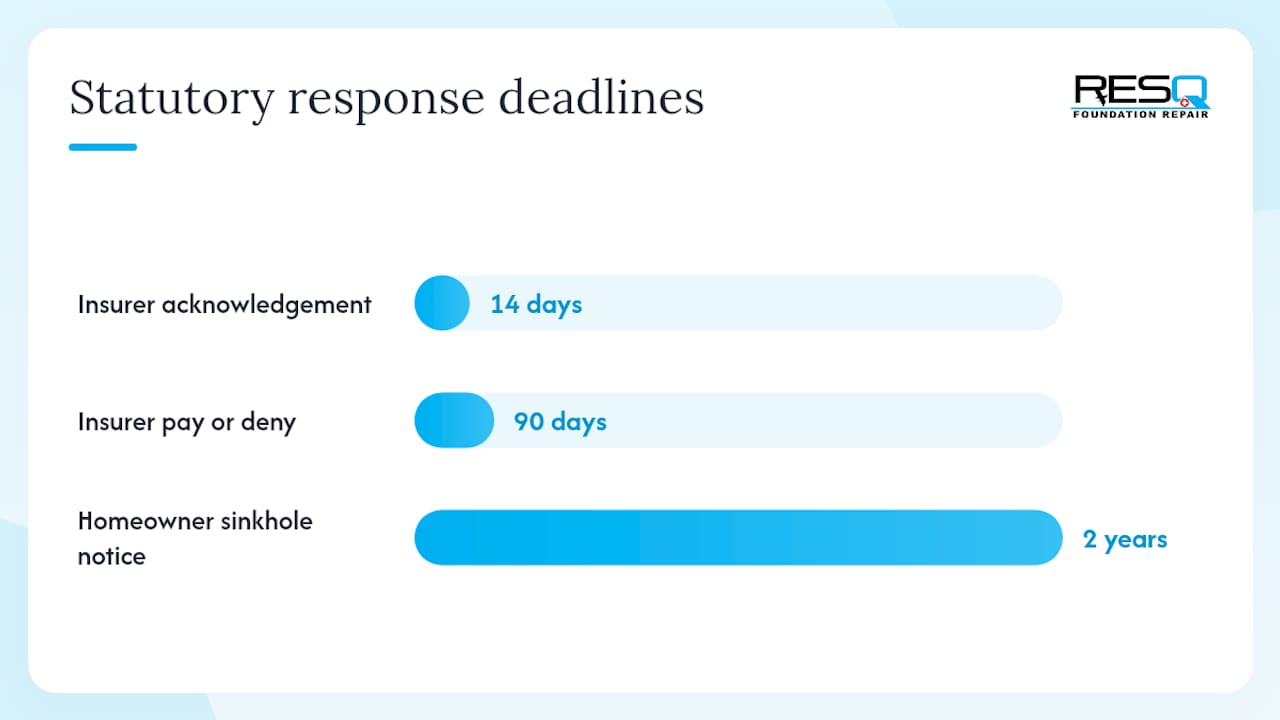
Once you submit a claim, your insurer must acknowledge it within 14 days and pay or deny within 90 days. For sinkhole-specific claims, you have a 2-year notice deadline from the date of loss to preserve your rights under statute.
Table of Contents
- How Foundationresq helps you navigate a foundation insurance claim
- Key Takeaways
- What insurers actually do — and what you should do first
- Statutes, programs, and documents worth saving
- FAQ
How Foundationresq helps you navigate a foundation insurance claim
Filing a foundation damage claim without contractor documentation is one of the most common ways Florida homeowners weaken their own case. Foundationresq provides the licensed contractor estimates, repair contracts, and inspection documentation that insurers actually require.
Under §627.707, once a sinkhole loss is confirmed, insurers may limit initial payment to actual cash value until you enter a binding repair contract. Foundationresq prepares exactly that: binding repair contracts that specify stabilization methods such as underpinning, piering, or grouting, along with timelines that satisfy insurer requirements and trigger full stabilization payments. The team also coordinates with independent structural and geotechnical engineers whose reports address causation directly, which is the single factor most likely to reverse an initial denial.
Pro Tip: Secure an independent licensed structural or geotechnical engineer report before the insurer’s adjuster finalizes its file whenever possible. An objective causation finding on record early gives you far more leverage than disputing the insurer’s retained engineer after the fact.
For homeowners facing deductibles of various percentages of dwelling limits under sinkhole endorsements, Foundationresq also offers financing options to cover gaps between what insurance pays and what repair actually costs. Request an inspection or estimate through Foundationresq’s services page to get started.
Key Takeaways
Florida foundation coverage hinges on cause of damage, statutory deadlines, and binding repair contracts that trigger full insurer payment under §627.707.
| Point | Details |
|---|---|
| Cause controls coverage | Sudden, accidental events are covered; gradual settling, wear and tear, and earth movement are typically excluded. |
| Sinkhole vs. CGCC | CGCC coverage is mandatory but narrow; sinkhole coverage requires a separate endorsement with deductible options expressed as percentages of dwelling limits. |
| Statutory deadlines | Insurers must acknowledge within 14 days and pay or deny within 90 days; homeowners have 2 years to file sinkhole notice. |
| Binding repair contract | Under §627.707, insurers may withhold full stabilization payment until you sign a binding repair contract with a licensed contractor. |
| Foundationresq | Provides licensed contractor estimates, binding repair contracts, and engineer coordination for North Florida homeowners filing or disputing claims. |
What insurers actually do — and what you should do first
The most predictable insurer tactic in foundation claims is recharacterization. An adjuster labels visible cracking as “pre-existing settling” or “normal wear and tear,” neither of which triggers coverage. A second common move: the insurer’s retained geologist or engineer finds no sinkhole activity, closing the file before you have a chance to respond. Independent engineering evidence that directly addresses causation is often what reverses a denial — not appeals, not phone calls.
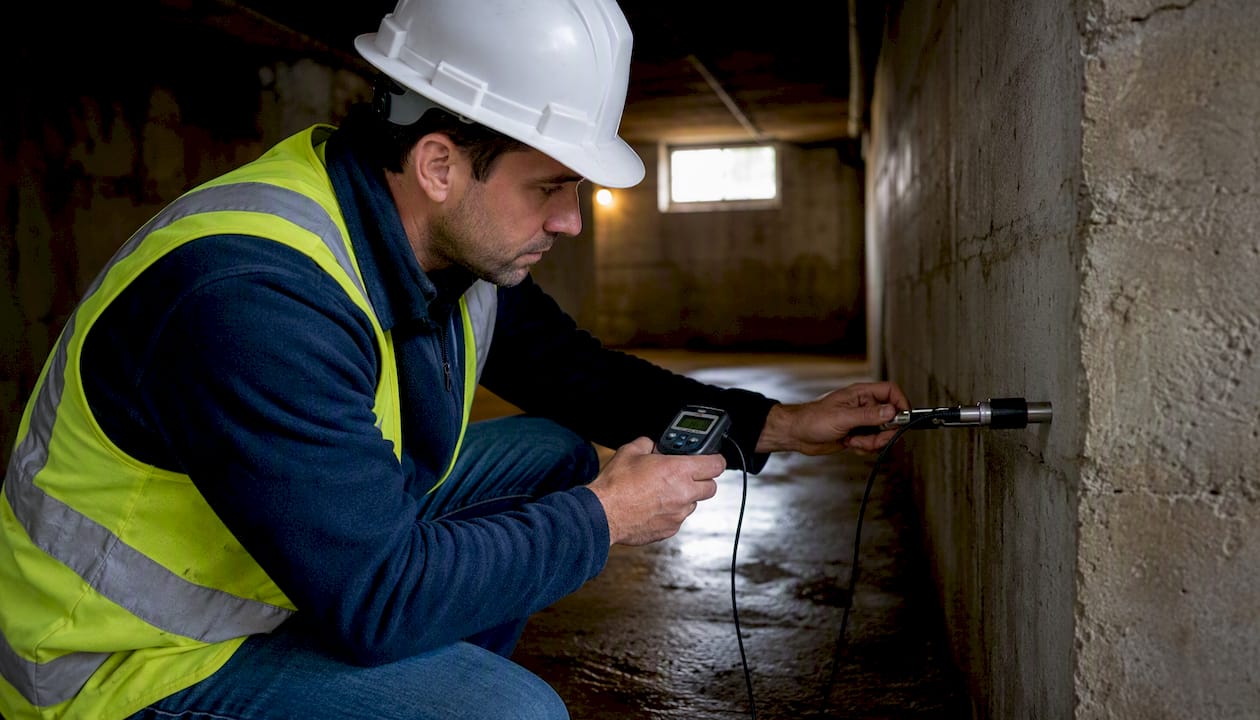
The homeowner’s burden of proof is real. Florida courts and insurers consistently distinguish between damage from a sudden event and damage from gradual processes, and the burden sits with you to show which one applies. An independent structural or geotechnical engineer’s report should document the specific cause, reference displacement measurements against ACI 318-95 variance thresholds where applicable, and connect the physical evidence to a covered peril.
Calling your insurer before obtaining an independent assessment is one of the most common filing mistakes homeowners make. Early verbal statements can be used to frame the claim in ways that favor exclusions. Get your documentation in order first.
If your claim is denied or underpaid, four dispute paths exist. The appraisal process resolves valuation disputes. The Florida Department of Financial Services Neutral Evaluation Program assigns an independent engineer or geologist to evaluate sinkhole claims specifically. A Civil Remedy Notice under Florida Statute §624.155 puts the insurer on notice of bad faith and opens the door to litigation. Invoking Neutral Evaluation or appraisal tolls the statutory timelines while the process runs. Also request your insurer’s complete claim file — adjuster notes, photos, and retained-engineer reports — and review them for methodological gaps before deciding how to proceed. Knowing why insurers deny structural claims across property types helps you spot the same patterns in foundation denials.
Statutes, programs, and documents worth saving
The sources below are the ones that actually matter when you are filing or disputing a foundation damage claim in Florida.
- Florida Statute §627.706: Defines sinkhole loss and CGCC, sets the four-part CGCC test, establishes deductible options (1%, 2%, 5%, 10% of dwelling limits), and requires bold-type disclosure when sinkhole coverage is excluded.
- Florida Statute §627.707: Governs insurer duties after a claim, testing requirements, the 14-day acknowledgment and 90-day decision timelines, and the binding-contract requirement for stabilization payments.
For guidance on licensed contractor requirements and how to vet estimates that will hold up to insurer scrutiny, review Florida’s permit and documentation standards before signing anything.
FAQ
Does standard home insurance in Florida cover foundation damage?
Only when the damage results from a sudden, covered peril such as a burst pipe or windstorm. Gradual settling, earth movement, and wear and tear are excluded under most standard policies.
What is the difference between CGCC and sinkhole coverage?
CGCC coverage is mandatory under Florida law but requires four specific conditions; sinkhole coverage is broader and available as an optional endorsement with deductibles ranging from 1% to 10% of dwelling limits under §627.706.
How long does a Florida foundation insurance claim take?
Insurers must acknowledge a claim within 14 days and pay or deny within 90 days under Florida statute. Sinkhole claims involving geological testing or Neutral Evaluation can extend that timeline while the process runs.
What if my foundation claim is denied?
Request your insurer’s complete claim file, obtain an independent structural or geotechnical engineer report, and consider the DFS Neutral Evaluation Program, appraisal, or a Civil Remedy Notice under §624.155 depending on the basis for denial.
Can Foundationresq help with the documentation insurers require?
Yes. Foundationresq provides licensed contractor estimates, binding repair contracts, and engineer coordination for North Florida homeowners, which are the specific documents insurers require to process and pay foundation damage claims under §627.707.