
Replace your sump pump proactively between 7 and 10 years of service, and replace a battery backup every 3 to 5 years. Move up that timeline immediately if you hear grinding or rattling, the pump runs nonstop, water keeps rising despite it running, or you see rust on the housing. As a budgeting rule, if a repair quote comes in above roughly half the cost of a new unit, buy the new unit instead.
TL;DR:
- Sump pumps last between 7 to 10 years, but those with plastic components may fail after 3 to 5 years under heavy use, while cast iron models can exceed 10 years with proper maintenance.
- Warning signs requiring replacement include persistent grinding noises, nonstop operation despite water level, visible rust or corrosion, and repeated breaker trips or burning smells.
- Repair is cost-effective for minor issues on young pumps, but replacement is recommended once the pump hits 7 to 10 years or shows motor symptoms, especially in finished basements.
- Full replacement costs generally range from $200 to $800 for the pump itself, with installation fees up to $2,500 depending on labor, access, and additional modifications.
- Routine quarterly and annual inspections, including testing and battery replacement every 3 to 5 years, extend pump lifespan and help prevent costly failures during storms.
Table of Contents
- How Long Does a Sump Pump Last?
- Warning Signs Your Sump Pump Needs Replacing
- Should You Repair or Replace the Pump?
- What Does a New Sump Pump Cost?
- Sump Pump Maintenance That Extends Its Life
- When Is the Best Time to Replace a Sump Pump?
- When to Call a Professional
- Foundation RESQ’s Take on Replacement Timing
- Get Your Sump Pump Inspected Before It Fails
- Sources
- FAQ
How Long Does a Sump Pump Last?
Most residential sump pumps run for 7 to 10 years before the motor, bearings, or seals wear out enough to cause failure. That range isn’t fixed, though. It shifts a lot depending on what the pump is made of and how hard it works.
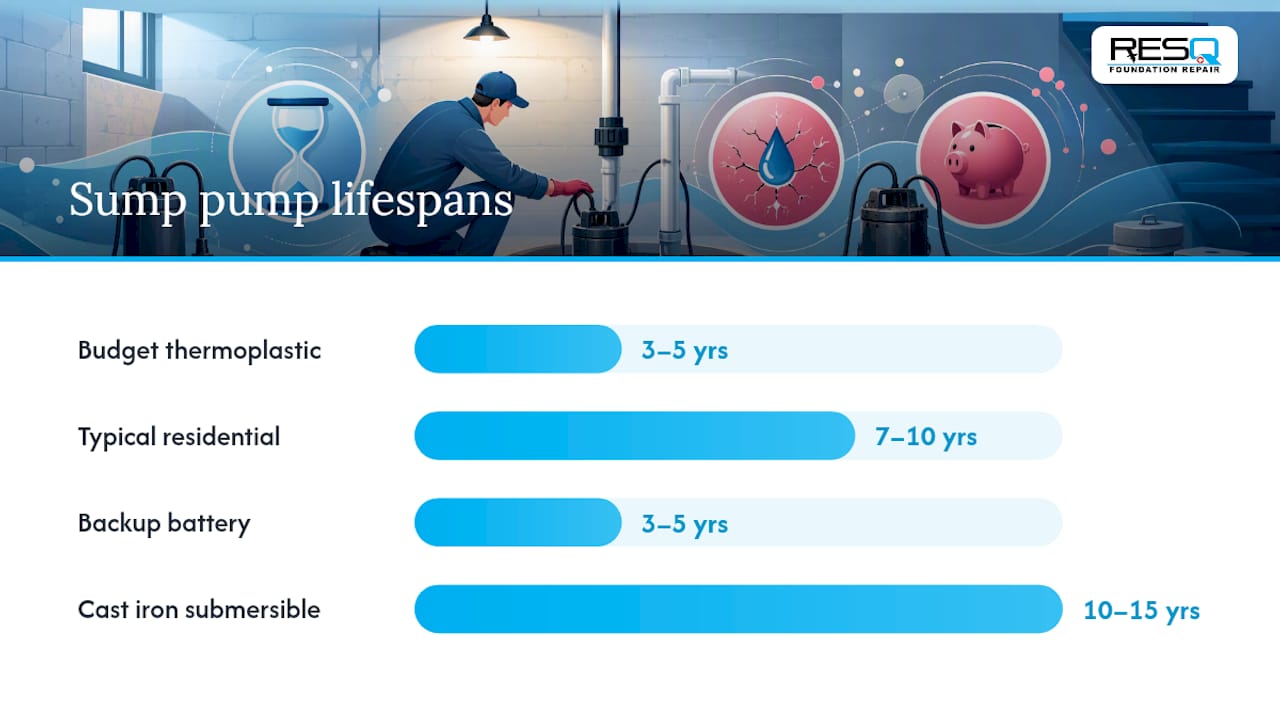
Budget thermoplastic submersible pumps, the kind sold at most hardware stores, tend to fall on the short end, sometimes failing in three to five years under heavy use. Cast iron submersible models dissipate heat better and often push past 10 years, occasionally reaching 15 with regular care. Pedestal pumps, with the motor mounted above the basin instead of submerged in water, usually last longer than submersibles because the motor never sits in a wet environment, but they’re noisier and less common in finished basements.
Several operating conditions push any pump toward early failure:
- Duty cycle matters more than calendar age. A pump that cycles on and off dozens of times a day because of a high water table wears out faster than one that runs occasionally.
- Undersized pumps overheat. If the gallons-per-hour rating doesn’t match your actual inflow, the motor works overtime and burns out early.
- Poor installation shortens life. A pit that’s too small, a discharge line with too many bends, or a check valve installed backward all add strain.
- Backup batteries have their own clock. Expect 3 to 5 years from a backup battery regardless of how long the primary pump lasts, since batteries degrade on a separate chemical timeline.
If you’ve bought a home and have no idea how old the existing pump is, treat it the same as one nearing the end of its expected life, especially if the basement is finished.
Warning Signs Your Sump Pump Needs Replacing
Walk down to your sump pit right now and run through this checklist. It takes about five minutes and it’s the single best way to catch a failure before it floods your basement.
- Listen for grinding, whining, or rattling. A healthy pump hums quietly. Any harsh mechanical noise usually means the impeller or bearings are failing.
- Check for short-cycling. If the pump kicks on and off every few minutes even during dry weather, the float switch or check valve is likely malfunctioning.
- Watch for nonstop running. A pump that never shuts off, or one that runs but the water level in the pit doesn’t drop, is a clear sign of replacement need, not repair.
- Look for rust and corrosion on the housing. Surface rust on a cast iron unit is cosmetic, but corrosion around seams or the motor casing signals internal wear.
- Inspect the power cord. Frayed, cracked, or brittle cords are a fire and shock hazard on top of a pump problem.
- Note repeated GFCI trips. A breaker that trips more than once is telling you the motor is drawing abnormal current.
- Smell for burning. Any electrical or burning odor coming from the pit means stop using the pump immediately.
Two of those symptoms, a burning smell or repeated breaker trips, aren’t “monitor and see” situations. They mean shut the pump down and replace it before running it again.
Pro Tip: Keep a small notebook or phone note logging the pump’s install date and every repair. When you can’t answer “how old is this thing?” in five seconds, that uncertainty alone is a reason to lean toward replacement.
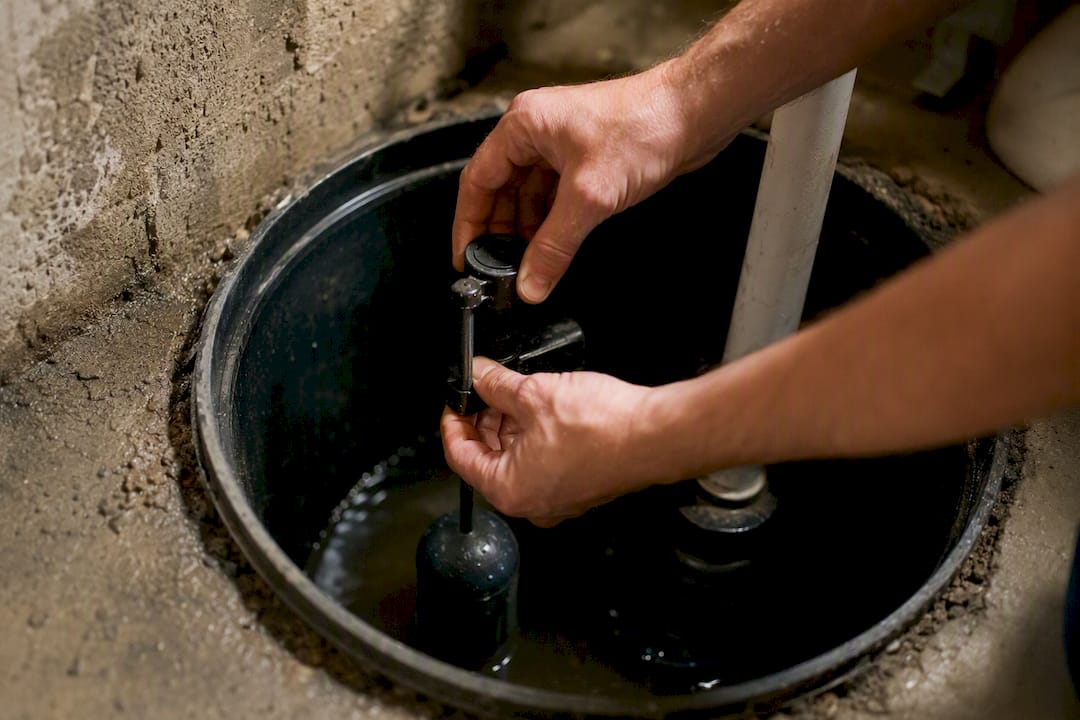
For a deeper diagnostic walk-through, Foundation RESQ’s guide on assessing sump pump performance covers flow-rate testing most homeowners skip entirely.
Should You Repair or Replace the Pump?
Repair makes financial sense for isolated, cheap fixes on a pump that’s still young. A stuck float switch, a clogged intake screen, or a jammed check valve are all quick fixes on a three-year-old pump that otherwise runs fine.
Replacement is the smarter call once any of these apply:
- The pump is at or past the 7 to 10 year mark, regardless of how it currently sounds.
- It shows motor symptoms like grinding, overheating, or repeated GFCI trips.
- The repair estimate exceeds roughly 50% of what a comparable new pump would cost installed.
- You have a finished basement, recently experienced a flood scare, or simply don’t know the pump’s age.
A motor bearing repair today often means a seal failure next season, and you end up paying for two repairs instead of one replacement. Finished basements raise the stakes considerably: a $400 gamble on repair versus a $1,200 replacement looks very different when the alternative is soaked drywall and carpet.
What Does a New Sump Pump Cost?
Budget submersible pumps start around $100 to $150 at retail, mid-range cast iron units run $200 to $400, and premium models with integrated battery backup systems can reach $500 to $800 or more.
Installation costs vary based on whether you’re swapping an existing pump into an existing pit or starting from scratch:
- Pump-only replacement (same pit, same discharge line) typically runs $308 to $748 including labor.
- Full installation with a new pit, new discharge routing, or permitting requirements can run $1,200 to $2,500.
- Adding a battery backup to a primary pump replacement usually adds $200 to $500 in parts and labor rather than doubling the job cost.
The gap between those numbers usually comes down to access. A pump swap in an accessible pit is a same-day job. Cutting a new pit through concrete, running discharge line further from the house, or pulling a permit adds both time and cost.
Sump Pump Maintenance That Extends Its Life
A little routine attention buys you real years of pump life and catches failures while they’re still cheap to fix.
- Quarterly: Visually inspect the pit for debris, check that the float moves freely, and confirm the discharge line outside isn’t blocked or frozen.
- Annually: Pour a few gallons of water into the pit to trigger a full test cycle, verify the check valve isn’t leaking, and test the GFCI outlet by pressing its test button.
- Battery backup: Test monthly or quarterly by simulating a power loss rather than just checking the voltmeter reading. Runtime under actual load, not a static voltage number, tells you if the battery still has capacity. Replace the battery every 3 to 5 years regardless of how it tests.
Pro Tip: Schedule your annual full test for early spring, right before storm season ramps up. Catching a weak battery in March beats discovering it during an April thunderstorm.
Guides from extension services back this same quarterly and annual cadence, and if any test reveals a symptom from the checklist above, that’s the moment to call a professional rather than wait for the next scheduled check.
When Is the Best Time to Replace a Sump Pump?
Late fall or late winter are the safest windows for proactive replacement, before spring melt and storm season put real demand on the system. If your pump fails and heavy rain is forecast, use a temporary pump or call for emergency service rather than delaying. This 24 hour plumbing emergency checklist covers what to do while you wait on a contractor.
When to Call a Professional
Call a professional when your basement has already flooded, the pump has failed more than once in a short span, you can’t identify the cause of a symptom, or you’re replacing a pump of unknown age. Ask any contractor about GPH capacity and horsepower for your pit size, warranty length, backup recommendations, and whether permits or disposal of the old unit are included.
- Vague answers on sizing, no written warranty, or no proof of insurance are red flags worth walking away from.
- A reputable installer should welcome questions about sizing sump pump repair needs and offer references without hesitation.
Foundation RESQ’s Take on Replacement Timing
We generally advise homeowners with finished basements, or pumps that have needed more than one repair, to replace proactively once they hit that 7 to 10 year mark rather than wait for failure. Our inspections check the float, discharge line, check valve, backup battery, and pit condition together, not in isolation.
— Kayle
Get Your Sump Pump Inspected Before It Fails
Waiting for a pump to fail costs more than replacing it on your terms. A soaked finished basement runs into thousands in flooring, drywall, and mold remediation, far more than the few hundred dollars a proactive swap costs.

Foundation RESQ inspects the float, check valve, discharge line, and battery backup as one system, then gives you a straight answer on repair versus replacement, not a guess. If a full replacement makes sense, we can pair it with basement waterproofing to address the water problem at its source, and financing options are available if the timing is tight. Request a free sump pump inspection and get a clear quote before storm season puts your basement to the test.
Sources
For deeper technical guidance, see sump pump lifespan and warning signs, routine testing intervals from NDSU Extension, and CDC guidance on mold risk after water intrusion.
- How Long Does a Sump Pump Last? (5 Warning Signs) — sumpPumpCentral
- How Long Do Sump Pumps Last? Is It Time to Replace It? — Angi
- Sump Pump Failing: Signs and Next Steps — AlertPlumber
FAQ
How often should a sump pump be replaced?
Replace a primary sump pump every 7 to 10 years and a backup battery every 3 to 5 years, sooner if you notice mechanical or performance symptoms.
What are the clearest signs a sump pump needs replacing?
Grinding or rattling noises, nonstop running, water rising despite the pump operating, visible rust, and repeated breaker trips are the strongest indicators.
Is it cheaper to repair or replace a sump pump?
Repair makes sense for a young pump with an isolated issue like a stuck float switch; replace once the repair cost exceeds roughly 50% of a new unit’s price or the pump is near 7 to 10 years old.
How much does sump pump replacement cost?
Pump-only replacement typically runs $308 to $748, while a full installation with a new pit or discharge routing can reach $1,200 to $2,500.
When is the best time of year to replace a sump pump?
Late fall or late winter is ideal for proactive replacement, ahead of spring melt and storm season demand on the system.
Can Foundation RESQ inspect my sump pump before I decide?
Yes, Foundation RESQ offers inspections that check the float, check valve, discharge line, and battery backup to give homeowners a clear repair-or-replace recommendation.