
Yes, a settled porch is almost always repairable without full replacement, as long as the slab itself is still solid. Slab settlement usually calls for polyurethane foam injection or mudjacking to re-lift the concrete, while a porch pulling away from the house structurally needs helical piers or underpinning. Stair-step cracks or interior wall cracks are the signal to stop DIY-diagnosing and call a foundation specialist.
TL;DR:
- Soil issues, such as poor compaction, water erosion, or tree roots, are the primary causes of porch settlement and should be addressed to prevent recurrence.
- Foam injection and mudjacking are suitable for leveling slabs that remain structurally sound, while underpinning with piers is necessary if the porch is pulling away from the house.
- Cracks that are stair-step or diagonal indicate structural movement requiring a foundation specialist, whereas horizontal cracks suggest a slab or soil void problem manageable by DIY or contractors.
- Costs for repairs vary widely, with small lifts costing a few hundred dollars and underpinning or full replacement exceeding several thousand dollars, depending on scope and access.
- Fixing drainage issues, such as extending downspouts and regrading soil, is essential to ensure long-term stability after the repair, as neglecting this often leads to settlement reoccurrence.
Table of Contents
- Signs Your Porch Is Settling: What to Check First
- Why Porches Sink: The Root Causes Behind Settlement
- Repair Methods Explained: Foam, Mudjacking, Piers, and Replacement
- DIY or Call a Pro? Diagnostic Thresholds That Matter
- What Porch Settlement Repair Typically Costs
- Stopping the Problem From Coming Back
- How a Qualified Contractor Approaches Porch Settlement Repair
- Why Early Action Beats a Bigger Repair Later
- Get a Free Porch Inspection From Foundation RESQ
- Sources
- FAQ
Signs Your Porch Is Settling: What to Check First
A porch does not sink overnight. It tells you first, usually through a handful of physical clues that are easy to spot if you know where to look.
- A widening gap between the porch and the house — even a quarter-inch gap is worth measuring and tracking over a few weeks.
- A tilted or sloped slab you can confirm with a four-foot level or a straightedge laid across the surface.
- Steps that no longer line up, where the bottom stair sits lower than it did when the porch was poured.
- Cracked mortar joints or stair-step cracks running diagonally through brick veneer or block.
- Doors and windows near the porch entry that stick or no longer latch the way they used to.
Not every sign means “act now.” A hairline crack you’ve watched for months without change can wait for a scheduled inspection. A gap that’s grown visibly wider, a step that’s become a trip hazard, or new cracks appearing inside the house near the porch wall mean it’s time to call someone this week, not next season.
Why Porches Sink: The Root Causes Behind Settlement
Porches sink for the same handful of reasons, over and over, and almost none of them are mysterious once you know what to look for.
Soil is the biggest culprit. Inadequate soil compaction during construction, water erosion, freeze-thaw cycling, and expansive clay all cause the ground under a slab to shift or lose volume, and the concrete follows gravity down into the resulting voids.
- Poor compaction under the original pour, leaving loose fill that settles over years.
- Gutters dumping water at the porch edge instead of away from the house.
- Grading that slopes toward the foundation instead of away from it.
- Tree roots growing under the slab and disturbing the soil bed.
- Vibration from nearby construction, heavy trucks, or long-term traffic loads.
- Shallow footings poured without the depth needed to reach stable soil.
Pro Tip: Walk your gutters after the next heavy rain and watch where the water actually lands. If it’s pooling within two feet of the porch slab, you’ve likely found the mechanism causing the settlement, not just a symptom of it.
Repair Methods Explained: Foam, Mudjacking, Piers, and Replacement
Four methods cover almost every porch settlement case, and picking the right one depends entirely on what’s actually happening under the concrete.
- Polyurethane foam injection (polyjacking): Small holes are drilled into the slab, then structural foam is pumped underneath to fill voids and lift the concrete back into place. Foam lifts often cure fast enough that homeowners can use the porch the same day, and the process is far less invasive than tearing out concrete.
- Mudjacking (slabjacking): A cement-based grout mixture is pumped under the slab through similar drill holes. It’s a long-proven method and sometimes cheaper upfront, though the added weight of the grout can compress soft soil further over time.
- Helical piers and underpinning: When the porch footing itself needs deep bearing support, or when the porch is structurally tied to the house’s foundation, piers are driven to stable soil or bedrock to carry the load permanently. This is the engineered fix used when a porch is genuinely pulling away from the house, not just settling in place.
- Full replacement: Reserved for slabs that are pulverized, have exposed and corroded rebar, or sit on masonry footings that have already failed. There’s no lifting a slab that no longer has structural integrity.
A comparison of PolyRenewal and mudjacking is worth reading before you commit to either grout or foam, since the tradeoffs (weight, cure time, longevity) matter more than the sticker price alone.
The workflow that actually holds up long-term looks like this: inspect first, choose the method based on what’s under the slab (not what’s cheapest), fix the drainage problem causing the settlement, lift or stabilize the concrete, then patch and finish. Skip the drainage fix, and you’ll likely be paying for this twice.
DIY or Call a Pro? Diagnostic Thresholds That Matter
Some settlement is a weekend fix for a concrete contractor. Some is a structural issue that needs an engineer’s signature. Telling the two apart starts with the crack pattern.
- Check the crack direction first. Straight, mostly horizontal cracks across a slab point to a slab or soil void problem suitable for foam or grout leveling. Diagonal or stair-step cracks through masonry or foundation walls mean structural movement, and that’s a foundation specialist’s job.
- Watch for compounding symptoms. Doors sticking, windows binding, or new drywall cracks inside the house alongside a settling porch usually mean the problem has already spread past the slab.
- Expect a real inspection, not a guess. A proper visit includes soil condition checks, a load-bearing assessment of the porch structure, a written scope of recommended repair, and a realistic timeline.
- Ask for documentation before you sign anything. Get the warranty terms in writing, ask whether the company carries its own crews or subcontracts the work, and ask what happens if the same section settles again within the warranty period.
What Porch Settlement Repair Typically Costs
Costs range widely because “porch repair” covers everything from a small void fill to a full structural rebuild. Common concrete repairs and lifts often fall in the low hundreds up to roughly $1,500 or more, while underpinning or full replacement runs considerably higher depending on scope, and pricing varies by region.
A few variables move that number more than anything else:
- Porch size — a small stoop lift costs far less than a full wraparound porch.
- Lift method — foam injection and mudjacking price differently per square foot.
- Access — tight side yards or landscaping obstacles add labor time.
- Underpinning need — piers add real cost but solve problems foam alone can’t.
- Drainage or grading corrections bundled into the same job.
- Finish work — patching, staining, or matching existing concrete texture.
When you’re comparing bids, ask each contractor to break the estimate into line items rather than one lump number. A breakdown of what drives sinking slab repair costs helps you spot whether a low bid is skipping a step, like drainage correction, that will bring the problem back. Catching settlement early keeps you in the cheaper end of that range, since small lifts cost less and disrupt less than the underpinning or replacement jobs that follow years of neglect.
Stopping the Problem From Coming Back
Fixing the slab without fixing the water problem underneath it is a temporary win. Most settlement returns within a few years if drainage isn’t corrected alongside the lift.
- Extend downspouts 4 to 6 feet away from the foundation and porch edge.
- Regrade soil so it slopes away from the house, not toward it.
- Clean gutters at least twice a year so overflow doesn’t pool at the slab edge.
- Walk the perimeter after major storms and note any new gaps or cracking.
- Keep irrigation heads and heavy landscaping away from the immediate porch footprint.
- If doors near the porch are sticking while you wait on repair scheduling, basic seasonal door adjustments can buy you time without masking the underlying issue.
Pro Tip: If you can’t schedule a repair right away, mark the current gap width with tape or a Sharpie line and re-check it monthly. That simple habit tells you whether you’re dealing with a slow, stable settlement or an active one that needs faster attention.
How a Qualified Contractor Approaches Porch Settlement Repair
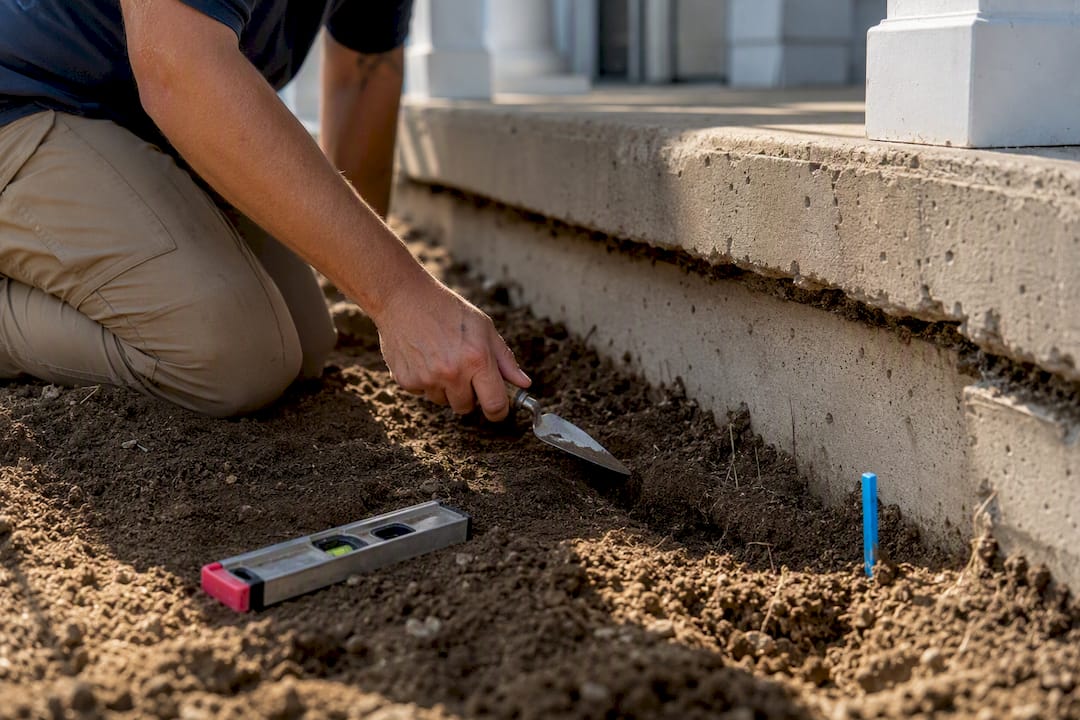
A properly run inspection starts with soil assessment around the porch footing, moves to a load-bearing check of the slab and any attached structure, and ends with a specific recommendation, whether that’s foam lifting, mudjacking, or piers.
Foundation RESQ’s services include free inspections, concrete leveling, and underpinning, backed by financing options for larger scopes. Before hiring anyone, ask to see documented case studies showing before-and-after results on comparable jobs, not just marketing photos. A contractor willing to show its work, explain the method it’s recommending and why, and put a warranty in writing is doing what the job actually requires.
Why Early Action Beats a Bigger Repair Later
The biggest mistake homeowners make with a settling porch isn’t picking the wrong method. It’s waiting until the crack pattern turns from a slab issue into a foundation one. Get at least one written estimate with a defined scope and warranty terms before agreeing to anything, and be wary of any contractor pushing immediate tear-out without first explaining why lifting won’t work.
— Kayle
Get a Free Porch Inspection From Foundation RESQ
If you’ve read this far and you’re staring at a gap between your porch and your front door, the fastest path to an answer isn’t another article. It’s a soil and slab assessment from someone who does this daily. Foundation RESQ offers free inspections across its service area, along with concrete leveling, underpinning, and financing options for larger repairs, so cost doesn’t force you into a temporary patch instead of a permanent fix.

During an inspection, expect a technician to check soil conditions under and around the slab, assess whether your porch’s crack pattern points to a slab issue or something structural, and walk you through the recommended method with a real cost range before any work begins. If you want to see what finished jobs actually look like, the case studies page shows completed lifts and underpinning projects with real outcomes. Schedule your free inspection and get a written scope before your porch settlement turns into a bigger repair bill.
Sources
- The complete guide to foundation inspections — AmeriSave
- How Much Does Porch Repair Cost? (2026) — HomeGuide
- Is it my foundation or the slab? — PolyJacks
- Is your porch pulling away from your house? — Able Basements
FAQ
Can a Porch That Has Settled Be Fixed?
Yes, in most cases. If the slab itself is intact, foam injection or mudjacking can lift it back into place, and if the footing or house connection has shifted, helical piers provide a permanent structural fix.
How Much Would It Cost to Fix a Porch?
Costs typically range from a few hundred dollars for a small lift to $1,500 or more for common concrete repairs, with underpinning or full replacement running higher depending on porch size and access.
How Much Foundation Settlement Is Acceptable?
There’s no single universal number, but small, stable hairline cracks that aren’t growing are generally considered low urgency, while stair-step cracks, widening gaps, or sticking doors and windows signal settlement that needs a professional assessment soon.
My Concrete Porch Is Crumbling. What Can I Do to Fix It?
If the concrete is pulverized or rebar is exposed, foam or grout lifting won’t hold, and replacement is usually the only lasting option; a qualified contractor can assess whether the slab is salvageable before you commit to a full rebuild.