
Proper crawl space encapsulation typically cuts heating and cooling energy use by about 15 to 18 percent and reduces crawlspace humidity by over 20 percent. The biggest winners are homes with ductwork or HVAC equipment running through the crawlspace and homes in hot, humid climates where moisture load drives cooling costs. Those numbers only hold up if the job includes damp-proofing, duct sealing, dehumidification, and a combustion safety check, not just a plastic sheet stapled to the joists.
TL;DR:
- Proper crawl space encapsulation must include sealing walls, insulation, ductwork, dehumidification, and drainage to avoid trapping moisture and causing damage.
- Sealing vents alone is ineffective and can worsen humidity problems if not combined with active moisture removal and proper insulation.
- Homes with ductwork or HVAC equipment in the crawlspace and in humid climates benefit most, with energy savings reaching up to 21 percent in some cases.
- Costs vary based on existing conditions and system complexity, but expected savings generally justify the investment for high-moisture or ducted homes.
- Incorrect encapsulation can cause mold, structural issues, or safety hazards, making professional inspection and planning essential.
Table of Contents
- How Unsealed Crawlspaces Waste Energy
- What a Proper Encapsulation Job Actually Includes
- Does Encapsulation Actually Lower Your Energy Bill?
- What Does Encapsulation Cost, and When Does It Pay Off?
- What Are the Downsides of Crawl Space Encapsulation?
- How Do You Know If Your Home Will Benefit, and What Should You Ask a Contractor?
- Foundation RESQ’s Approach: Why Full Scope Matters
- Get a Scoped Estimate for Your Crawlspace
- Sources
- FAQ
How Unsealed Crawlspaces Waste Energy
A vented crawlspace acts like an open window under your house. Outside air moves in and out with every temperature swing, and that air doesn’t stay put. It rises into your living space through the stack effect, the same pressure dynamic that pulls warm air up a chimney, forcing your HVAC system to fight air it never should have had to condition in the first place.
Three mechanisms drive most of the waste:
- Air leakage and stack effect: Outdoor air enters through vents and gaps, then migrates upward into the home, raising heating and cooling load.
- Duct losses: Supply and return ducts routed through an unconditioned crawlspace leak air into a space that’s never at the right temperature, cutting delivered efficiency before the air ever reaches a room.
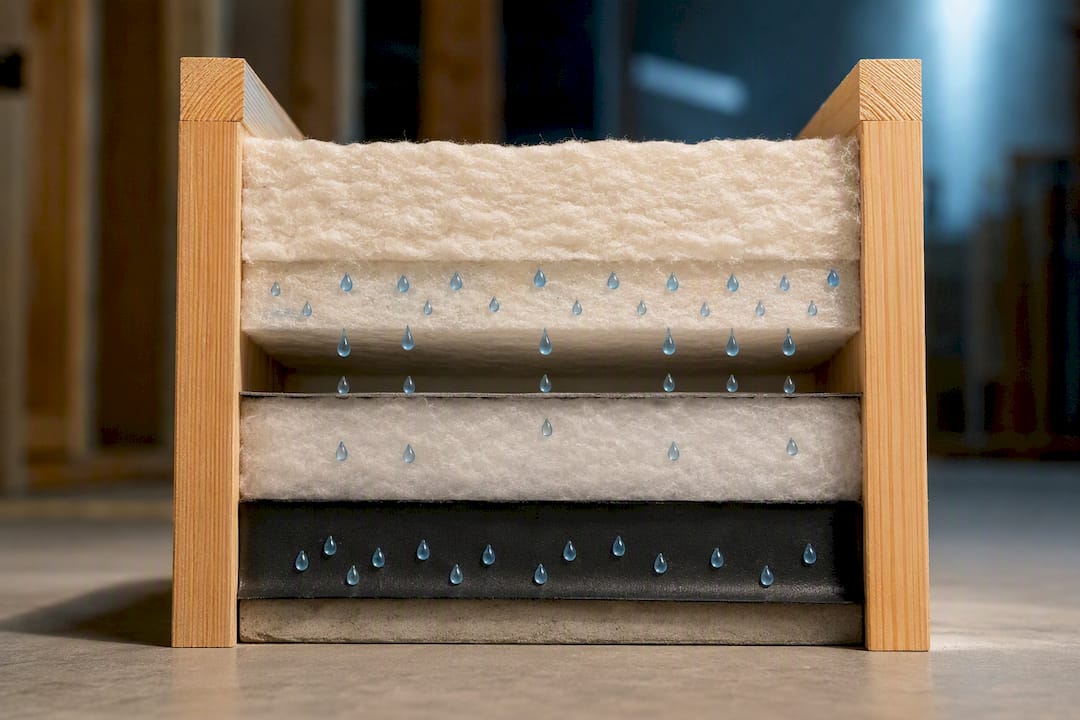
- Moisture-driven insulation failure: Fiberglass batts under a vented floor absorb humidity, sag, and grow mold, which collapses their effective R-value over a few seasons.
Each problem compounds the others. A leaky duct in a damp crawlspace doesn’t just waste energy; it feeds the moisture that ruins the insulation meant to stop the loss.
What a Proper Encapsulation Job Actually Includes
Sealing a crawlspace is a system, not a single product. A contractor doing it right addresses six components in sequence:
- Continuous vapor barrier sealed and taped to the walls and piers, not just draped over the ground.
- Wall or perimeter insulation installed against the foundation walls rather than between the floor joists.
- Rim-joist sealing to close the gap where the foundation meets the framing, a common overlooked leak point.
- Duct sealing and insulation on any HVAC lines running through the space.
- Dehumidification or a conditioned-supply approach to manage the humidity a sealed space traps if it isn’t actively controlled.
- Drainage fixes and proper access doors so groundwater and outside air can’t undo the seal.
The most common shortcut is sealing the vents and stopping there. That approach traps moisture instead of removing it, which is why ENERGY STAR’s guidance on closing and conditioning crawlspaces treats the crawlspace as part of the home’s thermal envelope, requiring active moisture management, not passive sealing alone.
Pro Tip: Match your insulation’s vapor permeance to your climate and local code. A material that works in the Southeast can trap moisture the wrong way in a colder region, so check climate-specific crawlspace insulation guidance before you buy.
Does Encapsulation Actually Lower Your Energy Bill?
Yes, and the field data behind that answer is more specific than most homeowners realize. Building America’s field research found that unvented, conditioned crawlspaces reduced heating and cooling energy use by 15 to 18 percent compared to vented designs, alongside a humidity drop exceeding 20 percent.
The 15 to 18 percent figure isn’t a ceiling. A matched-pairs field study in the southeastern U.S. recorded cooling-season savings as high as 21 percent in one sealed configuration, while heating-season results varied depending on where the insulation sat in the assembly.
That climate split matters. Hot, humid regions see the strongest and most consistent gains because sealing the crawlspace removes both a heat-load source and a moisture-load source at the same time. Cold-climate homes still benefit, but the payoff depends heavily on whether insulation is placed correctly against the walls rather than left in the failing floor-joist configuration.
Certain homes see outsized returns with new interior doors:
- Houses with ductwork or air handlers routed through the crawlspace, since duct losses become internal to the sealed boundary instead of leaking into open air.
- Homes in high-humidity climates, where moisture control does double duty on comfort and energy.
- Properties with poor or degraded floor insulation, where any upgrade delivers a bigger jump.
- Crawlspaces with visible mold, standing water, or musty odors, all signs the current setup is actively working against the HVAC system.
What Does Encapsulation Cost, and When Does It Pay Off?
Cost depends less on square footage alone than on what’s already wrong down there. Four factors drive the estimate:
- Crawlspace size and access difficulty — a tight, low-clearance space costs more to work in than a walk-in one.
- Pre-existing repair needs — mold remediation, wood rot, or structural sistering adds to the base encapsulation price.
- Ductwork condition — leaky or uninsulated ducts that need sealing or replacement add a separate line item.
- Materials and HVAC integration — heavier vapor barriers, insulated wall panels, and a dehumidifier tied into the system cost more than a basic sealed liner.
To estimate your own payback, start with your current HVAC-related utility spend and apply the 15 to 18 percent savings range as a baseline, then adjust up if you’re in a cooling-dominated climate where the field data skews higher. A household spending a typical amount a year on heating and cooling might expect a proportional savings annually, though your actual number depends on system efficiency and how leaky your ducts were to begin with.
The dollar savings are only part of the return. A drier crawlspace means fewer HVAC service calls, less risk of structural rot undermining your foundation, and a space you’re not embarrassed to show an inspector when you sell.
What Are the Downsides of Crawl Space Encapsulation?
Encapsulation done wrong can create new problems instead of solving old ones. Sealing vents without a moisture-removal plan is the most frequent mistake, and it can raise humidity inside a now-airtight space that has nowhere for that moisture to go.
- Skipping dehumidification after sealing traps humidity instead of removing it.
- Ignoring combustion appliances (water heaters, furnaces) in the crawlspace can create unsafe conditions if they no longer get adequate combustion air; some setups need to be converted to sealed-combustion units.
- Using the wrong vapor barrier or insulation type for your climate can create a condensation trap behind the wall, rotting framing you can’t see.
- If your envelope problems are mainly attic or window related, encapsulation may not be your highest-priority upgrade.
Pro Tip: If your crawlspace has a water heater or furnace, ask your contractor directly how they’re handling combustion air. This is not a detail to leave to assumption.
How Do You Know If Your Home Will Benefit, and What Should You Ask a Contractor?
A few signs point to strong odds of savings: musty odors upstairs, floors that feel cold or sticky in summer, visible condensation on crawlspace pipes, or ductwork you can see running through open crawlspace air. If any of those describe your house, it’s worth getting a scoped estimate rather than guessing.
When you talk to a contractor, run through this list:
- Does the scope include duct sealing, or only the crawlspace envelope itself?
- What vapor barrier thickness and seam-sealing method will they use, and is it rated for your climate?
- What’s the dehumidification or conditioned-air plan, and is it sized for your square footage?
- Will they address drainage or standing water issues before sealing?
- Have they checked combustion safety for any appliances in the space?
- Can they show before-and-after humidity or temperature readings from comparable completed jobs?
A contractor who can’t answer the duct and combustion questions specifically is scoping a partial job, not a real encapsulation.
Foundation RESQ’s Approach: Why Full Scope Matters
Foundationresq specializes in crawl space remediation and encapsulation across North Florida, South Georgia, and Alabama, and treats the crawlspace as one connected system rather than a checklist of parts. Diagnosis, structural repairs, the vapor barrier, ductwork, and dehumidification get planned together, which is what keeps a sealed space from trapping the humidity it was supposed to fix. That’s why a professional inspection, not a guess from a blog post, is the fastest way to know your real numbers.
— Kayle
Get a Scoped Estimate for Your Crawlspace
Foundationresq handles the full range of crawlspace work under one roof: inspection, structural remediation, encapsulation systems, dehumidifier installation, and financing options for homeowners who’d rather not pay the whole job upfront. That matters because a partial fix from a vent-sealing-only contractor can leave you with the exact humidity problem this article just warned against.
The practical next step is a free on-site inspection, where a technician measures your current crawlspace humidity and airflow conditions and tells you what a realistic savings range looks like for your specific house, not a national average. If your crawlspace has drainage or standing water issues, that gets scoped into the same visit instead of surfacing as a surprise mid-project. Schedule an inspection to find out what your home’s numbers actually look like.
Sources
- Unvented, Conditioned Crawlspaces – Building America Top Innovation | Department of Energy
- Osti
- Guide to Closing and Conditioning Ventilated Crawlspaces (ENERGY STAR / BSC)
FAQ
How much does it cost to encapsulate a 2,000 sq ft crawl space?
Cost varies widely based on access, existing mold or structural repairs, and whether ductwork needs sealing, so an accurate number comes from an on-site inspection rather than a flat per-square-foot rate.
What are the downsides of crawl space encapsulation?
Done poorly, it can trap humidity if no dehumidification is added, create combustion safety issues for appliances in the space, or cause hidden condensation damage if the wrong materials are used for your climate.
Is crawl space encapsulation worth the money?
For homes with ducts in the crawlspace or in humid climates, the Building America field data showing 15 to 18 percent HVAC savings plus reduced mold and rot risk makes it worth serious consideration; homes with minimal crawlspace issues may see smaller returns.
Is crawl space encapsulation covered by insurance?
Standard homeowners insurance generally doesn’t cover encapsulation as a preventive upgrade, though it may help offset repairs if the crawlspace damage stems from a covered event like a sudden pipe leak, so check your specific policy language.
Does encapsulation help in cold climates, not just hot humid ones?
Yes, but the benefit depends more on insulation placement than in hot climates. Cold-climate homes need insulation against the perimeter walls rather than the floor joists to see the same consistent gains that Building America measured in the Southeast.