
Mud tubes, live insects, or discarded wings on a damaged board point to termites; a musty smell and soft, crumbling wood with no tubes points to rot; and if you see both, you’re likely dealing with moisture that attracted termites to already-decaying wood. Grab a screwdriver, probe the wood, photograph what you find, and call the right specialist based on what shows up.
TL;DR:
- Termite mud tubes follow the wood grain and are reliable indicators of active subterranean termite activity, especially during spring swarming seasons.
- Wood rot presents as crumbly, spongy, or discolored wood near moisture sources, with fungal growth and a musty odor typically evident before probing.
- Visual clues differentiate termites from rot: galleries follow grain and are hollowed channels, while rot causes shattering or cube-shaped cracks in the wood.
- Mechanical tests using a screwdriver help identify soft rot versus hollow termite galleries by assessing the wood’s firmness and sound when tapped.
- Moisture control through drainage, ventilation, and vapor barriers is the primary method to prevent both fungal decay and termite attraction long term.
Table of Contents
- Termite Damage vs Rot: Signs of Active Termite Activity
- What Wood Rot Actually Is and Why It Spreads
- Termite Damage vs Rot: Key Differences You Can Spot on Site
- How to Inspect and Test Damaged Wood Yourself
- What to Do Next After Finding Damage
- Preventing Both Rot and Termite Damage Long-Term
- Why Moisture Is the Real Root Cause
- Get a Moisture and Structural Inspection Before Small Damage Spreads
- Sources
- FAQ
Termite Damage vs Rot: Signs of Active Termite Activity
Termites leave behind physical evidence long before you notice structural sag, and most of it is visible if you know where to check. Subterranean termites build pencil-width mud tubes running up foundation walls, piers, or crawl space supports. These tubes shield the insects from open air while they travel between soil and wood, and finding one is one of the more reliable indicators of active subterranean termite activity.
Other clues to check for:
- Frass, or termite droppings, that looks like small pepper-colored pellets near baseboards or window tracks
- Discarded wings scattered near light fixtures or windows after a swarm
- Wood that sounds hollow or papery when tapped, with galleries running parallel to the grain
- Damage concentrated at sill plates, deck posts, subfloors, and other wood-to-soil or wood-to-concrete contact points
Pro Tip: Swarming season for subterranean termites typically runs in spring, right after a warm rain. If you spot winged insects near your foundation in March or April, don’t brush them off as flying ants. Check the wings first: termite wings are equal length front and back, while ant wings are not.
What Wood Rot Actually Is and Why It Spreads
Wood rot is fungal decay, not insect damage, and it needs one thing above all else: sustained moisture. Decay fungi rarely cause serious damage when wood moisture content stays below roughly 20%, which is why rot shows up almost exclusively near leaks, poor drainage, or unventilated crawl spaces rather than in dry framing lumber.
There are three types homeowners run into most:
- Brown rot breaks down cellulose and leaves wood cracked into small cube-shaped chunks, often brittle and dark
- White rot attacks lignin and can leave wood pale, stringy, or spongy
- Soft rot develops in very wet conditions and leaves a soft, discolored surface layer
You’ll typically find rot at window sills, deck ledgers, roof eaves, sill plates, and floor joists near plumbing leaks. Affected wood loses strength gradually, often turning crumbly or spongy, and a musty odor along with visible fungal growth is usually the giveaway before you even touch it.
Termite Damage vs Rot: Key Differences You Can Spot on Site
Standing in front of damaged wood, you don’t need a lab test to make a reasonable call. A few side-by-side checks separate the two conditions most of the time:
- Appearance: Termite galleries follow the wood grain and leave clean, hollowed channels with a honeycomb look. Rot leaves wood cracked into cubes, bleached and stringy, or generally shapeless and mushy.
- Texture and sound: Termite-damaged wood often still holds a thin outer shell and produces a hollow, papery sound when tapped. Rotted wood tends to be dull, crumbly, or soft all the way through.
- Smell: Rot usually carries a musty, earthy odor from active fungal growth. Termite damage on its own has no distinct smell.
- Companion evidence: Mud tubes, frass, and shed wings point to termites. Water stains, visible mold, or peeling paint point to a moisture problem and rot.
Neither condition rules out the other. Fungal decay softens wood and raises local moisture, and that combination can make a spot more attractive to foraging termites looking for an easy meal. A board that started as a rot problem can end up hosting both issues by the time you notice it.
How to Inspect and Test Damaged Wood Yourself
A flathead screwdriver and a phone camera get you most of the way to a diagnosis:
- Probe the wood. Press the screwdriver tip into the suspect area. Wood that gives way soft and crumbly signals rot; wood that’s hollowed into clean channels but keeps its shape signals termites.
- Tap the surface. A hollow, papery sound suggests termite galleries underneath; a dull, muted thud suggests decay has taken over the wood’s structure.
- Check nearby surfaces for mud tubes on foundation walls, frass near the damage, or discarded wings on windowsills.
- Smell the area. A musty, damp odor with any visible fungal patches points toward rot rather than insects.
- Photograph everything, including a coin or tape measure for scale, before you go any further.
Field checks like the screwdriver or pick test are standard practice among home inspectors because they’re fast and hard to get wrong. Pro Tip: Stop probing the moment wood feels unstable under a support beam, joist, or stair stringer. Document it with photos and step back. A collapsed floor section is not worth confirming your suspicion firsthand.
What to Do Next After Finding Damage
Who you call first depends entirely on what you found.
- Mud tubes, live termites, or fresh frass: Call a licensed pest control company before doing any repair work. Treating the infestation first prevents new damage while you plan repairs.
- Soft, musty wood with no insect evidence: Cut off the moisture source (a leak, poor drainage, or condensation) and let the area dry before contacting a repair contractor.
- Both types of evidence present: Get the termite issue treated first, then bring in a contractor for structural repair. This sequence matters because repairing wood that’s still under active insect attack wastes money and time.
- Any sign of sag, spring, or give underfoot: Stay off the area and avoid stacking weight nearby until a professional evaluates it.
Keep your photos and notes regardless of which path you take. Insurance claims and contractor estimates both move faster when you can show exactly when and where you found the damage. A detailed crawl space wood rot repair guide can help you understand what a contractor will likely recommend once the pest issue, if any, is cleared.
Preventing Both Rot and Termite Damage Long-Term
Moisture control does double duty here. Keeping wood dry is one of the most effective ways to prevent fungal decay and reduce termite attraction at the same time, since both problems depend on damp wood to get started.
Focus on these fixes first:
- Clean gutters and extend downspouts so water discharges well away from the foundation
- Grade soil to slope away from the house rather than toward it
- Install a vapor barrier and improve ventilation or dehumidification in crawl spaces to keep wood moisture below the roughly 20% threshold that invites decay
- Keep wood framing and siding elevated above soil contact, and use pressure-treated lumber where ground contact is unavoidable
- Clear wood debris, mulch piles, and old stumps away from the foundation, and check for new damage after heavy storms or plumbing repairs
A crawl space encapsulation with proper vapor barriers handles most of this in one project rather than piecemeal fixes.
Why Moisture Is the Real Root Cause
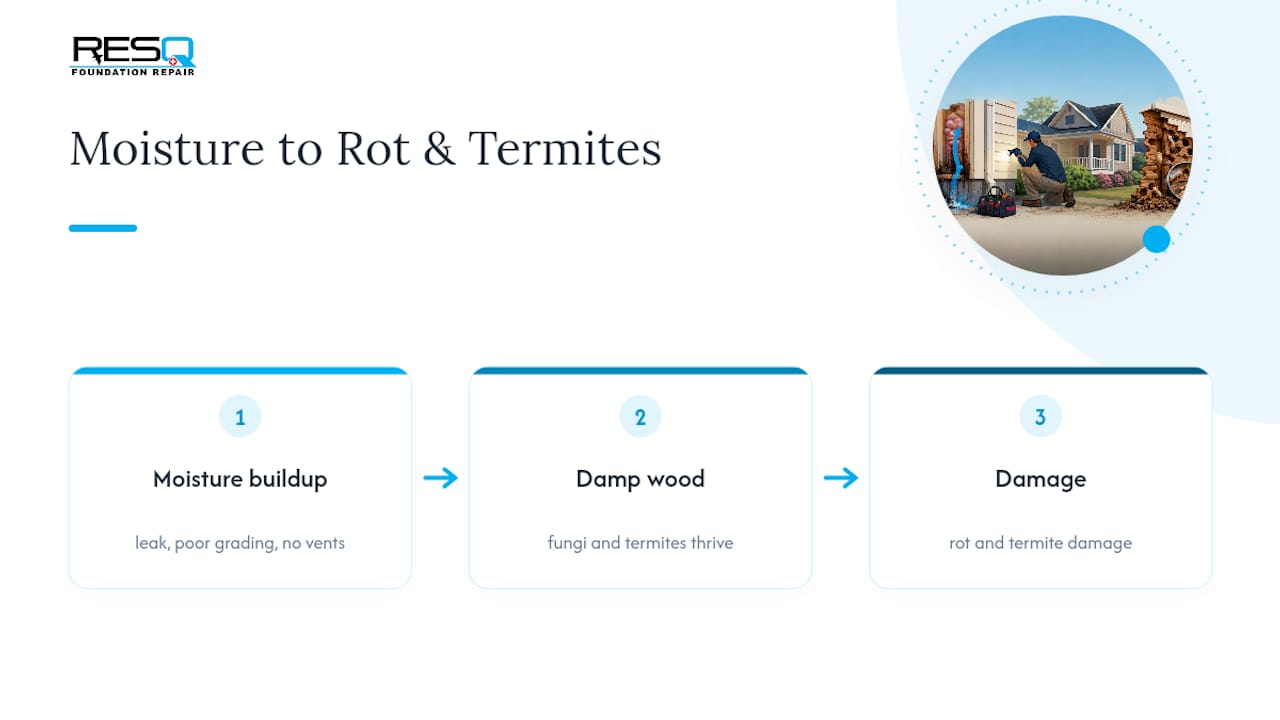
Termites and rot get treated as separate problems, but they usually trace back to the same source: water that has nowhere to go. Foundation RESQ’s crawl space waterproofing and dehumidification work exists because drying out a crawl space or basement removes the condition both fungi and foraging termites depend on.
Cosmetic wood replacement without fixing the moisture source is a short-term patch. A joist that got soft once will get soft again if the leak, poor grading, or dead ventilation that caused it never got addressed. Structural stabilization has to come after, or alongside, moisture correction, not instead of it.
— Kayle
Get a Moisture and Structural Inspection Before Small Damage Spreads
If you’ve found soft, musty wood but no mud tubes or live insects, you’re likely looking at a moisture problem, not a pest infestation, and that’s exactly the kind of damage Foundation RESQ handles daily across crawl spaces, basements, and foundations.

Foundation RESQ inspects for the moisture sources behind rot and offers crawl space repair, basement waterproofing, and wood rot repair once a leak or drainage issue has been identified and corrected. If your inspection turns up mud tubes, frass, or live termites, get a licensed pest control company on-site first. Structural and moisture repair work goes further once the insect threat is cleared. For homeowners ready to find out what’s driving damage in a crawl space or basement, Foundation RESQ’s services page covers inspection options and next steps, including financing for larger repair projects.
Sources
- USDA Forest Products Laboratory — decay and wood moisture resources
- Biodeterioration of Wood (USDA Forest Products Laboratory, FPL GTR-282, chapter 14)
- InterNACHI — Wood decay overview and inspection tests
- Review on wood decay, moisture relations and fungal mechanisms (PMC article)
FAQ
How can I tell if my wood has termite damage or rot?
Check for mud tubes, frass, or discarded wings, which point to termites, versus a musty smell and soft, crumbly texture with no tubes, which points to rot. The screwdriver probe test is the fastest way to confirm which one you’re dealing with on the spot.
What can be mistaken for termite damage?
Water-stained or rotted wood is the most common mix-up, since both can leave wood weakened and discolored near trim, sill plates, or subfloors. Carpenter ants and wood-boring beetles can also leave galleries that look similar without an untrained eye spotting the difference.
Can you show me pictures of termite damage and wood rot?
Photographing your own damage with a scale reference, like a coin or tape measure, next to the affected area gives a pest control professional or contractor exactly what they need to make a remote assessment before a site visit.
How long does it take termites to cause significant damage?
It varies widely based on colony size and how long the infestation goes unnoticed, since termites often work inside wood for months or years before visible signs appear. That’s why catching mud tubes or frass early, and calling a pest control professional promptly, matters more than the exact timeline.