
A dry crawl space can help limit conditions that allow mold to grow. Encapsulation uses a vapor barrier and seals openings to reduce moisture entering from the ground and humid outdoor air. This can reduce a source of mold spores that may aggravate allergy or asthma symptoms.
It’s understandable to focus on what you can see indoors, especially when symptoms flare or musty odors linger. But moisture below the home can affect indoor air: mold and other contaminants from a crawl space may move into living areas through air pathways connected to the house.
This guide explains the potential crawl space encapsulation benefits for allergies, what the barrier and sealing do, and how moisture control can discourage mold without treating allergies themselves. You’ll also learn what an encapsulation system can include, when dehumidification may help, and why controlling dampness at its source matters. The goal is to clarify how a drier crawl space may support better indoor air quality, along with the limits of encapsulation.
Key Takeaways
- Encapsulation creates a barrier between the crawl space and outdoor or ground moisture, while sealing openings can help limit unwanted air and particles.
- The U.S. Environmental Protection Agency says keeping humidity in attic and crawl-space areas below 50 percent can prevent condensation on building materials.
- Reducing dampness can help discourage mold growth, a potential source of airborne spores that may aggravate allergy or asthma symptoms.
- Look beyond indoor symptoms: signs of moisture or mold in the crawl space can point to an underlying condition that needs attention.
What is Crawl Space Encapsulation?
Crawl space encapsulation creates a barrier between the ground, outdoor air, and the space beneath a home. It can include a floor-and-wall liner, sealed openings, and moisture-control measures. Understanding crawl space encapsulation benefits for allergies starts with how these barriers limit moisture and air movement.
Barriers Against Airborne Particles
A sealed crawl space can reduce pathways for outdoor particles, including pollen and dust, to enter the home. A vapor barrier covers exposed ground, while sealing gaps and openings helps limit unfiltered air movement. These steps may also reduce routes for dust mites and other allergens associated with damp materials. They don’t remove particles already inside, but they address one possible entry point below living areas.
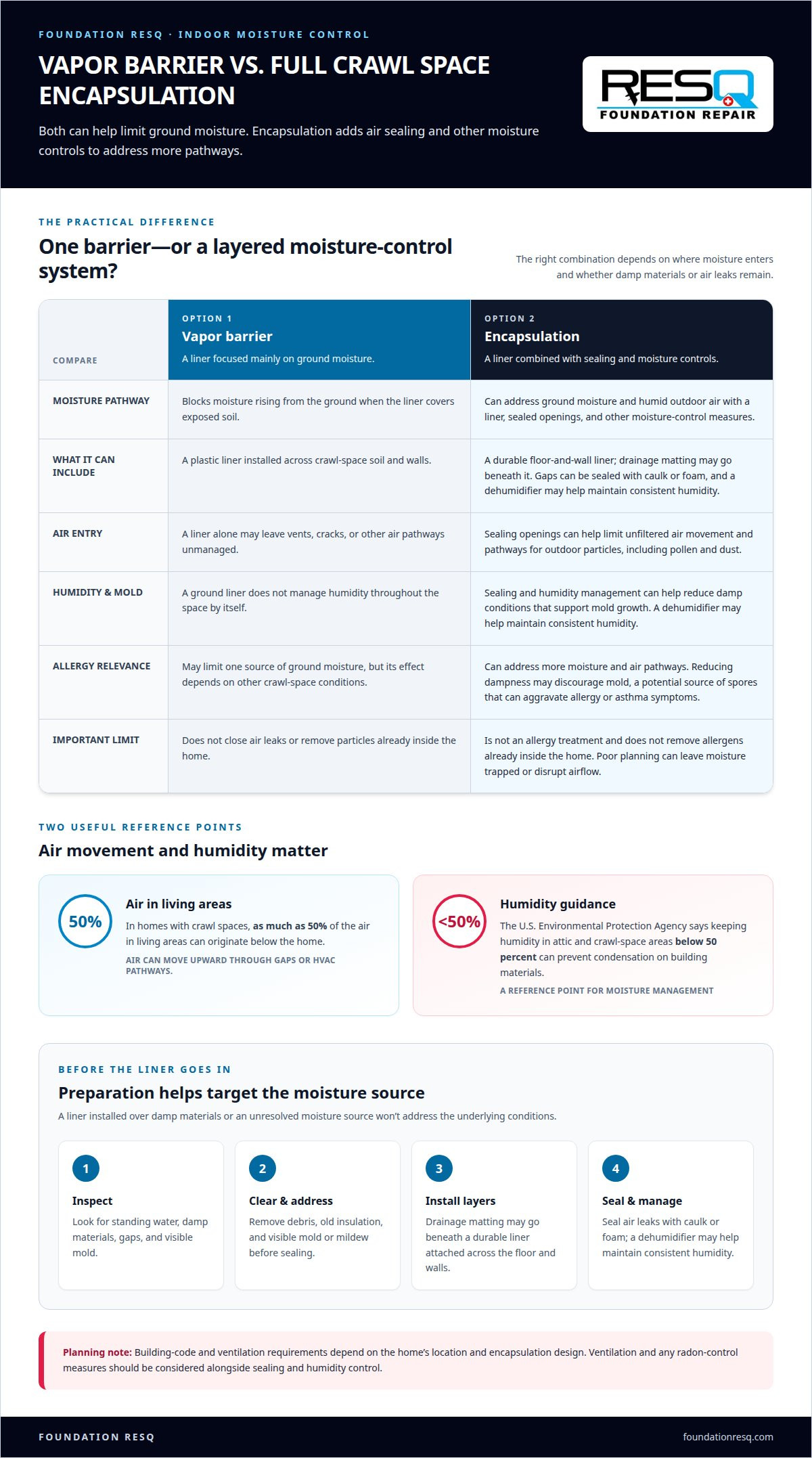
In homes with crawl spaces, as much as 50% of the air in living areas can originate below. The stack effect helps explain this movement: warm indoor air rises and escapes through the attic, drawing cooler crawl-space air upward. Air can also move through gaps or HVAC pathways, carrying particles into rooms. These crawl space encapsulation benefits for allergies depend on limiting those pathways and addressing moisture sources.
Building-code and ventilation requirements depend on the home’s location and encapsulation design. Because sealing vents changes airflow, ventilation and any radon-control measures should be considered together.
Research links dampness and mold with indoor-air concerns. The World Health Organization states that sufficient epidemiological evidence links occupancy in damp or moldy buildings with increased respiratory symptoms and infections, and worsening asthma. Moisture control can address a potential source, but encapsulation is not an allergy treatment.
Preparation and Encapsulation Steps
Preparation starts with inspecting the crawl space and addressing debris, old insulation, and visible mold or mildew before sealing. A liner installed over damp materials or an unresolved moisture source won’t address the underlying conditions. The process can include clearing the area, laying drainage matting, attaching a durable liner across the floor and walls, and sealing air leaks with caulk or foam. A dehumidifier may help maintain consistent humidity.
An inspection should identify standing water, damp materials, gaps, and visible mold before work begins. Those findings guide preparation and show where the liner and air seals need to meet. Removing debris, old insulation, and visible mold or mildew creates a clearer surface for the barrier. Addressing these conditions first helps the system target moisture entry rather than cover existing problems.
Moisture control with vapor barriers and sealing
A vapor barrier and sealed air leaks address different moisture pathways. Together, they help reduce the damp conditions that can support mold growth beneath a home.
Vapor Barriers and Encapsulation Materials
A vapor barrier is a plastic liner installed across crawl-space soil and walls to block ground moisture. During encapsulation, drainage matting may go beneath a durable liner attached to the floor and walls. Caulk or foam seals gaps where outside air could enter. These layers matter because a ground liner alone doesn’t close air leaks or manage humidity throughout the space.
Traditional vents can draw humid outdoor air into a crawl space during summer. That moisture may condense on insulation, pipes, and other materials. Sealing openings and controlling humidity address this pathway, while a dehumidifier can help maintain consistent humidity. The right combination depends on where moisture enters and whether damp materials or air leaks remain.
Encapsulation Compared With a Vapor Barrier
A vapor barrier mainly blocks moisture rising from the ground; encapsulation combines a liner with sealed gaps and other moisture controls. For allergens, the broader system can address more pathways by limiting dampness and outside air entry. A liner alone may leave vents, cracks, or humid air unmanaged, so its effect depends on the crawl space’s other conditions.
Keeping humidity in attic and crawl-space areas below 50 percent can prevent condensation on building materials, according to the U.S. Environmental Protection Agency. The World Health Organization notes that excess moisture on indoor materials can promote microbial growth and release spores and other contaminants into indoor air.
Applicable building-code and ventilation requirements depend on the home’s location and the system design. Ventilation needs should be considered alongside sealing, humidity control, and any radon-mitigation measures.
Yes. Poor planning can leave moisture trapped or disrupt airflow. For example, sealing vents without addressing moisture entry or humidity control can leave damp conditions in the crawl space.
Encapsulation generally provides broader moisture and air control than a vapor barrier alone, but it doesn’t remove allergens already inside the home. A well-planned system pairs the liner with sealed gaps and suitable humidity management.
Mold spores and allergy or asthma symptoms
Yes. Crawl-space moisture can support mold growth, and airborne spores can aggravate allergies or asthma. Dust mites are a separate potential allergen.
Moisture control addresses one possible source of indoor triggers, but it doesn’t establish the cause of a person’s symptoms.
Mold Spores and Allergy Symptoms
Mold can grow on damp crawl-space materials and release spores into the air. If those spores reach living areas, they can contribute to allergic reactions and respiratory irritation. The World Health Organization reports sufficient epidemiological evidence linking occupancy in damp or moldy buildings with increased respiratory symptoms and infections. Visible growth, persistent dampness, or musty odors are useful clues to investigate.
Exposure doesn’t affect everyone in the same way. For example, a musty smell near a floor register can prompt a closer look at moisture below, especially if indoor symptoms occur in the same area.
Asthma Trigger Reduction
Dampness and mold can worsen asthma, so reducing crawl-space moisture can address one potential trigger. Spores or other contaminants can move from below the home into occupied rooms through air pathways. Limiting conditions that support mold helps reduce this potential source, but does not treat asthma or replace medical care.
Look for patterns, not a diagnosis: recurring musty odors, visible growth, or damp materials point to a building condition worth addressing. Moisture control can reduce the risk of mold growth, but asthma symptoms can have other triggers inside and outside the home.
Moisture-Related Mold and Allergens
Persistent dampness can support mold on crawl-space materials, while mold spores can enter indoor air. Dust mites are another possible allergen, but dampness alone doesn’t prove they are present or causing symptoms. Different triggers can overlap, so identifying the moisture source helps clarify which building conditions need attention.
For example, wet insulation and mold on nearby wood indicate conditions that can sustain mold growth. Addressing the dampness helps limit that source of spores. It won’t remove allergens already in living areas, so consider the crawl-space condition separately from indoor symptoms.
How encapsulation limits crawl-space moisture and mold
Encapsulation targets conditions that let mold establish itself: ground moisture, humid air, and damp building materials. A continuous liner separates exposed soil from crawl-space air, while sealed gaps reduce humid outdoor air entering through vents or cracks. This matters in summer, when warm, moist air can condense on cooler pipes, insulation, or wood.
Moisture control works as a system, not as a sheet of plastic alone. Sealing air leaks limits new humid air, and a crawl-space dehumidifier can help maintain consistent humidity. Insulation may be added to walls or floors to reduce temperature swings and condensation. Each measure addresses a different condition, so the moisture source and crawl-space layout guide the approach.
Water that continues entering from another source can undermine these measures. For example, standing water or persistently wet materials can keep the space damp even with a liner in place. Encapsulation also doesn’t remove mold spores already circulating indoors, prevent every possible mold source, or treat allergies and asthma. Its role is to reduce crawl-space conditions that can support mold growth.
Maintenance helps reveal problems before dampness persists. Inspect the liner for tears, loose seams, and gaps around pipes or supports. Look for standing water, damp insulation, musty odors, or visible growth on wood. If the system includes a dehumidifier, check that it runs and that its drainage remains clear. These observations can reveal changes that need attention.
Keep the surrounding conditions in view, too. For example, a new water stain or recurring puddle may point to moisture entering despite the barrier. Addressing the source, repairing damaged seals, and controlling humidity support the system’s purpose: limiting damp conditions that encourage mold and other contaminants.
If crawl-space moisture or mold persists, explore crawl-space moisture-control options suited to the underlying conditions.
Foundation ResQ: Foundation repair
Foundation ResQ helps homeowners address crawl-space moisture, foundation concerns, and mold with crawl space encapsulation, foundation repair, and mold remediation. These services may be relevant when moisture issues coincide with visible mold, or when cracks, shifting, and uneven floors point to a structural concern. Helical and push piers address foundation stabilization needs, while mold remediation focuses on existing mold conditions.
Encapsulation can help control moisture in a crawl space, but it does not correct every source of water or resolve foundation movement. Connecting the visible signs to the underlying building condition helps determine the appropriate next step. Foundation ResQ can help assess foundation or mold concerns and identify a suitable service.
Contact Foundation ResQ to discuss foundation repair or mold concerns in your home.
Take the Next Step Toward a Drier Crawl Space
Use what you’ve noticed at home to guide the next conversation. A musty odor, damp materials, or recurring moisture can help identify concerns worth investigating below the living areas. The potential crawl space encapsulation benefits for allergies come from controlling moisture and reducing conditions that support mold, not from treating allergy symptoms directly.
Even a well-planned encapsulation system can’t ensure allergy relief, since symptoms may have other causes. The practical next step is to discuss the crawl-space conditions you’ve observed and whether encapsulation fits the home’s moisture-control needs.
Foundation ResQ provides crawl space encapsulation for homeowners addressing moisture concerns beneath their homes. Contact Foundation ResQ to discuss encapsulation and take a measured step toward protecting your home.
Frequently Asked Questions
How can crawl space encapsulation reduce indoor allergens?
Encapsulation can reduce potential indoor allergen pathways by limiting damp, particle-laden crawl-space air reaching living areas. For example, sealing gaps around pipes can reduce air movement from below, while moisture control can make conditions less favorable for mold. In a Tallahassee home, persistent musty odors or damp materials are practical signs to investigate. Encapsulation addresses a potential source, but it doesn’t remove allergens already indoors.