Why Homeowners Turn to Concrete Slab Jacking for Sunken Slabs
Concrete slab jacking is a repair technique that lifts and levels sunken concrete by injecting material underneath it. This process fills voids, restores support, and raises the slab back to its original position, eliminating trip hazards and improving drainage without costly replacement.
Quick Overview:
- What it is: Injecting grout or polyurethane foam beneath a sunken slab to lift it.
- Common uses: Driveways, sidewalks, patios, garage floors, pool decks.
- Cost: Typically less than half the price of replacement ($800-$8,000).
- Time: Most projects are completed in hours, not days.
- Other names: Mudjacking, concrete leveling, slab lifting, polyjacking.
If your driveway has sunk, your sidewalk has become a trip hazard, or your patio slopes toward your home, you’re likely dealing with soil settlement. This is more than an eyesore—it’s a safety risk that can reduce your home’s value.
The good news is you probably don’t need to rip out and replace the slab. Concrete slab jacking offers a faster, cleaner, and more affordable solution that addresses the root cause while preserving your existing concrete.
This guide draws on years of experience helping foundation repair companies explain complex solutions like concrete slab jacking to homeowners. We’ll cover what causes concrete to sink and the most effective repair methods available today.
What Causes Concrete Slabs to Sink?
Understanding why concrete sinks is the first step to fixing it. Surprisingly, the concrete itself is usually fine. The problem lies with the ground underneath.
Concrete is strong, but it can’t stay level if the soil beneath it shifts, erodes, or compacts. When that support disappears, gravity takes over, and your once-level slab starts to settle. In Alabama, Florida, and Georgia, we see a few common culprits.
Soil erosion is a major offender. Heavy rainfall can wash away soil from under your slabs, especially with poor drainage. This creates voids, and the unsupported concrete eventually cracks and sinks.
Poor soil compaction, often an issue with new construction, is another cause. If the fill dirt under a slab isn’t packed tightly, it will gradually compress under the concrete’s weight, causing it to sink over time.
The clay soils common in our region present a unique challenge. They swell when wet and shrink dramatically when dry. During a drought, shrinking clay can pull away from the slab, leaving gaps that the concrete settles into.
Water damage from plumbing leaks or poor drainage can saturate the soil, turning it soft and unstable. Waterlogged soil simply can’t support the weight of the concrete above it.
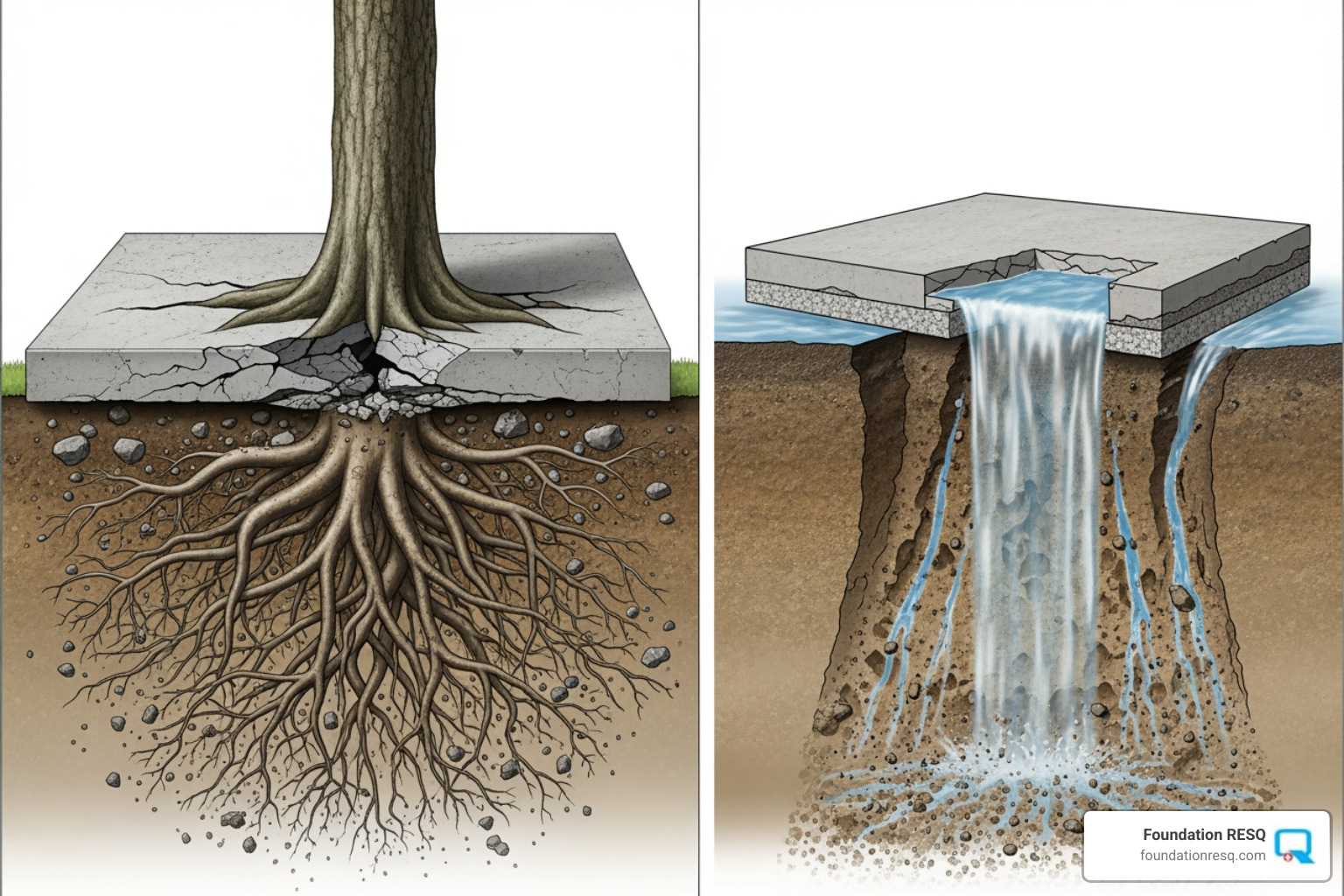
Tree roots can both lift and sink concrete. Growing roots can push slabs up, while decaying roots leave behind voids that cause slabs to settle.
While less common in our warm climate, freeze-thaw cycles can destabilize the ground. Water in the soil expands when it freezes and contracts when it thaws, gradually weakening the support.
Finally, heavy loads on the concrete, especially when the soil is already compromised, can accelerate the sinking process.
It’s important to know that The American Disabilities Act of 1990 defines a “trip hazard” as any vertical change over ¼” or more. This means even minor settling can create a legal liability on your property.
Fortunately, concrete slab jacking addresses these issues by not only lifting the concrete but also filling the voids to provide solid, lasting support.
How Does Concrete Slab Jacking Work?
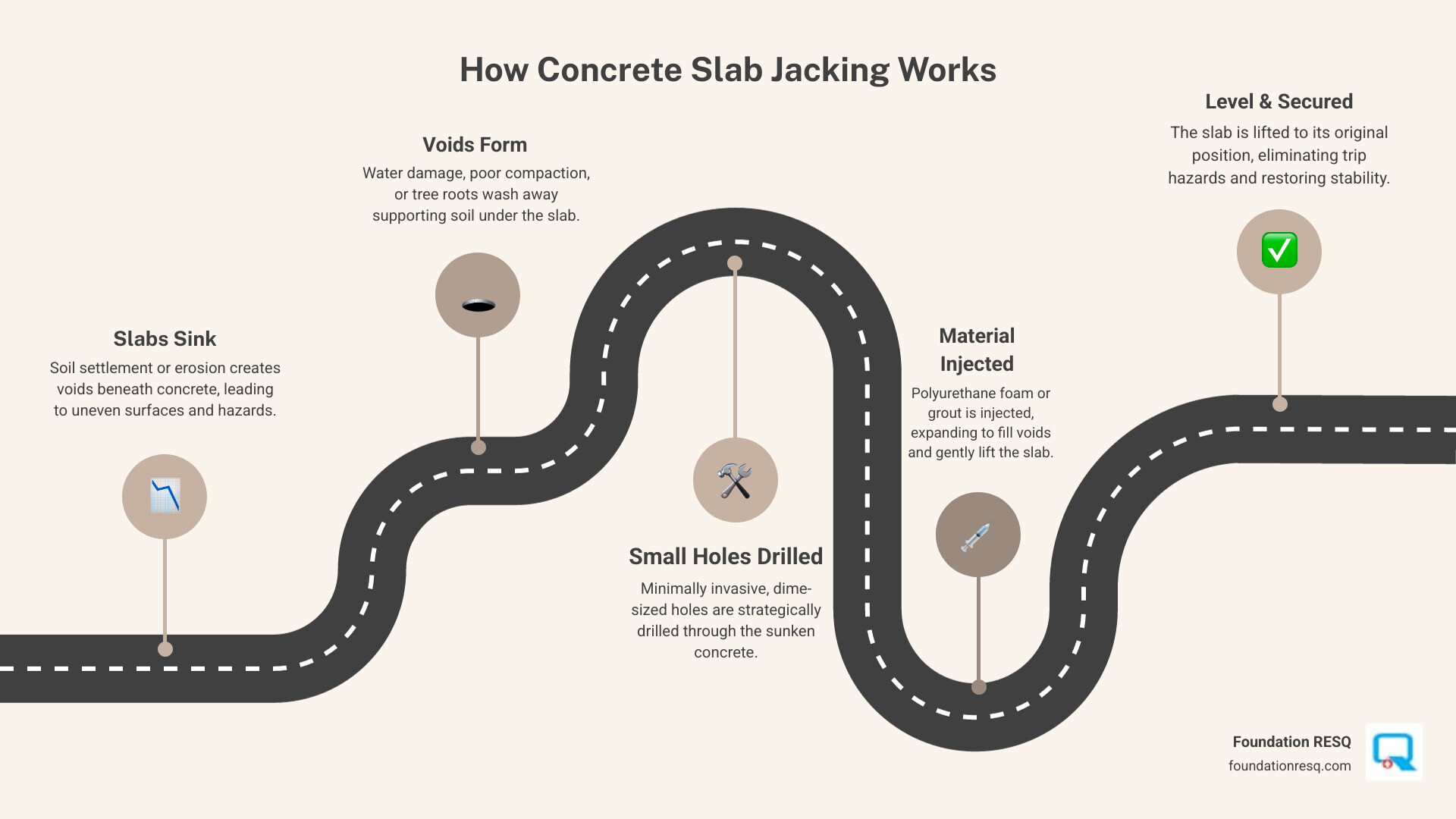
At Foundation RESQ, we use the most effective and minimally invasive techniques to lift and level your concrete. Our preferred method is polyurethane foam injection, also known as poly-jacking. This modern approach offers superior advantages over older methods.
The Polyurethane Foam Injection Process
Here’s how we get your sunken concrete back where it belongs:
-
Drill Small Holes: Our team drills small, dime-sized holes (about 5/8-inch) through the sunken slab. These are strategically placed for an even lift and are barely noticeable afterward.
-
Inject Foam: We inject a high-density, two-part polyurethane foam through the holes using specialized equipment. This engineered polymer is designed for structural lifting.
-
Expand and Lift: The two parts of the foam mix and expand rapidly, filling voids and compacting loose soil underneath. This powerful but controlled expansion gently lifts the slab back to its original position.
-
Cure and Finish: The foam hardens and reaches maximum strength within about 15 minutes, meaning you can use the repaired area almost immediately. We then patch the small drill holes.
The science behind it is solid. Technical data on polymer foams confirms the advanced structural properties of these materials, making them an ideal solution for concrete leveling.
Why We Choose Polyurethane Foam
Foundation RESQ uses polyurethane foam for our concrete slab jacking services in Alabama, Florida, and Georgia because it delivers the best results for our customers:
- Precision Lifting: The controlled expansion allows us to raise the slab to the exact level needed, preventing over-lifting.
- Long-Lasting Results: The foam is waterproof, resists erosion, and won’t break down. It provides a stable, permanent base that can last the lifetime of the concrete.
- Minimal Disruption: The small injection holes and quick curing time mean less mess, less noise, and no damage to your landscaping. The area is ready for use almost immediately.
- Lightweight Strength: Polyurethane is incredibly light, so it doesn’t add significant weight to already weak soil. Despite this, it provides immense compressive strength (up to 6,000 lbs per square foot).
- Environmentally Responsible: The foam is inert and safe for the environment once cured. By salvaging your existing slab, we also reduce landfill waste.
- Versatility: This method works on driveways, garage floors, sidewalks, patios, pool decks, and even interior slabs.
For more information on how we can help, visit our Concrete Leveling Services page.
Slab Jacking vs. Concrete Replacement
When facing a sunken concrete slab, homeowners have two main options: concrete slab jacking to lift the existing slab or a complete replacement. While replacement seems straightforward, slab jacking is often the smarter, quicker, and more effective solution.
Here’s a closer look at how the two approaches compare:
| Feature | Concrete Slab Jacking | Concrete Replacement |
|---|---|---|
| Cost | Up to 50% less than replacement | Significantly higher (demolition, removal, new materials, labor) |
| Time | Hours to complete, immediate use | Days to weeks (demolition, pouring, 28-day curing time before full use) |
| Disruption | Minimal noise, small holes, no landscape damage | Loud demolition, heavy equipment, large debris, landscape disturbance |
| Longevity | Permanent stabilization, can last the life of the slab | Depends on new base preparation; new slab can sink again if root causes aren’t addressed |
| Aesthetics | Preserves existing concrete, seamless look | New concrete may not match existing adjacent slabs (color, texture) |
| Environmental | Reduces landfill waste, no new material production | Generates significant waste, requires new concrete production |
| Structural | Fills voids, compacts soil, provides stable base | Only as good as the new base; underlying soil issues may persist |
Why Slab Jacking Often Wins
Let’s dive deeper into why concrete slab jacking is frequently the superior choice.
Cost and Time Savings
Slab jacking is a clear winner for your wallet and schedule. It typically costs less than half the price of replacement and is completed in just a few hours. The area is ready for use almost immediately, compared to the weeks of curing time required for new concrete.
Longevity and Structural Support
Slab jacking provides a long-lasting solution by addressing the root cause. Injecting polyurethane foam fills voids and stabilizes the soil, creating a solid base that prevents future settlement. Replacement is only as good as the new base preparation, and the slab can sink again if underlying soil issues aren’t fixed.
Minimal Disruption and Better Aesthetics
Our process is quiet and clean, using small drill holes and avoiding heavy machinery that can damage your landscaping. Best of all, we preserve your original slab, so you don’t have to worry about mismatched concrete patches on your property.
Environmental Impact
Choosing slab jacking is also a greener option. By repairing your existing concrete, we prevent tons of waste from ending up in landfills and reduce the carbon footprint associated with producing new concrete.
Is DIY Concrete Slab Jacking a Good Idea?
While the DIY spirit is great for many home projects, concrete slab jacking is a job best left to professionals. Attempting to lift heavy concrete slabs yourself can quickly lead to bigger, more expensive problems.
Here’s why DIY slab jacking is risky:
-
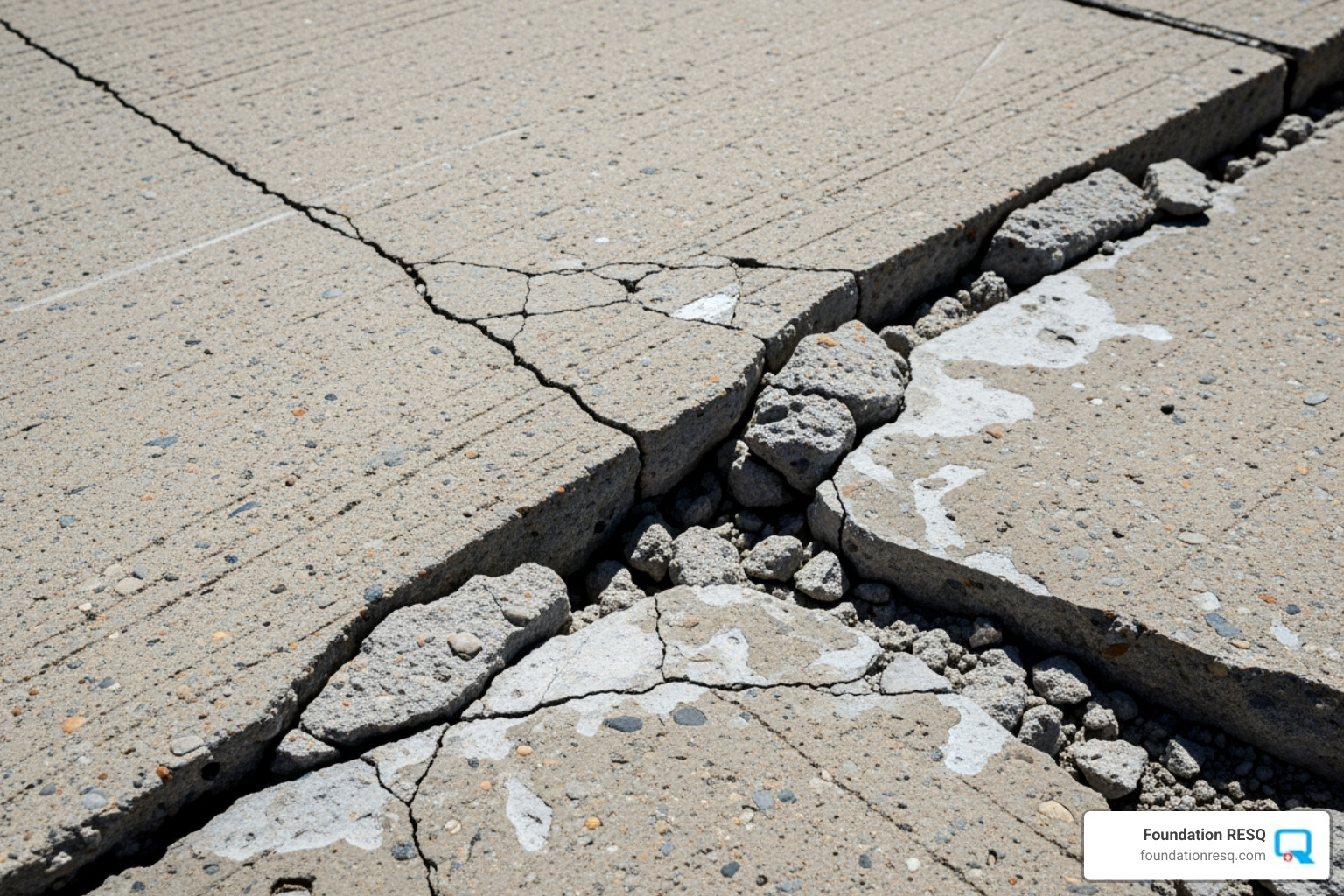
Potential for More Damage: It’s easy to over-lift a slab, causing it to crack, break, or become even more uneven. A simple repair can turn into a full replacement.
-
Specialized Equipment and Materials: Professional poly-jacking requires high-pressure pumps, precision injection guns, and engineered two-part polymer foam. These are not available at a typical hardware or rental store, and consumer-grade products like canned spray foam are completely ineffective and unsafe for this purpose.
-
Lack of Professional Expertise: Our technicians have years of training. They understand soil behavior and how to control the lifting process with precision. This knowledge can’t be learned from an online video and is crucial for a stable, lasting repair.
-
Safety Concerns: Working with high-pressure equipment and heavy concrete slabs carries significant risks of injury. Professionals follow strict safety protocols.
-
Cost and Ineffectiveness: When you factor in equipment rental, material costs, and the risk of mistakes, a DIY attempt can cost as much as hiring a pro. Worse, DIY repairs often fail, meaning you’ll have to pay to fix the problem again.
For these reasons, we strongly recommend letting experts handle your concrete slab jacking needs. Foundation RESQ has the tools, materials, and expertise to do the job safely and effectively, with results that last.
Frequently Asked Questions about Concrete Slab Jacking
Homeowners in Alabama, Florida, and Georgia often have questions about concrete slab jacking. Here are answers to some of the most common ones.
When is concrete slab jacking the right solution?
Slab jacking is ideal when your concrete slab is structurally sound but has sunk or become uneven. It works best on slabs with only minor cracks. If the concrete is crumbling or broken into many small pieces, replacement is likely the better option.
Concrete slab jacking is perfect for:
- Driveways
- Patios and Sidewalks
- Pool Decks
- Garage Floors
- Interior Slabs
However, slab jacking is not the right solution for:
- Severely Damaged Concrete: If the slab is crumbling or shattered, it cannot be lifted effectively.
- Foundation Settlement: Slab jacking lifts slabs-on-ground (like patios or driveways), not a home’s entire settling foundation. That requires different repair methods like underpinning, which Foundation RESQ also specializes in. Our free inspection will determine the correct solution for your home.
What is the typical cost of concrete slab jacking?
The cost varies based on the project size, the depth of the voids, and accessibility. However, concrete slab jacking is almost always more economical than replacement.
Generally, costs range from $800 for a small job to $8,000 for a large project. This is typically less than half the price of full concrete replacement, saving many homeowners thousands of dollars.
We offer free inspections to provide a detailed, no-obligation estimate custom to your specific needs.
How long do slab jacking repairs last?
When done professionally with high-quality materials, a concrete slab jacking repair can last for the lifetime of the concrete slab itself.
The longevity of the repair depends on a few factors:
- Quality of Work: Professional installation is key to ensuring voids are filled and the soil is properly stabilized.
- Material Durability: The polyurethane foam we use is waterproof, inert, and resistant to erosion, creating a permanent base.
- Addressing Root Causes: The repair will last longer if underlying issues, like poor drainage or plumbing leaks, are also resolved. Our inspectors help identify these problems.
With our advanced techniques, you can be confident that your repaired concrete will remain stable and level for many years to come.
Your Expert Solution for Sunken Concrete
We’ve seen why concrete sinks and how concrete slab jacking with polyurethane foam is a smarter choice than messy, expensive replacement. At Foundation RESQ, we provide homeowners in Alabama, Florida, and Georgia with advanced, lasting solutions for their sunken concrete.
Sunken concrete is more than an eyesore; it’s a safety hazard. Our polyurethane foam injection method is designed to solve this problem effectively and efficiently.
When you choose Foundation RESQ, you’re choosing a repair that is:
- Cost-Effective: Save up to 50% compared to the cost of replacement.
- Fast and Convenient: Most projects are finished in hours, and the area is ready for immediate use.
- Minimally Invasive: We use small drill holes and avoid damage to your landscaping.
- Long-Lasting: Our foam creates a permanent, stable base to support your concrete for its entire lifespan.
Our experienced technicians provide expertise you can trust, ensuring every job is done with precision and care. Don’t let uneven slabs detract from your home’s safety and value.
Ready to restore your concrete? Schedule your free inspection with our concrete leveling experts today! Let us provide an affordable, lasting solution for your home.