
Introduction
Water in a crawl space doesnt stay putit spreads, fuels mold, weakens wood, and seeps into the air we breathe. Across Alabama, Florida, and Georgiafrom Tallahassee, Jacksonville, and Pensacola to Columbus, Macon, and Dothanwe see the same pattern: standing water and high humidity lead to structural damage, musty odors, rising energy bills, and poor indoor air quality.
We wrote this guide to answer the big question: Is a crawl space drainage system a bad idea? The short answer is noits one of the smartest investments we can make to protect homes in our climate. Below, we explain why water invades crawl spaces, how modern drainage systems work, the components that matter, and how we tailor solutions to local soils, codes, and weather. We also cover installation, maintenance, costs, and the long-term benefits of pairing drainage with encapsulation and dehumidificationso you can make a confident, informed decision for your home.
Understanding the Enemy: Why Water Invades Your Crawl Space
Water doesn’t respect property lines or home values. It flows wherever gravity and opportunity take it—and unfortunately, that’s often straight into your crawl space.
Understanding why water keeps showing up uninvited is the first step to solving the problem for good. Let’s look at the most common culprits we see here in the Southeast.
High water tables are a fact of life in many parts of Alabama, Florida, and Georgia. When the soil beneath your home is naturally saturated, especially during our rainy seasons, groundwater can push up through the soil and into your crawl space. There’s nowhere else for it to go.
Poor exterior grading around your foundation is another frequent offender. Your yard should slope away from your house, directing rainwater to drain elsewhere. But over time, soil settles, landscaping changes, and suddenly water is flowing straight toward your foundation instead of away from it.
Then there are gutter and downspout issues. When gutters overflow or downspouts dump water right next to your foundation, you’re essentially pouring hundreds of gallons of water directly where you don’t want it. That water seeps down and finds its way inside.
Foundation cracks provide a direct entry point for water. Even small cracks in concrete or hollow block foundations can channel significant amounts of water into your crawl space during heavy rains. And in our region, heavy rains aren’t exactly rare.
Don’t forget about plumbing leaks. A dripping pipe or failed water line under your home can introduce gallons of water daily without you even realizing it until the damage is done.
The consequences of all this moisture go far beyond just standing water. We’re talking about wood rot that compromises your floor joists and structural supports. Pest infestations follow moisture like moths to a flame—termites, carpenter ants, and rodents all love damp environments.
Fungal growth and mold thrive in humid crawl spaces, releasing spores that travel up through your floors and into the air you breathe. This leads to musty odors that permeate your entire home and can trigger or worsen allergies and asthma.
Your wallet takes a hit too. Damp crawl spaces lead to increased energy bills because moisture makes your HVAC system work harder to maintain comfortable temperatures. Cold, damp air rises into your living space, forcing your heating and cooling system into overdrive.
Over time, unchecked moisture causes serious structural problems—sagging floors, foundation settlement, and damage that only gets more expensive to fix the longer you wait.
A properly designed crawl space drainage system addresses these issues at their source, collecting and removing water before it can cause harm. More info about Crawl Space Repair Services.
Signs You Need a Drainage Solution
How do you know if your crawl space needs a drainage system? Your home will tell you—you just need to know what to look for.
The most obvious sign is visible water or puddles in your crawl space. If you peek down there and see standing water, wet soil, or even moss growing on the ground, you’ve got a moisture problem that needs immediate attention.
High humidity levels are harder to spot with the naked eye, but you can feel them. If your crawl space feels muggy or damp, or if you notice condensation on pipes, ductwork, or insulation, humidity is too high.
Look for efflorescence on foundation walls—those white, chalky deposits that appear when water moves through concrete or block walls. It’s a telltale sign that moisture is actively penetrating your foundation.
Damp or sagging insulation between your floor joists is another red flag. Fiberglass insulation acts like a sponge when exposed to moisture, becoming heavy and pulling away from the subfloor.
Inside your home, buckling hardwood floors or floors that feel unusually cold or uneven can indicate moisture problems below. You might also notice doors that stick or don’t close properly as your home’s structure shifts.
If your family experiences worsening allergies or respiratory issues that seem worse at home, the culprit might be mold spores and poor air quality originating in your crawl space. Up to 50% of the air in your home comes from your crawl space.
Strange musty odors that you can’t quite locate? They’re probably rising from below.
Take an honest assessment of your crawl space conditions. The sooner you address drainage issues, the less damage moisture can do—and the more money you’ll save in the long run.
Exploring Your Options: Types of Crawl Space Drainage
When it comes to keeping your crawl space dry, you have several drainage options to choose from. Modern crawl space drainage systems are designed to handle everything from minor seepage to serious standing water problems.
The most common approach is an interior perimeter drain system, which runs along the inside edge of your crawl space foundation. Think of it as a protective moat that intercepts water before it can pool on the floor. These systems use perforated pipe buried in a trench with drainage aggregate. As water seeps through foundation walls or rises from below, the pipe collects it and channels it to a collection point.
You might hear French drain used interchangeably. While similar, a French drain traditionally relies on a gravel-filled trench with perforated pipe and gravity to move watera time-tested solution.
Engineered drainage channels are the next evolution. Instead of round pipe and loose gravel, they use purpose-built channels with features that solve common failure points. Integrated filter fabric keeps sediment out while admitting water, and a wall flange captures water right where the wall meets the footinga frequent entry point. These systems are notably clog-resistant, maintaining capacity year after year.
Every interior drain needs a destination: the sump pump. Located at the lowest point, it lifts collected water out and safely away from your foundation. Without it, water would simply sit in the drain.
In our Alabama, Florida, and Georgia service areas, high water tables and coastal rains often call for robust systems, and some local codes require sump pumps during encapsulation. We design to meet or exceed local requirements and your propertys specific conditions. Professional installation commonly takes a day or less for typical crawl spaces.
For a complete moisture protection strategy, drainage systems work hand-in-hand with other waterproofing measures. More info about Crawl Space Waterproofing.
How Does a Crawl Space Drainage System Work?
Understanding the process highlights why these systems are so effective:
- Water collection at the perimeter: seepage through walls or from the soil is intercepted first.
- Gravity channeling: pipes and channels are set on a slight slope to move water toward the basin.
- Sump basin and pump: water gathers in the basin; the pump activates automatically as levels rise.
- Discharge line: water is routed well away from the foundation to prevent cycling back.
Comparing Perimeter Drain and Engineered Systems
| Feature | Traditional Perimeter Drain | Engineered Drainage System |
|---|---|---|
| Installation Method | Trench filled with gravel and perforated pipe | Specialized channels with integrated features |
| Materials | PVC pipe, gravel, landscape fabric | Engineered plastic channels, filter fabric, aggregate |
| Clog Resistance | Moderate; can clog with sediment over time | Excellent; designed to prevent clogs |
| Ideal Application | Standard drainage needs, stable soil conditions | High water tables, clay soils, long-term reliability |
| Cost Factor | Lower upfront material costs | Higher initial investment, lower maintenance costs |
Both can work well when properly designed. We help homeowners choose based on soil, water severity, and maintenance preferences.
Key Components of a Crawl Space Drainage System
An effective crawl space drainage system is more than just a trench; it’s a combination of key components working together. Each part plays a specific role in protecting your home from moisture.
The Drainage Trench and Piping
The system starts with a drainage trench excavated along the interior perimeter of your crawl space. This trench must be properly sloped toward the sump pump to let gravity do its work. Inside, we install perforated pipe surrounded by a specialized aggregate and wrapped in filter fabric. This design allows water to enter while keeping out soil and debris that could cause clogs. For hollow block foundations, we also create weep holes at the base of the wall to release trapped water into the system. Your soil type mattersheavy clay soils common in our region may require extra permeable backfill to ensure proper drainage.
The Sump Pump: The Heart of the System
The sump pump is the engine of your drainage system. It sits in a sump basin at the lowest point of your crawl space, collecting all the water from the drainage pipes. When the water level rises, the pump automatically kicks on and evacuates it away from your foundation.
Choosing the right pump size is critical to handle local rainfall. But what about power outages during a storm? That’s why we strongly recommend a battery backup system. A secondary, battery-powered pump provides peace of mind, ensuring your crawl space stays dry even when the power is out. Many systems also include a high water alarm to alert you of any potential pump issues before flooding occurs.
The Vapor Barrier: A Crucial Companion
A drainage system handles liquid water, but a vapor barrier is essential for controlling moisture evaporating from the soil. In our humid Southern climate, an exposed dirt floor constantly releases moisture into the air, fueling mold growth and musty odors.
A high-quality vapor barrier completely covers the crawl space floor and runs up the walls, with all seams taped shut. This seal prevents ground moisture from entering the crawl space air. When integrated with a drainage system, the vapor barrier helps direct any water intrusion into the drainage channels. This one-two punch of drainage and vapor barrier creates a dry, healthy environment where mold and rot can’t thrive. For the ultimate protection, consider our Crawl Space Encapsulation System.
Installation, Maintenance, and Long-Term Benefits
A properly installed and maintained drainage system offers decades of protection and numerous benefits for your home.
DIY vs. Professional Crawl Space Drainage System Installation
While the DIY spirit is admirable, installing a crawl space drainage system is a complex job best left to professionals. The work is labor-intensive, requires specialized tools like jackhammers, and demands technical knowledge of proper slope and system integration. The risks of improper installation are significant—a failed system can make moisture problems worse. Professional installation ensures the job is done right the first time, providing a reliable, long-term solution that protects your investment.
System Maintenance and Upkeep
Once installed, your system requires minimal but important upkeep. We recommend an annual inspection to ensure everything is working correctly.
- Test the sump pump by pouring water into the basin.
- Clean the discharge line exit point to prevent blockages.
- Check the battery backup system to ensure it’s charged and ready.
- Inspect the vapor barrier for any tears or loose seams.
This simple annual check-up ensures your system is ready to perform when you need it most.
Beyond Drainage: Creating a Healthy Crawl Space
A drainage system is the first step toward a healthy crawl space, but combining it with encapsulation and insulation multiplies the benefits. This comprehensive approach dramatically improves energy efficiency, as your HVAC system no longer has to fight excess humidity. This leads to lower energy bills and more comfortable indoor temperatures.
The impact on indoor air quality is profound. With a clean, dry crawl space, the air rising into your home is healthier, reducing musty odors and allergy symptoms. By keeping the wooden structures of your home dry, you also ensure its structural protection, preventing rot and preserving your property’s value. A dry, professionally waterproofed crawl space is a major selling point, demonstrating a well-cared-for home. For complete air moisture control, consider adding dehumidification.
Frequently Asked Questions about Crawl Space Drainage
We’ve answered some of the most common questions homeowners have about installing a crawl space drainage system.
How much does a crawl space drainage system cost?
There’s no single price tag, as the cost depends on several factors:
- Crawl space size: A larger area requires more materials and labor.
- System type: A basic perimeter drain costs less than an advanced engineered system with a battery backup pump.
- Accessibility: Tight or difficult-to-access crawl spaces can increase labor costs.
- Geographic location: Labor and material costs vary by region.
The best way to get an accurate price is with a professional assessment. Foundation RESQ offers free inspections to provide a clear quote based on your home’s specific needs.
How long does a crawl space drainage system last?
A professionally installed crawl space drainage system is a long-term solution. The drainage pipes and engineered components are highly durable and can last for decades. The sump pump, which has moving parts, typically has a lifespan of many years and is the component most likely to need eventual replacement. Regular annual maintenance is the key to longevity, ensuring all parts of the system remain in optimal condition.
Will a drainage system fix the musty smell in my house?
Yes, a drainage system is a critical part of the solution. It addresses the source of the problem by removing the standing water and excess moisture that cause mold, mildew, and musty odors. By keeping the crawl space dry, you eliminate the breeding ground for these smells.
For complete odor control, a drainage system works best when combined with other solutions. A crawl space dehumidifier will control air moisture, while a fully sealed vapor barrier from our Crawl Space Encapsulation System will block any remaining odors from entering your living space. Together, these create a truly fresh and healthy home environment.
A Dry Crawl Space is a Smart Investment
So, is a crawl space drainage system a bad idea? Absolutely not. It’s one of the smartest investments you can make in your home’s health, safety, and value.
A professional drainage system protects your home’s structural integrity, improves indoor air quality, keeps pests away, and can even lower your energy bills. It’s not just about fixing a problem—it’s about creating a healthier, more comfortable home and gaining peace of mind during heavy rains. A dry crawl space is also a major asset when it comes time to sell.
At Foundation RESQ, we understand that every home in the Tallahassee area and beyond has unique challenges. We don’t use one-size-fits-all solutions. Our process starts with a thorough, free inspection to assess your specific situation and recommend a custom solution for your needs and budget.
Don’t wait for minor moisture issues to become major structural problems. The longer water sits, the more damage it does. For a comprehensive assessment and a lasting solution, explore our foundation repair services or give us a call today. Your home will thank you.
Why a Crawl Space Drainage System Is Critical for Your Home
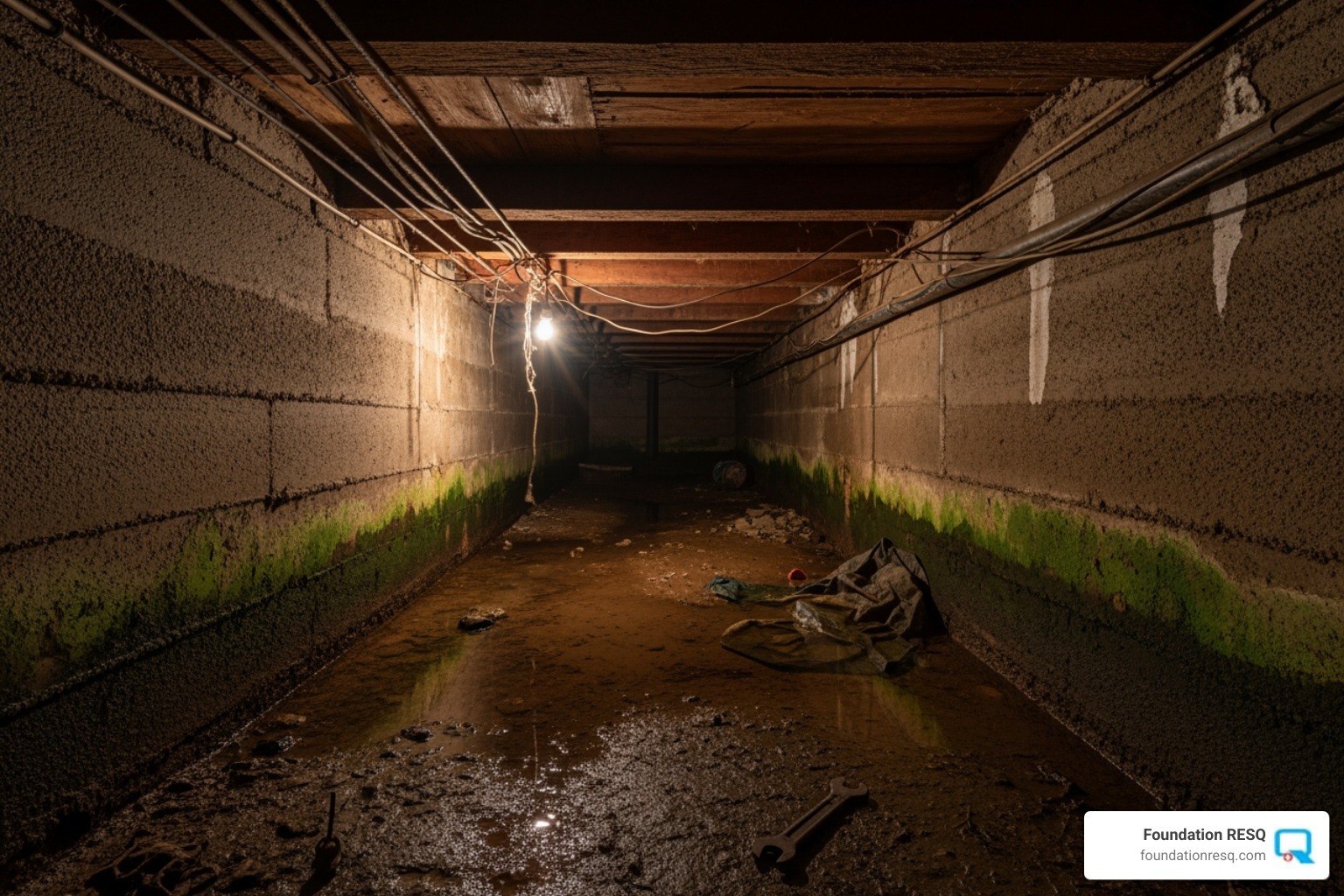
Let’s cut straight to the point: a crawl space drainage system is absolutely not a bad idea. For homeowners dealing with moisture, it’s one of the smartest investments you can make to protect your home and your family’s health.
If you’ve noticed standing water, dampness, or a musty smell, you’re facing a problem that won’t fix itself. Water in your crawl space is a direct threat to your home’s structural integrity and indoor air quality. Wet crawl spaces lead to serious problems with rot and mold that only get worse over time. Since crawl space moisture often goes unnoticed, significant damage can occur before it’s finded.
Here’s a surprising fact: up to 50% of the air in your home comes from your crawl space. When that space is damp and moldy, your family is breathing contaminated air. This makes crawl space health a top priority.
A crawl space drainage system collects water through perimeter drains, channels it to a sump pump, and discharges it safely away from your home. Professional installation is fast, often taking just a day or two, and provides around-the-clock protection. While costs vary, the expense is a fraction of what you’d pay to repair rotted joists, remediate mold, or fix foundation damage. Standing water breeds pests and wood-destroying fungi, and as it evaporates, it raises humidity, compromising your home’s structure and air. For comprehensive solutions, learn more about Crawl Space Repair Services.
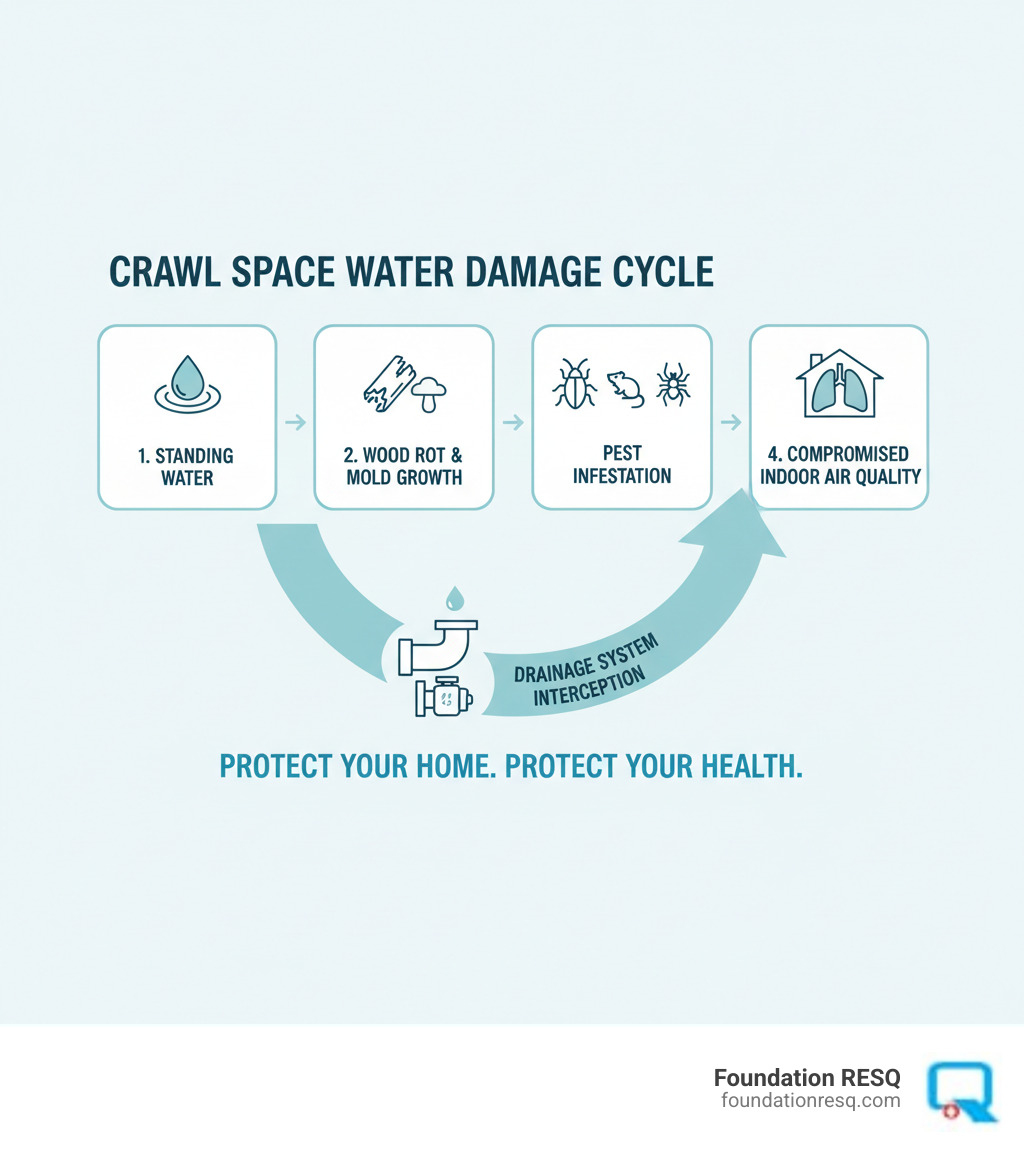
The bottom line is that a properly installed crawl space drainage system is essential for a healthy, structurally sound home. The real question isn’t if you should install one, but how soon you can start protecting your biggest investment.
Understanding the Enemy: Why Water Invades Your Crawl Space
In Alabama, Florida, and Georgia, high water tables, poor exterior grading, overflowing gutters/downspouts, small foundation cracks, and hidden plumbing leaks are the usual culprits. The results are serious: wood rot, mold growth, musty odors, pest pressure, uneven floors, and higher energy bills as your HVAC fights humid air. Since a large share of your homes air can originate from the crawl space, controlling moisture protects both structure and health. The U.S. Environmental Protection Agency (EPA) stresses that controlling moisture is the key to preventing mold.
If these problems sound familiar, its time to act. We design solutions for local conditions across Tallahassee, Gainesville, Jacksonville, Pensacola, Panama City, Ocala, Columbus, Macon, Valdosta, Dothan, Auburn/Opelika, Montgomery/Prattville, and nearby communities. Learn more about our approach with Crawl Space Repair Services.
Signs You Need a Drainage Solution
- Standing water or damp soil after rain
- Condensation on pipes or ductwork; high humidity
- Efflorescence (white, chalky deposits) on block or concrete walls
- Damp/sagging insulation or musty odors inside the home
Exploring Your Options: Types of Crawl Space Drainage
Choosing the right system starts with an interior drainage solution that captures water before it spreads. Interior perimeter drains collect seepage along the walls and route it to a sump pump, which discharges water well away from your foundation. In higher-risk areas of Florida and Georgia, sump pumps are often essential, and we ensure every installation meets or exceeds local code. Explore more options in our Crawl Space Waterproofing services.
How Does a Crawl Space Drainage System Work?
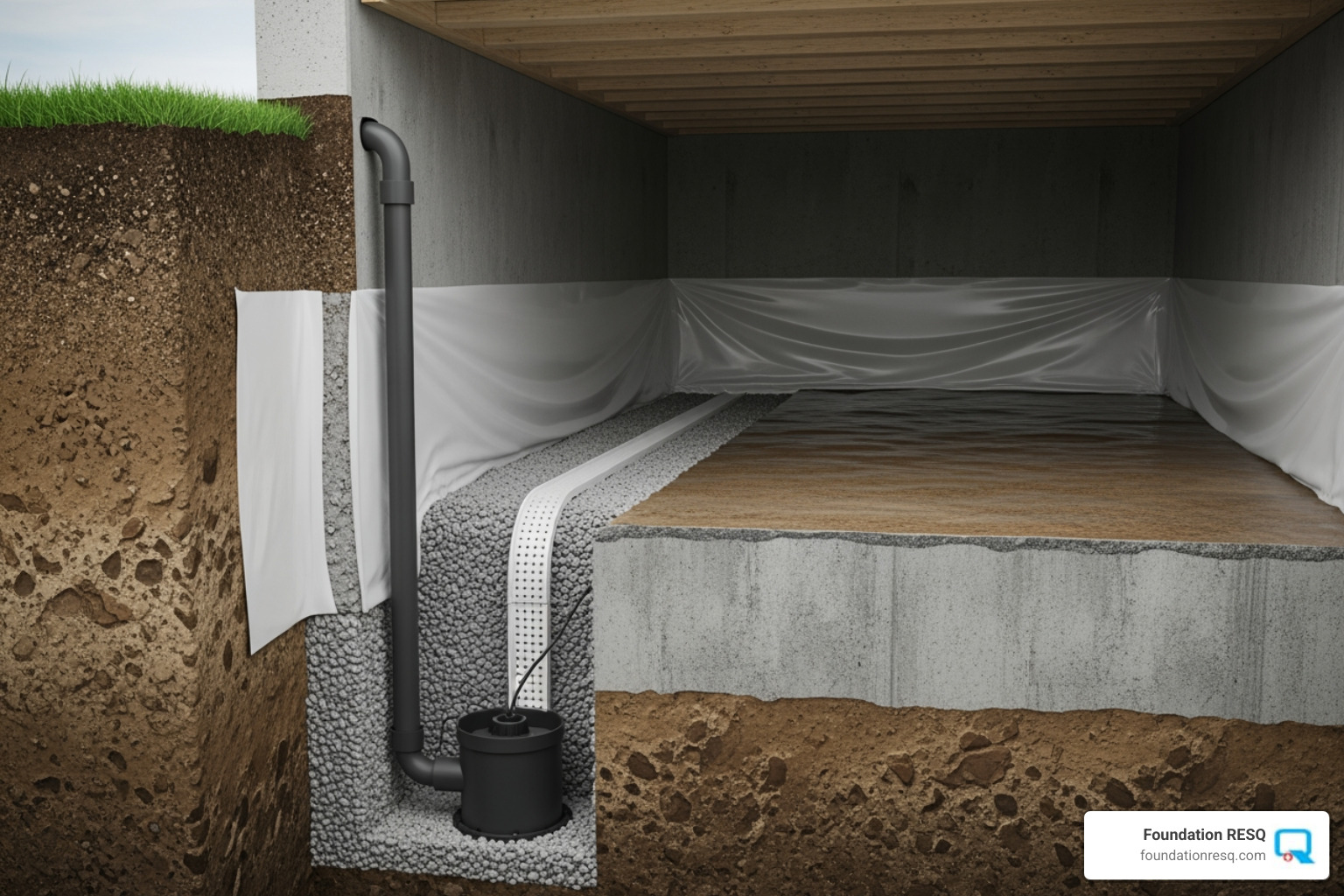
- Collect: A sloped perimeter drain intercepts water at the edges.
- Move: Gravity carries water to a sump basin.
- Pump: The sump pump activates automatically and expels water.
- Discharge: Water exits 10-20 feet (or more) from the foundation to avoid recirculation.
Comparing Perimeter Drain and Engineered Systems
| Feature | Traditional French Drain / Perimeter Drain | Engineered Drainage System |
|---|---|---|
| Installation Method | Trench dug around perimeter, perforated pipe laid in gravel bed, covered with filter fabric | Trench dug around perimeter, specialized pipe with integrated features, often with geo-synthetic aggregate instead of gravel |
| Materials | Perforated PVC pipe, gravel or crushed stone, filter fabric | Engineered pipe with built-in features (wall flanges, specific hole patterns), filter fabric, specialized drainage aggregate |
| Clog Resistance | Moderate—can clog over time as soil and debris work through gravel | High—designed with holes on top/front only, filter fabric wrapping, and features to prevent sediment entry |
| Ideal Application | Moderate water intrusion, good soil drainage conditions, budget-conscious solutions | Heavy water intrusion, clay soils, areas requiring long-term reliability with minimal maintenance |
| Cost Factor | Generally lower initial cost due to simpler materials | Higher initial investment, but often lower long-term costs due to reduced maintenance and longer lifespan |
We help you choose the most effective option for your soil, water conditions, and budget.