
What if water beneath your Tallahassee home keeps returning because it has nowhere reliable to go? When standing water or damp soil lingers after rain, it’s reasonable to wonder whether you need drainage, a sump pump, encapsulation, or a combination. A durable crawl space drainage system installation considers the full path of water: where it enters, how it moves, and where it’s discharged.
This guide explains how crawl space drainage collects water and directs it away from the foundation, and what assessment and installation involve. Drainage guides water toward a collection or discharge point. A sump pump actively removes water collected in a basin, while encapsulation helps limit moisture entering from the ground and outside air. These measures can work together, but they aren’t interchangeable.
Because each property handles water differently, the right approach depends on conditions beneath the home and the source of moisture. We’ll cover signs that drainage may be needed, the main steps involved in planning an installation, and how drainage can fit into a broader moisture-control plan for a Tallahassee crawl space.
Key Takeaways
- Recurring standing water, wet soil, or damp odors can signal a moisture concern, but these clues need to be considered in the context of your crawl space.
- A drainage plan should account for how water is collected, moved, and directed to a discharge point.
- Drainage, sump pumps, and encapsulation serve different roles. Knowing the difference helps you understand which measures may work together.
- A professional crawl space drainage system installation is planned around site access, water patterns, and a suitable discharge route.
- A property-specific assessment can connect your Tallahassee home’s moisture conditions with a practical drainage approach.
When Does a Tallahassee Crawl Space Need a Drainage System?
Water that appears beneath a home after rain and returns with the next storm deserves attention. It doesn’t automatically mean a drainage system is needed, and a musty smell alone can’t identify the cause. The important question is whether the signs point to recurring water intrusion or to another moisture source that needs a different response.
A crawl space drainage system collects water that enters or accumulates beneath a home and guides it toward a designated discharge point. Its purpose is to manage liquid water, not every cause of crawl space moisture. A crawl space can have different designs and conditions, so consider visible clues alongside where and when they occur.
What signs suggest water is collecting beneath the home?
Look for standing water, damp or persistently saturated soil, and water marks on masonry or other surfaces. A patch that stays wet after nearby areas have dried is worth noting. Musty odors can also indicate excess moisture, but they don’t show whether the source is rainwater, condensation, or a plumbing leak.
Patterns provide useful context. Note where moisture appears and whether it follows rainfall, develops near plumbing, or remains during dry weather. If it’s safe to access the area, photos taken at different times can show whether the same spot repeatedly becomes wet. These observations aren’t a diagnosis, but they give an assessment a clearer starting point.
Why assess the source before choosing a drainage solution?
Water can reach a crawl space through different routes. Rainwater may enter from outside or collect beneath the home. Condensation forms when humid air meets cooler surfaces, while a plumbing leak can create localized, persistent wetness that doesn’t depend on rainfall. Treating these causes as if they were the same can leave the underlying issue unresolved.
Location and recurrence help narrow the possibilities. Moisture along one area after rain suggests a different pattern from a persistent wet spot near a supply line. Note whether water appears at the perimeter, in a low area, or around plumbing, and whether it changes with the weather. No single clue confirms the source, but the details together can guide a more focused inspection.
Drainage planning also depends on where water gathers and how it can be directed to a suitable discharge point. Access beneath the house and the pattern of moisture influence the layout, so a system shouldn’t be treated as a standard product installed the same way in every home. For a Tallahassee property, the assessment should be based on observed site conditions, not broad assumptions about rainfall or soil.
Recurring water is a reason to investigate, not a reason to guess. A professional assessment can help distinguish water intrusion from condensation or plumbing moisture and determine whether drainage belongs in the solution. That diagnosis is the first step toward a crawl space drainage system installation suited to the home’s conditions.
How a Crawl Space Drainage System Collects and Moves Water
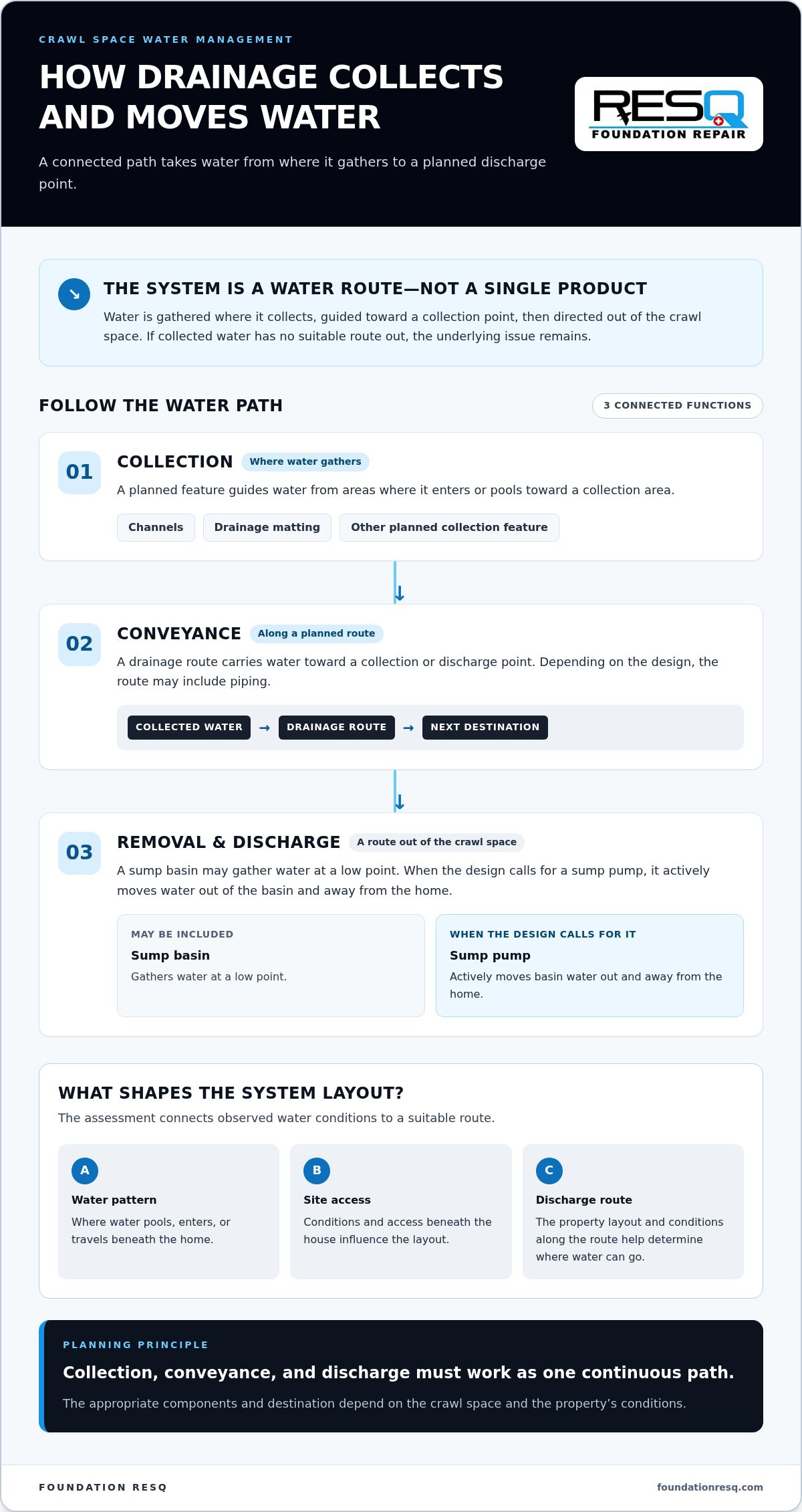
A drainage system is a connected path for water, not a single product. It gathers water where it collects, guides it toward a collection point, and provides a way for it to leave the crawl space. Each part has a role. If water is collected but has no suitable route out, the underlying problem remains.
A crawl space drainage system moves collected water away from vulnerable areas and toward a planned discharge point. The layout should reflect where water appears, how it travels beneath the home, and what discharge options suit the property. That’s why crawl space drainage system installation is planned around site conditions rather than treated as a one-size-fits-all purchase.
What parts may make up a crawl space drainage system?
Depending on the design, channels or drainage matting may guide water toward a collection area. A pipe can carry water along a planned route, while a sump basin may gather it at a low point. If the design calls for a sump pump, the pump moves collected water out of the basin and away from the home.
Not every system uses the same components. The assessment and layout determine what suits the crawl space, including where water is collected and how it travels from there.
- Collection: Channels, matting, or another planned feature guide water from areas where it gathers.
- Conveyance: A drainage route, which may include piping, carries water toward a collection or discharge point.
- Removal: A sump basin and pump may be used when water needs to be actively moved out of the crawl space.
Where does collected crawl space water go?
Water needs a continuous route out of the crawl space. The discharge plan considers the collection point, the property’s layout, and conditions along the route. A pump may be part of the plan when water must be lifted or moved from a basin. The appropriate destination depends on the site and should be determined as part of the assessment.
Think of the system as a connected path. Water gathers where it enters or pools, moves through a channel or pipe, and reaches a point where it can be directed away from the crawl space. If any part of that path doesn’t suit the water pattern or the available discharge route, water may continue to collect in vulnerable areas.
When planning, note whether water pools in one location or follows a broader route. Those observations help inform where collection features belong and whether a sump basin and pump are part of the design. The goal is a practical route tailored to the property, not simply adding components beneath the home.
For Tallahassee homeowners, Foundation ResQ’s crawl space moisture-control planning connects observed water patterns with a drainage approach suited to the property.
Drainage, Sump Pumps, and Encapsulation: Which Addresses What?
Water in a crawl space can call for more than one kind of moisture control, but the options aren’t interchangeable. Drainage manages the path of liquid water. A sump pump removes water that collects in a basin. Encapsulation helps limit moisture entering from the ground and outside air. Matching the measure to the problem is central to planning a durable solution.
| Measure | Primary role | Limitation |
|---|---|---|
| Drainage | Guides water toward a collection or discharge point. | Doesn’t by itself control humidity or block all moisture entry. |
| Sump pump | Actively moves collected water out of a basin. | Needs water directed to it and a suitable discharge route. |
| Encapsulation | Creates a barrier to moisture from the ground and outside air. | Doesn’t replace a route for standing or flowing water. |
| Dehumidifier | Helps manage humidity in the crawl space. | Doesn’t collect or remove incoming bulk water. |
When does drainage differ from a sump pump?
Drainage and pumping can work together, but they perform different jobs. A drainage route guides water toward a planned destination. If water can flow by gravity to that destination, a pump may not be needed. Where gravity alone can’t move water to the discharge point, a sump basin and pump may be part of the plan.
That distinction matters during crawl space drainage system installation. A pump without a way to collect and direct water may not address wet areas across the crawl space. A drainage path that relies on gravity also needs a discharge plan suited to the property. The assessment determines how these parts should work together rather than assuming every design needs a pump.
How does encapsulation fit with drainage?
Encapsulation addresses moisture entry, not water movement. A vapor barrier over the ground can help limit moisture rising from the soil, while sealing the crawl space helps reduce the entry of outside air and its moisture. If standing water is present, that bulk-water issue needs attention. A barrier alone doesn’t guide water out.
A dehumidifier has a separate role. It manages humidity in the crawl space, but it isn’t a substitute for drainage when liquid water is collecting. Depending on conditions, drainage, encapsulation, and humidity control may work together as parts of a broader moisture-control plan.
For a closer look at how sealing and moisture control work, see this crawl space encapsulation guide. Foundation ResQ serves Tallahassee homeowners with crawl space moisture-control services. A property-specific moisture-control assessment can help identify which measures fit the conditions beneath your home.
What Happens During Crawl Space Drainage System Installation?
A well-planned installation starts with understanding the site, not choosing components in isolation. Access beneath the home, the pattern of water, and a workable discharge route all shape the project. Conditions vary from one Tallahassee property to another, so the scope and schedule should be based on an assessment of the crawl space.
A professionally planned drainage installation moves from site assessment and route layout to project-specific installation and checks of how water travels through the system. Each stage helps ensure the approach responds to observed conditions beneath the home.
How is the crawl space assessed and the drainage route planned?
The assessment considers where water collects, how much of the crawl space is accessible, and the condition of surfaces where components may be placed. The proposed path from collection area to discharge is also reviewed. These observations help determine where water should be gathered and how it can be conveyed away from vulnerable areas.
Conditions vary by property, even within Tallahassee. A route that suits one crawl space may not work for another if access, collection areas, or discharge options differ.
What installation and final checks should homeowners expect?
Once the layout is set, the work area is prepared and the components specified for the project are installed. The exact tasks depend on the plan. Some designs may include drainage channels or piping, and a sump basin and pump may be included when active water removal is needed.
After installation, the system’s operation should be checked, including water movement along the planned route, pump function if present, and discharge. These checks help confirm that the connected parts work as intended, though drainage alone doesn’t control every source of crawl space moisture.
A homeowner can expect the process to follow a clear sequence:
- Assess conditions: Identify water collection areas, access constraints, floor conditions, and possible discharge routes.
- Plan the layout: Use those observations to position collection and conveyance components for the property.
- Prepare and install: Prepare the work area, then install the project-specific drainage components.
- Check operation: Review water movement and the discharge route, along with pump operation when the design includes one.
Follow-up moisture controls may be considered if the assessment identifies concerns beyond bulk water. Encapsulation or a crawl space dehumidifier addresses different conditions than drainage. Keeping those roles distinct helps homeowners understand what the installation is designed to do and what may need separate attention.
Foundation ResQ provides crawl space drainage system installation in Tallahassee, planned around each property’s conditions. Schedule a crawl space drainage assessment to discuss water patterns, access, and a suitable project approach.
Plan Crawl Space Drainage Installation with Foundation ResQ in Tallahassee
Recurring water beneath a home calls for a plan based on what’s happening at that property, not a standard layout applied everywhere. A useful assessment connects the water pattern to the crawl space’s access and layout, then considers how collected water can be directed away. That gives homeowners a clearer basis for deciding whether drainage is appropriate and what the project should address.
What makes a drainage plan specific to a Tallahassee home?
The assessment considers where water appears, how it enters or collects, and whether the crawl space allows access to affected areas. It also accounts for a practical discharge route. Conditions after rain can help reveal recurring patterns, but observations at the home are more useful than broad assumptions about local soil or rainfall.
For example, water that repeatedly gathers near one part of the crawl space may call for a different collection layout than moisture appearing in several areas. A suitable plan considers the water’s path, available working space, and where it can be directed. These details shape a property-specific crawl space drainage system installation rather than a one-size-fits-all solution.
What is a sensible next step for recurring crawl space water?
Keep a simple record before an assessment. Note where water appears, whether it follows rainfall, and how long the area stays wet. Photos taken at different times can show whether the same spots repeatedly collect water or the pattern changes. Include other observations, such as damp soil or a musty odor, while remembering that these signs alone don’t establish the source.
Foundation ResQ serves Tallahassee homeowners with crawl space moisture-control services, including drainage installation. An assessment connects the water pattern and the home’s layout to a practical drainage plan. If conditions point to additional needs, related measures can play supporting roles: a sump pump system removes water collected in a basin, encapsulation helps limit moisture entering from the ground and outside air, and a dehumidifier manages humidity. Each addresses a different part of moisture control.
Drainage is intended to manage collected water, but it doesn’t address every possible source of moisture or guarantee that other issues won’t develop. Understanding the source and planning the discharge route helps keep expectations grounded in what the system is designed to do.
If water keeps returning beneath your home, use your observations as a starting point for a focused conversation about the property. Explore Foundation ResQ’s crawl space solutions for local moisture-control options in Tallahassee.
Take the Next Step Toward a Drier Crawl Space
Water concerns beneath a home can feel difficult to resolve when the signs keep changing. You don’t need to choose equipment based on a single wet spot. First, connect the pattern you’ve observed with the outcome you want, whether that means managing collected water or addressing broader moisture concerns. That clarity helps keep planning focused on your home’s conditions rather than assumptions.
A durable crawl space drainage system installation is about more than adding a drain. It means choosing an approach that fits how water behaves beneath your property. Foundation ResQ helps Tallahassee homeowners address crawl space moisture concerns with solutions tailored to the home. A property-focused plan gives you a practical basis for deciding what to do next without expecting one measure to resolve every source of moisture.
Ready to take a steady next step? Explore crawl space moisture-control solutions with Foundation ResQ and move toward a plan suited to your home.
Frequently Asked Questions
Can a crawl space drainage system stop water from coming back after heavy rain?
It can help control recurring water when the system is designed for the source and has a workable discharge route, but it can’t guarantee water will never return. If water shows up again, note whether it appears in the same location and whether the discharge area is wet or obstructed. In Tallahassee, these observations help a professional assess whether the drainage plan still matches conditions at your home.
Does every crawl space drainage system need a sump pump?
No. A sump pump isn’t necessary in every design. If water can flow along the planned route to a suitable discharge point, gravity may move it without a pump. A pump may be included if the site layout makes gravity drainage impractical. For example, water collecting in a low area may need active removal. The decision depends on the property’s layout and discharge conditions.
Is crawl space drainage enough without encapsulation?
Sometimes, but it depends on whether liquid water is the only concern. If the crawl space remains damp after standing water is addressed, moisture from the ground or outside air may also need attention. Encapsulation can help limit those sources, while drainage manages water that collects. A dehumidifier can help control humidity, but it doesn’t remove incoming bulk water. The right combination depends on the moisture conditions.
How long does crawl space drainage system installation take?
There isn’t one reliable timeframe for every home. Project duration depends on factors such as crawl space access, the work in the planned layout, and the discharge route. Additional moisture-control work may also affect the overall project. A site assessment establishes the scope, so the expected schedule can be based on actual conditions rather than a general estimate for another property.
Can a drainage system be installed if there is already mold in the crawl space?
Yes, existing mold doesn’t automatically prevent drainage work, but the moisture source and mold concern should both be considered in the plan. Drainage may help manage water, while mold remediation addresses existing mold. One doesn’t replace the other. Avoid disturbing affected materials yourself, and share what you’ve noticed, such as where mold appears or whether the area gets wet after rain, during an assessment.
How much does crawl space drainage system installation cost?
The cost depends on the work your property needs, so a general figure may not reflect your project. Factors can include access, where water collects, the layout required, and whether the design needs a sump pump or additional moisture controls. An assessment of the crawl space and discharge route helps define the scope before costs are estimated. Foundation ResQ provides crawl space moisture-control services in Tallahassee.
What maintenance does a crawl space drainage system need?
Follow the maintenance guidance for the system’s components, especially if a sump pump is included. Keep an eye on the accessible discharge area and watch for changes in water patterns after rainfall. If the pump appears not to operate or water begins collecting in a familiar spot again, arrange an assessment rather than assuming the system is working normally. Regular attention can help identify concerns before they go unnoticed.