
A crawl space is the shallow, unfinished area beneath a home’s first floor that houses structural supports, plumbing, and electrical systems. This crawl space issues home buyers guide covers the nine most critical problems that can derail a purchase, inflate repair costs, or create serious health risks. Moisture intrusion, mold growth, structural damage, and ventilation failures are the leading concerns, and each one affects property value directly. Tools like moisture meters, hygrometers, and vapor barriers are standard in professional crawl space evaluation. Knowing what to look for before closing gives you real negotiating power.
1. What are the main crawl space issues home buyers need to evaluate?
Crawl space problems fall into six core categories, and missing any one of them can cost you thousands after closing. The categories are moisture, structural damage, mold, pests, ventilation, and insulation. Each one connects to the others. Moisture feeds mold. Mold weakens wood. Weak wood invites pests.
- Moisture problems: Standing water, high humidity, and vapor intrusion are the most common findings. Damp crawl spaces carry a roughly 90% likelihood of mold growth driven by humidity and condensation. That number alone should make moisture your first priority.
- Structural issues: Sagging floor joists, wood rot, and damaged support posts signal long-term water exposure. These repairs are expensive and often hidden from a surface-level walkthrough.
- Mold growth: Both active and historical mold matter. Active mold requires fixing the moisture source plus treating affected materials. Historical mold on dry substrates may need less aggressive remediation, but it still needs documentation.
- Pest infestations: Termite mud tubes, rodent droppings, and carpenter ant galleries are serious structural threats. Pest damage often overlaps with wood rot, compounding repair costs.
- Ventilation problems: Blocked or sealed vents without proper code compliance trap moisture and accelerate decay. IRC 2024 Section R408 requires vented crawl spaces to provide 1 square foot of vent area per 150 square feet of floor area.
- Insulation and vapor barriers: Missing or damaged insulation reduces energy efficiency. Incomplete ground covers allow soil moisture to evaporate directly into the crawl space air.
Pro Tip: Ask the listing agent whether the crawl space is vented or sealed before the inspection. That single answer shapes every other question you need to ask.
2. How to properly inspect and evaluate a crawl space before buying
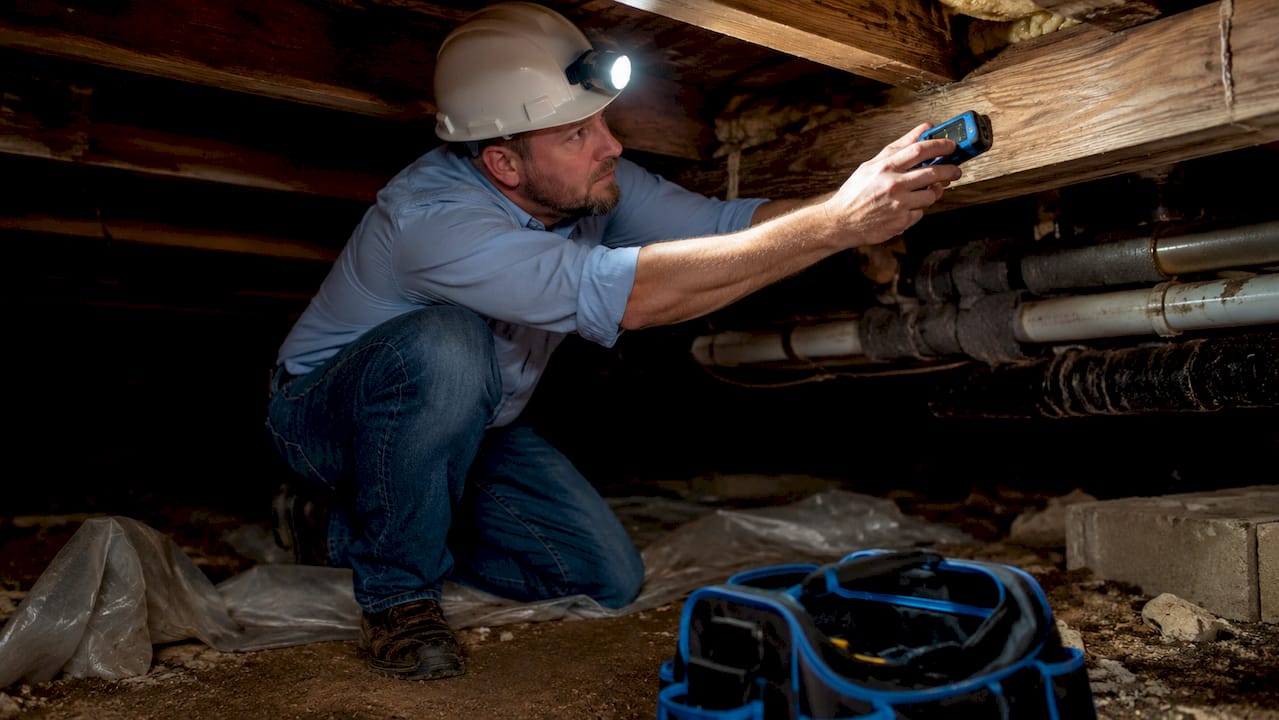
A proper crawl space inspection goes far beyond a flashlight peek from the access hatch. InterNACHI standards require inspectors to assess structural components, insulation, ventilation, and active signs of water penetration. Skipping any of these categories leaves you with an incomplete picture.
- Demand full entry. Inspectors should physically enter the crawl space wherever clearance allows. Full crawl space entry is the only way to catch damage at low points and corners that are invisible from the access opening. If the inspector cannot enter due to standing water or low clearance, that limitation must appear in the written report.
- Use a moisture meter. Readings below 15% indicate dry wood. Readings between 15% and 19% signal elevated moisture. Readings above 19% indicate active wood decay risk. These thresholds guide the inspector’s structural assessment.
- Bring a hygrometer. Relative humidity above 60% in the crawl space creates conditions for mold. Baseline moisture testing with a digital hygrometer, done within the first week of ownership, helps track whether conditions are improving or worsening.
- Document everything with photos. Photos of standing water, mold staining, damaged joists, and pest evidence create a record you can use in price negotiations or repair requests.
- Check for IRC 2024 code compliance. Verify that vents are present, unobstructed, and correctly sized. Confirm that any sealed crawl space includes a continuous Class I vapor retarder on floors and walls plus mechanical conditioning.
- Request specialist evaluations when needed. A general home inspector covers the basics. For active mold colonies or suspected structural failure, hire a certified mold inspector or structural engineer separately.
Pro Tip: Experienced inspectors scan moisture meter readings at rim joists, mid-bay flooring, and near plumbing penetrations. These are the spots where hidden moisture sources concentrate.
3. Vented vs. sealed crawl spaces: what buyers need to know
The type of crawl space under a home determines which inspection checklist applies and which repair strategies make sense. Vented and sealed crawl spaces follow different code requirements and carry different moisture risks.
| Feature | Vented crawl space | Sealed (unvented) crawl space |
|---|---|---|
| Vent requirement | 1 sq ft per 150 sq ft of floor area (IRC 2024 R408.1) | No vents required if code conditions are met |
| Vapor barrier | Ground cover required | Continuous Class I retarder on floors and walls |
| Moisture control | Natural airflow | Mechanical dehumidification or HVAC source |
| Common problem | Blocked or undersized vents | Partial sealing without proper vapor barrier |
| Mold risk | High if vents are blocked | High if sealed without conditioning |
IRC 2024 R408.3 specifies that sealed crawl spaces require a continuous, low-permeance vapor barrier combined with mechanical conditioning. Sealing alone without these elements can trap existing moisture and worsen mold problems. That is a critical point buyers often miss.
Vented crawl spaces fail when vents are blocked by insulation, debris, or intentional closure during winter. Closed vents in cold months seem logical but trap humidity. Partial vapor barriers are equally problematic. A ground cover that stops short of the walls leaves exposed soil releasing moisture directly into the space. Learn more about crawl space ventilation options and how they affect moisture control.
4. Typical repair costs for crawl space problems
Repair costs vary widely depending on the problem type and severity. Knowing the ranges before you make an offer gives you a concrete basis for negotiation.
- Waterproofing: Wet crawl space waterproofing costs range from $1,500 to $15,000 depending on the severity and complexity of the solution. Simple drainage improvements sit at the low end. Full interior drainage systems with sump pumps sit at the high end.
- Drainage improvements: Regrading the soil around the foundation, cleaning gutters, and extending downspouts address surface water before it enters the crawl space. These are often the cheapest fixes.
- Encapsulation: Installing a full vapor barrier system, including wall coverage and a dehumidifier, typically costs more than basic waterproofing but provides lasting moisture control.
- Mold remediation: Cost depends on whether the mold is active or historical. Active mold requires fixing the moisture source first. Historical mold on dry materials may cost less to treat. See the crawl space mold removal guide for a breakdown of what remediation involves.
- Structural repairs: Wood rot and pest damage to joists and support posts require replacement of affected lumber. Costs scale with the extent of damage and access difficulty.
- Negotiation strategy: Use the inspection report as a line-item list. Request a price reduction equal to the repair estimate, or ask the seller to complete repairs before closing. Serious moisture intrusion can be a deal-breaker or significant leverage depending on your risk tolerance.
| Problem | Estimated cost range | Priority level |
|---|---|---|
| Waterproofing | $1,500–$15,000 | High |
| Encapsulation | $3,000–$8,000 | High |
| Mold remediation | $500–$6,000 | High |
| Structural wood repair | $1,000–$10,000 | Critical |
| Drainage improvements | $500–$3,000 | Medium |
5. Red flags that should make buyers walk carefully
Some crawl space findings are serious enough to pause the entire purchase process. These are the conditions that signal systemic failure, not just deferred maintenance.
- Standing or pooling water is evidence of active drainage failure, not just high humidity. Puddles in a crawl space indicate true water intrusion and immediate risk to wood and structural components.
- Musty odors during the home walkthrough often originate in the crawl space. Odors that travel upward through floors and walls indicate moisture or mold at a scale that affects living areas.
- Visible mold colonies or wood discoloration require immediate specialist evaluation. Distinguishing active from historical mold changes the remediation scope and cost significantly.
- Sagging insulation signals that moisture has saturated the material, which often means the joists above it are also wet. Wet joists decay faster than any other structural component.
- Pest activity or mud tubes along foundation walls indicate termites. Termite damage combined with wood rot is the most expensive crawl space repair scenario a buyer can face.
- Incorrectly sealed vents without a proper vapor barrier create a sealed environment that concentrates moisture. This is worse than leaving vents open. Indoor air quality suffers as a result. Mold spores from crawl spaces affect indoor air quality throughout the entire home.
6. Why crawl space access matters for every buyer
Crawl space access is not a technicality. It is the physical gateway to evaluating one of the most consequential parts of any home. A crawl space without a proper access door, or one that has been sealed shut, prevents inspection entirely. That alone is a red flag.
The condition of the crawl space affects home value and buyer decisions directly. Serious moisture intrusion can be a deal-breaker or a negotiation tool, depending on how well you document it. Buyers who skip crawl space evaluation during purchase often discover the true cost within the first year of ownership.
Access also matters for ongoing maintenance. A crawl space you cannot enter is a crawl space you cannot monitor. Humidity levels, pest activity, and early signs of wood decay all require periodic visual checks. Homes with proper access doors and adequate clearance give you the ability to catch problems early, before they become structural failures.
Key takeaways
Crawl space problems are among the most underestimated risks in a home purchase, and moisture is the root cause behind nearly every major issue buyers encounter.
| Point | Details |
|---|---|
| Moisture is the root cause | High humidity and water intrusion drive mold, wood rot, and pest activity simultaneously. |
| Full inspection is non-negotiable | Inspectors must enter the crawl space fully to catch damage at corners and low points. |
| Vented vs. sealed changes everything | Each crawl space type requires a different inspection checklist and repair approach. |
| Repair costs range widely | Waterproofing alone runs $1,500–$15,000; use estimates as negotiation leverage before closing. |
| Red flags can be deal-breakers | Standing water, active mold, and termite damage warrant specialist evaluation before proceeding. |
What I’ve learned from watching buyers skip the crawl space
Most buyers spend 20 minutes in the kitchen and 30 seconds at the crawl space hatch. That ratio is backwards. The crawl space holds the structural and moisture history of the entire home, and it tells you things the seller’s disclosure never will.
The buyers I’ve seen get burned share one pattern. They trusted a quick visual check from the access opening and assumed the rest was fine. Damage in crawl spaces concentrates at the far corners and low points, exactly where a flashlight from the hatch cannot reach. A full physical inspection, with a moisture meter and a camera, is the only way to know what you’re actually buying.
My honest view is that crawl space findings should be treated as a system, not a checklist. Moisture, ventilation, structure, and mold are connected. Fixing one without addressing the others produces temporary results. Buyers who understand this walk into negotiations with real information. Those who don’t often find out the hard way, after closing.
If the seller resists a full crawl space inspection or refuses to disclose the crawl space type, treat that resistance as a data point. Transparency about the crawl space is a reasonable expectation. A seller who pushes back has a reason.
— Kayle
Foundationresq can help you assess and fix what you find
Buying a home with crawl space concerns does not have to mean walking away. Foundationresq specializes in crawl space waterproofing, encapsulation, dehumidification, and mold remediation for homeowners and buyers in the Tallahassee area.

Whether you need a moisture assessment before closing or a full repair plan after purchase, Foundationresq offers crawl space encapsulation and waterproofing services built around your specific conditions. Financing options are available for qualified repairs. Visit Foundationresq services to request a free inspection and get a clear picture of what the crawl space under your potential home actually needs.
FAQ
What is the most common crawl space problem in homes?
Moisture intrusion is the most common crawl space problem. It leads directly to mold growth, wood rot, and pest activity, making it the root cause behind most other crawl space failures.
How much does it cost to fix a wet crawl space?
Waterproofing a wet crawl space typically costs between $1,500 and $15,000 depending on the severity and the solution required, from basic drainage improvements to full interior waterproofing systems.
Should I buy a house with crawl space mold?
Crawl space mold is not automatically a deal-breaker. Active mold with an ongoing moisture source requires more aggressive remediation than historical mold on dry materials. Get a specialist evaluation and use the findings in price negotiations.
What is the difference between a vented and sealed crawl space?
A vented crawl space uses exterior vents sized at 1 square foot per 150 square feet of floor area. A sealed crawl space omits vents but requires a continuous vapor barrier on floors and walls plus mechanical conditioning to meet IRC 2024 code.
Do home inspectors always enter the crawl space?
Standard practice requires inspectors to fully enter the crawl space where clearance and conditions allow. If entry is not possible due to standing water or low clearance, the inspector must document that limitation clearly in the report.