
Mold remediation is the professional process of identifying, containing, and removing mold growth to restore safe indoor air quality. For most homeowners, professional remediation costs range from $1,500 to $9,000, with medium-sized projects averaging $3,500 to $4,500. That wide range exists because labor intensity, contamination scope, and moisture conditions all push costs in different directions. The good news is that you can reduce mold remediation costs as a homeowner by understanding what drives those expenses and making smarter decisions before, during, and after the job.
What factors most affect mold remediation labor costs?
Labor accounts for 50%–65% of the total cost of any mold remediation project. That means the single most effective way to lower your bill is to reduce how much labor the job requires.
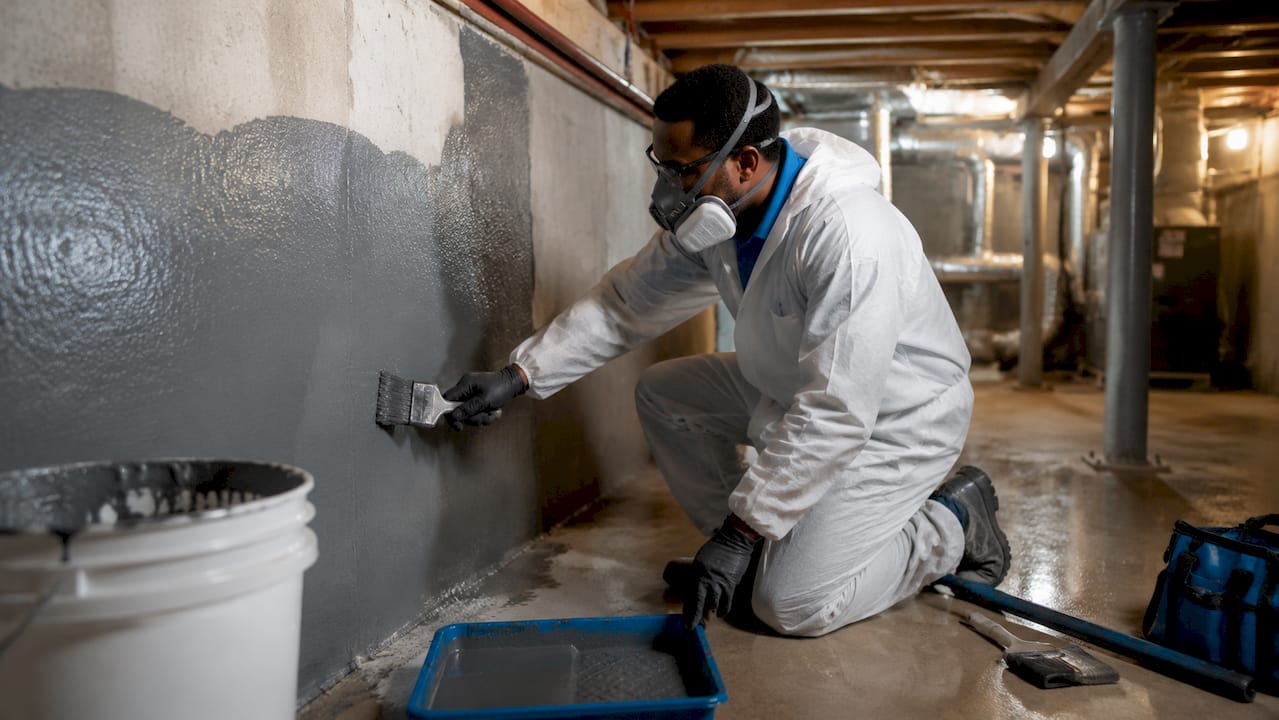
Labor time increases with three main factors: the size of the affected area, the complexity of containment setup, and the amount of material that needs to be removed. A small patch of mold on a concrete wall takes far less time to address than mold embedded in drywall, insulation, or wood framing. Porous materials require demolition, disposal, and replacement, all of which add hours to the job.
Here is what drives labor costs up on most residential projects:
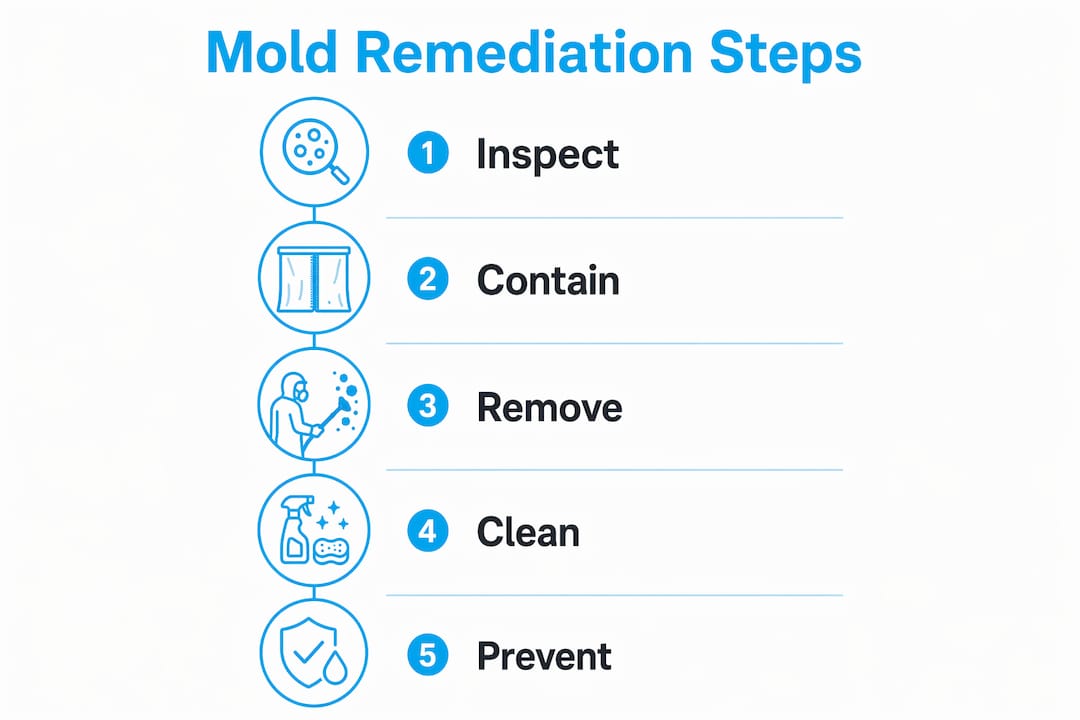
- Containment setup. Proper containment requires negative air pressure and HEPA filtration to prevent spores from spreading to clean areas. This setup takes time and specialized equipment.
- Material removal. Cutting out and disposing of contaminated drywall or insulation adds both labor hours and disposal fees.
- Access difficulty. Crawl spaces, attics, and tight corners require more time and sometimes specialized equipment to work in safely.
- Reconstruction. If the same contractor handles both remediation and rebuilding, you often pay a premium for the bundled service.
Pro Tip: Ask every contractor for a line-item labor breakdown before signing anything. A quote that separates containment, demolition, cleanup, and clearance testing gives you real leverage to compare bids and spot inflated line items.
Separating your remediation and reconstruction contracts can save homeowners 20%–30% on overall project costs. That is a meaningful reduction you can capture simply by hiring a general contractor for the rebuild phase instead of defaulting to whoever did the mold work.
When can you safely do DIY mold removal?
DIY mold removal is appropriate for areas under 10 square feet on non-porous surfaces only. That means tile, sealed concrete, glass, or metal. Drywall, wood framing, and insulation are off-limits for DIY because mold roots penetrate the material and cannot be wiped away.
A complete DIY mold removal kit costs between $196 and $407 and should include a HEPA vacuum, N95 or P100 respirator, nitrile gloves, disposable coveralls, plastic sheeting for containment, and an EPA-registered mold cleaner. Skipping any of these items puts you at risk of spreading spores to clean rooms or inhaling mycotoxins.
Follow this process for safe small-area DIY removal:
- Seal the area. Use plastic sheeting and tape to isolate the work zone from the rest of the house.
- Put on full PPE. Respirator, gloves, and coveralls before you touch anything.
- HEPA vacuum the surface. Remove loose spores before applying any cleaner.
- Apply an EPA-registered cleaner. Products like Concrobium Mold Control or RMR-86 are widely available and proven effective on non-porous surfaces.
- Scrub and wipe. Use a stiff brush, then wipe clean with a damp cloth.
- Bag and seal all waste. Double-bag contaminated materials and dispose of them immediately.
- HEPA vacuum again. A second pass after cleanup captures residual spores.
One critical warning: do not use bleach on mold. Bleach is roughly 90% water, and that water content actually feeds mold roots inside porous materials. Bleach may remove surface discoloration while leaving the underlying colony intact, which is why mold returns after surface cleaning so reliably when bleach is the only treatment.
Pro Tip: If you find mold returning within two weeks of DIY cleanup, or if the affected area is larger than a sheet of printer paper, stop and call a professional. Repeated DIY attempts on an active mold problem spread contamination and raise your eventual professional remediation bill.
How do you choose cost-effective professional mold remediation?
The cheapest quote is rarely the most cost-effective choice in mold remediation. Contractors who skip containment, rush clearance testing, or bundle remediation with reconstruction often create problems that cost more to fix than the original job.
Use these criteria when evaluating professional services:
- Written remediation plan. Any qualified contractor should provide a written scope of work that references industry protocols such as those from the IICRC (Institute of Inspection, Cleaning and Restoration Certification) or the EPA mold remediation guidelines.
- Itemized pricing. Quotes that list containment, labor, disposal, and clearance testing separately let you compare apples to apples across multiple bids.
- Independent clearance testing. You should not hire the same company for both remediation and post-clearance testing. Independent testing removes the conflict of interest and gives you an unbiased result.
- Proper PPE and containment. Skipping containment or using inadequate PPE leads to re-contamination and structural damage, both of which cost significantly more to address later.
- Local licensing and insurance. Verify that the contractor holds a current license in your state and carries general liability plus workers’ compensation insurance.
A useful resource for finding qualified local contractors is the mold inspection company guide from Foundationresq, which outlines what to look for in a service provider before you commit to a contract.
For crawl space and basement projects specifically, review the crawl space mold remediation pricing guide to understand what fair pricing looks like before you start collecting bids.
How can you prevent mold from coming back after remediation?
Recurring mold is caused by untreated moisture sources, not by inadequate cleaning. Remediation without moisture control is a temporary fix. You will pay for the same job again within months.
Preventing mold recurrence means addressing the water pathways that feed it. Here are the most effective steps:
- Fix leaks immediately. Roof leaks, plumbing drips, and window condensation are the three most common moisture sources in residential mold cases.
- Control indoor humidity. Keep relative humidity below 50% using a dehumidifier in basements and crawl spaces. Brands like Santa Fe and AprilAire make units sized specifically for these spaces.
- Improve ventilation. Bathroom and kitchen exhaust fans should vent outside, not into attics or crawl spaces.
- Grade soil away from the foundation. The ground around your home should slope away at least 6 inches over the first 10 feet to prevent water from pooling at the foundation.
- Extend downspouts. Downspout extensions that discharge water at least 4 feet from the foundation reduce basement and crawl space moisture significantly.
- Seal crawl spaces. Encapsulating a crawl space with a vapor barrier cuts ground moisture intrusion, which is the leading cause of crawl space mold growth.
Pro Tip: Every season, do a 10-minute moisture check. Walk your basement and crawl space with a flashlight and look for water stains, condensation on pipes, and musty odors. Catching a small leak in fall costs far less than remediating a mold colony in spring.
Investing in crawl space or basement waterproofing is the single most cost-effective long-term strategy for homeowners who have dealt with repeated mold problems. The upfront cost is real, but it eliminates the cycle of recurring remediation bills.
Localized cleanup vs. full professional remediation: what does each cost?
The scope of mold remediation determines the cost more than almost any other factor. Understanding the difference between localized surface cleanup and full professional remediation helps you budget accurately and avoid paying for more than you need.
| Scenario | Typical Cost Range | What Is Included |
|---|---|---|
| DIY surface cleanup (under 10 sq ft) | $196–$407 | PPE kit, EPA cleaner, HEPA vacuum filters |
| Localized professional cleanup (10–50 sq ft) | $500–$1,500 | Containment, surface treatment, basic clearance |
| Medium project with material removal (50–200 sq ft) | $1,500–$4,500 | Full containment, demolition, disposal, HEPA filtration, clearance testing |
| Large or whole-home remediation (200+ sq ft) | $4,500–$9,000+ | Multi-room containment, structural material removal, reconstruction prep, independent clearance |
Localized treatment works when mold is confined to a small, accessible area on non-porous or semi-porous surfaces with no structural involvement. Full professional service is necessary when mold has penetrated drywall, wood framing, or insulation, or when it appears in HVAC systems, crawl spaces, or basements where containment is complex.
The cost difference between a localized job and a full remediation is not just about square footage. It reflects the labor required for containment setup, the volume of contaminated material removed, and the rigor of post-clearance verification. Cutting corners on any of these elements to save money upfront typically results in mold returning within a season, which means paying for the full job twice.
Key takeaways
Reducing mold remediation costs requires addressing moisture sources first, controlling labor scope, and never skipping containment or clearance testing.
| Point | Details |
|---|---|
| Labor is the biggest cost driver | Labor accounts for 50%–65% of total project cost; reducing scope and access difficulty lowers your bill. |
| DIY has strict limits | Only attempt DIY removal on areas under 10 sq ft on non-porous surfaces using proper PPE and EPA-registered cleaners. |
| Separate your contracts | Splitting remediation and reconstruction contracts can save homeowners 20%–30% on overall project costs. |
| Moisture control prevents recurrence | Mold returns when the underlying moisture source is not fixed; waterproofing and humidity control are the real long-term savings. |
| Independent clearance testing is non-negotiable | Hiring a separate company for post-remediation testing protects you from re-contamination and contractor disputes. |
The mistake that costs homeowners the most
I have seen the same pattern repeat itself more times than I can count. A homeowner gets a mold problem, hires the cheapest contractor they can find, skips the clearance test to save $300, and then calls us six months later with a bigger problem than the one they started with.
The real money-waster in mold remediation is not the initial job. It is the second job. And the second job almost always happens because someone cut a corner on containment, skipped independent testing, or never fixed the moisture source that caused the mold in the first place. Bleach on a damp basement wall is not remediation. It is a delay.
What I tell every homeowner is this: spend the money on containment and clearance testing upfront. Those two line items feel like overhead until you understand that they are the only things standing between a completed job and a recurring nightmare. Separating your remediation and reconstruction contracts is the one cost-saving move that actually works without increasing your risk. Everything else labeled “cost-saving” in this industry is usually just corner-cutting with a better name.
The homeowners who spend the least over five years are the ones who fixed the leak, encapsulated the crawl space, and hired a qualified contractor with a written plan. They paid more in month one. They paid nothing in months six, twelve, and twenty-four.
— Kayle
How Foundationresq helps you lower remediation costs for good
If you are dealing with mold in your crawl space, basement, or anywhere else in your home, Foundationresq offers protocol-driven mold remediation and moisture management services built around lasting results, not repeat visits.
Foundationresq’s team in Tallahassee, FL specializes in the moisture problems that cause mold to return. From crawl space encapsulation to full mold remediation services, every job follows a written remediation plan with proper containment and independent clearance verification. You can also review real project outcomes to see how Foundationresq has helped homeowners resolve mold problems permanently. Request a free inspection and get a transparent, itemized quote before committing to any work.
FAQ
What is the average cost of professional mold remediation?
Professional mold remediation for basements and crawl spaces averages $3,500 to $4,500 for medium projects, with a full range of $1,500 to $9,000 depending on scope and severity.
Why does mold keep coming back after cleaning?
Mold returns after surface cleaning because the underlying moisture source was not fixed. Remediation without moisture control is a temporary solution, not a permanent one.
Can a homeowner do mold removal without a professional?
DIY mold removal is safe only for areas under 10 square feet on non-porous surfaces. Anything larger, or any mold on drywall or wood, requires professional remediation with proper containment.
How can i reduce what i pay for mold remediation labor?
Keep the affected area small by catching mold early, improve access to the work zone, and separate your remediation and reconstruction contracts. These three steps directly reduce labor hours and total cost.
Do i need clearance testing after mold remediation?
Yes. Independent clearance testing by a third party confirms the mold was fully removed and protects you from re-contamination and contractor disputes. Skipping it is one of the most common and costly mistakes homeowners make.
Recommended
- Mold Remediation Costs Uncovered: A Homeowner’s Guide – Tallahassee Foundation Repair | Foundation ResQ
- Cost of Mold Remediation in Crawl Space: 2026 Homeowner Price Guide – Tallahassee Foundation Repair | Foundation ResQ
- Professional Mold Remediation in Tallahassee, FL: The Homeowner’s Guide to Permanent Solutions – Tallahassee Foundation Repair | Foundation ResQ
- Mold After a Leak? How to Tackle Crawl Space and Basement Mold Yourself – Tallahassee Foundation Repair | Foundation ResQ