
What if the quickest way to clear a crawl space odor is to stop trying to cover it up? Air fresheners may mask the smell, but they won’t fix damp materials, standing water, or another source of moisture. If you’re searching for how to get rid of damp smell in crawl space, start by finding what’s causing it.
A lingering odor can be frustrating, especially when it drifts into living areas or seems to come through the HVAC system. You don’t have to crawl into a tight, damp space to begin investigating. Changes in the smell, visible signs near the access point, and moisture around the home can all help you identify what needs attention.
This guide explains how to trace likely odor sources safely, which first steps can help, and why quick fixes often fall short. You’ll also learn when moisture control, such as a sump pump, dehumidifier, or crawl space encapsulation, may be part of a lasting solution, and when mold remediation may be needed.
Key Takeaways
- Treat a musty odor as a clue to investigate, not proof of mold or structural damage.
- In Tallahassee, consider moisture sources such as humid air, rainwater entry, plumbing leaks, and damp soil.
- Odor absorbers and fragrance may mask smells, but lasting odor reduction depends on addressing the moisture source.
- Learn how to get rid of damp smell in crawl space by noting odor patterns and documenting visible moisture without entering unsafe areas.
- Depending on crawl space conditions, encapsulation, a sump pump, or a dehumidifier may help control moisture over time.
What a Damp Smell in Your Crawl Space Can Tell You
A persistent damp or musty odor can be unsettling, especially when it reaches rooms where your family spends time. It’s a reason to investigate, but it doesn’t identify the cause by itself. Damp soil, standing water, wet insulation, and other damp building materials can all produce stale or musty odors. Smell alone can’t confirm mold, identify a particular contaminant, or show whether the home has structural damage.
A crawl space is the low, accessible area between the ground and the first floor. The Crawl space overview explains its basic role and common conditions. Air can move between a crawl space and occupied rooms through gaps around pipes, wiring, floor openings, or other connections. Pressure differences may contribute to that movement, and HVAC duct issues can affect where odors are noticed. The route varies by home, so an indoor smell isn’t proof that it came from below.
Odor absorbers can reduce a smell, but addressing the moisture source is what can help stop it from returning. That distinction matters when deciding what to investigate next.
What does a musty crawl space smell usually mean?
A musty odor often points to damp conditions, but it doesn’t reveal exactly what’s wet. Moist soil, pooled water, damp insulation, or wood and other building materials may be involved. The smell may become stronger after rain if water enters or collects below the home. Humid weather can also make damp conditions more noticeable. These changes offer clues about timing, not a diagnosis.
How can you tell whether the odor is coming from below?
Notice where the odor is strongest and when it changes. Does it linger in one room, seem stronger near a floor register, or become more noticeable after rainfall? Record those patterns without entering a cramped or unsafe space. If the smell is near a register, note whether it occurs while the HVAC system runs. You can also look for accessible signs, such as a musty filter or visible moisture around equipment. Don’t open equipment or handle damaged wiring.
Compare crawl space clues with other possible sources. A localized smell near a sink, drain, laundry area, damp stored items, or a wall could point to a separate household issue. If the odor is only near one vent, it may involve the HVAC system rather than the whole crawl space. Careful observations help narrow the possibilities and guide the next step in learning how to get rid of damp smell in crawl space, without treating an odor as proof of a specific problem.
Why Crawl Spaces Develop Damp Odors in Florida
In Tallahassee, crawl space moisture can come from more than one direction. Humid outdoor air may contribute to damp conditions, while rainwater can enter through openings or collect where drainage carries water toward the home. Moist soil beneath the structure can also add moisture to the space. Conditions vary from property to property, so a musty smell alone won’t reveal which source is responsible.
How water and humid air reach the crawl space
Moisture pathways can include exposed soil, gaps or openings in the foundation, and places where surface water drains or pools near the home. A plumbing leak can create a damp patch around a pipe or beneath a fixture, even without widespread flooding. If the odor becomes more noticeable after rain, record the timing. It’s a useful clue, but it doesn’t prove water is entering at a particular spot.
Airflow by itself may not solve the problem. Moving air can change how an odor is perceived, but it won’t stop a leak, dry persistently damp soil, or prevent repeated water entry. If moisture keeps reaching the crawl space, the conditions behind the odor can remain even when the smell temporarily seems less noticeable.
If the moisture source remains, the crawl space odor may return. Lasting improvement starts with understanding where water or damp air is coming from, then matching the response to the conditions present.
When moisture creates conditions for mold or material damage
Damp materials can support mold growth, but odor alone cannot confirm mold or determine a health risk. From a safe position, look for visible dampness or staining on insulation and framing, as well as debris that appears wet. Don’t enter a hazardous area or disturb suspected mold to inspect it. For general information, the EPA explains potential health effects of mold. You can also read Is Mold in Crawl Space Dangerous for Your Family? for more on the topic.
For homeowners in Tallahassee, an assessment can connect visible moisture patterns with practical next steps. Foundation ResQ provides crawl space moisture-control solutions, including encapsulation, sump pump systems, and dehumidifiers, suited to the conditions found. Learn more about crawl space moisture control as a way to address the source rather than mask the odor.
Do Odor Absorbers and Ventilation Really Get Rid of Crawl Space Smells?
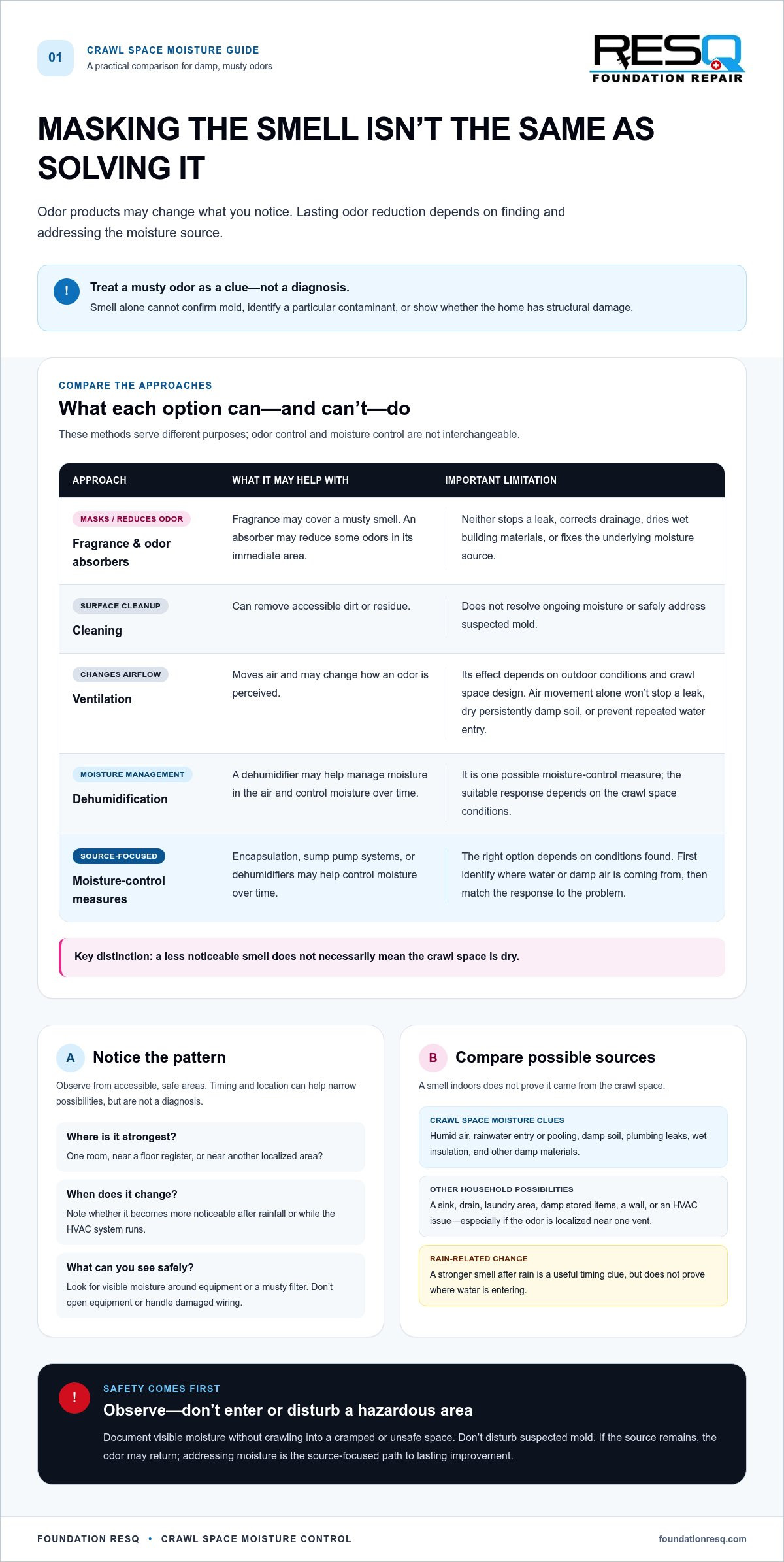
Some remedies change how a crawl space smells; others help manage moisture. They aren’t interchangeable. A scented product may cover a musty odor, while an absorber may reduce some odors in its immediate area. Neither can stop a leak, correct drainage, or dry wet building materials. Even if the smell becomes less noticeable, the crawl space may still be damp.
Each approach has a different purpose:
- Fragrance and odor absorbers: May reduce or mask perceived odor, but don’t correct its source.
- Cleaning: Can remove accessible dirt or residue, but won’t resolve ongoing moisture or safely address suspected mold.
- Ventilation: Moves air, but its effect depends on outdoor conditions and crawl space design.
- Dehumidification: Helps manage moisture in the air, but isn’t a fix for active water entry.
- Moisture-source correction: Addresses the conditions that may be keeping materials or soil damp.
Which odor remedies only provide temporary relief?
Scented sprays, fragrance products, and household odor absorbers can make a space seem fresher without making it drier. They can’t repair a plumbing leak, redirect water, or dry damp insulation and framing. Cleaning may help with removable surface dirt, but it won’t solve a continuing moisture problem. Don’t place chemicals or household products in a crawl space you can’t safely access. If you can’t access the area, you may also be unable to monitor or retrieve them.
When can ventilation or a dehumidifier help?
Ventilation isn’t a universal solution. Whether it helps depends on the crawl space design and the moisture conditions of the air outside. A dehumidifier can help manage excess moisture, but active water entry should be addressed rather than left for the unit to compensate for. Encapsulation may be part of a broader moisture-control approach. For more context, see the guide Crawl Space Encapsulation Tallahassee.
When figuring out how to get rid of damp smell in crawl space, track whether the odor returns and look for signs of moisture, not just changes in smell. A cleaner scent doesn’t prove the space is dry. Lasting odor reduction depends on matching the response to the cause, which may require moisture control and appropriate repairs.
How to Address a Damp Crawl Space Smell Safely, Step by Step
A careful check can help narrow down what may be causing the odor without putting you at risk. You don’t need to enter the crawl space to gather useful clues. Work through these steps from safe, accessible areas:
- Note the odor pattern. Record which rooms smell mustiest and whether the odor changes after rain, when the HVAC system runs, or at certain times.
- Look only from a safe vantage point. Check visible areas near the access opening or other accessible spaces for water, damp staining, or wet materials. Don’t crawl into a confined or unsafe area.
- Document what you see. Take photos from a safe position and note where moisture or staining appears. Don’t touch suspected mold, damaged materials, or electrical wiring.
- Choose the next step based on the clues. Have a visible plumbing leak handled by an appropriate plumbing repair professional. Recurring water or widespread dampness may call for a crawl space moisture assessment.
What can homeowners check without entering the crawl space?
Look for visible water, staining, or dampness near an accessible opening, but don’t reach into areas you can’t see clearly. Note whether the smell is stronger in one room, near a floor register, or after rain. Photos and written observations can help show whether signs recur in the same place. Avoid moving insulation, debris, or anything that may be moldy or damaged.
When should you stop investigating and get help?
Stop if you encounter standing water, suspected mold, damaged wiring, or a space that feels confined or unsafe. Persistent odors, recurring water, visible mold, or damaged materials are good reasons to seek a professional assessment. That doesn’t mean every musty smell is an emergency; it means the cause may need a closer look than a safe visual check can provide.
Observations are a useful starting point when learning how to get rid of damp smell in crawl space, but they don’t replace correcting the source. A crawl space moisture assessment can connect visible conditions with suitable next steps. Request a crawl space moisture assessment to determine whether moisture control or further remediation is appropriate.
How Foundation ResQ Can Help Stop Crawl Space Odors at the Source
Once you’ve recorded the odor pattern and any visible signs, the next step is to connect those clues with the crawl space’s moisture conditions. The right remedy depends on what’s happening below the home. A musty smell alone doesn’t point to one standard fix, and treating the odor without addressing moisture may leave the underlying problem in place.
What happens during a professional crawl space assessment?
An assessment looks at observable moisture conditions and relevant areas of the crawl space to help identify what may be contributing to the odor. Notes about when and where the smell occurs, along with photos of visible staining or water taken from a safe position, can add helpful context. Recommendations should fit the conditions found rather than respond to smell alone. This gives homeowners a clearer basis for deciding what to address.
Which moisture-control options may address the underlying cause?
Different conditions may call for different components. Crawl space encapsulation creates a barrier between the space and ground moisture. A sump pump system may help manage water where collection is an issue. A crawl space dehumidifier helps manage humidity in the air. Depending on the conditions, one or more of these options may be appropriate. Active water entry still needs attention at its source.
If mold is present, mold remediation addresses that concern. Moisture control serves a related but distinct purpose: reducing conditions that can contribute to mold returning. When both issues are present, neither should be treated as a substitute for the other.
For Tallahassee homeowners considering how to get rid of damp smell in crawl space, a practical next step is to share your observations and have the crawl space conditions assessed. Foundation ResQ provides crawl space encapsulation, sump pump systems, dehumidifiers, and mold remediation to address identified needs. Contact Foundation ResQ to discuss a crawl space assessment and suitable next steps for your home.
Take the Next Step Toward a Fresher, Drier Crawl Space
A musty odor is a clue to investigate, not proof of mold or structural damage. Note where and when it appears, and look for visible moisture only from a safe position. Fragrance and odor absorbers may make a smell less noticeable, but they won’t correct its moisture source.
Understanding how to get rid of damp smell in crawl space starts with matching the response to the conditions below your home. Depending on what’s found, lasting moisture control may involve crawl space encapsulation, a sump pump system, or a dehumidifier. If mold is present, remediation addresses that concern while moisture control helps reduce conditions that can contribute to its return.
Foundation ResQ serves Tallahassee property owners with crawl space moisture-control solutions and mold remediation. If a persistent odor or recurring moisture is difficult to trace, schedule a crawl space assessment with Foundation ResQ to discuss practical next steps. With a clear understanding of the source, you can move toward a drier crawl space with confidence.
Frequently Asked Questions
How do I get rid of a musty smell in my crawl space?
Address the moisture causing the odor rather than relying on fragrance or odor absorbers. To understand how to get rid of damp smell in crawl space, note when the smell is strongest, look for visible moisture from a safe position, and arrange an assessment if it persists or water keeps returning. The right next step could involve correcting water entry, managing humidity, encapsulation, or mold remediation, depending on the conditions.
Can a damp crawl space smell mean there is mold?
It can be associated with mold, but a musty odor alone can’t confirm mold or identify a health risk. Damp soil, wet insulation, standing water, or other materials may also contribute to the smell. Don’t disturb suspected mold or enter an unsafe crawl space to investigate. If you see visible growth or the odor persists, a professional assessment can help determine whether mold remediation or moisture control is appropriate.
Will a dehumidifier get rid of crawl space odor?
A crawl space dehumidifier can help manage excess moisture in the air, which may help reduce conditions contributing to musty odors. It won’t repair a plumbing leak or stop water from entering, so those sources need separate attention. If the smell continues, consider whether damp materials or ongoing water entry remain. Foundation ResQ installs crawl space dehumidifiers for Tallahassee property owners as part of moisture-control solutions suited to observed conditions.
Is it safe to go into a crawl space that smells musty?
Not necessarily. Don’t enter if there’s standing water, suspected mold, damaged wiring, or a confined or otherwise unsafe space. You can still note the odor and look for visible signs from a safe, accessible position without touching materials. If you’re unsure whether the area is safe, leave the inspection to trained professionals. A musty smell doesn’t automatically mean an emergency, but unsafe conditions are a clear reason to stay out.
Why does my crawl space smell worse after it rains?
A stronger odor after rain may be a clue that water is collecting or entering near the crawl space, or that already damp materials are becoming more noticeable. Drainage pathways, foundation openings, and ground moisture can all be relevant, but the timing alone can’t identify the cause. In Tallahassee, record when the smell changes and any visible signs from a safe vantage point. Recurring water warrants a closer assessment.
Can crawl space odor travel into the house?
Yes, odors can move from a crawl space into occupied rooms through openings around pipes, wiring, floor gaps, or other connections. Air movement and HVAC conditions may affect where the smell is noticed, including near floor registers, but that doesn’t prove the crawl space is the source. Note which rooms smell strongest and whether the odor changes when the HVAC runs. Compare those clues with other possible household sources.
Does crawl space encapsulation eliminate damp smells?
Encapsulation can help limit moisture from the ground by creating a barrier, but it can’t be assumed to eliminate every odor on its own. The result depends on the crawl space conditions and whether other moisture sources, such as water collection or a leak, also need attention. A sump pump system or dehumidifier may be appropriate in some situations. Foundation ResQ assesses crawl space conditions for Tallahassee homeowners and recommends a suitable moisture-control approach.