
What if the musty smell in your home is coming from below, not from the room where you notice it? If you’re wondering how to improve air quality from crawl space conditions, start by looking for moisture and the routes air may take into your living areas. Damp materials, musty odors, or visible growth can be reasons to investigate, but they don’t confirm the cause on their own.
It’s reasonable to want fresher indoor air without making a possible mold problem worse. Air can move through gaps around plumbing, ducts, and the subfloor, carrying odors and particles into the home. Masking a smell may offer temporary relief, but lasting improvement depends on identifying and addressing the conditions creating dampness.
This guide explains what to observe safely, which signs call for a closer assessment, and why moisture control matters more than treating an odor alone. You’ll learn how drainage, crawl space encapsulation, dehumidification, and professional mold remediation can address underlying conditions, so you can choose sensible next steps with confidence.
Key Takeaways
- Learn how crawl-space moisture and air pathways may affect the air inside your home.
- Recognize musty odors, standing water, and recurring condensation as clues to investigate, not proof of mold.
- Find out how to improve air quality from crawl space conditions by addressing moisture sources instead of masking odors.
- Use exterior observations, such as checking where downspouts discharge, to spot possible drainage concerns.
- Understand how an assessment can guide next steps, including crawl space repair, encapsulation, drainage, or dehumidification.
How to Improve Air Quality from a Crawl Space: Start with the Connection
Indoor air quality describes the air inside your home, including what’s floating in it, what you can smell, and whether moisture is contributing to problems. Dust and other particles can affect air quality, while persistent odors or dampness may point to conditions worth investigating. These observations help you decide what to look into, but they don’t identify a specific contaminant by themselves.
A crawl space sits beneath the home and may contain plumbing, wiring, soil, and structural materials. Its conditions can matter upstairs if air moves through gaps in the floor or around pipes and wiring. That connection is possible, not automatic: a home’s construction, openings, ventilation, and pressure patterns all influence how air travels.
What does crawl-space air have to do with indoor air?
Small openings around floorboards, plumbing penetrations, and wiring can create routes between the crawl space and living areas. Air may move through these gaps in either direction as pressure and temperature change. A musty smell near a floor, for example, may be a reason to inspect below, but it doesn’t prove the crawl space is the source or reveal what caused the odor.
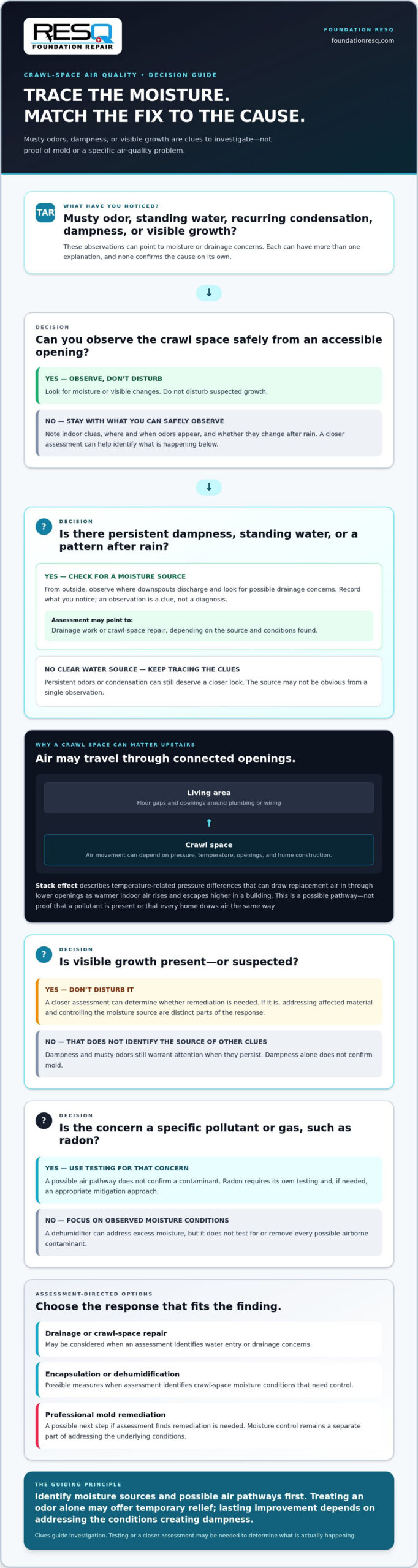
Building Science Corporation’s guidance on air-flow control describes the stack effect as air movement driven by temperature-related pressure differences: warmer air rises and escapes higher in a building, which can draw replacement air in through lower openings. In a home connected to a crawl space, that pressure pattern may help draw air upward through floor gaps. The effect depends on the building and conditions, so it doesn’t mean every home draws the same amount of air from below.
Think of a house as a connected system, not a set of perfectly sealed rooms. A possible pathway tells you where air could travel, but it doesn’t establish that mold, radon, or another particular pollutant is present. Testing or a closer assessment may be needed to determine what’s actually happening.
Which crawl-space conditions deserve attention?
Persistent dampness, standing water, musty odors, and visible growth are useful observations to record and investigate. They can point to moisture or drainage concerns, although each clue has more than one possible explanation. A musty smell can alert you to an issue without identifying a specific contaminant or diagnosing a health problem.
Note where and when an odor appears, whether it changes after rain, and whether you’ve noticed moisture on nearby surfaces. If you can see the crawl space safely from an accessible opening, observe rather than disturb suspected growth. Don’t assume that every damp area contains mold or that one treatment will solve every air-quality concern.
To understand how to improve air quality from crawl space conditions, first identify likely moisture sources and possible air pathways. The response depends on what an assessment finds, such as water entry, persistent dampness, or openings connecting the space to the home. A careful assessment helps match the remedy to the cause instead of relying on odor masking or a one-size-fits-all fix.
How Moisture and the Stack Effect Can Carry Crawl-Space Air
Air movement offers one explanation for how conditions below a home might relate to indoor air, but it doesn’t establish what’s in the air or how much is moving. Temperature and pressure differences can draw air through connected spaces. Moisture is a separate concern: it can support mold growth and produce musty odors, but dampness alone doesn’t confirm mold is present.
How does stack effect move air through a house?
Building Science Corporation describes the stack effect as air movement caused by temperature-related pressure differences inside and outside a building. In cooler conditions, warmer indoor air can rise and escape near upper levels; replacement air may then enter through lower openings. In a home with gaps between its crawl space and living area, some lower-level air may be drawn upward.
The route and strength of that movement vary with the home’s construction, openings, weather, and pressure conditions. A diagram could show the crawl space at the bottom, openings around pipes and wiring in the floor, the living area above, and air continuing toward the attic. Arrows would illustrate a possible pathway, not prove that air follows it in every home.
That distinction matters. Stack effect explains how air could move; it doesn’t measure indoor air quality or confirm a pollutant. Moisture, airborne particles, and gases are different concerns. Dust or mold particles may travel with air, while a gas such as radon requires its own testing and, if needed, an appropriate mitigation approach. A dehumidifier can address excess moisture, but it doesn’t test for or remove every possible airborne contaminant.
Why do moisture and mold concerns need source control?
Water that repeatedly enters or remains in a crawl space can keep materials damp. Persistent moisture creates conditions favorable to mold growth, though not every damp space contains mold. Musty odor and visible changes can prompt a closer look, but neither reveals the type of mold, level of exposure, or a health diagnosis.
The U.S. Environmental Protection Agency identifies moisture control as central to mold control. If mold remediation is needed, removal and moisture mitigation are distinct parts of the response: affected material may need to be addressed, and the water source or damp conditions also need attention. Removing visible growth without addressing ongoing moisture can leave the underlying conditions in place, which is why experienced specialists like ABC Mould Cleaning Solutions prioritize identifying the root cause alongside direct remediation.
Managing crawl-space moisture helps address conditions that may contribute to odors, mold growth, and air-movement concerns, but it doesn’t resolve every possible indoor air issue. The right step depends on what’s causing the moisture and whether another concern, such as a gas, needs separate assessment. If you’re weighing how to improve air quality from crawl space conditions, a crawl-space inspection can help identify moisture sources and guide an appropriate response. Foundation ResQ’s crawl-space moisture assessment can help clarify those next steps.
How to Tell Whether a Crawl Space May Be Affecting Your Home
A musty smell or damp patch can be a useful clue, but it doesn’t prove the crawl space is the source. Look for patterns and visible signs without putting yourself at risk. In Tallahassee, Florida’s humid climate is one factor that can affect moisture conditions, but the source and extent of a problem depend on the property. An inspection can help distinguish observations from likely causes.
What signs can a homeowner observe safely?
From a safe, accessible position, note odors, water, damp surfaces, condensation, or visible damage to a vapor barrier. Don’t enter a crawl space that feels unsafe, and don’t touch or scrape suspected mold. Record when and where signs appear, including whether an odor is stronger after rain or condensation returns in the same area. These details can help focus a professional assessment.
Use this table to organize what you notice. Each observation is a reason to investigate, not a diagnosis.
| Observation | Possible crawl-space connection | Sensible next step |
|---|---|---|
| Musty odor indoors | Moist materials or air moving from below may be contributing, but the smell alone can’t identify a source. | Note the location and timing; arrange an assessment if it persists or returns. |
| Visible dampness or damaged vapor barrier | Water or moisture may be reaching crawl-space materials or the ground covering. | Observe from a safe position and document the affected area without disturbing it. |
| Standing water | Possible sources include drainage issues, plumbing leaks, or water entering from the ground or perimeter. | Record where water collects and seek an assessment to trace the source. |
| Repeated condensation | Changing temperature and moisture conditions may be leaving surfaces wet. | Note which surfaces are affected and when condensation appears; have the conditions evaluated. |
Which moisture sources should be considered?
Moisture may come from a plumbing leak, water entering through the ground, or drainage that carries runoff toward the foundation. From outside, look for downspouts that release water close to the home, areas where water appears to collect, or grading that seems to direct runoff toward the building. These are observations, not proof of a specific cause.
Keep a simple record of dates, locations, and changes you notice, and take photos from a safe distance if useful. Avoid disturbing suspected mold or attempting repairs in an unsafe space. A professional assessment can examine crawl-space moisture and help determine what needs attention. This evidence-based first step is more useful than assuming every odor or damp spot has the same explanation, especially if you’re deciding how to improve air quality from crawl space conditions.
What Homeowners Can Do to Improve Crawl-Space Air Conditions
A steady, methodical approach can help separate useful clues from assumptions. Start with what you can safely observe, then address moisture at its source. Don’t rush to seal the space or treat an odor before understanding what’s causing the conditions. The right combination of drainage, encapsulation, and dehumidification depends on what an assessment finds.
Which first steps are reasonable before professional work?
Use this sequence to document useful information and avoid disturbing a possible mold problem:
- Document symptoms. Write down where odors occur, when they appear, and whether they change after rain or other noticeable conditions. Record visible dampness or condensation, too.
- Look for exterior moisture clues. From outside, check whether downspouts discharge close to the home, water visibly collects near the foundation, or the ground appears to slope toward the house. Note concerns rather than entering an unsafe area or starting extensive repairs.
- Leave suspected mold undisturbed. Don’t scrape, brush, or remove material that may be moldy. Surface cleaning can disturb growth and won’t correct an ongoing moisture source.
- Arrange an assessment if signs persist. Recurring water, lasting dampness, visible mold, or continuing musty odors deserve closer evaluation. Share your notes and observations so the assessment can focus on the pattern and possible source.
When should a professional assess the crawl space?
Arrange an assessment when moisture or odors return, water is present, or you see suspected mold or damage to the vapor barrier. A careful inspection considers the crawl space as a whole, including possible water entry, drainage, and damp materials. It can help determine whether the conditions call for drainage work, encapsulation, dehumidification, or another response.
These measures aren’t interchangeable. Drainage may be relevant when water collects or enters; encapsulation and dehumidification may suit other moisture conditions. Let the findings guide the approach. For a closer look at how one moisture-control option is used locally, the article Crawl Space Encapsulation Tallahassee: The Complete Homeowner’s Buying Guide for 2026 provides related context.
An air purifier or odor treatment may address some particles or smells, but it won’t fix water entering the crawl space or persistent dampness. If you’re deciding how to improve air quality from crawl space conditions, prioritize identifying and correcting moisture sources. Foundation ResQ provides crawl space repair, encapsulation, drainage, and dehumidification in Tallahassee. Learn about crawl-space moisture control.
How Foundation ResQ Addresses Crawl-Space Moisture and Air Quality
Improving indoor air starts with understanding what’s happening beneath the home. A musty odor may draw attention to the crawl space, but a lasting response depends on identifying the conditions behind it. Foundation ResQ serves Tallahassee homeowners with crawl space repair, encapsulation, drainage systems, and dehumidification, as well as mold remediation that addresses moisture sources.
Which Foundation ResQ services address crawl-space conditions?
Each home has its own moisture conditions, so an assessment helps determine which approach fits the project. Crawl space drainage systems can address water entry or collection. Encapsulation and crawl space dehumidification address other moisture conditions, while crawl space repair can help when the assessment identifies concerns with the space itself.
These measures focus on underlying conditions rather than simply covering up an odor or cleaning a surface. If mold remediation is needed, Foundation ResQ’s ACAC-certified and Clean Trust-certified professionals remove mold and mitigate the moisture source. Addressing both matters because unresolved dampness can allow mold to return. For more on the removal and moisture-control process, see our guide to professional mold remediation in Tallahassee.
What happens after requesting a free inspection?
Start by sharing what you’ve noticed, such as recurring musty odors, visible dampness, standing water, or condensation. Details about where and when these signs appear can help focus the assessment. Foundation ResQ provides free inspections and estimates for service requests. The inspection helps identify crawl-space moisture conditions and determine an appropriate project approach, rather than assuming one solution suits every home.
After reviewing the conditions, the next step may involve drainage, encapsulation, dehumidification, crawl space repair, or mold remediation with moisture mitigation. The goal is to match the work to the observed source and conditions, not to promise that one service will address every possible indoor air concern. If you’re researching how to improve air quality from crawl space conditions, a professional assessment can help replace guesswork with a clearer plan.
Request a free crawl-space inspection
Take the Next Step Toward a Healthier Home
A lingering odor can make it hard to know where to begin. You don’t have to identify the exact cause before asking for help. Have the conditions assessed, then use the findings to decide what deserves attention. This keeps the focus on evidence and lasting solutions rather than guesswork or temporary odor control.
If you’re weighing how to improve air quality from crawl space conditions, Foundation ResQ’s ACAC-certified and Clean Trust-certified mold remediation professionals can remove mold and address moisture when remediation is needed. The response depends on the conditions found in your home, since each property may need a different approach.
Start with a clearer picture of what’s happening beneath your home. Request a free crawl-space inspection and take a practical first step toward addressing the concern.
Frequently Asked Questions
Can an air purifier fix air quality problems caused by a crawl space?
An air purifier may capture some airborne particles in the room where it runs, but it won’t stop water entering a crawl space or control dampness there. For example, less dust near the unit doesn’t show that a leak has been fixed. Treat purification as a limited indoor measure, not source repair. If odors return despite running it, note the pattern and investigate moisture or another source.
Is crawl-space air always pulled into the house?
No. Stack effect is one influence on airflow, not a guarantee that air always moves from the crawl space into the home. Temperature and pressure differences, openings in floors, and the home’s design all affect the direction and amount of movement. There’s no fixed percentage that applies to every house. If odors or moisture concerns persist, an assessment can help identify whether the crawl space is involved.
What happens if a crawl space smells musty but no mold is visible?
A musty odor is a reason to investigate, but it can’t confirm mold on its own. Damp soil, water intrusion, plumbing issues, or another odor source may be involved. Don’t pull back materials or disturb concealed growth to look for an answer. Record where and when the smell occurs. If it continues or you also notice visible moisture, arrange an assessment to help locate the source.
Can changing an HVAC filter remove moisture from a crawl space?
No. An HVAC filter is designed to capture certain airborne particles as air moves through the system; it doesn’t stop water entry or control crawl-space humidity by itself. Choose and replace filters according to your system’s needs and manufacturer guidance, or consult HVAC contractors such as Ultra Air Heating and Cooling to evaluate overall system airflow. If dampness continues, the crawl space needs separate attention to identify moisture sources and conditions. A filter change alone won’t resolve those underlying issues.
How often should I inspect my crawl space for moisture?
There isn’t one required inspection interval that suits every home. Make periodic observations, and pay closer attention after noticing water intrusion, persistent odors, or changes in visible conditions. In a Tallahassee home, record what you observe and when, so recurring patterns are easier to explain. Don’t enter an unsafe space or disturb suspected mold. A professional assessment can help evaluate moisture that keeps returning or is difficult to locate.
Can sealing crawl-space vents alone improve indoor air quality?
Not necessarily. Changing ventilation isn’t a universal fix because moisture sources, drainage, air pathways, and the home’s design all matter. Avoid sealing vents as a stand-alone project without understanding how the crawl space is performing. Encapsulation and moisture-control measures should match assessed conditions. An evaluation can help determine whether drainage, dehumidification, or another approach is appropriate, rather than treating vent changes as a solution for every home.