The best alternatives to indoorairqualitymatters.com are the EPA’s indoor air quality resources, CDC mold guidance, AIHA referrals, and the professional standards of IICRC, ACAC, and NORMI. For homeowners in Tallahassee dealing with active mold, crawl space moisture, or foundation issues, Foundationresq offers free local inspections. Before signing any contract, get at least two detailed written quotes that specify scope, containment, drying approach, and post-remediation clearance testing.
Your shortlist at a glance:
- EPA Indoor Air Quality — foundational guidance on moisture, mold, and ventilation
- CDC Mold Resources — health-focused evidence on when to call professionals
- AIHA — referrals to Certified Industrial Hygienists (CIHs) for complex exposures
- IICRC, ACAC, NORMI — certification bodies whose credentials to demand on every quote
- InHaus Lab — lab-verified IAQ testing when defensible data matters
- Foundationresq — local inspection, crawl space remediation, and foundation repair in Tallahassee
One-sentence TL;DR: Prioritize defensible testing and two detailed written quotes before signing any remediation or repair contract.
Table of Contents
- What are the most trusted U.S. indoor air quality resources?
- How do you use these resources to find vetted local providers?
- What should your contractor-vetting checklist include?
- What phases should a professional remediation project include?
- What red flags should stop the conversation with a contractor?
- Where do you find and verify local remediation and foundation professionals?
- Why should a Healthy Home Assessment come before remediation?
- Key Takeaways
- The mistake most homeowners make before calling anyone
- Foundationresq covers the full scope from inspection to clearance
- Useful sources and where to verify claims
- FAQ
What are the most trusted U.S. indoor air quality resources?
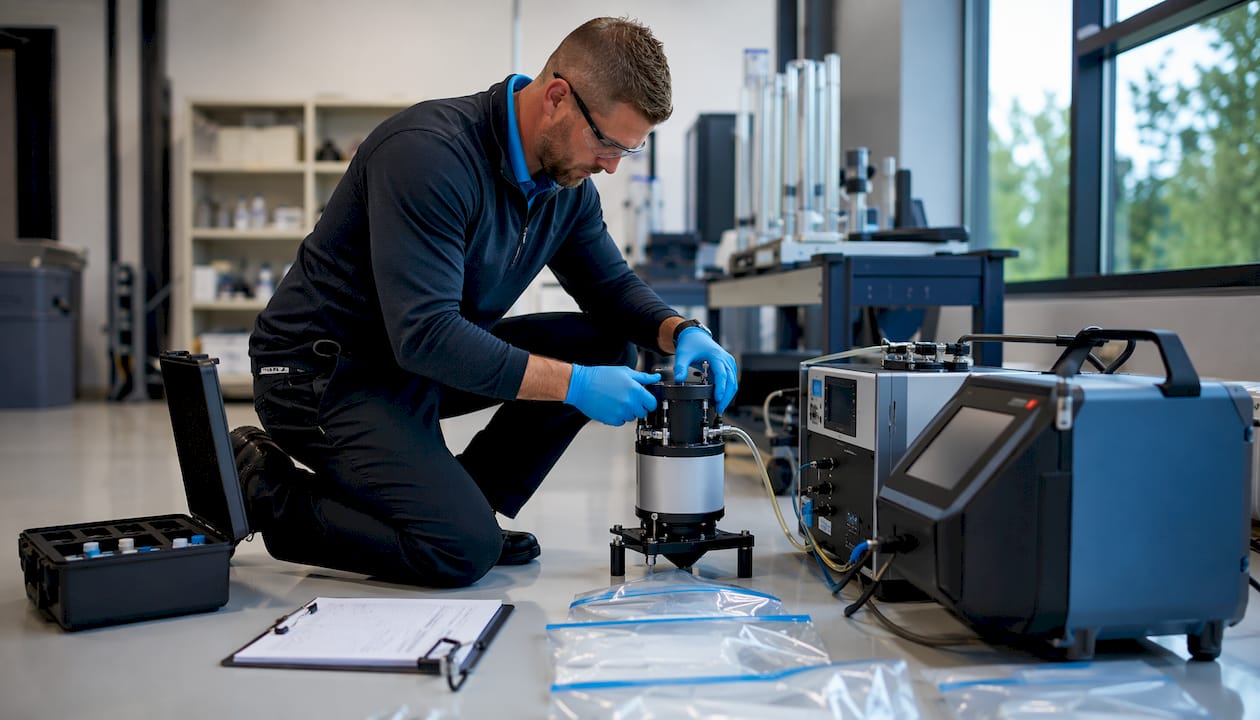
These six sources cover the full spectrum from basic education to professional credentialing.
| Resource | Best For | What It Offers |
|---|---|---|
| EPA Indoor Air Quality | Homeowner education | Mold, moisture, ventilation guides; remediation basics |
| CDC Mold | Health risk context | Evidence-based health effects; when to call a pro |
| AIHA | Finding CIHs | Referral directory; industrial hygiene standards |
| IICRC | Credential verification | S520 mold standard; contractor certification lookup |
| ACAC | Assessor credentials | Council-certified mold consultants and remediators |
| NORMI | Inspector credentials | National mold inspection and remediation certification |
| InHaus Lab | Lab-verified testing | Home environmental testing with accredited lab analysis |
The EPA and CDC are your starting point for understanding whether a problem is serious enough to warrant professional help. AIHA steps in when you need a CIH to interpret complex results or provide a defensible scope for insurance or resale purposes. IICRC, ACAC, and NORMI are the three certification bodies whose credentials you should request on every written quote. A contractor who holds none of them is a red flag.
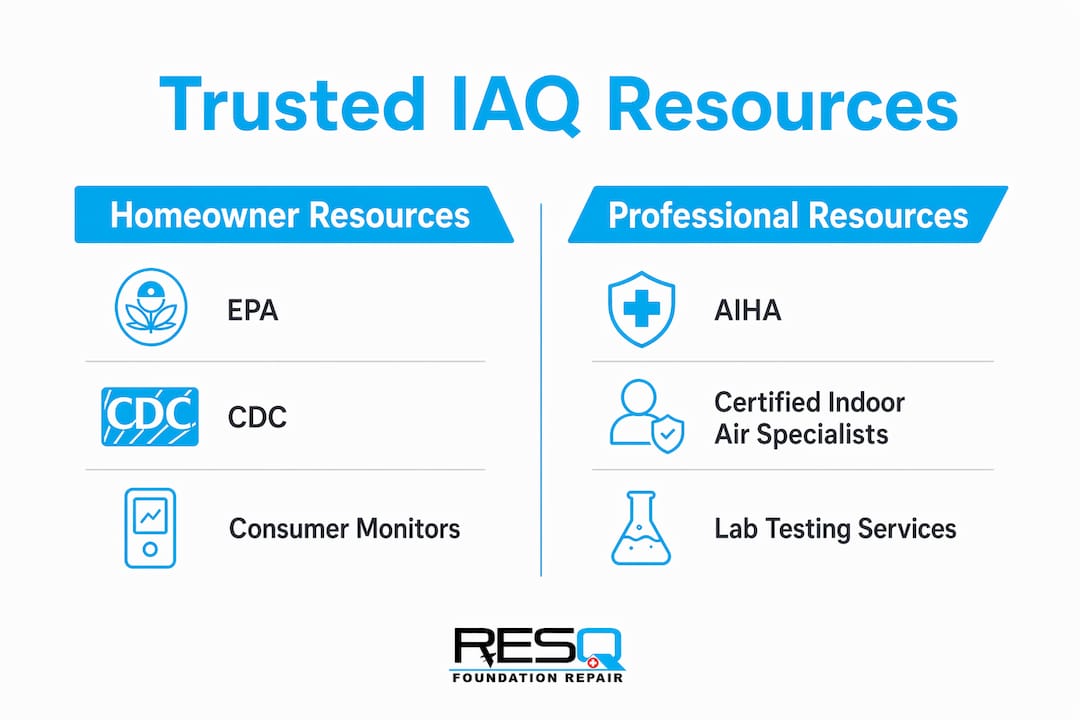
For testing, consumer monitors are useful as an early signal only. Professional testing produces lab-grade precision and the kind of documented results that hold up for insurance claims and remediation scoping.
How do you use these resources to find vetted local providers?
Follow this sequence to move from national guidance to a qualified short list.
- Clarify your need. Use EPA and CDC resources to determine whether you need assessment, active testing, or immediate remediation. A musty smell in a crawl space is different from visible black mold near an HVAC return.
- Find credentialed contractors. Search the IICRC, ACAC, and NORMI directories for certified professionals in your area. AIHA’s referral tool connects you with CIHs when health risks or complex moisture sources are involved.
- Match resource to need. Lab testing for documented proof, a CIH for complex or multi-room exposures, a remediation contractor for active mold and structural moisture.
- Verify independently. Cross-check any contractor against BBB listings, state licensing databases, and independent review platforms before scheduling an estimate.
Pro Tip: Ask every contractor upfront whether they use third-party lab clearance testing. A contractor who handles both remediation and their own post-clearance testing creates a conflict of interest — in states like Florida and Texas, this separation is legally required.
What should your contractor-vetting checklist include?
Before you hire anyone for foundation, crawl space, or mold work, get these items in writing.
| Checklist Item | What to Demand |
|---|---|
| Written quotes (2+) | Scope, containment plan, materials, drying approach, timeline |
| Certifications | IICRC, NORMI, or ACAC; CIH involvement when testing is needed |
| Testing plan | Pre- and post-remediation sampling with chain-of-custody documentation |
| Lab clearance report | Accredited lab results confirming remediation success |
| Payment terms | Deposit amount, payment schedule, warranty/guarantee in writing |
| Trust signals | Before/after photos, case studies, independent reviews |
- Require HEPA filtration and physical barriers in the containment plan — without them, spores spread into living areas during work.
- Ask for start and end dates, project phases, and a written change-order process.
- Confirm proof of insurance and bonding before any work begins.
Pro Tip: Request references from at least two recent projects similar to yours — same foundation type, similar crawl space size. Call them. A contractor confident in their work will hand you those numbers without hesitation.
What phases should a professional remediation project include?
Any legitimate estimate should walk through these steps in order.
- Assessment and moisture mapping — identifies the root water source before any work begins
- Containment — physical barriers and HEPA filtration to isolate the work area
- Material removal — affected insulation, wood, or drywall removed and bagged
- Cleaning and antimicrobial treatment — surfaces treated after removal
- Drying and dehumidification — commercial dehumidifiers run until moisture readings normalize
- Repairs — vapor barriers, crawl space encapsulation, foundation crack sealing, interior drain systems, or basement waterproofing as needed
- Post-remediation clearance testing — calibrated instruments and accredited labs confirm the space is clear
Common long-term solutions that directly affect indoor air quality include crawl space encapsulation, commercial dehumidifiers, foundation crack sealing, and interior drainage systems. Skipping any phase, especially clearance testing, means you have no documented proof the problem is resolved.
Americans spend roughly 90% of their time indoors, which is why fixing the moisture source rather than just treating visible mold has real long-term health consequences.
Typical crawl space remediation runs $1,500–$5,000; full encapsulation adds roughly $5,000–$15,000 depending on size. Budget for both if recurrence is a concern.
What red flags should stop the conversation with a contractor?
Walk away, or at minimum ask hard follow-up questions, when you see any of these:
- No assessment offered — jumping straight to a quote without inspecting the moisture source
- One-size-fits-all fixes — a single solution pitched before they’ve seen your space
- No clearance testing — refusing to include post-remediation lab testing in the scope
- No written containment plan — verbal assurances about HEPA and barriers aren’t enough
- No written warranty — any legitimate contractor stands behind their work in writing
- Large upfront deposit pressure — standard practice is a modest deposit, not 50%+ upfront
Questions to ask during the estimate:
- “Who performs the testing, and is it a third-party lab?”
- “What exactly is in the containment plan, and how do you prevent cross-contamination?”
- “Can I see before/after photos from a similar crawl space or foundation project?”
- “What does your warranty cover, and for how long?”
Where do you find and verify local remediation and foundation professionals?
Search paths:
- IICRC, ACAC, and NORMI contractor directories (filter by specialty and location)
- AIHA referral tool for CIHs in your area
- BBB listings and state contractor licensing databases
- Independent review platforms for recent, verified customer feedback
Verification steps:
- Confirm active state licensing and check for complaints.
- Request proof of general liability insurance and bonding.
- Ask for two recent project references with similar scope.
- Compare two independent quotes using the vetting checklist above.
- If health risks are present or moisture sources are unclear, add a Healthy Home Assessment or CIH evaluation before committing to remediation.
For crawl space and foundation work specifically, verify that the contractor has documented experience with your foundation type. A company that primarily handles above-grade mold may not carry the structural knowledge needed for wet crawl space repair or crack sealing.
Why should a Healthy Home Assessment come before remediation?
Treating mold without identifying the moisture source is the single most common reason homeowners pay for the same repair twice. A Healthy Home Assessment combines room-to-room environmental testing, moisture mapping, and prioritized recommendations — it tells you what to fix first and why, rather than leaving you to guess.
“Defensible data — from calibrated instruments and accredited laboratories — is what separates a documented remediation from one you can’t verify or claim against.” (Criterion Labs)
That documentation matters beyond the immediate repair. A CIH-backed interpretive report supports insurance claims, satisfies disclosure requirements during a sale, and gives you a clear scope that prevents a contractor from expanding the job without justification. Professional testing produces lab-verified results that consumer monitors simply cannot replicate.
Pro Tip: Ask your assessor to deliver a prioritized fix list, not just a list of findings. The difference between “you have elevated moisture” and “seal this foundation crack first, then encapsulate, then add a dehumidifier” is the difference between a useful report and an expensive piece of paper.
Key Takeaways
Getting a Healthy Home Assessment before remediation, combined with two detailed written quotes and lab-based clearance testing, is the most reliable way to avoid repeat repairs and wasted costs.
| Point | Details |
|---|---|
| Start with assessment | Moisture mapping before remediation prevents repeat repairs and wasted spend. |
| Demand certifications | Require IICRC, NORMI, or ACAC credentials and CIH involvement for complex cases. |
| Require clearance testing | Post-remediation lab results are the only documented proof the work succeeded. |
| Budget realistically | Crawl space remediation runs $1,500–$5,000; full encapsulation adds $5,000–$15,000. |
| Foundationresq | Offers free inspections, crawl space remediation, encapsulation, and mold removal in Tallahassee. |
The mistake most homeowners make before calling anyone
The pattern I see most often: a homeowner notices a musty smell, gets one phone quote, and signs a contract the same week. No moisture map. No written containment plan. No clearance testing in the scope. Six months later, the smell is back.
The contractors who earn long-term trust are the ones who show up with calibrated instruments, document conditions before touching anything, and hand you a written scope that includes what happens after the work is done. HEPA containment isn’t optional — it’s what keeps spores out of your living space while the crawl space is open. And post-remediation lab clearance isn’t a nice-to-have; it’s the only way to know the job is finished.
A typical small crawl space project runs two to four days: one day for assessment and setup, one to two days for removal and treatment, and a final visit for clearance testing once drying is complete. That timeline is reasonable to expect in writing before you sign anything.
Foundationresq covers the full scope from inspection to clearance
If you’re in the Tallahassee area and want a local team that checks every box on the vetting checklist above, Foundationresq handles the complete project sequence: free inspection, crawl space remediation, crawl space encapsulation, dehumidification, basement waterproofing, foundation crack repair, and professional mold remediation. Financing options are available for homeowners who need help managing project costs.
Documented case studies, before/after photos, and warranty information are available on the services page. Schedule your free Healthy Home Assessment or inspection today and get a written scope before committing to any work.
Useful sources and where to verify claims
- EPA Indoor Air Quality — foundational homeowner guidance on mold, moisture, and ventilation
- CDC Mold Resources — health effects, risk populations, and when to call professionals
- AIHA — CIH referral directory and industrial hygiene standards
- IICRC — S520 mold remediation standard; contractor credential lookup
- ACAC — council-certified mold consultant and remediator verification
- NORMI — national mold inspection and remediation certification directory
- InHaus Lab — lab-verified home environmental testing and Healthy Home Assessments
- Verified Remediation cost guide — crawl space remediation and encapsulation cost ranges
- Foundationresq services — local inspection, remediation, and repair in Tallahassee, FL
FAQ
What are the best alternatives to indoorairqualitymatters.com for homeowners?
The EPA’s indoor air quality pages, CDC mold guidance, and AIHA are the strongest free U.S. resources. For professional credentialing, check IICRC, ACAC, and NORMI directories.
Do I need professional IAQ testing or will a consumer monitor work?
Consumer monitors are an early warning signal only. Professional testing provides lab-verified, defensible results needed for remediation scoping and insurance claims.
How much does crawl space mold remediation typically cost?
Remediation alone typically runs $1,500–$5,000; adding full encapsulation brings the total to roughly $5,000–$15,000 depending on crawl space size.
What certifications should I require from a mold or crawl space contractor?
Look for IICRC, NORMI, or ACAC credentials. For complex exposures or when testing is involved, ask whether a Certified Industrial Hygienist will be part of the project.
Can Foundationresq handle both inspection and remediation in Tallahassee?
Yes. Foundationresq offers free inspections, crawl space remediation, encapsulation, dehumidification, waterproofing, and mold removal, with financing options available for qualifying projects.
Recommended
- Beyond the Air You Breathe: Finding Top Indoor Environmental Management – Tallahassee Foundation Repair | Foundation ResQ
- Beyond Clean Air: Unpacking Indoor Environmental Services – Tallahassee Foundation Repair | Foundation ResQ
- Top 4 Crawl Space Maintenance Providers 2026 – Tallahassee Foundation Repair | Foundation ResQ
- Top 6 floridastructuralgroup.com Alternatives 2026 – Tallahassee Foundation Repair | Foundation ResQ