
Why Sinking Slab Repair Cost Matters for Your Home and Wallet
Sinking slab repair cost typically ranges from $2,200 to $8,100, with a national average of around $5,100. When you notice cracks in your concrete, uneven floors, or doors that won’t close, your first thought is likely about the cost. It’s a fair question, as foundation problems only become more expensive to fix over time.
Catching foundation issues early keeps costs lower, while delayed repairs can lead to expenses that are ten times higher. A small crack that costs $500 to seal today might require $5,000 in structural repairs next year if water worsens the settlement.
The good news is that you have options. Different repair methods—from budget-friendly mudjacking to advanced polyurethane foam injection—offer solutions at various price points. Understanding these options helps you make informed decisions.
This guide cuts through the confusion to give you the real numbers and practical insights you need to steer sinking slab repair costs.
The Bottom Line: Average Sinking Slab Repair Costs
When you spot that telltale crack in your driveway or feel your garage floor starting to slope, one question immediately comes to mind: “What’s this going to cost me?” Let’s cut through the uncertainty and talk real numbers. Understanding the average sinking slab repair cost helps you plan, budget, and avoid sticker shock.
The costs for fixing a sinking slab vary widely, from a few hundred dollars for minor issues to tens of thousands for major structural work. Knowing what influences these costs is crucial.
What is the average cost of sinking slab repair?
The national average sinking slab repair cost is around $5,100, with most homeowners spending between $2,200 and $8,100. The final cost depends on the severity of the problem and the chosen repair method.
- Minor cracks that don’t affect structural integrity typically cost $300 to $800 to seal. This is preventative maintenance that saves money long-term.
- Moderate settling, which causes noticeable cracks or uneven floors, usually costs between $4,500 and $15,000. These repairs involve lifting and stabilizing the slab.
- Severe settlement can cost $15,000 to $40,000+. This applies to significant drops in the foundation or widespread damage requiring extensive structural work.
The takeaway is simple: acting early saves money. A small crack you ignore today won’t fix itself and will only lead to a more expensive repair later.
We offer comprehensive solutions for every level of foundation and concrete problem. Learn more about how we can help stabilize your home: More info about our services.
What is the cost per square foot for sinking slab repair?
Contractors often quote sinking slab repair cost per square foot, which varies by method:
- Mudjacking: $3 to $6 per square foot. This traditional, budget-friendly option uses a cement slurry to lift concrete.
- Polyurethane foam injection: $5 to $25 per square foot. This modern method costs more but offers a lighter material, faster curing, and greater precision.
The final cost isn’t just about square footage. The size of the void under the slab is a major factor; a small area with a deep void may cost more than a large area with a shallow one due to material and labor needs. Accessibility also affects the price. Per-square-foot pricing is a good starting point, but a professional quote is needed for an accurate estimate.
Key Factors That Influence Your Sinking Slab Repair Cost
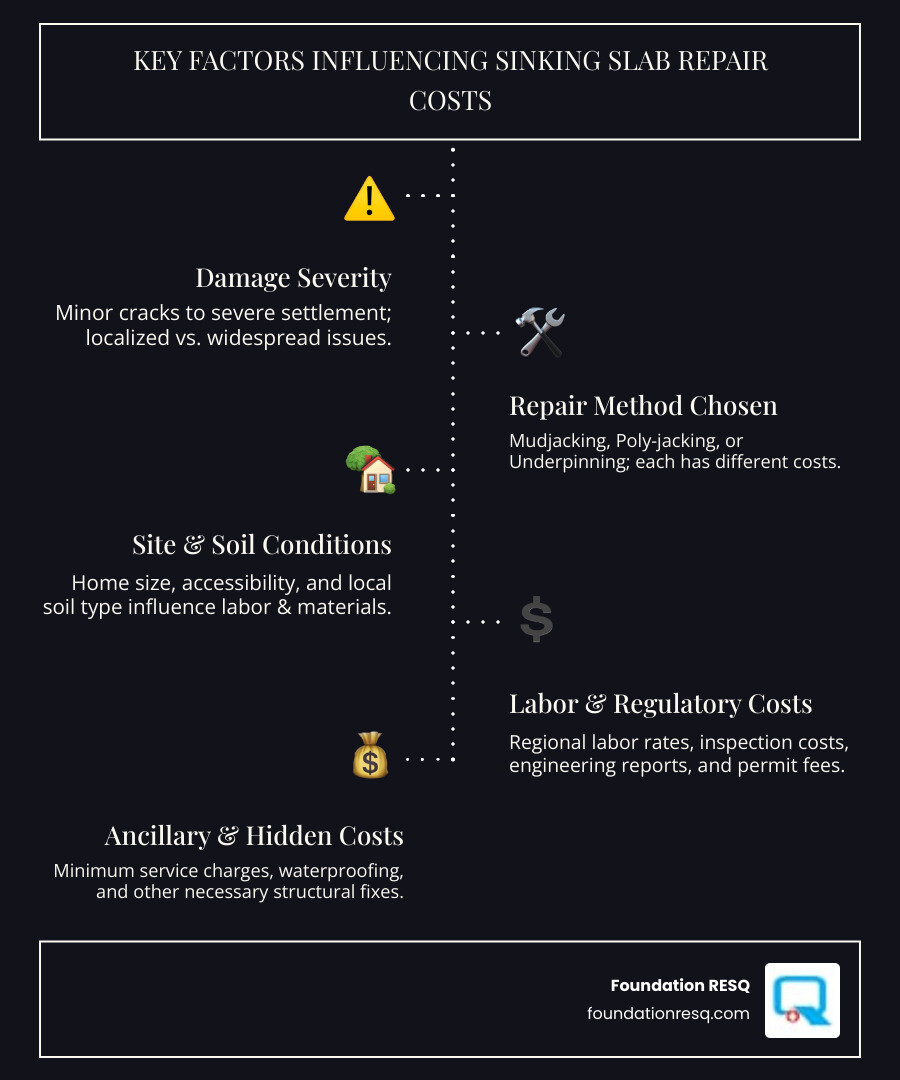
To anticipate your sinking slab repair cost, you need to understand the specific factors that influence pricing. The final cost depends on the model, features, and condition, much like buying a car.
Severity of Damage and Scope of Work
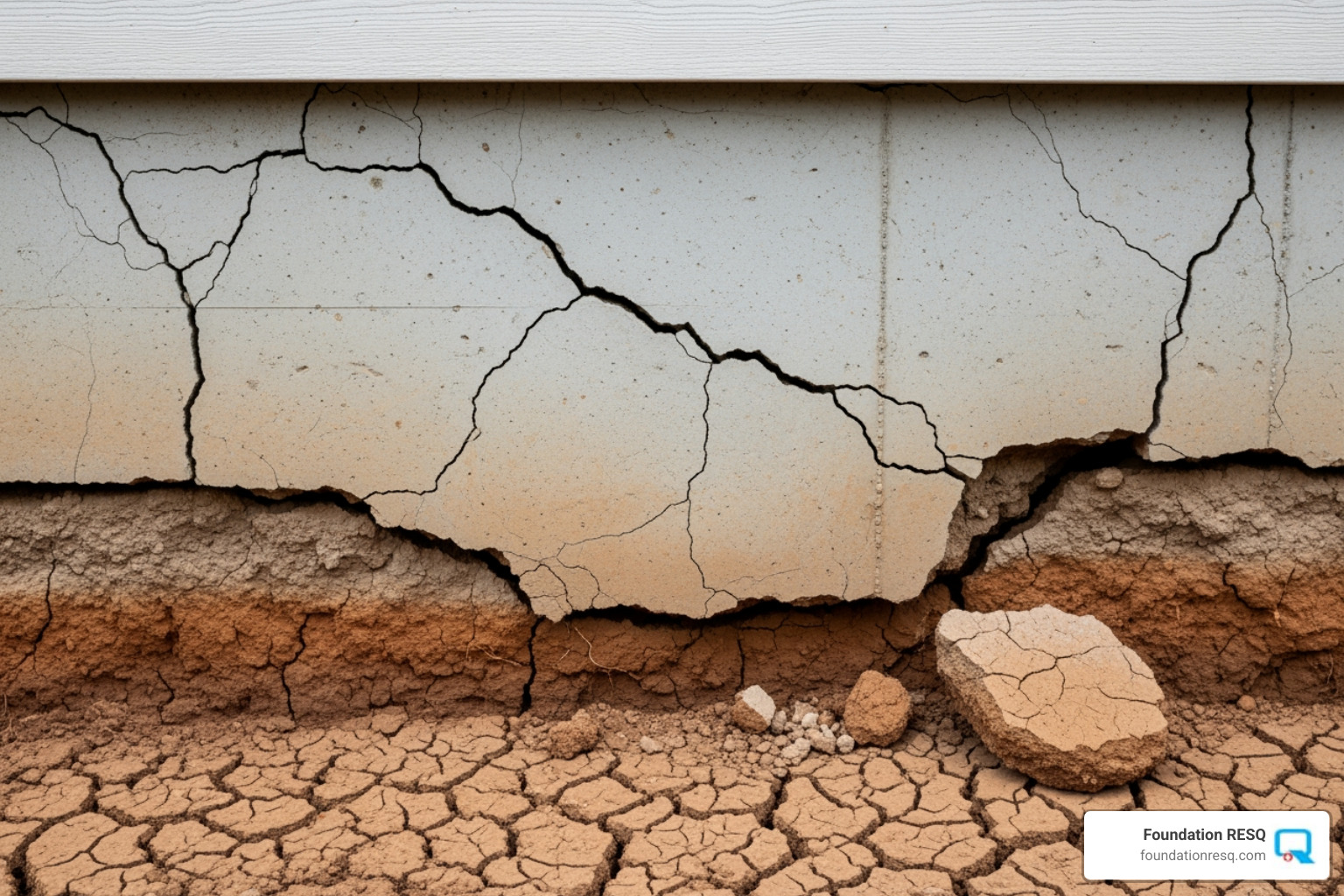
This is the most significant factor. A hairline crack costs far less to fix than a slab that has settled several inches and caused structural damage.
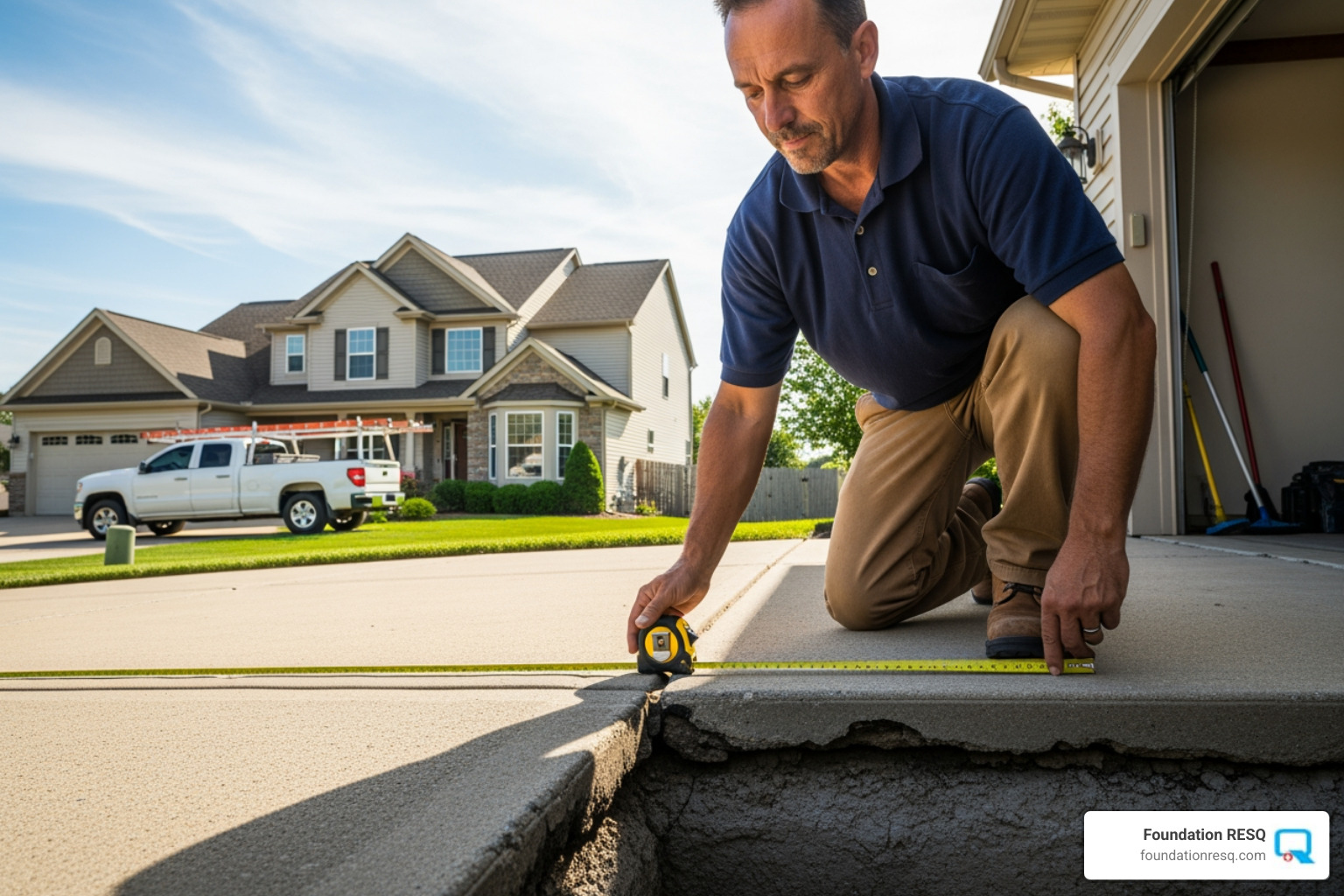
- Minor vs. Moderate Damage: Sealing small cracks might cost a few hundred dollars. However, cracks wider than 1/8 inch, or those that are horizontal or stair-stepped, indicate structural movement requiring more extensive repairs like mudjacking or poly-injection.
- Scope of Work: A localized repair, like lifting one sidewalk slab, is much cheaper than addressing widespread foundation distress. Widespread issues require more injection points or piers, which increases material and labor costs.
Ancillary Costs: Inspections, Engineering, and Permits
The total sinking slab repair cost often includes more than just the repair itself. Be prepared for these potential expenses:
- Foundation Inspections: A professional assessment typically costs $400 to $750. Many contractors, including Foundation RESQ, waive this fee if you hire them for the repair.
- Structural Engineer Reports: For complex issues, an engineer’s report may be needed, costing $500 to $3,000. This ensures the correct long-term solution is chosen.
- Permits: Depending on your location in Alabama, Florida, or Georgia, permits for foundation work can cost $75 to $150 or more.
- Waterproofing and Drainage: To prevent future problems, solutions like French drains or sump pumps might be necessary, costing $2,000 to $7,000.
Minimum Service Charges and Regional Differences
Contractors often have minimum service charges, typically from $300 to $2,000, to cover fixed costs like travel and setup. Even a small repair will likely incur this minimum fee.
Regional factors also influence cost. Labor rates for specialists can exceed the national average of $200 per hour in high-demand areas of Florida and Georgia. Material costs also vary by location.
In Alabama, Florida, and Georgia, expansive clay soils are a common challenge. These soils shrink and swell with moisture changes, putting pressure on foundations. Repairing slabs in these conditions can be more complex and expensive, requiring specialized techniques for long-term stability. This soil instability helps explain why sinking slab repair cost varies significantly in areas like Tallahassee, Panama City, or Dothan.
Comparing Repair Methods and Their Costs
When your slab starts sinking, the good news is that you’ve got options. Not every repair requires the same approach, and understanding the differences between methods can save you thousands of dollars while getting you the right solution for your specific situation. Let’s break down the main repair methods, what they cost, and when each one makes the most sense for your home in Alabama, Florida, or Georgia.
We pride ourselves on offering advanced techniques custom to your specific needs. Find more about our cutting-edge concrete leveling services: More info about our advanced techniques.
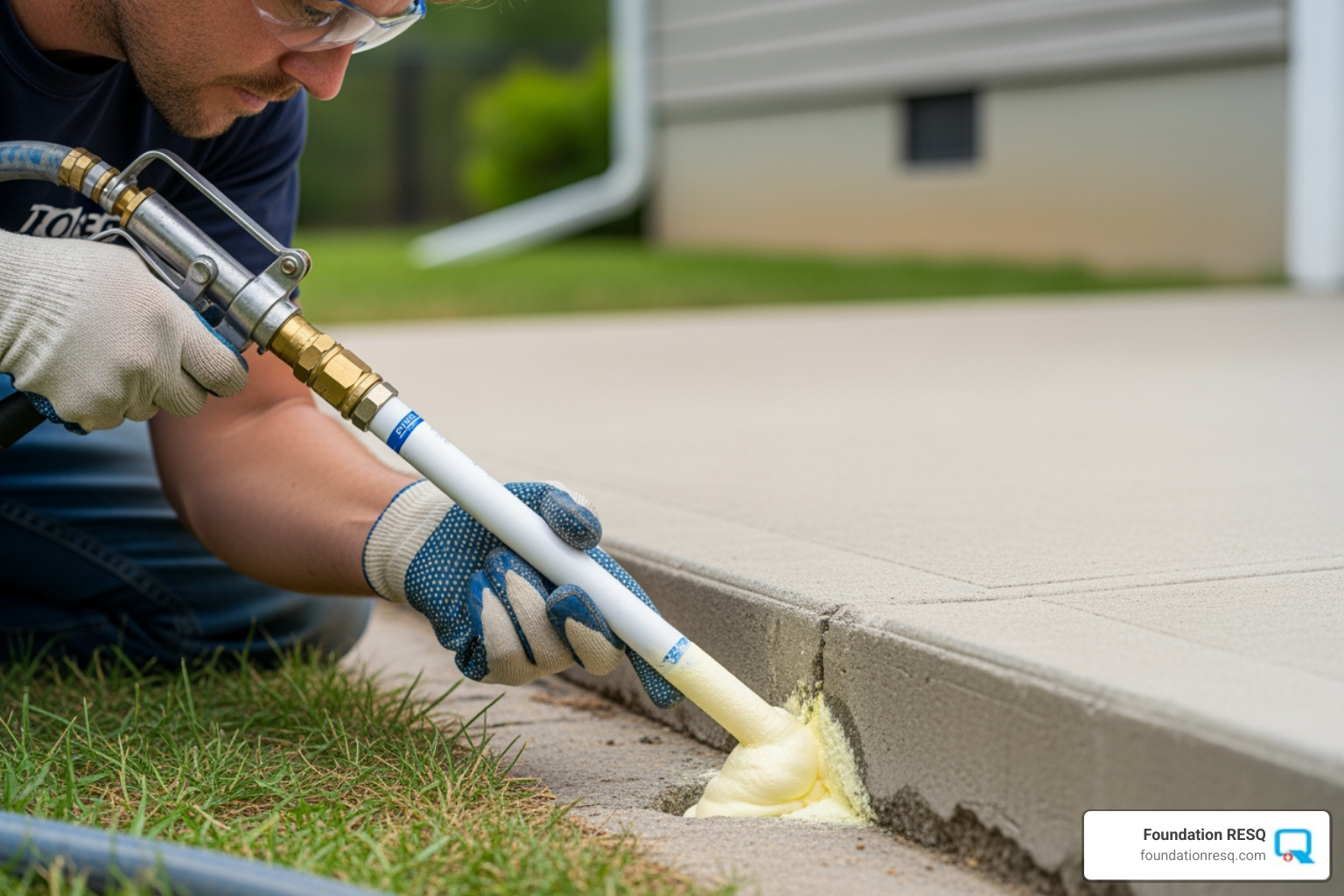
Polyurethane Foam Injection (Poly-Jacking)
Think of polyurethane foam injection as the modern, high-tech solution to sinking concrete. It’s become increasingly popular for good reason—it’s fast, effective, and incredibly precise.
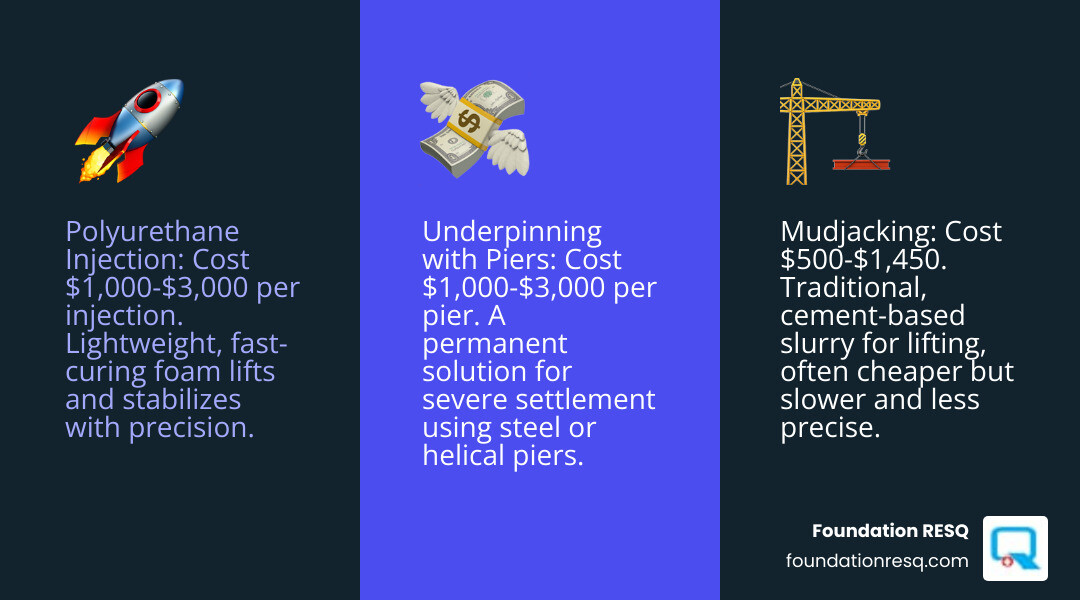
The sinking slab repair cost for polyurethane injection typically runs between $1,000 and $3,000 per injection point, or about $5 to $25 per square foot. Yes, it’s more expensive than traditional methods upfront, but here’s why it’s often worth every penny.
The magic is in the material itself. Polyurethane foam is remarkably lightweight—we’re talking about a material that weighs just a fraction of what traditional concrete slurry weighs. This means you’re not adding more weight to already struggling soil, which helps prevent future settling. The foam expands beneath your slab, filling every nook and cranny, and then hardens within about 15 minutes. That’s right—you can often walk on your repaired concrete the same day.
Beyond just lifting your slab back into place, the expanding foam compresses and reinforces weak soil underneath. It’s like giving your foundation a supportive hug from below. We often recommend this method for driveways, sidewalks, patios, pool decks, and garage floors—basically anywhere you need precision lifting with minimal disruption to your daily routine.
Mudjacking (Slab Jacking)
Mudjacking is the grandfather of concrete leveling methods—it’s been around for decades and remains a solid choice for many situations, especially if budget is your primary concern.
With mudjacking, you’re looking at costs between $500 and $1,450 for smaller jobs, or roughly $3 to $6 per square foot. For a larger foundation around 1,500 square feet, expect costs in the $4,500 to $9,000 range. It’s generally the most affordable option if you’re dealing with straightforward sinking.
The process involves drilling holes in your concrete and pumping a cement-based slurry underneath until the slab lifts back into position. It works, and it’s been working for a long time. However, there are some tradeoffs to consider.
That cement slurry is heavy—much heavier than polyurethane foam. While it effectively fills voids and lifts your slab, adding all that weight to already compromised soil can sometimes contribute to future settling if the underlying issues aren’t fully addressed. You’ll also need to wait several days before you can use the repaired area again, as the slurry needs time to cure and harden.
The technique is also a bit less precise than foam injection. The high-pressure pumping of thick slurry can make it trickier to achieve perfectly even results, though experienced professionals can certainly get excellent outcomes. For localized sinking and smaller repairs, mudjacking remains a tried-and-true method that won’t break the bank.
Underpinning with Piers
When we’re talking about serious foundation problems—the kind where your entire house is settling or large sections of your foundation are compromised—underpinning with piers is the heavy-duty solution you need.
This is not a small investment. Each pier typically costs between $1,000 and $3,000, and a full underpinning project can range from $10,000 to $30,000 or more. In severe cases, costs can climb to $50,000 to $100,000 or beyond. But when your foundation needs this level of intervention, it’s about protecting your entire home and investment.
Underpinning involves excavating beneath your foundation and installing steel or helical piers deep into stable soil strata—we’re talking about reaching down to bedrock or stable soil layers that won’t shift or settle. These piers essentially become new support columns, transferring the weight of your structure from unstable shallow soil to solid, dependable ground far below.
When installed correctly by licensed professionals, underpinning provides a permanent solution to major structural issues. It’s not something you’ll need to revisit in five or ten years. This method is typically reserved for situations where other repair methods simply won’t cut it—when the foundation itself has failed and needs to be lifted and permanently stabilized. For a more in-depth look at this critical repair method, check out A detailed guide on piering costs.
Repair vs. Full Slab Replacement
Here’s a question we hear all the time: “Wouldn’t it just be easier to tear everything out and start fresh?” It’s a fair question, but the answer almost always points toward repair instead of replacement.
Repairing your sinking slab typically saves you 50% to 70% compared to full replacement. If replacing a slab would cost you $10,000, you might spend only $3,000 to $5,000 on a repair instead. That’s real money back in your pocket.
Full slab replacement is expensive—running anywhere from $16 to $19 per square foot, which can total $23,000 to $48,000 for an entire foundation. Even just replacing a smaller slab can cost $3,600 to $8,000, and that doesn’t include the cost of demolishing and hauling away the old concrete.
Beyond the financial savings, replacement is far more disruptive to your life. You’re looking at demolition, excavation, pouring new concrete, and then waiting weeks for it to cure properly. Your landscaping gets torn up, your daily routines get interrupted, and you’re left with a construction zone for an extended period. Repair methods like foam injection or mudjacking? Often completed in hours or a few days at most.
There’s also something to be said for preserving your existing concrete when possible. You avoid the color and texture mismatches that come with new pours, and you’re making a more environmentally responsible choice by keeping concrete out of landfills. Unless your slab is so severely damaged that repair isn’t structurally feasible, fixing what you have is almost always the smarter, more cost-effective choice.
Paying for the Fix: Insurance, Financing, and Long-Term Value
Let’s talk about how to pay for your sinking slab repair cost and why this investment is one of the smartest you can make. Think of it this way: you’re not just fixing concrete, you’re protecting your home’s value and your family’s safety.
We understand that unexpected home repairs can strain your finances. That’s why we offer flexible options to help you manage the cost: More info about our financing options.
Does Homeowner’s Insurance Cover Repairs?
Here’s the question everyone asks: most homeowner’s insurance policies won’t cover sinking slab repairs. Insurance companies typically view foundation settling as a maintenance issue resulting from gradual wear and tear. Damage from expansive soils or slow settlement almost never qualifies for coverage.
However, there are exceptions for sudden, unexpected events. If a burst pipe causes settlement, or if your foundation is damaged by a covered disaster like a fire, you might have a claim. Standard policies typically exclude floods and earth movement unless you have purchased separate coverage.
My honest advice? Pull out your policy and read the fine print, or call your insurance provider directly. Don’t assume anything when it comes to coverage. For a more detailed look at what homeowner’s insurance typically covers regarding foundation issues, check out Understanding what homeowner’s insurance covers.
The Long-Term Costs of Delaying Repairs
It’s tempting to ignore a small crack, but foundation problems never get better on their own—they only get worse and more expensive.
A sinking slab causes worsening structural damage throughout your home, leading to stressed walls, cracked drywall, sticking doors, and uneven floors. The financial impact of waiting is significant, as repair costs increase exponentially with time. An $800 crack repair today could become a $10,000 structural emergency next year. Early intervention is key to keeping your sinking slab repair cost manageable.
Delaying repairs also has other consequences:
- Reduced Home Value: Foundation problems can lower your home’s market value by 10% to 20% or more. They are a major red flag for buyers and can complicate mortgage approvals.
- Safety Hazards: Uneven floors are tripping hazards, while foundation cracks can invite pests, moisture, and mold. Severe instability can make parts of your home unsafe.
- Plumbing Damage: As a slab sinks, it can break pipes beneath it, leading to costly slab leaks (averaging $2,300 to repair). This creates a vicious cycle where leaking water causes more sinking.
Acting now protects your wallet and your home. Every month you wait, the problem and the repair bill grow larger.
Frequently Asked Questions about Slab Repair Costs
We get a lot of questions about sinking slab repair cost and the issues that lead to it. After years of helping homeowners across Alabama, Florida, and Georgia, we’ve noticed that many of you have similar concerns. Let’s tackle some of the most common questions we hear.
Is minor foundation settling normal?
Here’s the thing: yes, some minor foundation settling is actually completely normal. It’s just part of the natural aging process every home goes through as the soil beneath it adjusts and compacts over time. You might notice tiny hairline cracks—we’re talking no wider than 1/8 inch—that run vertically in your foundation walls or concrete slab. These are usually just cosmetic and not a sign that your house is about to fall apart.
But—and this is an important “but”—ongoing or rapid settlement is a different animal entirely. If you’re seeing cracks that are horizontal, stair-stepped, or getting wider over time, that’s your home waving a red flag at you. Other warning signs include doors and windows that suddenly stick or won’t close properly, floors that become noticeably uneven, or water starting to seep in where it shouldn’t be.
When you notice these signs, it’s time to call a professional. What might have started as “normal” settling has crossed into “we need to address this now” territory. Catching these problems early not only prevents further damage but also keeps your sinking slab repair cost from skyrocketing. We offer free inspections for exactly this reason—so you can get expert eyes on the problem before it gets worse.
What is the most affordable way to fix a sinking slab?
If you’re looking at the price tag alone, mudjacking is often the cheapest upfront option. At $3 to $6 per square foot, it’s typically the most budget-friendly choice for lifting smaller areas of sunken concrete. The cement-based slurry used in mudjacking costs less than the advanced polyurethane foam, which is why it comes in at a lower price point.
That said, polyurethane foam injection can be surprisingly cost-effective for smaller jobs. While it might cost more per square foot, its precision means you’re only treating exactly what needs treatment. Plus, the rapid curing time—we’re talking 15 minutes instead of several days—means less disruption to your life. Sometimes that convenience is worth the slightly higher cost.
But here’s the real secret to affordability: early intervention saves money, period. Addressing a minor crack or small area of settlement today will always be cheaper than waiting until you need extensive structural repairs. We’ve seen homeowners spend ten times more because they waited too long. A $500 repair this year can easily become a $5,000 problem next year if ignored. The most affordable fix is the one you do before the problem gets worse.
How long does a typical slab repair take?
The timeline for your repair depends on which method we’re using and how extensive the damage is.
Polyurethane injection is the speed champion. Most projects using this method can be wrapped up in just a few hours. The foam expands and cures in about 15 minutes, which means you can actually use your driveway or patio almost immediately. It’s the perfect solution when you need your concrete back in action quickly—no waiting around for days wondering when you can park in your driveway again.
Mudjacking takes a bit longer but is still relatively quick. We can usually complete the lifting process within a day or so. The catch is that the concrete slurry needs several days to fully cure before you should put heavy loads on it or use it normally. It’s not a huge wait, but it’s something to plan for.
For severe foundation problems that require underpinning with piers, you’re looking at a more involved process. These structural repairs can take several days or even a week or more, depending on how many piers we need to install, how deep we need to go to reach stable soil, and the complexity of the work. It’s a bigger commitment, but it’s also solving a much more serious problem.
No matter which method your home needs, our team at Foundation RESQ works efficiently to get the job done right without dragging it out. We know you want your life back to normal as quickly as possible, and we respect that.
Secure Your Foundation and Your Budget
If you’ve made it this far, you understand what drives sinking slab repair cost. The most important takeaway is that acting early is the single best decision for your home and your wallet. Ignoring a small crack or uneven slab only allows the problem to worsen, leading to more extensive and expensive repairs down the road.
While foundation problems can feel overwhelming, a professional assessment provides clarity. It uncovers the root cause—be it expansive soil, poor drainage, or settling—and allows for a targeted repair plan. At Foundation RESQ, we provide this clarity with customer-focused service and transparent pricing. We specialize in advanced techniques but always recommend the right solution for your specific needs, whether it’s polyurethane injection, underpinning, or mudjacking.
Your foundation is the base of your family’s safety and your home’s value. Protecting it provides peace of mind for years to come.
Taking the first step is easy. Foundation RESQ offers free, no-obligation inspections throughout our service areas in Alabama, Florida, and Georgia. Let our experts provide a clear path forward.
Your home is trying to tell you something. Let’s listen to it together. Get a free, no-obligation estimate for your concrete leveling needs.