What Slab Jackers Do and Why Your Home Needs Them
Slab jackers are concrete repair specialists who lift and level sunken slabs through a process also known as mudjacking or concrete leveling. This method provides a fast, affordable solution to restore safety and curb appeal to your property.
What Slab Jackers Do:
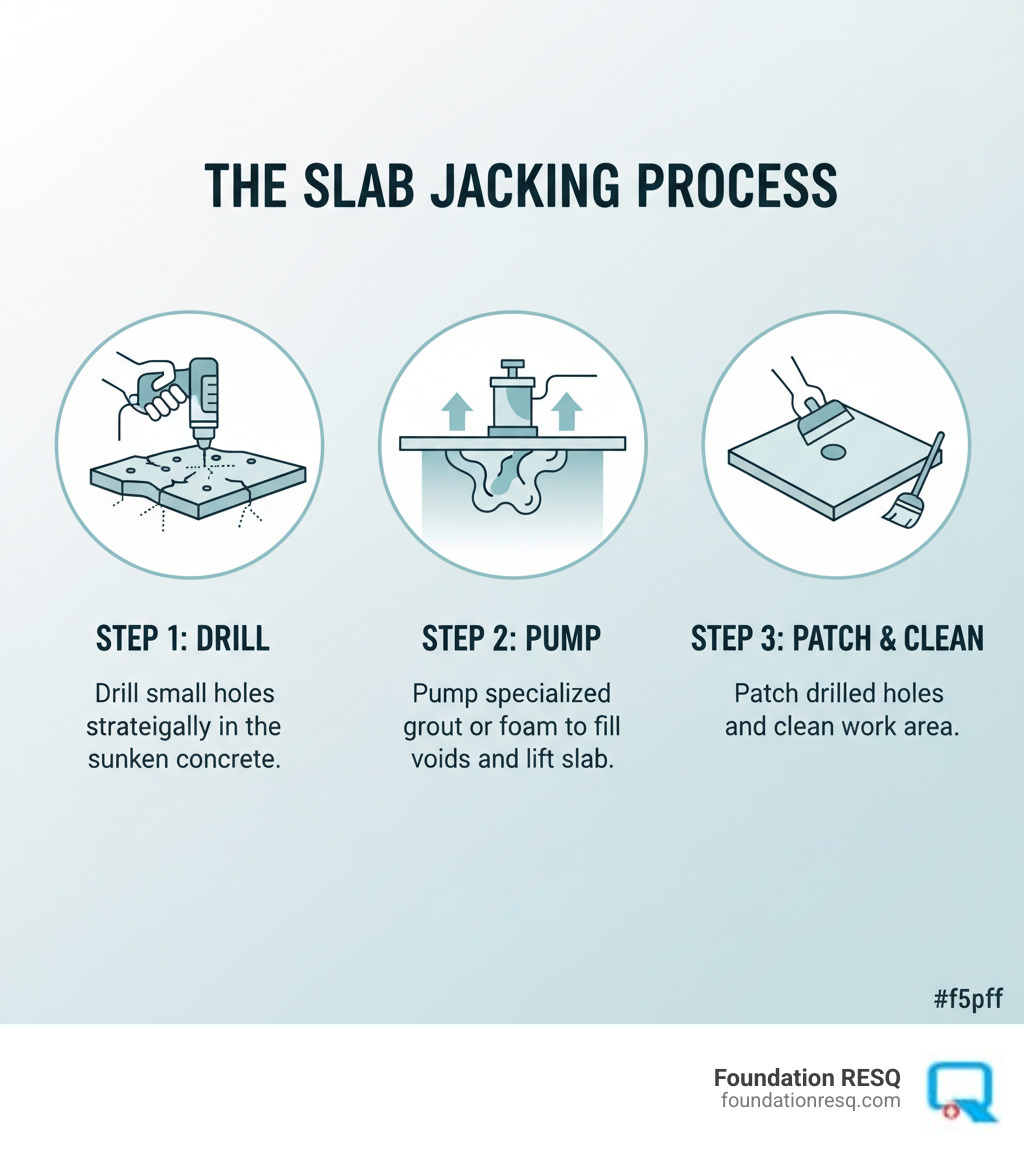
- Drill small holes in sunken concrete (typically 5/8 to 2 inches in diameter).
- Pump material (a grout mixture or polyurethane foam) underneath the slab.
- Lift the concrete back to its original level using hydraulic pressure.
- Patch the holes and clean the work area.
Why You Might Need a Slab Jacker:
- To fix sunken driveways, patios, sidewalks, or garage floors.
- To eliminate trip hazards and improve safety.
- To save up to 70% compared to concrete replacement.
- To complete repairs in hours, not days.
- To avoid the mess and hassle of demolition.
The cost typically ranges from $600 to $6,000, depending on the project size—about one-third the price of replacement. Most jobs are completed in 2-3 hours, and you can use the repaired surface almost immediately.
The Slab Jacking Process: From Sunken to Stable
A sunken concrete slab is more than an eyesore; it’s a safety hazard and a drainage problem. At Foundation RESQ, our slab jackers use a precise, straightforward process to fix settled concrete and restore stability to your property.
The process begins with a thorough assessment to identify the best locations for injection. We then drill small holes into the sunken slab—as small as ⅝ of an inch for polyurethane foam or 1½ to 2½ inches for traditional mudjacking. These holes are spaced strategically to ensure maximum lift without causing damage.
Next, we pump a specialized material—either a cement-based grout or expanding polyurethane foam—through the holes. This material flows into the voids beneath the slab, which are typically caused by soil erosion or poor compaction. As the material fills the empty space, it creates hydraulic pressure that gently lifts the slab back to its original position. Our technicians monitor the lift carefully, raising it incrementally to prevent cracking.
Once the slab is level, we patch the injection holes with a matching cement mix and clean the area thoroughly. Most residential jobs are completed in just 2-3 hours, and even larger commercial projects are often finished within a day, allowing you to use the surface almost immediately.
Want to dig deeper into the technical details? Check out this technical guide on slabjacking procedures from the concrete industry experts.
Common Problems Solved by Slab Jacking
Slab jacking is a versatile solution for many concrete settling issues. Our slab jackers regularly fix:
- Sunken driveways that cause bumps and scrapes.
- Uneven patios that create an obstacle course in your backyard.
- Sinking sidewalks that pose a serious trip hazard.
- Unstable steps that feel insecure and dangerous.
- Garage floor settlement that affects door alignment and drainage.
- Pool deck issues, restoring a smooth, safe surface near water.
Beyond fixing trip hazards, lifting concrete also corrects water flow problems, directing water away from your foundation. It also fills voids under the concrete, addressing the root cause of settlement.
For more details on how we address these issues and others, visit our repair services page.
Equipment and Materials Used
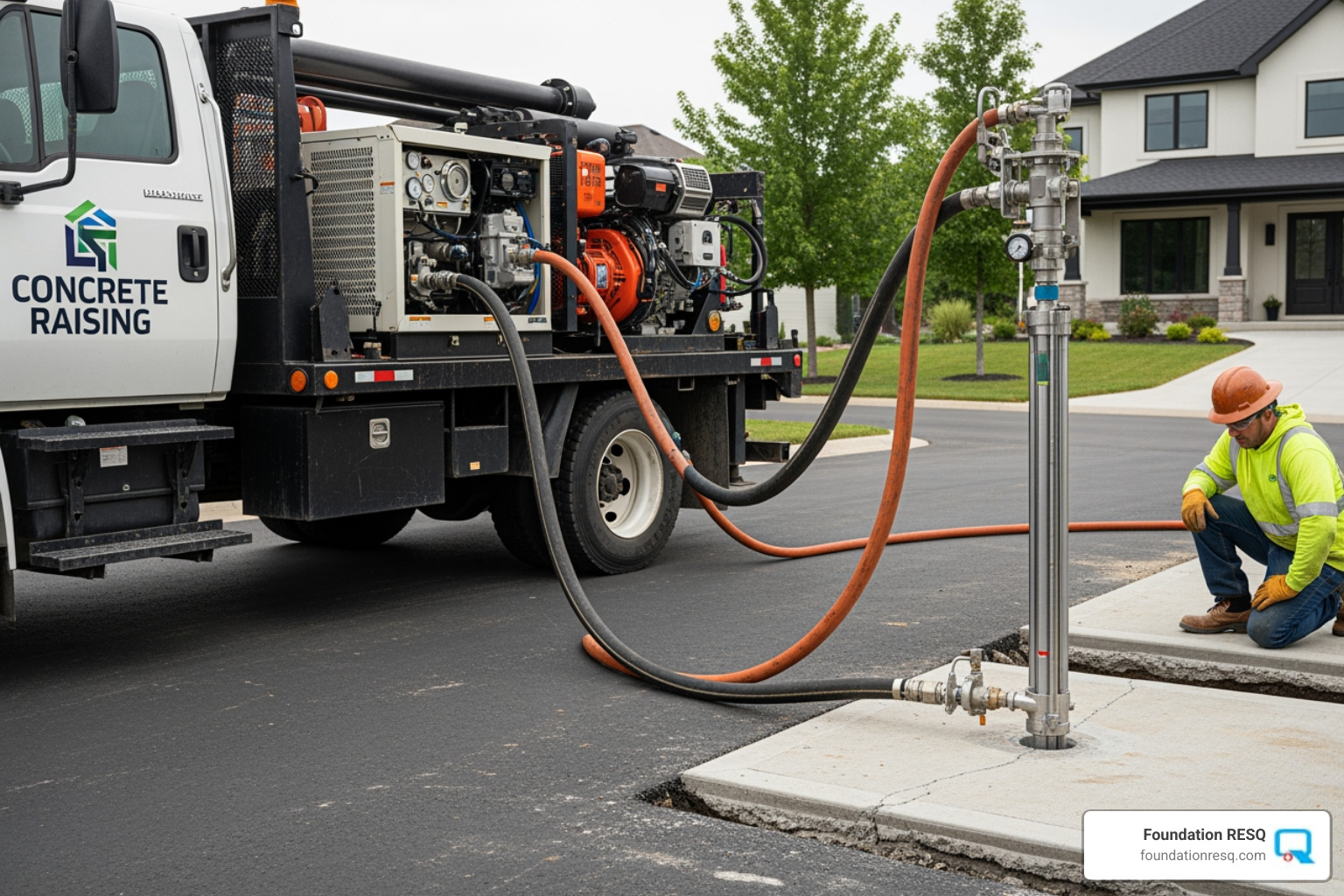
Our slab jackers use specialized equipment to ensure a precise and effective repair. This includes powerful rock drills for creating clean holes, high-speed mixers for preparing grout, and hydraulic pumps that allow for controlled, gentle lifting. We use hoses, nozzles, and various levels to ensure the slab is returned to a perfectly level position.
The materials are just as important. We use either a traditional cementitious slurry (a mix of cement, sand, and other aggregates) or modern polyurethane foam. The foam is a lightweight, two-part liquid that expands to fill voids and cures quickly. Both materials provide a stable, long-lasting base to support your concrete for years to come.
Types of Slab Jacking: Mudjacking vs. Polyurethane Foam Jacking
When lifting sunken concrete, there are two primary methods: traditional mudjacking and modern polyurethane foam jacking. Our slab jackers at Foundation RESQ are skilled in both, and the right choice depends on your budget, the concrete’s condition, and how quickly you need to use the area.
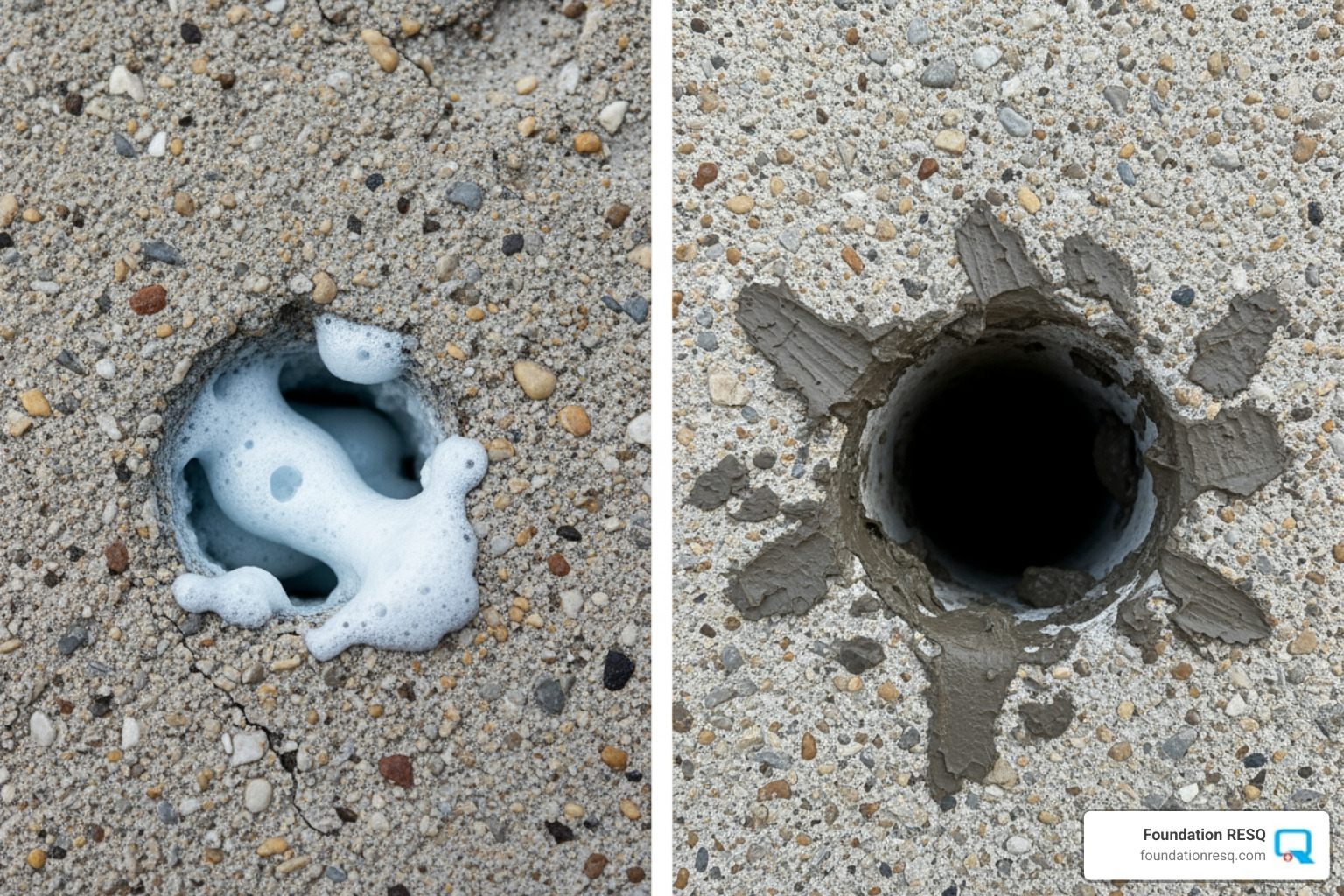
The most visible difference is the hole size: foam jacking uses tiny 5/8-inch holes, while mudjacking requires larger 2-inch holes. However, other factors distinguish these two effective techniques.
The Role of Polyurethane Foam in Modern Techniques
Polyurethane foam jacking, or polyjacking, involves injecting a two-part liquid that expands up to 35 times its original volume beneath the slab. This expansion allows it to fill every void, creating a solid, supportive base.
Key advantages of foam jacking include:
- Lightweight: The foam is incredibly light, so it doesn’t add extra weight to already unstable soil.
- Fast Curing: It cures to full strength in about 15 minutes, meaning you can use your driveway or sidewalk almost immediately.
- Discreet Repairs: The small injection holes are barely noticeable once patched, preserving your property’s curb appeal.
- Water Resistance: Cured foam acts as a moisture barrier, protecting the soil below from future erosion.
- Less Invasive: Our equipment can be positioned up to 200 feet away, minimizing disruption to your landscaping.
At Foundation RESQ, we invest in this advanced technology to provide the best solutions available. Learn more about our approach on our More about our advanced techniques page.
The Tried-and-True Mudjacking Method
Mudjacking has been a reliable method for lifting concrete for over 50 years. It uses a cementitious grout slurry made from cement, water, and aggregates like limestone dust. This mixture is pumped under the slab to fill voids and hydraulically lift the concrete.
The larger injection holes (1-1/2 to 2-1/2 inches) are necessary for the thicker grout. While more visible after patching, the material provides proven, stable support.
One of mudjacking’s biggest advantages is its cost-effectiveness. It is typically more budget-friendly than foam jacking, making it an excellent choice for large projects or homeowners focused on value. This time-tested method has been trusted by contractors for generations to deliver reliable results.
Our team will assess your specific situation and recommend the method that best suits your concrete, timeline, and budget. Both approaches offer tremendous value compared to the cost and hassle of replacement.
Slab Jacking vs. Concrete Replacement: Making the Smart Choice
When your driveway or patio sinks, replacement might seem like the only option. However, before committing to the expense and disruption of demolition, consider slab jacking. For many homeowners across Alabama, Florida, and Georgia, slab jacking is a smarter, more efficient solution.
| Feature | Slab Jacking | Concrete Replacement |
|---|---|---|
| Cost | Up to 70% less than replacement | High, involves demolition, new materials, labor |
| Time | Hours (typically 2-3 hours) | Days to weeks (including 28-day cure time) |
| Disruption | Minimal mess, no heavy equipment on lawn | Significant, demolition noise, debris, heavy equipment |
| Usability | Immediately or within hours | 28-day cure time before full use |
| Environmental | Preserves existing concrete, less landfill waste | Generates significant landfill waste |
Advantages of Repairing Over Replacing
The benefits of slab jacking extend beyond its significant cost savings of up to 70%.
- Speed and Convenience: Our slab jackers complete most jobs in 2-3 hours, not days or weeks. You can often use the repaired surface the same day, unlike the 28-day cure time required for new concrete.
- Minimal Disruption: The process is quiet and clean, with no heavy machinery tearing up your lawn or loud demolition annoying your neighbors.
- Environmental Responsibility: By repairing the existing slab, we keep tons of concrete out of landfills.
- Aesthetic Consistency: Slab jacking preserves your original concrete, avoiding the color mismatch that comes with pouring a new section.
Repairing your sunken concrete increases your property’s value, safety, and curb appeal in a fraction of the time and for a fraction of the cost of replacement.
When is Replacement the Better Option?
Slab jacking isn’t always the answer. Our team will recommend replacement if your concrete is severely cracked, crumbling, or structurally compromised. If the slab is shattered or deteriorating throughout, lifting it will not provide a lasting solution. In these cases, replacement is the more practical long-term choice. During your free inspection, we will provide an honest assessment and recommend the best course of action for your property.
When to Call Professional Slab Jackers (And When Not To)
Knowing when to call for slab jacking is key to a successful repair. While slab jackers can fix most sunken concrete, the method is best suited for specific conditions. At Foundation RESQ, our free inspections help determine if slab jacking is the right solution for you.
Ideal Scenarios for Slab Jacking
Slab jacking is the perfect solution when a concrete slab has settled but remains structurally sound. It works by filling the voids beneath the concrete that cause it to sink. Ideal applications include:
- Driveways, Sidewalks, and Walkways: Eliminating trip hazards and correcting drainage issues.
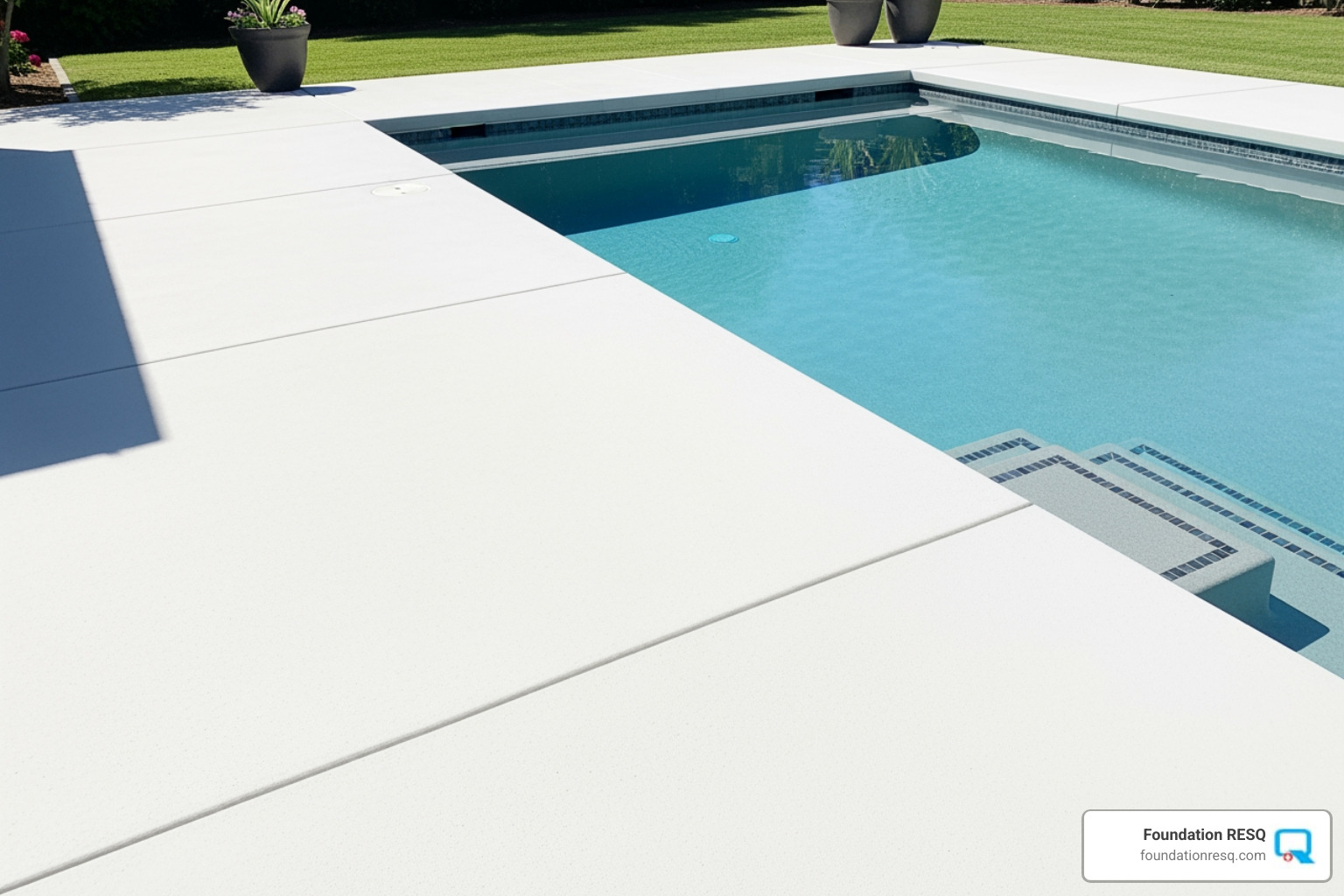
- Patios, Porches, and Pool Decks: Restoring level, safe surfaces for outdoor living and recreation.
- Garage Floors and Interior Floor Slabs: Leveling floors to improve stability and function, often with minimal disruption inside the home.
If your concrete is uneven but intact, slab jacking can deliver fantastic results quickly and affordably.
Situations Where Slab Jacking is Not Recommended
Our slab jackers will advise against this method in certain situations where it won’t provide a lasting fix. Slab jacking is not recommended for:
- Severe Cracking or Crumbling: If the concrete’s structural integrity is gone, it cannot be lifted effectively.
- Tree Root Damage: Lifting a slab shattered by roots won’t solve the underlying problem, as the roots will continue to grow and cause damage.
- Unstable Soil: In areas with highly organic soil, peat, or ongoing erosion, a more comprehensive solution is needed to stabilize the ground first.
- Severe Foundation Issues: If sunken concrete is a symptom of a larger structural problem with your home’s foundation, slab jacking is only a temporary patch. In these cases, we would recommend a more extensive foundation repair, which you can learn about on our foundation repair services page.
Our goal is to provide a permanent solution. A free inspection will help us identify the root cause of the problem and the best way to fix it.
Frequently Asked Questions About Slab Jacking
We know you have questions, and we’re here to provide clear, straightforward answers. Here are some of the most common inquiries we receive about slab jacking:
How much does slab jacking cost?
The cost of slab jacking typically ranges from $600 to $6,000, depending on the project’s size, the amount of lift needed, and the material used. It is significantly more affordable than replacement, often costing about one-third the price. This can save you up to 70% compared to tearing out and pouring new concrete. Our slab jackers provide free, no-obligation estimates custom to your needs in Alabama, Florida, or Georgia.
How long does slab jacking last?
A properly executed slab jacking repair can last for the life of the concrete, potentially 20 to 50+ years. In many cases, the repair can last indefinitely. Its longevity depends on addressing the root cause of settlement, such as poor drainage. We fill the voids to stabilize the soil, but maintaining good drainage and sealing cracks will ensure the most durable, long-term result.
For a broader perspective on the durability of concrete lifting, you can review this An overview of slab jacking.
Can slab jacking be done in various weather conditions?
Yes, slab jacking is a versatile process that can be performed year-round in most weather conditions, including rain or cold. The primary limitation is ensuring the ground is not frozen. This flexibility allows our slab jackers to address your concrete issues promptly without waiting for perfect weather.
Conclusion: Restore Your Property with Expert Concrete Lifting
Sunken concrete is more than an eyesore—it’s a safety hazard that can damage your property’s value and direct water toward your foundation. Fortunately, you don’t have to resort to a full replacement. Slab jacking offers a smarter solution that is faster, more affordable, and far less disruptive.
Whether using modern polyurethane foam or a time-tested grout mixture, the result is a level, stable surface ready for immediate use. At Foundation RESQ, our expert slab jackers bring years of experience serving communities across Alabama, Florida, and Georgia. We are committed to solving your concrete problems the right way.
We begin with a free inspection to provide an honest assessment and a clear recommendation—no pressure, no surprises. We’ve fixed countless driveways, patios, and sidewalks, using advanced techniques to deliver lasting results without breaking the bank.
Don’t let sunken concrete compromise your property’s safety and curb appeal any longer. The solution is more affordable and convenient than you think.
Ready to see what level concrete can do for your home? Restore your sunken concrete today with Foundation RESQ. We’re here to help, one lifted slab at a time.