
Concrete leveling is the process of lifting sunken or uneven concrete slabs back to their original position by injecting material beneath them through small drilled holes. The industry term is slabjacking, and it applies to driveways, patios, sidewalks, and porches. Unlike full concrete replacement, leveling restores function without demolition. The two standard methods are mudjacking, which uses a cementitious slurry, and polyurethane foam injection. Both are faster and less expensive than tearing out and pouring new concrete, making concrete leveling a practical first option for most homeowners dealing with settled slabs.
What does concrete leveling involve, step by step?
Concrete leveling follows a defined five-step process that most qualified contractors complete in a single visit. Understanding each step helps you know what to expect and what questions to ask before work begins.
-
Site inspection. A technician examines the slab to identify how much it has settled, where voids exist beneath it, and what caused the movement. Drainage problems, erosion, and compacting soil are the most common culprits.
-
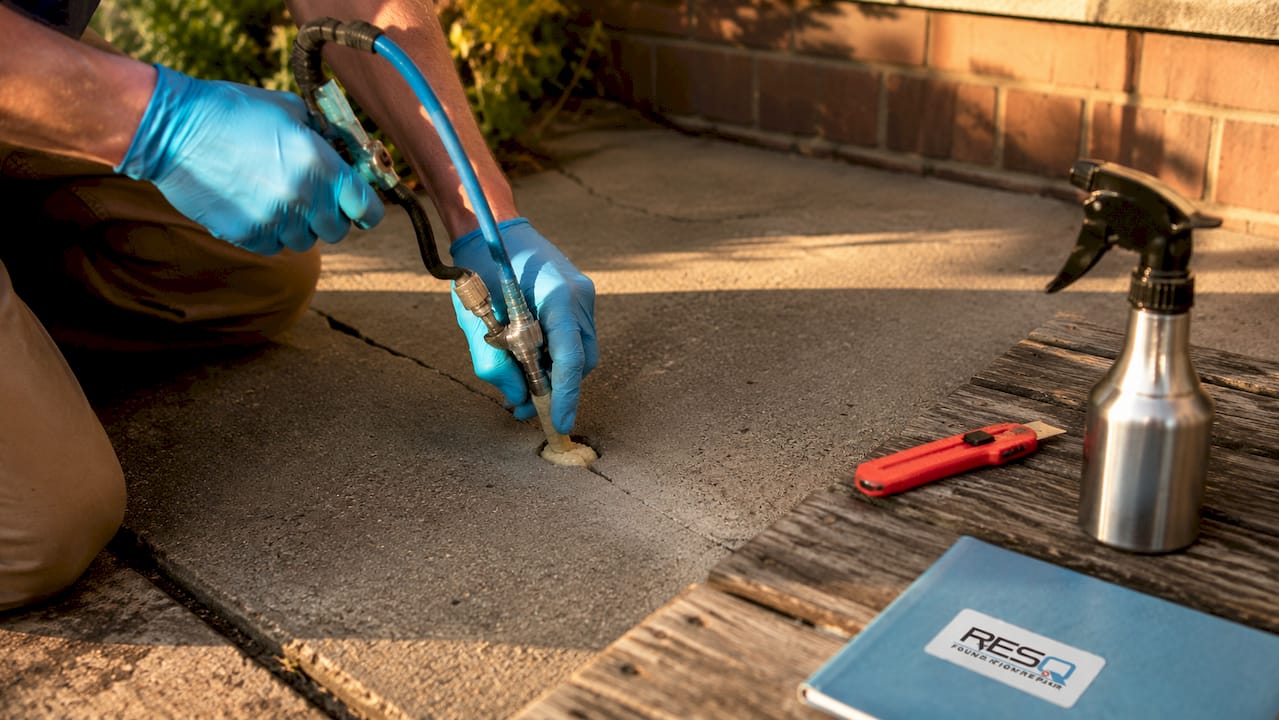
Drilling access holes. Small holes are drilled through the slab to reach the void below. Foam injection uses 5/8-inch holes, while mudjacking requires larger 1–2 inch holes. Smaller holes mean less visible patching after the job.
-
Injecting leveling material. The contractor pumps either a cementitious slurry or polyurethane foam through the holes. The material fills voids and creates upward pressure that lifts the slab.
-
Real-time lift monitoring. A skilled technician watches the slab continuously during injection. Lifting too fast or too far can crack the concrete. Controlled, gradual pressure is the standard practice.
-
Sealing the holes. Once the slab reaches the correct height, the holes are filled with non-shrink grout that matches the surrounding surface.
Cure times vary by method. Foam cures in as little as 15 minutes, making the surface traffic-ready the same day. Mudjacking requires 24–48 hours before the slab can bear normal load.
Pro Tip: Ask your contractor to walk you through the lift monitoring process before work starts. A contractor who cannot explain how they prevent over-lifting is a contractor worth replacing.
Which types of concrete leveling methods are most common?
Two methods dominate the concrete leveling market: mudjacking and polyurethane foam injection. Both lift sunken slabs, but they use different materials and suit different conditions.
Mudjacking
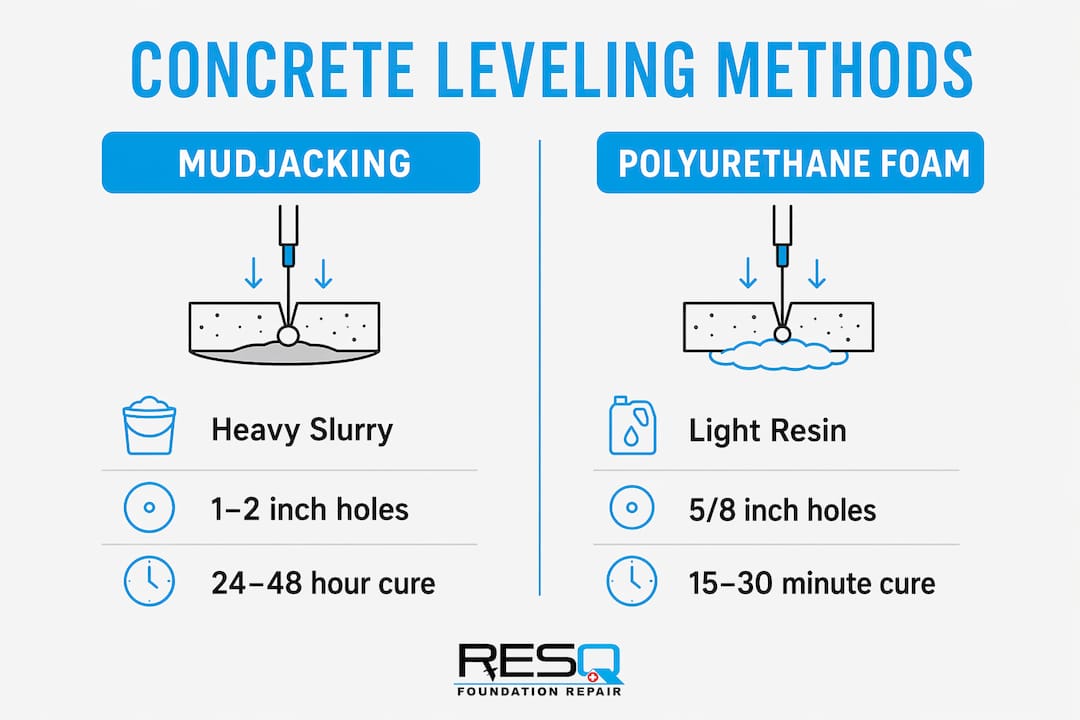
Mudjacking pumps a heavy cement, soil, and water slurry through 1–2 inch holes drilled into the slab. The slurry fills voids and pushes the concrete upward. It is the older of the two methods and costs less per project in most markets. The material weighs over 100 lbs per cubic foot, which makes it well suited for large, structurally demanding slabs like thick driveway sections or industrial pads. The tradeoff is cure time: mudjacking requires 24–48 hours before the surface is usable, and the heavier material can add stress to already weak subgrade soil.
Polyurethane foam injection
Polyurethane foam uses a lightweight two-part resin injected through 5/8-inch holes. The resin expands on contact, fills voids, and cures in roughly 15 minutes. At 2–4 lbs per cubic foot, it adds almost no weight to the soil below. Foam is also waterproof, which gives it a clear advantage on wet or moisture-prone subgrades where mudjacking slurry can erode or wash away over time.
| Feature | Mudjacking | Polyurethane foam |
|---|---|---|
| Hole size | 1–2 inches | 5/8 inch |
| Cure time | 24–48 hours | 15–30 minutes |
| Material weight | 100+ lbs/cu ft | 2–4 lbs/cu ft |
| Best for | Heavy slabs, stable soil | Patios, walkways, wet subgrades |
| Waterproof | No | Yes |
Mudjacking is favored for massive, structurally demanding slabs, while polyurethane foam suits patios and historic structures because of its light weight and rapid cure. The term “slabjacking” covers both methods. When a contractor uses that word, ask which specific material and technique they plan to use. The answer affects cost, hole size, cure time, and long-term durability.
Pro Tip: Slabjacking terminology varies widely between contractors. Always ask for the specific method and material in writing before signing any agreement.
Why is concrete leveling an affordable option vs. full replacement?
Cost is the clearest reason homeowners choose leveling over replacement. Professional concrete leveling costs $3–$10 per square foot, while full replacement ranges from $10 per square foot to over $100 per square foot for complex foundation work. A typical residential leveling project runs $500–$3,000 and finishes in hours. Replacement involves demolition, debris removal, new pours, and multi-day cure periods.
The time savings matter as much as the dollar savings. Foam leveling returns a driveway or patio to use within 30 minutes. Mudjacking adds a day or two of downtime. Full replacement can take several days from demolition to final cure, leaving your property disrupted and inaccessible.
Contractor minimum fees typically range from $300 to $500, which covers mobilization and equipment setup regardless of project size. That cost structure rewards homeowners who group multiple problem areas into one visit. If your driveway, front walkway, and patio all show settling, scheduling them together cuts your per-area cost significantly.
Leveling is only appropriate when the slab is worth saving. Leveling works when settlement is less than 4 inches, cracks are hairline to moderate, and no active structural failure is present. Slabs with deep fractures, widespread spalling, or severe heaving need replacement, not lifting. A qualified inspector can tell you which category your slab falls into before any money changes hands.
What should homeowners do before and after concrete leveling?
Preparation and follow-through determine whether a leveling repair lasts five years or fifteen. Most repeat failures trace back to one skipped step: fixing the underlying cause.
-
Diagnose the soil problem first. Ignoring drainage issues causes slabs to settle again after leveling. Water pooling near a slab erodes the subgrade over time. Regrading the yard, extending downspouts, or installing French drains should happen before or alongside leveling.
-
Verify contractor credentials. Ask for proof of licensing, insurance, and references from similar residential projects. A contractor who specializes in concrete slab repair will assess soil conditions, not just lift the slab.
-
Understand what materials will be used. Foam and mudjacking perform differently on different soil types. Heavier mudjacking slurry can worsen settlement on weak or moisture-prone subgrades. Confirm the contractor has evaluated your specific soil conditions before choosing a method.
-
Inspect the repair after cure. Walk the surface after the cure period ends. Check that the slab sits flush with adjacent surfaces and that no new cracks appeared during lifting. Minor surface cracks from the drilling are normal; new structural cracks are not.
-
Monitor drainage seasonally. After leveling, check that water still flows away from the repaired area during heavy rain. Soil erosion is gradual, and catching it early prevents a repeat repair.
Pro Tip: Schedule a follow-up inspection six months after leveling. Catching minor re-settlement early costs far less than waiting until the slab drops another inch.
Homeowners also benefit from checking nearby concrete for early signs of movement. A slab that has settled once often signals a broader soil or drainage issue affecting adjacent surfaces. Addressing the full picture in one project visit saves money and prevents staggered repair bills.
Key Takeaways
Concrete leveling restores sunken slabs by injecting material beneath them, and choosing the right method and fixing the underlying soil cause determines whether the repair lasts.
| Point | Details |
|---|---|
| Core process | Leveling drills small holes, injects material, monitors lift, and seals holes in one visit. |
| Method choice matters | Foam suits wet subgrades and fast cure needs; mudjacking suits heavy slabs on stable soil. |
| Cost advantage | Leveling costs $3–$10 per square foot versus $10–$100+ for full replacement. |
| Soil cause is critical | Fixing drainage and erosion before leveling prevents the slab from settling again. |
| Know when to replace | Leveling only works when settlement is under 4 inches and no active structural failure exists. |
What concrete leveling really taught me about homeowner expectations
Homeowners almost always frame concrete leveling as a cosmetic fix. They see a sunken patio slab and think “lift it and we’re done.” That framing is the most common reason repairs fail within two years.
The slab did not sink because concrete is weak. It sank because the soil beneath it moved. Water eroded it, organic material decomposed under it, or it was never properly compacted in the first place. Lifting the slab without addressing that soil condition is like patching a roof without fixing the rafter that caused the sheathing to sag.
I have seen foam injection work beautifully on patios and walkways where the drainage was corrected at the same time. I have also seen mudjacking make a weak subgrade worse because the added weight of the slurry accelerated the very settlement the homeowner was trying to stop. The method matters, but the diagnosis matters more.
My honest advice: treat the contractor’s site inspection as the most important part of the project, not a formality before the real work starts. If a contractor shows up, drills holes, and starts pumping without a thorough assessment of what caused the settlement, walk away. The foundation soil conditions driving your slab movement will outlast any material you inject if they go unaddressed.
Concrete leveling is a genuinely cost-effective and durable repair when it is applied correctly. The homeowners who get the most from it are the ones who ask hard questions before the drill touches the slab.
— Kayle
Foundationresq’s concrete leveling services in Tallahassee
Uneven concrete is more than a tripping hazard. It signals soil movement that can affect your foundation, drainage, and property value if left alone.
Foundationresq specializes in concrete leveling services for homeowners across Tallahassee, using both PolyRenewal® polyurethane foam injection and mudjacking depending on your property’s specific soil and slab conditions. Every project starts with a thorough site evaluation to identify what caused the settlement, not just how far the slab has dropped. Foundationresq also offers repair financing options to help homeowners address repairs without delaying until the problem grows. Contact Foundationresq for a free inspection and a clear recommendation on whether leveling or replacement is the right call for your property.
FAQ
What does concrete leveling involve at a basic level?
Concrete leveling involves drilling small holes through a sunken slab, injecting material beneath it to fill voids and lift the slab, then sealing the holes with grout. The entire process typically completes in a few hours.
How long does concrete leveling take to cure?
Polyurethane foam cures in 15–30 minutes and is traffic-ready the same day. Mudjacking requires 24–48 hours before the surface can bear normal load.
Is concrete leveling cheaper than replacement?
Leveling costs $3–$10 per square foot compared to $10 or more per square foot for replacement, making it significantly less expensive for most residential projects.
When is leveling not the right option?
Leveling is not appropriate when a slab has settled more than 4 inches, shows severe structural cracking, or has active foundation failure beneath it. Those conditions require full replacement.
Does concrete leveling fix the underlying cause of sinking?
Leveling lifts the slab but does not automatically fix the soil or drainage problem that caused it to sink. Homeowners should address drainage and erosion issues alongside leveling to prevent the slab from settling again.
Recommended
- Concrete Leveling in Tallahassee: The Homeowner’s 2026 Guide to PolyRenewal® – Tallahassee Foundation Repair | Foundation ResQ
- The Best Way to Level a Concrete Patio: 2026 Homeowner’s Guide
- Beyond the Cracks: Expert Concrete Lifting and Repair Solutions – Tallahassee Foundation Repair | Foundation ResQ
- Fixing Uneven Concrete Driveways in Tallahassee: A Complete Repair Guide – Tallahassee Foundation Repair | Foundation ResQ