
Sealing a crawl space is the most direct way to reduce mold growth because it eliminates the moisture conditions mold requires to survive. Industry research confirms that 40–50% of first-floor air in crawl space homes comes directly from below the floor. That means mold spores, musty odors, and humid air from an unsealed crawl space circulate through your living rooms every day. The professional term for this process is crawl space encapsulation, and it works by sealing soil moisture, blocking humid outside air, and using mechanical dehumidification to keep relative humidity below the 60% threshold mold needs to grow.
Why sealing crawl space reduces mold: the moisture connection
Mold does not appear randomly. It grows wherever moisture and organic material meet, and crawl spaces provide both in abundance.
Exposed soil under your home constantly releases water vapor. That vapor rises into the crawl space air, raising relative humidity to levels well above the 60% threshold where mold colonies establish themselves. The problem compounds quickly because wood floor joists, subfloor panels, and insulation batts are all organic materials sitting directly in that humid air.
Here is how moisture finds its way in and circulates upward:
- Ground evaporation: Bare soil releases moisture continuously, even in dry weather. Without a vapor barrier, that moisture has a direct path into the crawl space.
- Foundation vents: Traditional vented crawl spaces pull in outside air. In humid climates like Florida, that outside air carries more moisture than the crawl space already holds, raising wood moisture content above the 16–19% threshold where mold begins growing.
- Condensation on cold surfaces: Warm, humid air contacts cooler wood surfaces and condenses. That surface moisture feeds mold directly.
- Air leaks around pipes and wiring: Every penetration through the crawl space ceiling is a pathway for humid air to move between zones.
- The stack effect: Warm air rises through a home. As it exits through upper floors and the attic, it pulls replacement air upward from the crawl space. That stack effect carries mold spores into your living areas, which explains the musty smell many homeowners notice on the first floor.
Vented crawl spaces were once standard practice, but building science has moved on. In humid climates, venting introduces more moisture than it removes. The result is a crawl space that stays wet longer, not shorter.
How does crawl space encapsulation actually stop mold?
Crawl space encapsulation stops mold by removing the conditions that allow it to grow. It is not a single product. It is a system.
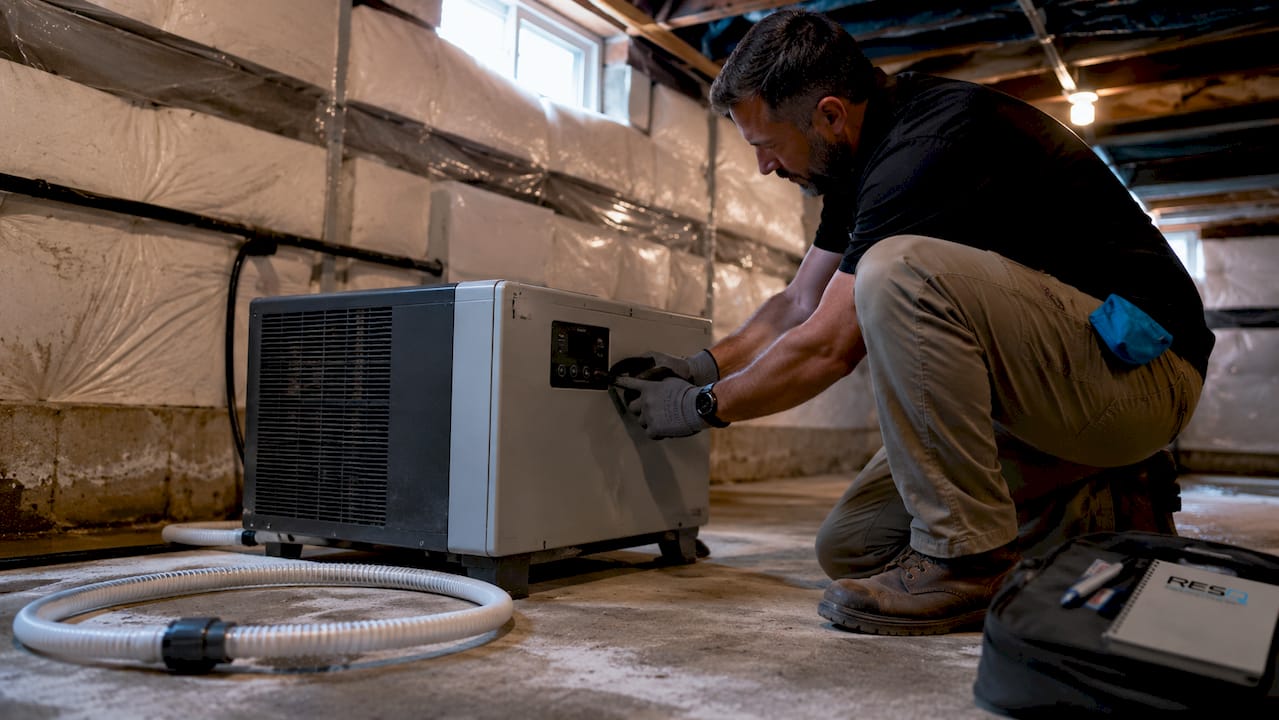
Encapsulation integrates a vapor barrier, perimeter wall sealing, vent closure, insulation, and mechanical humidity control into one coordinated solution. Each component addresses a specific moisture pathway.
Here is how a complete encapsulation system works, step by step:
- Vapor barrier installation: A thick polyethylene liner (typically 12–20 mil) covers the entire crawl space floor and extends up the walls. This physically blocks ground moisture from evaporating into the air.
- Foundation vent sealing: Open vents are closed and sealed. This stops humid outside air from entering the crawl space and driving up relative humidity.
- Wall and rim joist insulation: Rigid foam insulation on the perimeter walls keeps the crawl space temperature stable, reducing condensation on surfaces.
- Mechanical dehumidification: A crawl space dehumidifier runs continuously to pull moisture from the air. Maintaining relative humidity below 60% (ideally 30–50%) stops mold from establishing new colonies.
- Wood moisture stabilization: Once humidity drops, wood floor joists dry out and stabilize below the 16–19% moisture content where mold grows. This protects your home’s structural framing long term.
- Existing mold management: Encapsulation controls future mold by removing humidity. However, existing mold colonies become dormant rather than dead. Extensive mold growth requires professional remediation before or alongside encapsulation.
Pro Tip: Ask your contractor to measure wood moisture content before and after encapsulation. A reading below 16% confirms the system is working and mold cannot reestablish.
After encapsulation, it typically takes 2–4 weeks for the dehumidifier to fully process the air and eliminate musty odors. That timeline helps set realistic expectations for homeowners who expect immediate results.
Sealed vs. vented crawl spaces: which controls mold better?
The comparison between sealed and vented crawl spaces is not close in humid climates. Venting was designed for dry regions where outside air is drier than crawl space air. In the Southeast and other humid zones, the opposite is true.
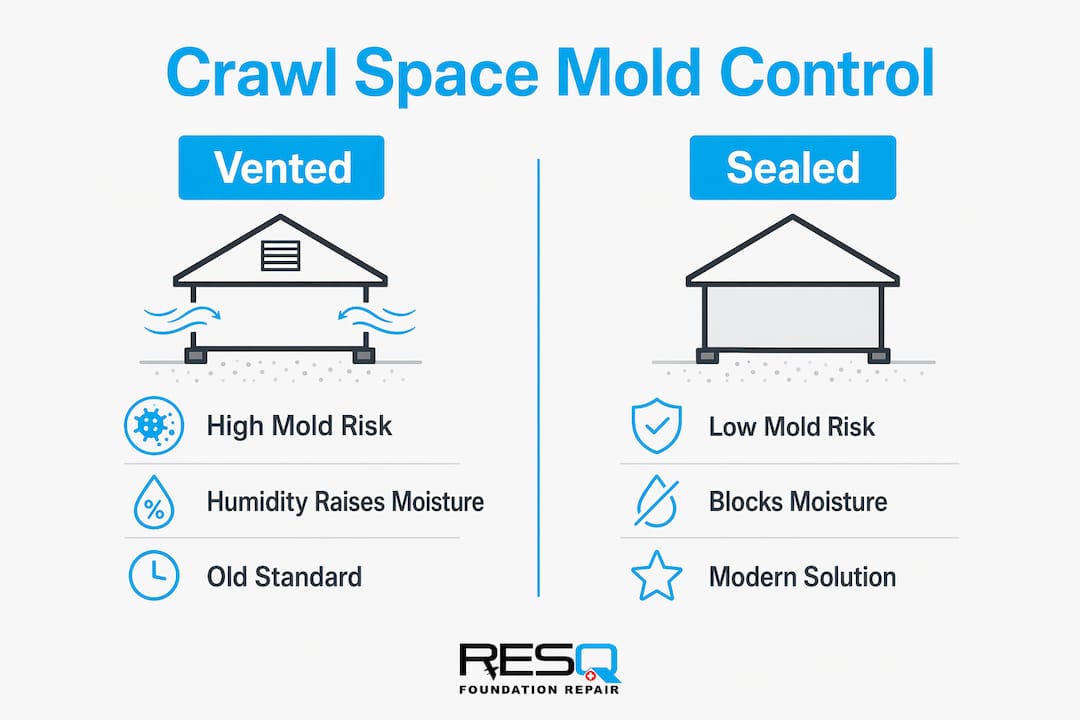
Building science research confirms that vented crawl spaces in humid climates raise wood moisture content above safe thresholds, worsening mold and rot risk rather than reducing it. The Department of Energy has recognized encapsulation as the preferred approach for moisture control in these conditions.
| Factor | Vented crawl space | Sealed crawl space |
|---|---|---|
| Mold risk | High in humid climates | Low with proper dehumidification |
| Wood moisture control | Poor; fluctuates with outdoor humidity | Stable; maintained below mold threshold |
| Indoor air quality | Mold spores enter living spaces via stack effect | Spore circulation blocked at the source |
| Energy efficiency | HVAC works harder due to unconditioned air | Up to 20% HVAC energy savings possible |
| Pest entry | Vents provide easy pest access | Sealed perimeter reduces entry points |
| Long-term structural risk | Elevated rot and joist damage risk | Structural framing protected from moisture |
The sealing crawl space advantages extend beyond mold. Homeowners report lower energy bills, fewer pest problems, and improved comfort on the first floor after encapsulation. These are not secondary benefits. They are direct results of controlling the crawl space environment.
Practical steps for homeowners to seal and protect their crawl space
Crawl space encapsulation is not a weekend project. Getting it right requires preparation, the right materials, and an honest assessment of what already exists down there.
- Inspect for standing water first. Sealing over standing water traps moisture and makes mold worse, not better. Any drainage problems, including grading issues, broken gutters, or a high water table, must be corrected before installation begins.
- Remediate existing mold before sealing. Encapsulation controls future moisture but does not kill established mold colonies. A professional crawl space mold treatment should precede or accompany encapsulation when active mold is present.
- Choose the right vapor barrier thickness. A 6-mil poly sheet is the minimum code requirement in many areas, but 12–20 mil barriers last significantly longer and resist punctures from foot traffic and debris.
- Size the dehumidifier correctly. An undersized unit runs constantly without reaching target humidity. A professional will calculate the cubic footage and moisture load to specify the right capacity.
- Budget realistically. Professional encapsulation costs range from $3,000 to $15,000 depending on crawl space size and condition. Homeowners typically recover 70–90% of that cost at resale, and HVAC energy savings can reach 20% annually.
- Schedule annual inspections. Vapor barriers can shift, dehumidifiers need filter changes, and drainage conditions change over time. An annual check keeps the system performing as designed.
Pro Tip: Before getting quotes, measure your crawl space square footage and note any visible mold, standing water, or damaged insulation. Contractors give more accurate estimates when they have this information upfront.
Understanding how mold affects air quality inside your home reinforces why preparation matters. Mold spores released during encapsulation work can temporarily worsen indoor air if the space is not properly contained during remediation.
For homeowners weighing the full financial picture, the encapsulation cost guide from Foundationresq breaks down typical project costs and what drives price variation in the Tallahassee area.
Key Takeaways
Sealing a crawl space reduces mold by eliminating the moisture conditions mold requires, protecting both indoor air quality and structural framing from long-term damage.
| Point | Details |
|---|---|
| Moisture is the root cause | Exposed soil, humid outside air, and condensation all feed mold growth in unsealed crawl spaces. |
| Encapsulation is a system | Vapor barriers, vent sealing, and dehumidification work together to keep humidity below 60% RH. |
| Venting worsens mold in humid climates | Vented crawl spaces raise wood moisture above the 16–19% mold threshold in humid regions. |
| Preparation is non-negotiable | Drainage must be corrected and existing mold remediated before sealing begins. |
| Investment pays off | Professional encapsulation costs $3,000–$15,000 and recovers 70–90% of value at resale. |
What I’ve learned after seeing hundreds of crawl spaces
After working with homeowners across Tallahassee and the surrounding area, the pattern I see most often is this: people wait too long. They notice a musty smell on the first floor, assume it is a minor issue, and delay action for months or years. By the time they call for an inspection, the mold has spread across multiple joists and the subfloor is showing early signs of rot.
The other misconception I hear constantly is that a vapor barrier alone solves the problem. Homeowners buy a roll of 6-mil poly from a hardware store, lay it on the crawl space floor, and consider the job done. That approach addresses one moisture source while leaving the others wide open. Without sealing the vents and adding mechanical dehumidification, outside air continues to drive humidity up every time the weather changes.
What actually works is treating the crawl space as part of the home’s conditioned envelope, not as a forgotten void beneath the floor. That shift in thinking changes everything. Once you stop treating the crawl space as separate from your living space, the connection between what happens down there and the air quality upstairs becomes obvious.
The homeowners who get the best results are the ones who invest in a professional assessment before making any decisions. A good inspector will measure wood moisture content, identify active mold, check for drainage issues, and give you a clear picture of what the space actually needs. That assessment costs far less than fixing a problem that was sealed in rather than sealed out.
— Kayle
Foundationresq’s crawl space solutions for Tallahassee homeowners
Moisture problems under your home do not resolve on their own. Foundationresq specializes in the full range of crawl space services that address mold at its source, including encapsulation system installation, professional crawl space waterproofing, and dedicated dehumidification systems sized for your specific space.
Every project starts with a free inspection so you know exactly what you are dealing with before any work begins. Foundationresq also offers financing options for homeowners who want to move forward without paying the full cost upfront. The team serves Tallahassee and surrounding communities with the kind of local knowledge that national contractors cannot match. Reach out through the services page to schedule your inspection and get a clear, honest assessment of your crawl space.
FAQ
Why does sealing a crawl space reduce mold?
Sealing a crawl space removes the moisture conditions mold needs to grow. By blocking ground vapor, closing foundation vents, and running a dehumidifier, encapsulation keeps relative humidity below 60% where mold cannot establish new colonies.
How long does it take to see results after encapsulation?
Most homeowners notice reduced musty odors within 2–4 weeks as the dehumidifier processes the crawl space air. Wood moisture levels continue to drop over the following weeks as the space stabilizes.
Can I seal my crawl space if mold is already present?
Sealing over active mold without remediation first makes the problem worse. Existing mold colonies must be professionally treated before encapsulation begins, since sealing traps dormant mold rather than eliminating it.
Is a vapor barrier enough to prevent crawl space mold?
A vapor barrier alone is not enough. Effective mold prevention requires sealing foundation vents and adding mechanical dehumidification. Without humidity control, outside air continues to raise moisture levels even with a barrier on the floor.
What does crawl space encapsulation cost?
Professional encapsulation typically costs between $3,000 and $15,000 depending on crawl space size and condition. Homeowners generally recover 70–90% of that cost at resale, and annual HVAC energy savings can reach 20%.