
Why Wood Rot is a Critical Threat to Your Home
Wood rot repair is the process of removing damaged wood, treating the remaining structure, and filling or replacing the affected areas to restore integrity. Here’s a quick overview of the process:
- Identify the type – Dry rot (crumbly) or wet rot (spongy)
- Remove all damaged wood – Cut out all rotted material
- Dry the area – Ensure all moisture is gone
- Apply wood hardener – Stabilize remaining wood fibers
- Fill with epoxy – Rebuild the area with a two-part filler
- Sand, prime, and paint – Finish to match the surrounding area
- Fix the moisture source – Address the underlying leak or ventilation issue
Wood rot is a fungal decay that thrives in moist environments and can spread rapidly. As one contractor noted, “rot is a fungus and it can spread quickly, infecting, and then destroying sound wood in its path.” The danger isn’t just cosmetic; it compromises your home’s structural integrity and can lead to costly repairs if left untreated.
This guide will walk you through identifying wood rot, choosing repair products, performing a DIY repair, and preventing future damage. With over a decade in the home services industry, I’ve worked with structural repair experts on countless wood rot repair projects. I’ve seen how early detection and proper techniques can save homeowners thousands.
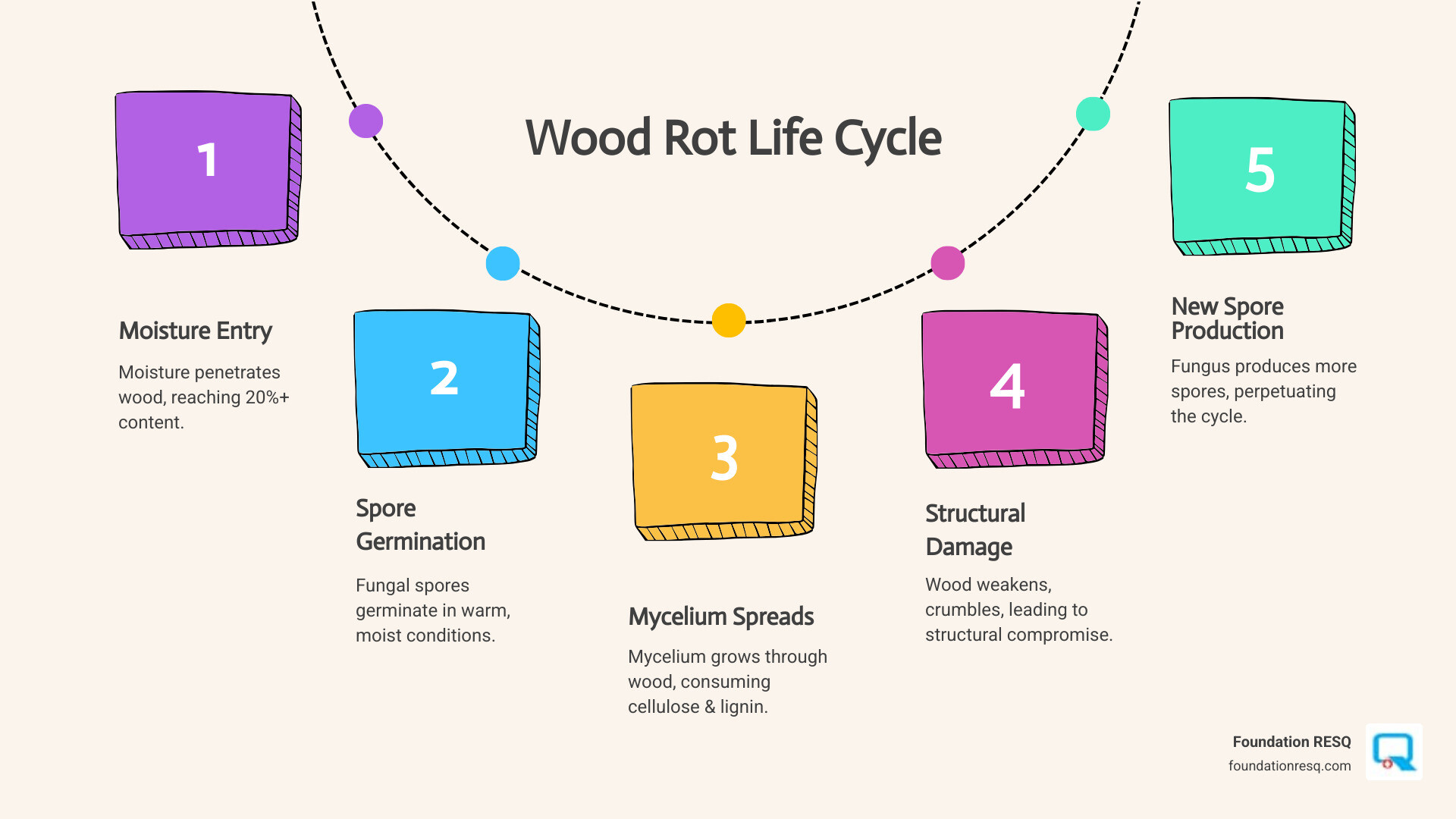
Identifying and Understanding Wood Rot
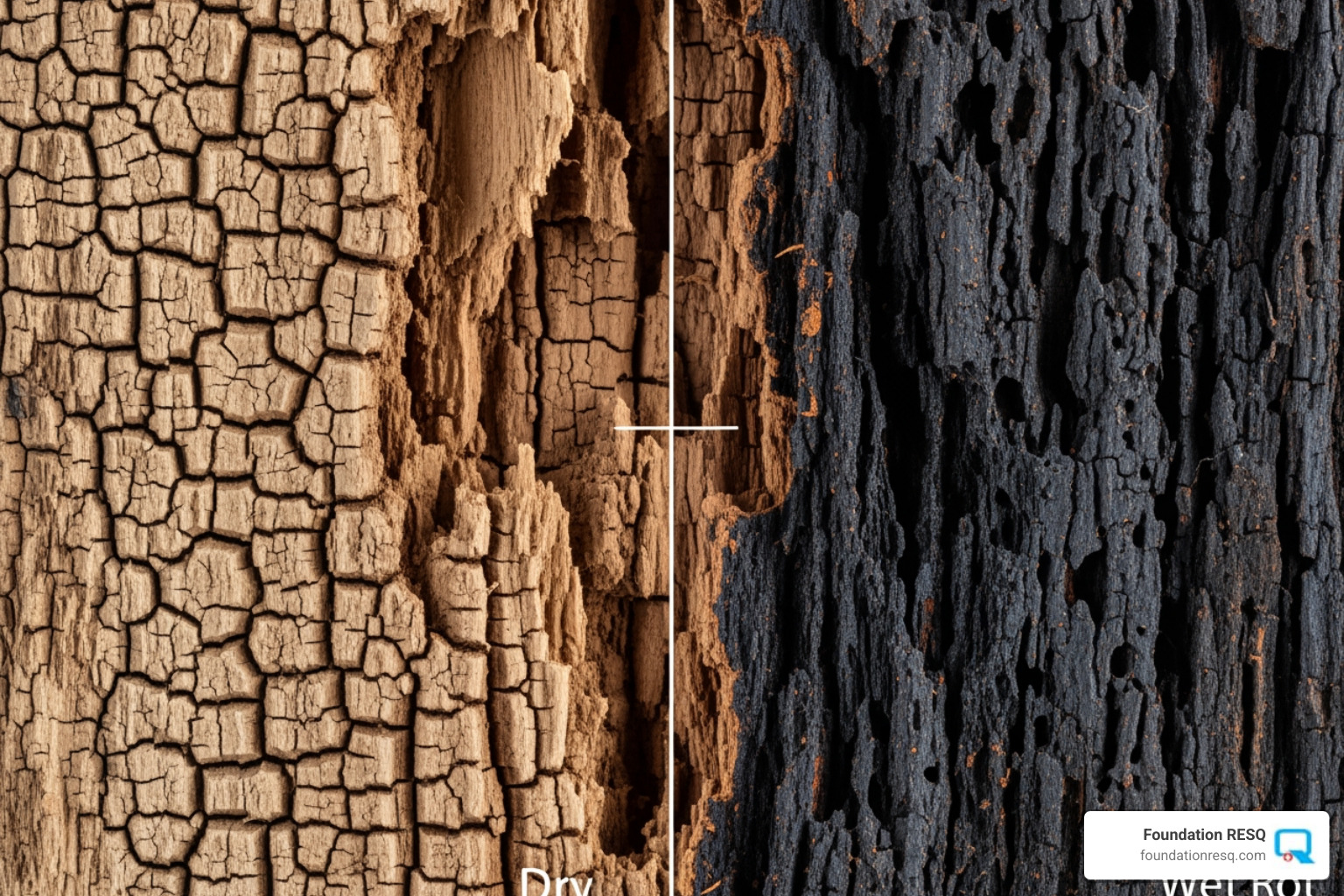
Before you can begin a wood rot repair, you must correctly identify the problem. Wood rot comes in several varieties, each behaving differently.
The Different Types of Wood Rot
Dry rot is the most dangerous type. It needs at least 20% moisture to start, but once established, it can spread across plaster and masonry to find new wood. It’s recognizable by its white, fuzzy growth and cubical cracking, which makes the wood shrink and crumble. It often has a musty, mushroom-like smell.
Wet rot is more common and requires higher moisture levels (at least 50%). It tends to stay localized to the moisture source. The affected wood becomes dark, soft, and spongy. While it spreads slower than dry rot, it can still cause serious structural damage over time.
Other types include brown rot, which causes the cubical cracking pattern; white rot, which digests lignin and leaves wood looking bleached and stringy; and soft rot, a slow-moving decay that appears in very wet conditions, often where wood touches the ground.
Common Causes of Wood Rot
Wood rot is always a moisture problem. Find and fix the water source to win half the battle.
- Excess Moisture & High Humidity: Fungi thrive once wood’s moisture content hits 20%. This is common in poorly ventilated crawl spaces and attics, which is why we recommend solutions like crawl space dehumidification and our crawl space encapsulation system.
- Leaks: A leaky roof, dripping pipe, or poorly sealed window can saturate wood over time, often hidden from view.
- Poor Ventilation: Trapped, humid air in a crawl space or attic creates a perfect breeding ground for fungi.
- Clogged Gutters: Overflowing gutters soak fascia boards, window frames, and siding.
- Other Sources: Wood-to-ground contact, poorly fitting doors and windows, and moisture penetrating masonry due to issues with stone pointing are also common causes.
Signs and Symptoms to Look For
Early detection can save you thousands. Here’s what to look for:
- Discoloration: Wood may look darker, stained, or have white, gray, or brownish fungal growth.
- Peeling or Blistering Paint: This is a red flag for trapped moisture underneath.
- Soft or Spongy Wood: Use the screwdriver test. Press a screwdriver into the wood; if it gives way easily or crumbles, you have rot.
- Musty Odor: An earthy, mushroom-like smell, especially in enclosed areas, almost always indicates fungal activity.
- Shrinking or Cracking Wood: As rot consumes the wood, it shrinks and develops telltale cubical cracks.
Repair vs. Replace: Making the Right Decision
Once you’ve found wood rot, you must decide: repair or replace? Making the wrong call can be costly and unsafe. Here’s how to choose with confidence.
When to Repair Rotted Wood
In many cases, a solid repair can restore wood to like-new condition. Repair is a good option for:
- Non-structural damage: Window sills, door frames, decorative trim, and fascia boards are great candidates for repair.
- Cosmetic issues: If the rot only affects the wood’s appearance, not its strength, repair products work well.
- Small, localized rot: A targeted repair is often sufficient for rot that is only a few inches wide and not too deep.
- Historic woodwork: Preserving original, intricate millwork with specialized epoxy repairs is almost always preferable to replacement.
- Cost-effectiveness: For minor spots, a DIY wood rot repair can cost as little as $30-$50 in supplies.
When to Replace Rotted Wood
Sometimes, a repair isn’t enough. Trying to patch wood that’s too far gone is a waste of time and money.
- Extensive damage: If the rot is widespread or has eaten deep into the wood, replacement is usually the best bet.
- Structural components: Any significant rot on floor joists, beams, support posts, or rafters typically requires replacement. While some advanced epoxies are rated for structural use, you need a professional assessment before trusting your home’s safety to a repair.
- High repair cost: If the cost of materials and labor for a complex repair exceeds the cost of replacement, swapping in a new piece is more practical.
- Saturated wood: If the wood is too wet to dry out completely, any repair will fail. The wood must be dry or removed.
When to Call a Professional
While DIY is great, some situations demand a professional to ensure your safety and your home’s value.
- Structural integrity is compromised: If rot affects load-bearing elements, do not guess. We at Foundation RESQ specialize in ensuring your home’s stability.
- Rot is widespread: A professional can assess the full extent of the problem, as visible rot is often just the tip of the iceberg.
- You can’t find the moisture source: A pro can track down hidden leaks and ventilation issues. Any repair is temporary until the cause is fixed.
- The job requires specialized skills: Intricate repairs or working in tight crawl spaces are often best left to those with the right tools and experience.
- Rot is in the crawl space: This often signals deeper moisture problems that could affect your foundation. We provide comprehensive Foundation Repair Services and Crawl Space Waterproofing to address the root cause.
A Step-by-Step Guide to Wood Rot Repair
For minor, non-structural wood rot, a DIY approach can be very effective. Let’s walk through how to tackle wood rot repair properly.
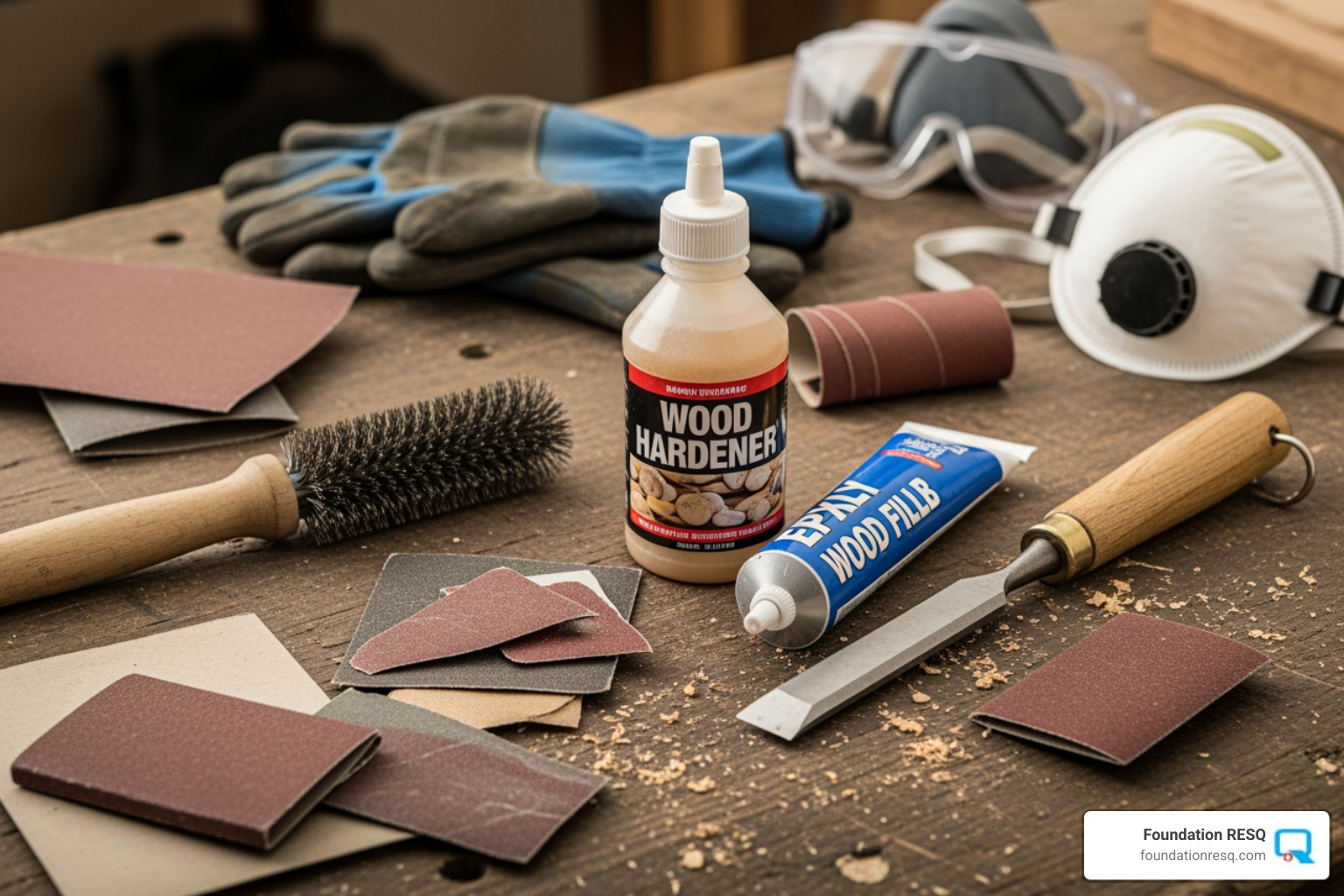
Essential Products for Your Wood Rot Repair Project
Having the right materials is crucial for a lasting repair. Your toolkit should include:
- Wood Hardeners (Consolidants): These liquid products (like Minwax Wood Hardener or Abatron LiquidWood) penetrate and solidify soft wood fibers, creating a stable base for fillers.
- Two-Part Epoxy Fillers: These strong, durable compounds (like Abatron WoodEpox or PC Woody) rebuild missing wood and can be shaped, sanded, and painted.
- Borate Treatments: Products like Tim-Bor kill rot spores and prevent their return, acting as both a fungicide and insecticide.
- Safety Gear: Non-negotiable items include safety goggles, chemical-resistant gloves, and a respirator.
- Tools: You’ll need a chisel, wire brush, putty knife, sandpaper, a drill, and a vacuum.
For professional-grade supplies, consider sources like Abatron, Conservation Technology, or The Rot Doctor.
The DIY Wood Rot Repair Process
Follow these steps carefully for a repair that looks great and lasts for years.
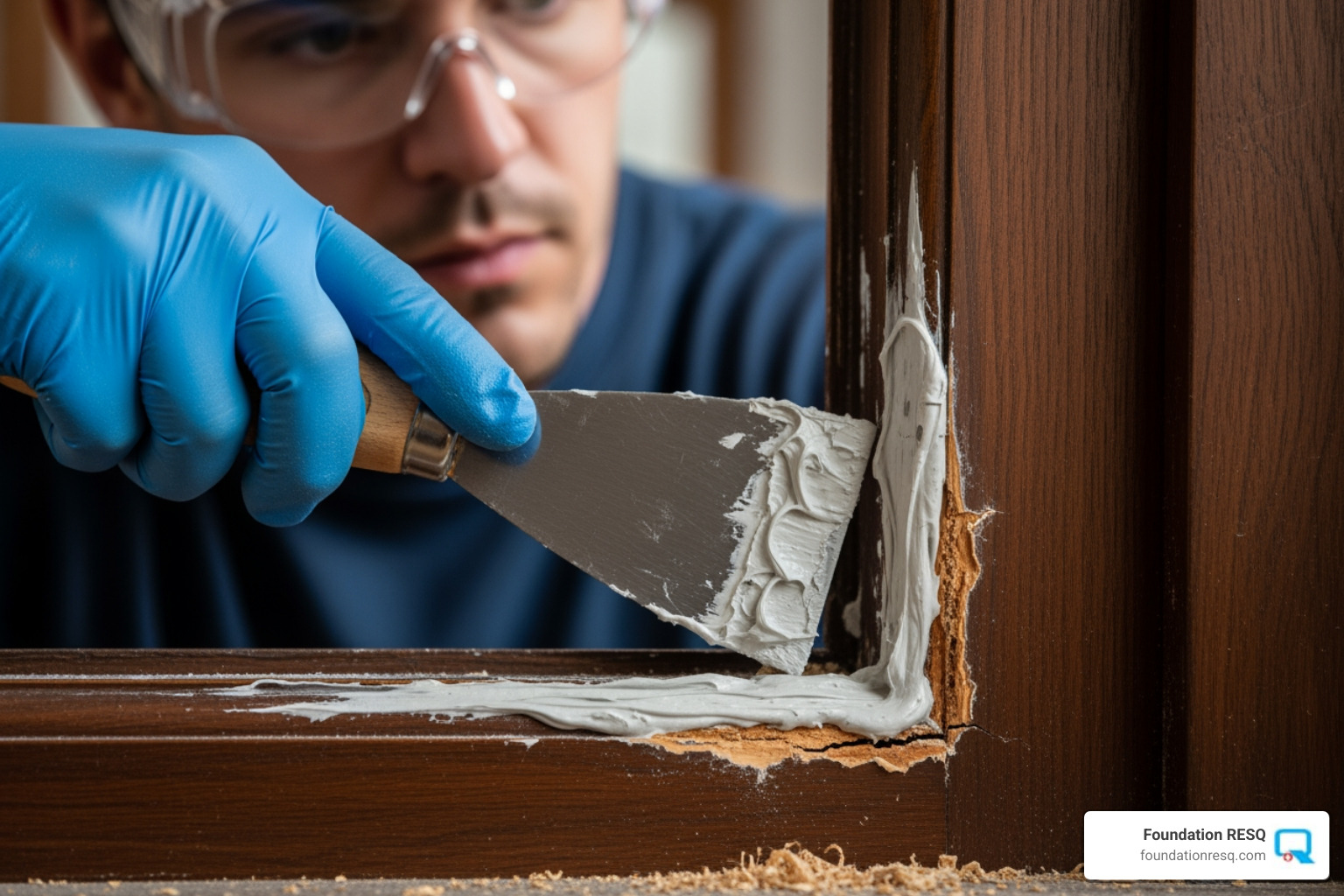
Step 1: Remove Rotted Wood
This is the most critical step. You must remove every bit of decayed wood until you reach solid, healthy material. Use a chisel, wire brush, or drill. Vacuum away all dust and debris.
Step 2: Dry the Area Thoroughly
Moisture caused the problem, so the area must be completely dry before you proceed. Use fans, a dehumidifier, or wait for natural evaporation. Applying products to damp wood will cause the repair to fail.
Step 3: Apply Wood Hardener
Once dry, liberally apply a wood hardener to the remaining solid wood, working it into all cracks. This creates a strong, waterproof base for your filler. Allow it to cure completely as directed.
Step 4: Mix and Apply Epoxy Filler
Follow the manufacturer’s instructions to mix the two-part epoxy. Apply it generously to the damaged area, slightly overfilling it to allow for sanding. For large voids, a simple form can help shape the filler.
Step 5: Shape and Sand the Repair
After the epoxy cures, use a chisel or plane to remove excess material. Then, sand the area smooth, starting with medium-grit sandpaper and finishing with a finer grit for a seamless transition.
Step 6: Prime and Paint
Protect your work by priming the area with an oil-based primer, followed by two coats of exterior-grade paint. This seals the repair from moisture.
Special Techniques for Different Areas
- Window Sills and Frames: The standard epoxy method works well for localized damage. For deeper rot, the entire window may need to be removed.
- Decks and Railings: Replace heavily damaged boards. For surface rot, use the epoxy method and apply a quality sealer afterward.
- Fascia and Soffits: The epoxy method is effective, but only after you fix the underlying gutter or roof leak that caused the rot.
- Structural Components (Dutchman Patch): For valuable timber where replacement isn’t ideal, the Dutchman patch is a classic technique. It involves precisely cutting out the rot and splicing in a new, custom-fitted piece of wood. This advanced method, detailed in guides like this one from This Old House, delivers beautiful results but often requires professional skill for structural applications.
Preventing Future Rot and Understanding the Risks
The best wood rot repair is the one you never have to make. After fixing rotted wood, the goal is to prevent it from ever happening again. In humid climates like Florida, Georgia, and Alabama, a proactive prevention strategy is key.
How to Prevent Wood Rot from Recurring
Protect your investment by staying vigilant about moisture control. This is ongoing maintenance, not a one-time fix.
- Control Moisture: Fix all leaks immediately. Grade the soil around your foundation so water flows away from your home.
- Improve Ventilation: Good airflow is your ally, especially in enclosed spaces. For crawl spaces, consider professional Crawl Space Waterproofing or a full Crawl Space Encapsulation System to control humidity at the source.
- Regular Inspections: Every few months, check vulnerable spots like window sills, door frames, deck boards, and your crawl space.
- Use Resistant Materials: When replacing wood, use pressure-treated lumber or naturally rot-resistant species like cedar.
- Maintain Paint and Caulk: A solid coat of paint and intact caulk lines are your home’s first defense against water intrusion.
- Clean Your Gutters: Prevent overflows that saturate fascia, siding, and window frames. Ensure downspouts direct water away from the foundation.
The Dangers of Ignoring Wood Rot
Putting off wood rot repairs is a costly mistake. Here’s why:
- Compromised Structural Integrity: Rot weakens wood fibers, reducing their ability to bear weight. This can lead to sagging floors, compromised roofs, and, in extreme cases, partial collapse.
- Spreading Fungus: Dry rot is particularly aggressive and can spread across plaster and masonry to infect new wood areas.
- Decreased Property Value: Wood rot is a major red flag to potential buyers and will lower your home’s value.
- Costlier Future Repairs: A $50 DIY fix today can prevent a $15,000 structural overhaul tomorrow. As rot spreads, repair costs skyrocket.
- Pest Infestations: Rotting wood is an open invitation for termites, carpenter ants, and other wood-destroying insects.
- Health Concerns from Mold: Wood rot and mold go hand-in-hand. Mold spores can trigger allergies, asthma, and other respiratory issues.
Frequently Asked Questions about Wood Rot
Homeowners across Alabama, Florida, and Georgia often ask us about wood rot repair. Here are answers to the most common questions.
How does wood rot affect structural integrity?
Wood rot fungi consume the cellulose and lignin that give wood its strength. As these fibers break down, the wood’s load-bearing capacity is dramatically reduced. If rot reaches critical structural components like floor joists, beams, or wall studs, it can lead to sagging floors, cracks in drywall, or even structural failure. Dry rot is especially dangerous as it can spread from a non-structural board to a critical support beam. If you suspect structural rot, a professional assessment is crucial.
What are the costs associated with wood rot repair?
Costs vary widely. A small, cosmetic DIY repair might only cost $30 to $50 for materials like wood hardener and epoxy filler. Professional repairs, however, have a national average of around $1,400. This cost can range from a few hundred dollars for a simple fix on an accessible door frame to several thousand for extensive rot in a crawl space. The final price depends on the extent of the damage, its location, labor rates, and the materials used. Remember to also factor in the cost of fixing the root moisture problem, which may involve our Crawl Space Repair Services.
What safety precautions are necessary for wood rot repair?
Safety is non-negotiable when performing a wood rot repair. Always take the following precautions:
- Personal Protective Equipment (PPE): Wear safety goggles to protect your eyes, chemical-resistant gloves to keep products off your skin, and a respirator to avoid inhaling wood dust, chemical fumes, and Volatile Organic Compounds (VOCs).
- Adequate Ventilation: Work in a well-ventilated area. If indoors, open windows and use fans to create cross-ventilation and disperse fumes.
- Follow Product Instructions: Carefully read and follow all manufacturer directions for mixing, application, and safety.
- Tool Safety: Use sharp tools, as they are safer than dull ones. Always cut away from your body and remain focused to avoid injury.
Protect Your Home from Wood Rot
Taking care of wood rot repair is about protecting your biggest investment and keeping your family safe. The most important takeaway is that catching rot early and controlling moisture makes all the difference. Regular inspections and prompt leak repairs can stop rot before it ever starts.
In our humid climate across Alabama, Florida, and Georgia, moisture control is essential. This is where we come in. At Foundation RESQ, we don’t just patch visible damage; we find and fix the underlying cause. Whether it’s a leaking crawl space or poor drainage, we have the expertise to make it right.
We offer free inspections because you deserve to know exactly what’s going on with your home before making a decision. Our team is committed to lasting solutions, not quick fixes.
If you’re dealing with moisture issues that could lead to wood rot, our Crawl Space Stabilization System can provide the comprehensive protection your home needs. From Tallahassee to Gainesville and Montgomery, we’re here to help you keep your home safe, sound, and rot-free.
Don’t wait for a small problem to become a big one. Let’s work together to protect your home.