
What if the air conditioner you rely on every summer is actually masking a deeper structural threat to your home? In Florida, we often assume a cool room is a dry room, but standard cooling systems frequently cycle off before they can properly manage the heavy moisture levels of our local climate. If you’ve noticed musty odors that linger or find your allergy symptoms worsening while indoors, you’re likely seeing the first signs of high humidity in house Florida residents often overlook. It’s frustrating to feel uncomfortable in your own space, especially when you’re doing everything right with your thermostat.
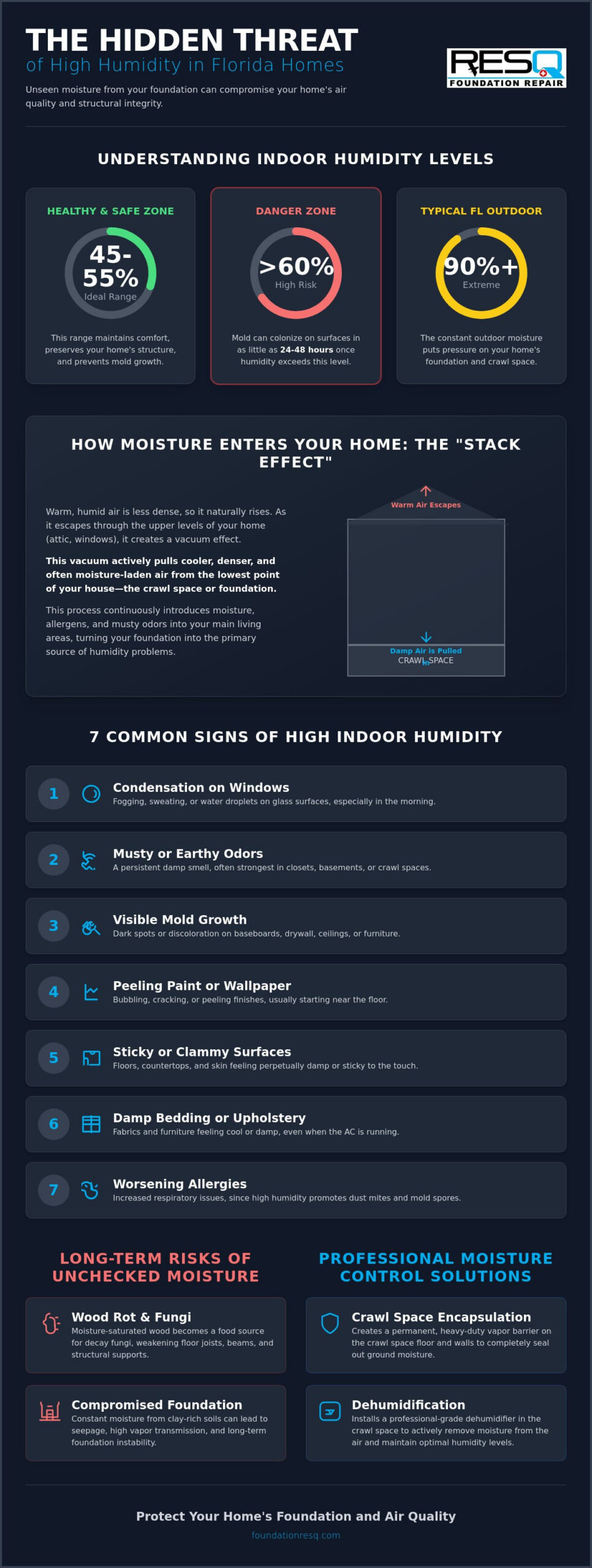
This guide will help you identify the subtle and obvious indicators of excess moisture before they lead to permanent structural damage. Maintaining indoor humidity between 45% and 55% is critical for your comfort and safety, as mold can begin to colonize organic surfaces in as little as 24 to 48 hours once levels exceed 60%. We’ll provide a clear checklist of warning signs to monitor and explain how moisture rising from your crawl space or foundation impacts your building’s long-term health. By the end, you’ll have actionable steps to address the root cause and protect your property with professional-grade solutions.
Key Takeaways
- Learn how to identify the subtle signs of high humidity in house Florida homeowners often miss before they lead to structural damage.
- Understand the “Stack Effect” and how moisture from your crawl space is pulled upward into your main living areas.
- Discover why open crawl space vents often invite more moisture inside and how they contribute to musty odors and mold growth.
- Identify the long-term risks of excess moisture, including wood-decay fungi and compromised foundation stability.
- Explore professional remedies like crawl space encapsulation and dehumidification to create a permanent barrier against the elements.
Understanding the Impact of Floridas Humidity on Your Home
Florida homeowners are intimately familiar with the oppressive outdoor heat, but the environment inside your home requires a different standard of care. Because our state sits on a high water table, moisture is constantly pressing against your foundation. This creates a scenario where the ground beneath your home stays perpetually damp. When this moisture isn’t managed, it doesn’t just sit there; it migrates into your living space, leading to the common signs of high humidity in house Florida residents often report, such as sticky floors or a persistent heavy feeling in the air.
One of the most critical concepts to understand is the “Stack Effect.” This is a natural physical process where warm air rises and escapes through the upper levels of your home, creating a vacuum that pulls cooler, damp air in from the bottom. In many Florida homes, that air comes directly from the crawl space or the soil beneath the slab. As this air travels upward through floorboards and wall cavities, it brings moisture, allergens, and odors with it. This movement effectively turns your foundation into the primary entry point for humidity.
What is Considered “High” Humidity in Florida?
Indoor comfort relies on a delicate balance. While outdoor humidity in Florida frequently hits 90% or higher, your home should ideally maintain a range between 30% and 50%. This isn’t just for comfort; it’s a matter of structural preservation. The science of psychrometrics tells us that warmer air has the capacity to hold significantly more water vapor than cool air. If your indoor levels climb above the 60% threshold, mold growth becomes exponential. At this point, the moisture provides the perfect fuel for fungi to colonize your drywall, furniture, and structural timbers. Identifying the signs of high humidity in house Florida early can prevent these levels from reaching the danger zone.
The Tallahassee Climate and Your Foundations Health
In Tallahassee and North Florida, our specific geology complicates moisture management. The region is known for clay-rich soils that expand when wet and hold onto water much longer than sandy coastal soils. During our heavy seasonal rains, this clay becomes saturated, trapping moisture right against your foundation walls. This constant contact can eventually lead to seepage or high vapor transmission through porous concrete. This moisture directly impacts your Indoor air quality, as the dampness provides a breeding ground for dust mites and mold. Recognizing these environmental stressors is the first step in preventing geological factors from compromising your home’s stability.
7 Common Signs of High Indoor Humidity in Florida
Identifying the signs of high humidity in house Florida structures isn’t always about seeing a puddle on the floor. Most of the time, the indicators are subtle shifts in how your home feels and smells. Florida’s climate creates a unique set of challenges where indoor air can quickly become saturated, even if your air conditioner seems to be running constantly. Monitoring these seven common warning signs can help you catch a moisture problem before it evolves into a costly structural failure.
- Persistent condensation on windows or glass doors.
- A noticeable musty or “earthy” odor in specific rooms.
- Visible mold growth on baseboards, furniture, or drywall.
- Peeling wallpaper or bubbling paint near the floor level.
- A “sticky” or “clammy” sensation on skin and surfaces.
- Bedding or upholstery that feels slightly damp to the touch.
- Increased respiratory issues or allergy symptoms when indoors.
Visible Indicators on Walls and Windows
When warm, moist air hits a cool surface, it reaches its dew point and turns into liquid water. You’ll often see this as fogging or water droplets on the interior of your windows. In homes with crawl spaces, you might notice “sweating” pipes or ductwork beneath the floor. This localized moisture often leads to cosmetic damage that signals a deeper issue. Look for wallpaper that begins to curl at the edges or paint that develops small bubbles. These are clear signs of high humidity in house Florida residents should take seriously, as they often indicate moisture is being pulled through the walls. If you notice dark staining on your drywall, it suggests that moisture has already begun to compromise the material’s integrity.
Sensory and Physical Warning Signs
Your senses are often the most reliable tools for detecting humidity. High moisture levels create a heavy, oppressive atmosphere that makes the air feel “sticky.” This isn’t just a comfort issue; it directly impacts your health. According to the EPA’s Guide to Indoor Air Quality, controlling moisture is the most important step in reducing biological indoor air pollutants. If your family experiences frequent sneezing, itchy eyes, or worsened asthma symptoms while at home, the air quality is likely compromised by mold spores or dust mites thriving in the dampness.
Odors are another major red flag. That signature “old house” smell is actually the byproduct of microbial volatile organic compounds released by mold and bacteria. If you find yourself washing linens more often because they feel “heavy” or smell damp, your home’s humidity levels are likely exceeding the safe 60% threshold. Because these issues often stem from the foundation or crawl space, a professional moisture inspection is the most effective way to identify the root cause and restore a healthy indoor environment.
Why High Humidity Often Starts in Your Florida Crawl Space
Many homeowners treat their crawl space as a separate entity from their living quarters. In reality, this area acts like the lungs of your home. Because of the “Stack Effect” mentioned earlier, a significant portion of the air you breathe on the first floor originates in the crawl space. When this area is damp, it introduces the primary signs of high humidity in house Florida families notice, such as heavy air and musty smells. The process begins with bare earth, which releases gallons of water vapor daily through evaporation. Without a professional vapor barrier, this moisture rises directly into your structural components and eventually your living space.
The relationship between ground moisture and indoor comfort is direct. As water evaporates from the soil, it seeks the driest environment possible, which is usually your climate-controlled home. This constant upward pressure means your foundation is always in a battle against the elements. The Environmental Protection Agency (EPA) guide to mold and moisture highlights that controlling this moisture is the only way to prevent microbial growth and maintain a healthy building. If the source of the dampness isn’t sealed off at the ground level, your air conditioner will continue to struggle against an endless supply of humidity.
The Problem with Vented Crawl Spaces
For decades, traditional building wisdom suggested that vents were necessary to “air out” the foundation. In the Florida climate, this practice is counterproductive. When hot, humid air enters a relatively cooler crawl space through these vents, it reaches its dew point and condenses on every surface, from wooden joists to metal pipes. This creates a constant cycle of dampness that never has a chance to dry out. Open vents don’t solve the problem; they effectively invite the very humidity you’re trying to avoid into the core of your home’s structure.
Moisture Migration Through the Floor
Moisture doesn’t stay trapped beneath your home. It actively migrates through porous materials like wood floor joists and fiberglass insulation. As these materials absorb water, they lose their structural integrity and thermal efficiency. You might notice your floors feel unusually cold in the winter or damp underfoot during a humid summer. This migration is a major contributor to the visible signs of high humidity in house Florida residences, including cupping wood floors or sagging carpets. Protecting your home requires a shift from passive venting to active management. Pursuing full crawl space encapsulation Tallahassee homeowners trust is the most reliable way to seal out the elements and stabilize your home’s environment.
The Long-Term Risks: Mold, Wood Rot, and Structural Damage
High humidity isn’t just a comfort issue. It acts as a catalyst for biological and chemical processes that can eventually destroy your home’s skeleton. When you ignore the early signs of high humidity in house Florida, you’re allowing a slow-motion structural failure to take place. The process often starts with wood-decay fungi. These organisms thrive when the moisture content in your wooden floor joists and subflooring stays consistently high. Over time, these fungi consume the cellulose that gives wood its strength, leading to a loss of structural integrity that compromises the safety of your entire building.
Beyond the wood itself, excess moisture attacks the metal components of your foundation. Steel fasteners, joist hangers, and support jacks are highly susceptible to corrosion when exposed to a high-humidity environment. Rust weakens these critical connections, which can lead to shifting, settling, and general instability. This cycle of decay is persistent. It won’t stop until the environment is stabilized and the primary moisture source is removed. Addressing these issues early is the only way to prevent a minor moisture problem from becoming a major structural renovation.
Bouncy Floors and Sagging Joists
One of the most noticeable symptoms of long-term moisture exposure is a change in the feel of your floors. If you notice “soft” spots or a bouncy sensation when walking across a room, it’s likely that the wooden support structures beneath you have softened. High humidity causes wood to swell and lose its rigidity. When combined with the weight of the home, these weakened joists begin to sag or “deflect.” This often results in uneven floors, sticking doors, and cracks in your drywall. These issues are clear indicators that you may need professional foundation repair Tallahassee experts provide to restore stability to your home.
Mold Growth and Air Quality Concerns
The same dampness that rots wood also fuels mold growth. Because of the Stack Effect, mold spores from the crawl space are easily pulled into your living areas, contaminating the air your family breathes. This is a significant health concern, as exposure to certain types of fungi, including “Black Mold,” can cause chronic respiratory issues and allergic reactions. Mold remediation is a comprehensive process that involves both the physical removal of fungal growth and the implementation of permanent moisture source controls. If you suspect your home has been compromised, seeking mold remediation Tallahassee FL services is the best way to ensure your indoor air is safe and healthy.
If you’ve noticed these signs of high humidity in house Florida, it’s time to act before the damage worsens. Protecting your investment requires a professional assessment of your home’s moisture levels. Contact Foundation ResQ for a comprehensive structural inspection to identify the root cause of your humidity issues and implement a permanent remedy.
Protecting Your Property: Professional Moisture Control Solutions
Recognizing the signs of high humidity in house Florida residents encounter is only the beginning of protecting your property. Once you’ve identified musty odors or damp floors, the focus must shift from observation to stabilization. A temporary fix, like a retail-grade dehumidifier or a fresh coat of paint, won’t address the underlying structural vulnerability. A professional moisture management system creates a permanent barrier between your home and the elements. This approach ensures your foundation remains stable and your indoor air stays healthy regardless of seasonal rains or rising water tables.
Implementing a comprehensive solution involves looking at the home as a complete system. By addressing the crawl space, you stop the upward migration of dampness before it reaches your floorboards. This methodical strategy doesn’t just fix the symptoms; it remediates the root cause of the problem. When your home’s environment is stabilized, the risks of wood rot and mold colonization are virtually eliminated, providing you with long-term peace of mind and a safer living environment for your family.
The Benefits of Crawl Space Encapsulation
Crawl space encapsulation is the most effective defense against Florida’s relentless humidity. This process involves lining the entire space with a heavy-duty, reinforced vapor barrier that seals off the ground and foundation walls. By preventing moisture from evaporating into the subfloor, you effectively stop the Stack Effect from pulling dampness into your living area. Beyond structural protection, an encapsulated space is a conditioned space. This often leads to noticeable energy efficiency gains, as your HVAC system no longer works overtime to remove moisture from the air. Additionally, a dry, clean crawl space is a significant asset that protects your home’s resale value by proving the building is free from rot and moisture-related decay.
Why a Dedicated Dehumidifier is Essential
While encapsulation seals out the bulk of external moisture, a dedicated crawl space dehumidifier manages the remaining humidity to keep levels consistently below 50%. It’s a mistake to rely on “big box” store units for this task. Industrial-grade dehumidifiers are specifically designed for the high-volume moisture removal required in our local climate. These systems are self-draining, which means you don’t have to worry about emptying buckets in a cramped space. Maintaining your home’s moisture-control equipment is just as important as the installation itself; for expert help with specialized appliance maintenance, HomeFix offers professional repair services that ensure your systems remain in peak condition. When paired with a professional sump pump system to remove standing water, these tools provide a comprehensive shield for your foundation.
Understanding the root cause of your home’s moisture issues requires a methodical approach. A professional assessment identifies exactly where the water is entering and how it’s affecting your structural integrity. If you’ve seen the signs of high humidity in house Florida, don’t wait for the damage to become irreversible. Contact Foundation ResQ today to schedule a comprehensive structural inspection and take the first step toward a permanently dry and stable home.
Secure Your Home’s Foundation Against Excess Moisture
Addressing moisture isn’t just about personal comfort; it’s about the long-term longevity of your home’s foundation. We’ve explored how the physical process of the Stack Effect pulls damp air from the ground into your living space, creating the common signs of high humidity in house Florida families encounter daily. Whether it’s a lingering musty odor or the development of bouncy floors, these indicators suggest that your crawl space is no longer acting as a protective barrier against the elements. Permanent remedies like encapsulation and industrial dehumidification offer the only reliable way to stabilize your home’s environment and prevent the progression of wood rot.
Foundation ResQ has served as the steadfast local Tallahassee experts since 2013. As a Groundworks family brand, we provide permanent structural solutions that go beyond simple cosmetic fixes. We conduct comprehensive structural and moisture inspections to identify exactly where your home is vulnerable to the Florida climate. You deserve a home that feels dry, smells fresh, and remains stable for decades to come. Protect your home from Florida humidity with a free inspection from Foundation ResQ. Our team is ready to help you build a final line of defense for your property.
Frequently Asked Questions
What is a normal humidity level for a house in Florida?
A normal indoor humidity level for a Florida home should stay between 30% and 50% for personal comfort, though 45% to 55% is the ideal range for structural stability. Maintaining levels below the 60% threshold is critical to prevent the growth of mold and wood-decay fungi. Because our local climate is naturally damp, achieving these stable levels often requires a dedicated dehumidifier to support your air conditioning system.
Can high humidity cause floor joists to rot?
Yes, persistent high humidity is a leading cause of wood rot in floor joists. When the moisture content in wooden structural members stays consistently elevated, it creates an environment where wood-decay fungi thrive. These organisms consume the fibers that give wood its strength, eventually leading to structural failure. Catching the signs of high humidity in house Florida structures early can prevent this decay from compromising your building’s safety.
Why does my Florida home smell musty even when it is clean?
Musty odors that linger in a clean home are usually a sign of moisture issues in the crawl space or foundation. Through a process called the Stack Effect, damp air from the ground is pulled upward into your living areas, bringing microbial smells and mold spores with it. Even if your interior surfaces are spotless, the air you breathe is often being filtered through a damp, unsealed environment beneath your floorboards.
Is condensation on windows a sign of a foundation problem?
Condensation on the interior of your windows is a clear indicator of high indoor humidity, which is often a precursor to structural issues. While the droplets on the glass don’t damage your foundation directly, the excess water vapor in the air can lead to wood rot and metal corrosion in your crawl space. If you notice frequent “sweating” on your windows, it’s a signal to have your foundation inspected for rising ground moisture.
How much does crawl space encapsulation cost in Florida?
The cost of crawl space encapsulation in Florida varies depending on the square footage of the space and its current condition. Factors such as existing standing water, the need for mold remediation, and the complexity of the foundation’s layout will all impact the final investment. Because every home faces different geological and moisture challenges, a professional inspection is the only way to determine the specific requirements for a permanent solution.
Can high humidity cause the floor to feel bouncy?
Yes, high humidity can cause floors to feel bouncy or soft underfoot. When wooden joists absorb excessive moisture, they lose their rigidity and become susceptible to rot. This structural softening allows the joists to sag or deflect under the weight of the home, resulting in a “springy” sensation when you walk across the room. This is one of the more serious signs of high humidity in house Florida residents should address to prevent total structural failure.