
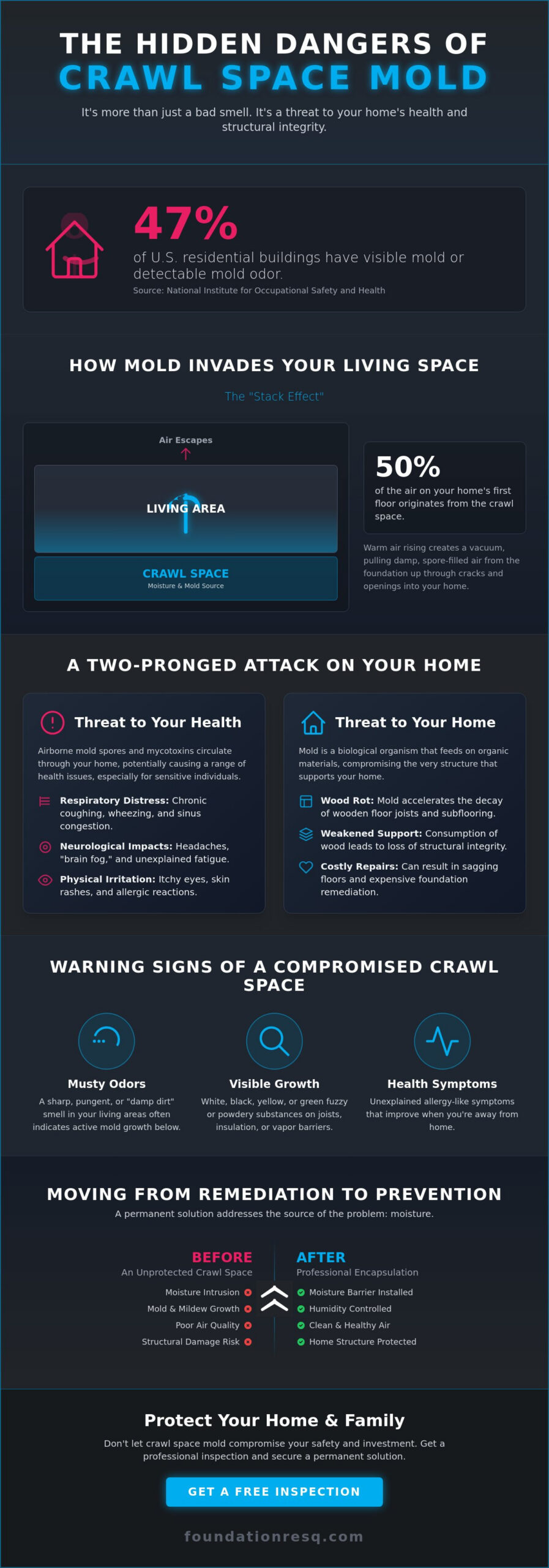
Did you know that nearly 47% of residential buildings in the United States have visible mold or a detectable mold odor? This finding from the National Institute for Occupational Safety and Health highlights a reality many homeowners face right beneath their feet. If you’ve noticed a persistent musty smell in your living room or your family is struggling with unexplained respiratory issues, you are likely wondering: is mold in crawl space dangerous? It’s stressful to feel like your home’s environment is working against your family’s well-being.
We believe every homeowner deserves a stable and healthy living space. This article explains the hidden dangers of crawl space mold and how to protect your home’s structural integrity. You’ll learn about the “stack effect” that pulls air from the ground up into your living areas and the specific risks mold poses to wooden floor joists. We will also outline the professional path to a permanent resolution, moving your home from a state of uncertainty toward one of lasting stability and safety.
Key Takeaways
- Understand why the question of whether is mold in crawl space dangerous involves more than just surface growth, affecting both your indoor air quality and structural stability.
- Discover how the “stack effect” creates a pathway for airborne spores and mycotoxins to travel from the foundation into your family’s living areas.
- Learn to recognize mold as a critical indicator of moisture levels that cause wood rot and threaten the integrity of your floor joists.
- Identify the warning signs of a failing crawl space, such as persistent musty odors and visible growth on vapor barriers or support beams.
- Explore professional solutions like crawl space encapsulation and dehumidifiers that provide a permanent barrier against future moisture intrusion.
The Hidden Risks of Crawl Space Mold: Is It Truly Dangerous?
Homeowners often ask if a little growth under the house is really a cause for concern. The short answer is yes. When considering if is mold in crawl space dangerous, we look at two primary areas: the structural stability of your home and the health of everyone inside it. Mold isn’t just a cosmetic issue. It is a biological organism that feeds on organic materials like floor joists and subflooring. Over time, this consumption weakens the very wood that supports your home, leading to sagging floors and costly repairs.
Beyond the wood, there is the air you breathe. It’s a common misconception that the air in your crawl space stays trapped under the house. In reality, your home acts like a large chimney. This movement of air is known as the “stack effect.” Because of this phenomenon, approximately 50% of the air on your first floor originated in the crawl space. If that space is filled with fungal spores, you are breathing them in every day. Understanding the dangers of indoor mold starts with realizing how connected your living room is to your foundation.
Distinguishing between a “damp dirt” smell and a mold problem is vital for early detection. A normal crawl space might have a faint, earthy scent from the soil. However, a sharp, musty, or pungent odor usually indicates active fungal growth. If you can smell it in your living room, the concentration of spores is already high enough to warrant a professional inspection.
Understanding the Stack Effect in Tallahassee Homes
In Tallahassee, our local climate plays a significant role in how air moves through a building. During our humid summers, warm air rises through the house and escapes through the attic. This creates a vacuum in the lower levels that pulls moist, moldy air upward from the crawl space. This transfer happens through unsealed penetrations around plumbing pipes, electrical wires, and HVAC ducts. In our region, high humidity levels accelerate this process. This makes moisture control a top priority for protecting both the building and the residents.
Mold Species Commonly Found in Florida Crawl Spaces
Florida’s environment supports several types of growth. Black mold, or Stachybotrys chartarum, is often found on water-damaged cellulose materials and carries specific risks for sensitive individuals. If you suspect this type of fungal growth beneath your home, understanding the full process of black mold in crawl space removal is essential for protecting your family and your structure. Homeowners also frequently see white growth. It’s important to distinguish between white mold and efflorescence, which is a harmless salt deposit on masonry. Yellow or green molds are also common sights. These species typically indicate high relative humidity and can spread quickly across insulation and wood surfaces if the moisture source isn’t stabilized.
Air Quality and Health: How Crawl Space Mold Reaches Your Family
The stack effect ensures that what happens beneath your floorboards eventually reaches your lungs. Because your home pulls air from the bottom up, any contaminants present in the crawl space become part of your daily breathing environment. When homeowners ask if is mold in crawl space dangerous, the medical answer often relates to the concentration of airborne spores and secondary metabolites known as mycotoxins. These microscopic particles can bypass standard HVAC filters, circulating through your bedrooms and kitchen long before you see physical growth on your walls.
Mycotoxins are particularly concerning because they are chemical byproducts that remain toxic even if the mold itself is dormant. High humidity levels in Florida homes provide a constant catalyst for these toxins to develop. According to the EPA guide to mold and moisture, controlling dampness is the only way to stop this biological cycle. Simply running an air purifier in the living room is a temporary fix. It does nothing to stop the continuous influx of spores rising from the saturated soil and damp joists below.
Common Symptoms of Mold Exposure
Identifying mold exposure in your household often begins with recognizing patterns of illness that improve when family members are away from home. Common indicators include:
- Respiratory distress: Chronic coughing, wheezing, and sinus congestion that mimics seasonal allergies but never fully clears.
- Neurological impacts: Many residents report “brain fog,” persistent headaches, and unexplained fatigue linked to poor indoor air quality.
- Physical irritation: Red, itchy eyes and skin rashes that persist despite medical treatments or topical creams.
Vulnerable Populations at Higher Risk
While mold affects everyone, certain family members are more susceptible to the allergens found in a damp foundation. Infants and the elderly have immune systems that are either developing or more easily compromised. Research has consistently linked early childhood mold exposure to the development of asthma later in life. We understand that discovering these risks can be unsettling for parents. However, professional mold remediation services can effectively neutralize these threats. By removing the biological growth and stabilizing the environment, you can restore your home to a safe, healthy sanctuary for your most vulnerable family members.
Structural Deterioration: Why Mold Threatens Your Home’s Foundation
While most discussions about mold focus on respiratory health, the physical impact on your home’s framework is just as significant. When evaluating if is mold in crawl space dangerous, we must look at it as a biological indicator. Mold cannot grow without excessive moisture. In Tallahassee, where soil saturation is high and humidity is constant, mold is often the first visible sign that your wood floor joists are under attack. If left unaddressed, this moisture leads to fungal decay that compromises the very stability of your foundation.
Fungal growth acts as a catalyst for structural failure. As mold colonies thrive, they often coexist with wood-rotting fungi that consume the cellulose in your support beams. This process turns solid timber into a soft, “punky” material that can no longer support the weight of the home above. You might notice the results of this deterioration as “bouncy” floors or gaps appearing between your baseboards and the flooring. While the health effects of mold exposure are a primary concern for residents, the eventual collapse of a support member is a safety risk that requires professional foundation repair to resolve.
Moisture and mold also create an inviting environment for secondary threats. Damp, decaying wood is significantly more attractive to wood-destroying organisms like subterranean termites and carpenter ants. These pests find it much easier to tunnel through wood that has been softened by fungal growth. By ignoring a mold problem, you are essentially providing a roadmap and a food source for pests that can accelerate the destruction of your home’s skeleton. It’s a chain reaction that begins with moisture and ends with a compromised structure.
Wood Rot: The Silent Partner of Crawl Space Mold
It’s important to distinguish between surface mold and structural rot. While surface mold might be remediated relatively easily, wood rot indicates a loss of structural integrity. Wet rot occurs when wood is consistently saturated, while dry rot can spread even through seemingly dry timber once it has established a foothold. Replacing a series of structural floor joists is a labor-intensive and expensive process. Early intervention with mold remediation and moisture control is a more stable, cost-effective way to preserve your building’s health.
Impact on Home Value and Real Estate Inspections
In today’s real estate market, a moldy crawl space is a major liability. Most Tallahassee home inspectors will flag active fungal growth as a high-priority issue. This can lead to buyers walking away or lenders refusing to finalize financing until the problem is solved. Documenting professional mold remediation services and moisture stabilization efforts is essential. These records prove to future buyers that you’ve taken the necessary steps to protect the home’s longevity and resale value, turning a potential deal-breaker into a point of reassurance.
Identifying the Danger: Warning Signs of a Compromised Crawl Space
Recognizing the early warning signs of a failing crawl space is the first step toward protecting your home’s stability. A persistent, musty odor that lingers in your living area is rarely just “old house smell.” These earthy scents are often the off-gassing of active fungal colonies beneath your floors. While the smell is a nuisance, it serves as a critical warning. If you find yourself wondering is mold in crawl space dangerous, these odors confirm that the air your family breathes is being influenced by the environment below.
Beyond smells, physical indicators often point to a moisture problem that has spiraled out of control. High indoor humidity levels, specifically those consistently above 60%, suggest that your crawl space is contributing a heavy moisture load to your home. You might notice condensation on the interior of your windows or HVAC ducts that appear to be “sweating.” In the crawl space itself, look for standing water or soggy soil near the foundation walls. This moisture provides the perfect breeding ground for mold and attracts wood-destroying pests.
- Visible Growth: Look for discoloration on wood floor joists, often appearing as white, black, or grey spots.
- Insulation Issues: Fiberglass batts that are heavy, sagging, or falling away from the subfloor often hide mold growth.
- Vapor Barrier Failure: Large bubbles of water trapped beneath the plastic or visible mold growing on top of the barrier indicate a failure in moisture control.
Visual Inspection Tips for Homeowners
If you decide to take a closer look, prioritize your safety. Always wear an N95 mask and gloves during a DIY inspection. Mold spores are easily disturbed and can be inhaled, causing immediate irritation. Use a high-powered flashlight to perform the “flashlight test.” By shining the beam parallel to the wood surfaces, you can spot the fuzzy texture of mold growth or see spores floating in the air. Pay close attention to the areas where pipes enter the floor, as these are common sites for both leaks and air transfer.
When to Call a Professional for a Crawl Space Evaluation
Many homeowners turn to over-the-counter mold test kits, but these are often inaccurate. These kits only confirm that spores exist, which is true of almost any environment. They don’t identify the root cause of the moisture or the extent of the structural damage. A professional assessment looks at the entire building envelope. We focus on identifying why the moisture is present, whether it’s from poor drainage or high humidity. If you suspect your foundation is at risk, scheduling a thorough inspection is the most reliable way to find a permanent solution. You can begin this process by requesting our professional Mold Remediation Services to restore your home’s safety.
Permanent Solutions: Moving from Mold Remediation to Prevention
Remediation is a vital first step, but simply killing active fungal growth is only half the battle. If the underlying environmental conditions remain unchanged, spores will inevitably return. When homeowners ask if is mold in crawl space dangerous, they are often concerned about a recurring cycle of growth and health issues. To break this cycle, you must move beyond temporary cleaning and toward a permanent moisture management strategy. A comprehensive approach addresses the root cause of the dampness, ensuring the biological threats are neutralized for the long term.
The most effective way to prevent the return of mold is to transform the crawl space from a damp, vented area into a dry, conditioned part of the home. This transition involves the strategic use of high-performance equipment. Sump pump systems are installed to manage ground water intrusion, while industrial-grade crawl space dehumidifiers maintain relative humidity levels below 50%. By keeping the air dry, you remove the primary ingredient mold needs to thrive. This proactive stabilization protects your family’s health and preserves the structural components of your foundation.
The Crawl Space Encapsulation Process
Creating a permanent barrier between your home and the damp Florida soil requires precision. The process begins by sealing all foundation vents and installing a heavy-duty, reinforced vapor barrier across the floor and walls. This is why crawl space encapsulation Tallahassee is considered the gold standard for regional moisture control. Unlike thin, loose-laid plastic sheets that shift and tear, a professional encapsulation is mechanically fastened and sealed at every seam. This creates a protective envelope that significantly improves energy efficiency and indoor air quality.
Stabilizing the Structure After Mold Damage
If mold and moisture have already begun to weaken your home’s framework, remediation must be paired with structural reinforcement. For homes with moisture-weakened foundation walls, carbon fiber wall repair Tallahassee offers a modern, low-profile solution to prevent bowing and cracking. If the damage has reached the floor joists, professional foundation repair Tallahassee is necessary to restore safety to sagging or bouncy floors. These interventions move your property from a state of uncertainty toward a state of informed resolution. Investing in these permanent remedies provides the peace of mind that comes with a dry, stable, and healthy foundation for years to come.
Securing Your Home’s Health and Stability
Addressing the question of whether is mold in crawl space dangerous requires looking at both the air your family breathes and the wood that supports your floors. We’ve explored how the stack effect pulls contaminants upward and how moisture levels above 60% invite structural decay. Protecting your property means moving from temporary fixes to a permanent, remedy-based framework that stabilizes the environment beneath your feet. A healthy home starts with a foundation that is shielded from the relentless humidity of the Florida climate.
As a member of the Groundworks brand family, Foundation ResQ brings specialized Tallahassee regional expertise to every project. We provide comprehensive structural and mold solutions designed to create a lasting barrier between your living space and the elements. You don’t have to navigate these concerns alone. Schedule your free crawl space inspection with Foundation ResQ today to take the first step toward a dry, healthy home. Our team is committed to providing the steady guidance and professional integrity you need for long-term peace of mind.
Frequently Asked Questions
Can crawl space mold make you sick?
Yes, mold in your crawl space can cause various health issues for you and your family. Because of the stack effect, airborne spores and mycotoxins rise through floor penetrations and enter your living areas. Residents often experience chronic coughing, sinus congestion, and itchy eyes. Sensitive individuals, such as those with asthma, may face more severe respiratory distress when these contaminants circulate through the home.
Is it safe to live in a house with mold in the crawl space?
While most mold growth doesn’t require an immediate evacuation, it is not considered safe for long-term health or structural stability. The primary concern is whether is mold in crawl space dangerous for your specific household, especially if infants or elderly family members are present. Over time, the continuous exposure to poor air quality and the risk of wood rot in your floor joists make professional remediation a priority for a healthy home.
How do I know if the mold in my crawl space is toxic black mold?
You cannot identify specific mold species, such as Stachybotrys chartarum, by sight alone. Many types of mold appear dark or black, but their color doesn’t always correlate with their level of risk. Health experts advise that all visible mold should be removed regardless of its type. A professional assessment is the most reliable way to determine the extent of the growth and the necessary steps for a permanent resolution.
Will mold in the crawl space go away on its own if it dries out?
No, mold does not simply disappear when conditions become dry. It often enters a dormant state where it stops growing but remains present in the wood fibers. These dormant spores can still cause allergic reactions and will reactivate as soon as humidity levels rise again. In our humid Tallahassee climate, moisture levels rarely stay low enough for long enough to stop fungal activity without professional intervention.
Does insurance cover mold remediation in a crawl space?
Homeowners insurance typically covers mold remediation only if the growth resulted from a “sudden and accidental” covered peril, such as a burst pipe. Most policies exclude mold caused by long-term humidity, seepage, or poor maintenance. You should review your specific policy or speak with your agent to determine if your situation qualifies for coverage under a standard claim or a specific mold endorsement.
How much does it cost to remove mold from a crawl space?
The cost of mold remediation varies significantly based on the size of the crawl space, the severity of the growth, and the accessibility of the area. Factors such as the need for structural repairs to weakened joists or the installation of moisture control systems also influence the final investment. A thorough inspection is required to provide an accurate estimate tailored to the specific needs of your foundation and its structural health.
Can I clean crawl space mold myself with bleach?
Cleaning mold with bleach is generally ineffective on porous surfaces like wood floor joists. Bleach contains a high percentage of water, which can actually soak into the wood and provide more moisture for the mold roots to thrive. While bleach may remove the surface stain, it doesn’t kill the underlying fungal structure. Professional remediation uses specialized antimicrobial treatments designed to penetrate the wood and neutralize the growth completely. For a detailed look at what professional-grade treatment involves, our guide on black mold in crawl space removal outlines the step-by-step process used by certified technicians.
What is the best way to prevent mold from returning to my crawl space?
The most effective prevention strategy is to stabilize the environment through crawl space encapsulation and dehumidification. By sealing the ground with a heavy-duty vapor barrier and closing off foundation vents, you block the primary sources of moisture. Adding a dedicated crawl space dehumidifier ensures that relative humidity stays below 50%. This combination creates a protective barrier that makes it impossible for mold to return to your home’s foundation.