
If you see a crack wider than a hairline, a wall that leans even slightly, or water pooling against your foundation after rain, the first move is not a repair quote. It’s a drainage check. Poor grading and clogged gutters cause or worsen the majority of foundation wall and retaining wall problems in North Florida, South Georgia, and Alabama. Fix those first, then schedule a free on-site inspection with Foundationresq if any structural warning signs remain.
The Florida Building Code Chapter 4 requires lots to drain surface water away from foundation walls, with a minimum grade fall of 6 inches within the first 10 feet. Georgia’s IRC Chapter 4 sets the same standard. If your yard doesn’t meet that threshold, you’re already behind on the most basic form of seawall maintenance.
Immediate safety red flags: stop loading the area near any leaning or rotating wall, keep people away from walls showing horizontal cracking, and call a licensed contractor within 48 hours of noticing active movement. Don’t attempt DIY repairs on structurally compromised walls.
Statistic: Coastal conditions in North Florida, including salt air, storm surge, and seasonal high water tables, accelerate wall degradation faster than inland conditions, making annual inspections and post-storm checks non-negotiable.
Pro Tip: Before calling anyone, walk the full perimeter of your foundation or retaining wall with your phone camera. Document every crack, stain, and wet spot. That photo record becomes the baseline for tracking movement over time.
Key Takeaways
Drainage correction is the single highest-leverage action a homeowner can take to prevent foundation wall and retaining wall failure, and it costs a fraction of structural repair.
| Point | Details |
|---|---|
| Fix drainage first | Restore the 6-inch grade fall in 10 feet before any crack repair or waterproofing work. |
| Know the 10 warning signs | Leaning, horizontal cracks, bowing, exposed rebar, and toe scour are emergency-level; schedule a contractor within 24–48 hours. |
| Test your sump pump seasonally | Pour a 5-gallon bucket into the pit each spring to confirm the float switch and discharge are working. |
| Document and monitor movement | Photo the same wall angles annually and install crack gauges on any active crack to track change over time. |
| Foundationresq provides free inspections | Foundationresq offers free on-site inspections, written estimates, and financing for qualifying repairs across North Florida, South Georgia, and Alabama. |
Table of Contents
- What are the warning signs your foundation or retaining wall needs attention?
- What does seawall maintenance actually include for foundations and retaining walls?
- DIY tasks vs. work that requires a licensed contractor or engineer
- What do typical job timelines and costs look like?
- What does a practical maintenance checklist look like by season?
- How does Foundationresq approach foundation and retaining wall maintenance?
- What permits and code requirements affect your repair scope?
- What most homeowners get wrong about foundation wall maintenance
- Foundationresq offers free on-site inspections for North Florida, South Georgia, and Alabama
- Sources
- FAQ
What are the warning signs your foundation or retaining wall needs attention?
Not every crack is an emergency, but some are. Here’s how to triage what you’re seeing:
Emergency-level signs (stop using the area, call a contractor within 24–48 hours):
- Leaning or rotating wall: any visible tilt away from the retained soil means the wall is losing the fight against lateral pressure
- Horizontal cracks: these run across the wall face and signal bending under soil load, a structural failure mode
- Bulging or bowing: the wall face pushing outward, even slightly, indicates active movement
- Exposed or corroded rebar: spalling concrete with rust-stained steel underneath means the reinforcement is compromised
- Toe scour or exposed footing: soil washing away from the base of the wall removes the bearing support
Monitor and schedule within 1–2 weeks:
- Vertical settlement cracks: diagonal or stair-step cracks at corners often indicate differential settlement
- Efflorescence: white mineral deposits on concrete or block walls signal water moving through the wall consistently
- Persistent standing water: water that sits against the wall for more than a few hours after rain points to drainage failure
- New interior cracks: fresh cracks in basement walls or floors, especially if they’ve grown since you first noticed them
- Enlarged wall joints: mortar joints that are widening or crumbling in block walls
After any major storm, inspect within 48–72 hours to catch early movement before it compounds.
What does seawall maintenance actually include for foundations and retaining walls?
The term “seawall maintenance” in the residential context covers a broader scope than most homeowners expect. Here’s what a complete program looks like:
| Task | What It Involves | When Needed |
|---|---|---|
| Drainage correction | Regrading, extending downspouts, clearing gutters | Annually or after storm damage |
| Back-of-wall drainage | Perforated pipe or French drain behind the wall | When hydrostatic pressure is present |
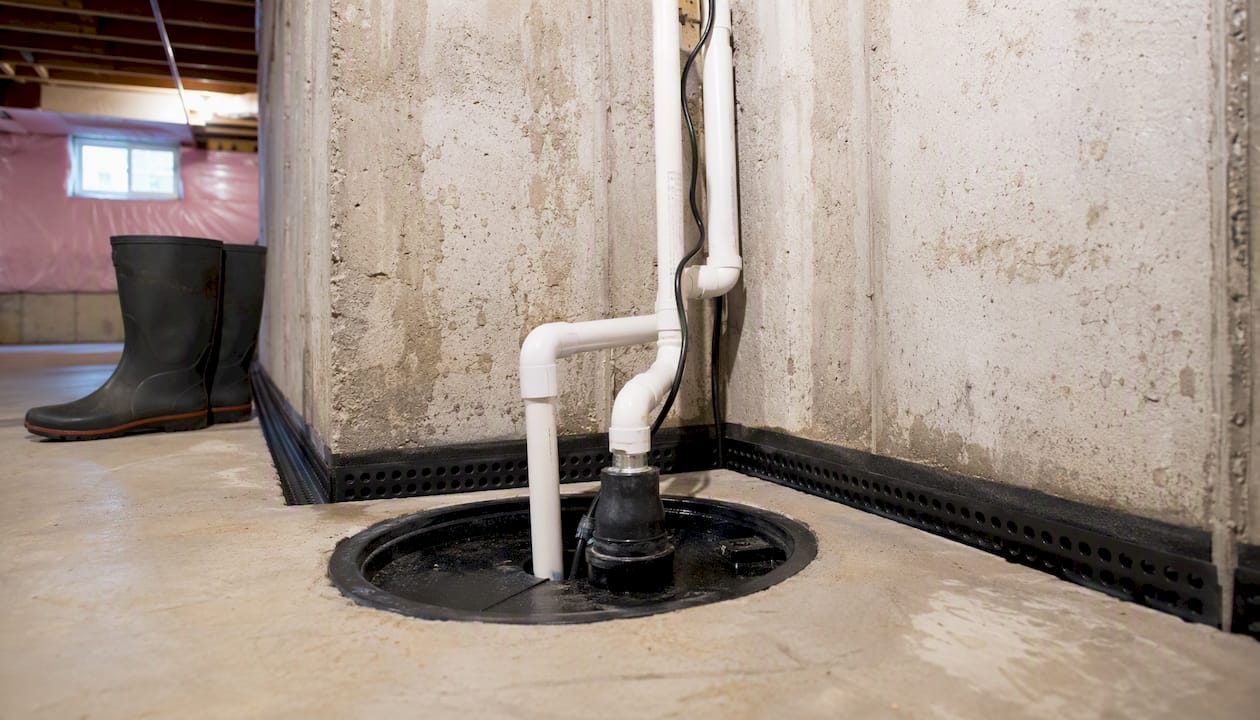
| Interior drain tile + sump pump | Perimeter drain channel and pump to manage water entry | Existing homes with chronic moisture |
| Exterior membrane or coating | Waterproof barrier applied to the outside of the wall | New construction or severe water intrusion |
| Crack injection | Epoxy or polyurethane injected into structural cracks | Non-moving cracks after drainage is fixed |
| Rebar repair and concrete patching | Treating corroded steel, patching spalled concrete | When rebar is exposed or concrete is deteriorating |
| Toe protection | Riprap, scour apron, or articulated mats at the wall base | Coastal or high-flow sites with scour risk |
| Weep hole cleaning | Clearing drainage outlets in the wall face | Annually, before rainy season |
The process follows a consistent sequence: inspection, diagnosis (including soil or geotechnical testing when warranted), design and permit, remediation, then verification and warranty check.
Professional waterproofing practice pairs drainage systems with membranes and sump pumps. Interior-only sealants are typically temporary and don’t address hydrostatic pressure at its source. For existing homes, interior drain tile and sump pump systems are often the most cost-effective long-term solution. Exterior membrane work is the standard for severe or structurally compromised cases.
Pro Tip: Fix drainage before anything else. Crack injection into a wall that still has water pressure behind it will fail. Drainage correction is the prerequisite, not the afterthought.
DIY tasks vs. work that requires a licensed contractor or engineer
Some maintenance tasks are genuinely homeowner-friendly. Others carry real risk if you get them wrong.
Safe for homeowners:
- Cleaning gutters and extending downspouts at least 6 feet from the foundation
- Regrading small areas to restore the 6-inch fall over 10 feet required by the Florida Building Code and Georgia IRC
- Clearing weep holes and back-drain outlets
- Testing sump pump function (pour a bucket of water into the pit to trigger the float switch)
- Sealing hairline, non-structural surface cracks with hydraulic cement or masonry caulk
Requires a licensed contractor or engineer:
- Any wall showing lean, rotation, or bowing
- Cracks wider than a hairline or cracks that have grown since you first noticed them
- Exposed or corroded reinforcement
- Toe scour or undermined footings
- Repeated water intrusion after DIY drainage fixes
- Any repair requiring a permit or engineered drawings
The decision rule: if you have movement AND water together, that combination is not a maintenance problem. It’s a structural problem. Call a licensed contractor and expect that a registered design professional (structural or geotechnical engineer) will need to be involved. IBC Chapter 18 requires retaining walls to meet a minimum safety factor of 1.5 against sliding and overturning, and achieving that requires engineered design, not field judgment.
What do typical job timelines and costs look like?
Realistic expectations prevent budget surprises. Here’s a general timeline for common scopes:
| Phase | Typical Duration |
|---|---|
| Free on-site inspection | Same week |
| Diagnostic testing or engineering review | 1–3 weeks |
| Permit approval (varies by city) | 1–6 weeks |
| Repair mobilization | 2–5 business days |
| Remediation (scope-dependent) | 1–2 weeks |
| Follow-up and warranty check | about 60 days post-repair |
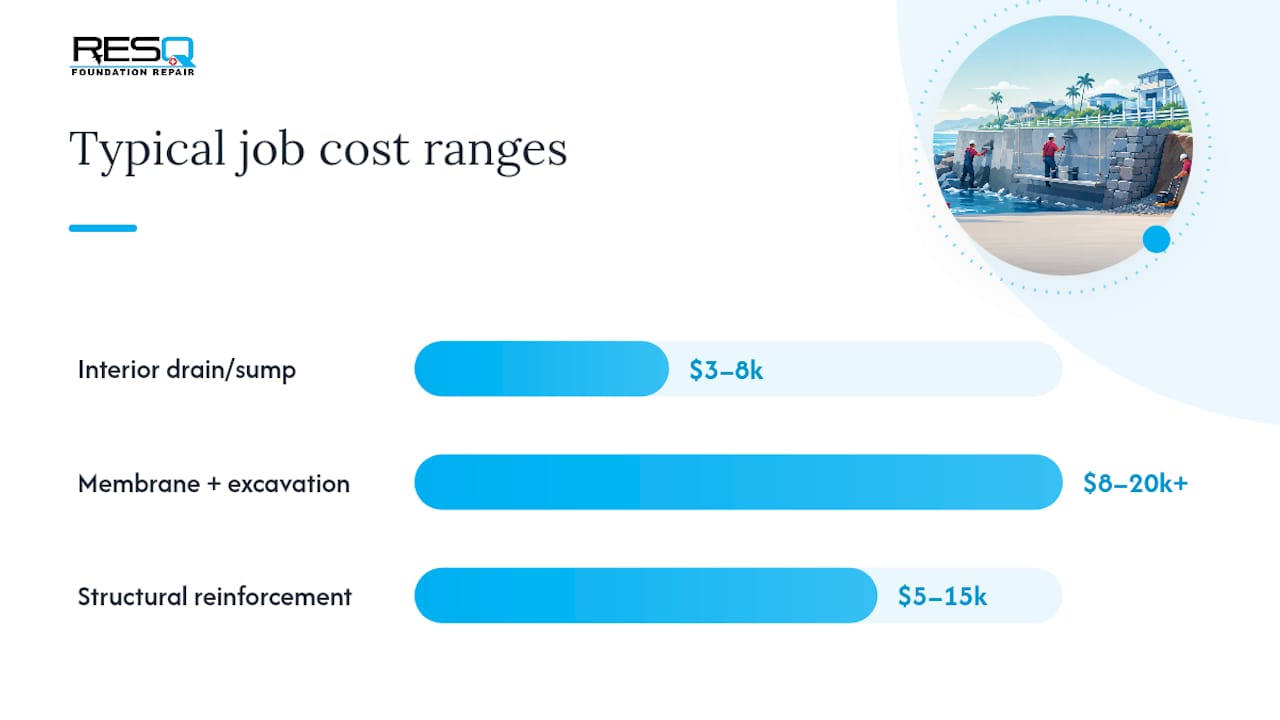
Primary cost drivers: excavation access, hydrostatic pressure severity, need for engineered drawings, material choices (drain tile vs. full membrane), toe protection requirements, and site restoration after work.
Ballpark budget ranges for common scopes (North Florida / South Georgia / Alabama region):
- Interior drain tile and sump pump installation: typically $3,000–$8,000 for a standard basement perimeter
- Exterior membrane plus excavation: typically $8,000–$20,000+ depending on wall height and access
- Structural reinforcement (wall anchors, carbon fiber straps): typically $5,000–$15,000 depending on the number of anchor points and wall length
These are rough ranges. Final costs depend on site conditions, permit fees, and whether engineering is required. For broader context on budgeting residential exterior repair projects, the fence repair cost guide from Action Fence and Deck gives a useful frame for how access and scope drive price variation in similar trades.
Statistic: Timely foundation and retaining wall repairs preserve long-term property value and typically cost significantly less than deferred repairs that allow structural failure to progress.
What does a practical maintenance checklist look like by season?
A repeatable schedule catches problems before they become expensive. Here’s a working cadence:
- Spring (March–April): Clean gutters and downspouts after pollen season. Confirm downspout extensions discharge at least 6 feet from the foundation. Check grade at the foundation perimeter with a tape measure.
- Before rainy season (May): Test sump pump by pouring a 5-gallon bucket into the pit. Confirm the float switch triggers and the pump discharges properly. Check battery backup if installed.
- Mid-summer (July): Walk the full wall perimeter after the first heavy rain of the season. Look for new cracks, wet spots, or efflorescence. Clear any weep holes blocked by debris or vegetation.
- Fall (October–November): Clean gutters again before winter rains. Trim vegetation growing against or over the wall face. Check for any new settlement or cracking at wall corners.
- Annual (any season): Schedule a professional inspection at least once per year. Document the wall condition with photos from the same angles each time.
- Post-storm (within 48–72 hours): Inspect for new cracking, movement, or toe scour after any significant storm, high-tide event, or surge episode. If you see new movement, call a contractor before the next rain event.
Pro Tip: Install simple crack gauges (adhesive tell-tales) across any crack you’re monitoring. They cost a few dollars each and give you objective data on whether a crack is active or stable, which is exactly what a contractor needs to know before recommending a repair approach.
How does Foundationresq approach foundation and retaining wall maintenance?
Foundationresq’s process starts with a free on-site inspection, not a phone estimate. A technician walks the property, documents structural and drainage conditions, and produces a written diagnostic report before any repair scope is proposed.
For structural work, Foundationresq coordinates with registered design professionals when engineered drawings are required, covering permit submission and code compliance so homeowners don’t have to navigate that process alone. The company offers phased repair plans for situations where full remediation isn’t immediately necessary or financially feasible, and wall anchoring and stabilization options are available for bowing or leaning walls.
What homeowners in North Florida, South Georgia, and Alabama consistently find: the inspection itself clarifies whether a problem is a drainage fix, a structural repair, or both. That distinction determines the entire cost and timeline, and getting it wrong in either direction is expensive.
Financing options are available for qualifying repairs, and written estimates are provided before any work begins. Warranties are transferable where applicable, which matters if you’re planning to sell.
For basement waterproofing services specifically, Foundationresq installs interior drain tile systems, sump pumps with battery backup, and exterior membranes depending on the severity of water intrusion and whether the wall is structurally sound.
What permits and code requirements affect your repair scope?
Most homeowners don’t know a permit is required until a contractor tells them. Here’s what typically triggers one:
- Retaining walls over 3 feet: most jurisdictions, including Tampa and similar Florida municipalities, require a building permit for any retaining wall exceeding 3 feet in height or supporting a surcharge load
- Drainage provisions: permitted walls typically require weep holes or drain tile as a condition of approval
- Grading changes: significant regrading near the foundation may require a grading permit depending on the city
- Structural repairs with engineered drawings: any repair that changes the structural system of a wall (adding anchors, tiebacks, or reinforcement) typically requires sealed drawings from a licensed engineer
When to engage a registered design professional: if your retaining wall has backfill exceeding 4 feet, shows evidence of structural failure, or if the local permit authority requires sealed drawings, a geotechnical or structural engineer must be involved. IBC Chapter 18 establishes the stability criteria these designs must meet, including the 1.5 safety factor against sliding and overturning. Skipping engineering on a wall that needs it doesn’t save money. It creates liability.
Always check your specific city or county code before starting any wall repair. Permit timelines vary from one to six weeks and should be factored into your repair schedule from the beginning.
What most homeowners get wrong about foundation wall maintenance
The conventional wisdom is to fix the visible problem first. Patch the crack, seal the wall, paint over the stain. That sequence is backwards.
Water doesn’t appear on a wall because the wall is porous. It appears because pressure is building behind the wall, and the wall is losing. Sealing the surface without addressing drainage is like putting tape over a leaking pipe. It holds briefly, then fails, usually in a worse location.
The other mistake is waiting. In North Florida, South Georgia, and Alabama, the combination of shallow water tables, clay soils, and storm exposure means that a wall showing early signs of distress in spring can be in active failure by fall. The cost difference between catching a problem at the monitoring stage versus the structural repair stage is substantial. Drainage fixes and annual inspections are cheap. Excavation, engineered reinforcement, and full wall reconstruction are not.
Early drainage correction often preserves the more expensive structural repairs entirely. That’s not a sales argument. It’s what the building codes are designed around.
Foundationresq offers free on-site inspections for North Florida, South Georgia, and Alabama
If you’ve spotted any of the warning signs in this article, or you just want a baseline before the next storm season, a free on-site inspection from Foundationresq is the right next step. No phone estimate, no guesswork. A technician comes to the property, documents what’s there, and gives you a written report.

Foundationresq covers foundation repair, basement waterproofing, crawl space remediation, structural stabilization, and mold remediation across North Florida, South Georgia, and Alabama. Financing is available for qualifying repairs. Written estimates are provided before any work begins.
Schedule your free inspection at Foundationresq or call to speak with a technician directly.
Sources
- Chapter 4 Foundations: 2023 FBC – Residential, 8th edition | UpCodes
- Pro Guide to Basement Waterproofing – Home Depot
- When to Reinforce Retaining Walls in Florida Coastal Landscapes – Cultivating Flora
FAQ
What is seawall maintenance for residential foundations?
In the residential context, seawall maintenance refers to the ongoing inspection, drainage correction, waterproofing, and structural repair of foundation walls, concrete retaining walls, and basement waterproofing systems. It does not refer to coastal bulkheads or marine seawalls.
How often should you inspect a foundation or retaining wall?
Inspect at least once per year, and within 48–72 hours after any major storm, surge, or high-tide event, particularly in coastal North Florida where salt, water table fluctuations, and storm exposure accelerate wall degradation.
When does a retaining wall repair require a permit or engineer?
Most Florida jurisdictions require a building permit for retaining walls over 3 feet tall or any wall supporting a surcharge. Walls with backfill exceeding 4 feet or showing structural failure require sealed drawings from a licensed engineer under IBC Chapter 18 standards.
What’s the difference between interior and exterior waterproofing?
Interior drain tile and sump pump systems capture water as it enters and are the most cost-effective approach for existing homes. Exterior membrane systems address the source of water intrusion and are the standard for severe cases or structurally compromised walls, but require excavation and cost more.
Does Foundationresq offer free inspections?
Yes. Foundationresq provides free on-site inspections for homeowners and property managers across North Florida, South Georgia, and Alabama, with written estimates and financing available for qualifying repairs.