
Yes, polyurethane foam lifting reduces disruption costs, and it does it through three mechanical facts: small access ports, a lightweight injected material, and a cure time measured in minutes rather than days. Polyurethane cures chemically in 15 to 30 minutes and typically allows same-day traffic. The foam itself weighs roughly 2 to 8 pounds per cubic foot compared with mudjacking slurry at over 100 pounds per cubic foot, so it doesn’t add the weight that can re-compress soil later. Foundation RESQ handles these lifts across North Florida, South Georgia, and Alabama, and most homeowners can get a free on-site estimate before committing to anything.
The disruption costs that drop hardest:
- Lost use of a driveway, garage, or walkway during the repair
- Landscape and lawn damage from excavation equipment
- Patching and cosmetic repair labor
- Repeat repair callbacks from soil that keeps settling
Quick fact: Because the material is usable the same day it’s injected, homeowners avoid the multi-day access restrictions that come with a curing slurry mix or a demolition crew.
Key Takeaways
Foam lifting reduces disruption costs primarily because small access ports, lightweight material, and rapid cure times eliminate the multi-day downtime and landscape damage common to mudjacking and replacement.
| Point | Details |
|---|---|
| Cure time drives savings | Foam cures to traffic-ready in 15 to 30 minutes, avoiding multi-day access loss. |
| Small ports cut patch costs | Injection holes run 5/8" to 1", far smaller than mudjacking’s 1.5" to 2.5" holes. |
| Lightweight material limits repeat repairs | At 2 to 8 lb/ft³, foam avoids adding weight that re-compresses failing soil. |
| Know the limits | Foam suits minor to moderate settling; major structural failure still needs piering. |
| Foundation RESQ offers local assessment | Free on-site inspections help homeowners in North Florida, South Georgia, and Alabama confirm if foam lifting fits their repair. |
Table of Contents
- What Actually Happens on Site During a Polyurethane Foam Lift
- Exactly How Foam Lifting Cuts Disruption and Which Cost Channels Drop
- How Foam Lifting Compares With Mudjacking and Piering on Cost and Downtime
- Which Homeowner Repairs Are the Best Fit for Foam Lifting?
- Durability, Warranties, and Fewer Repeat Repairs
- When Foam Lifting Won’t Actually Save You Money
- Typical Job Timeline and What Drives the Final Cost
- How to Vet a Contractor Before You Sign
- Case Summary: A Foundation RESQ Foam Lift in Practice
- Real Numbers Behind Disruption Cost Savings
- Environmental and Safety Factors That Affect Downtime
- Property Value and Insurance Implications of Foam Lifting
- When I’d Recommend Foam Lifting Over the Alternatives
- Get a Free Inspection From Foundation RESQ
- Sources
- FAQ
What Actually Happens on Site During a Polyurethane Foam Lift
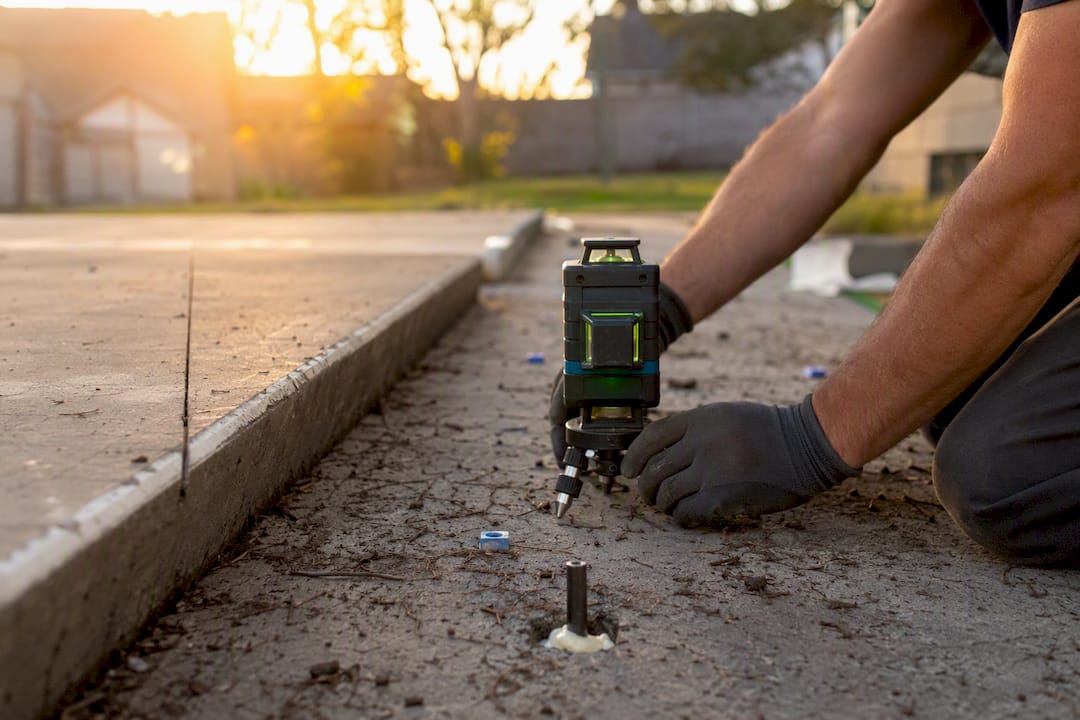
The whole process follows a tight sequence: drill small ports, insert a probe, inject in controlled stages, monitor the lift with a laser level, then patch and clean up. None of those steps require heavy machinery parked on your lawn for a week.
Here’s the breakdown:
- Inspection and scanning. A technician checks the slab, maps void locations, and marks injection points.
- Small-diameter drilling. Holes typically run 5/8 inch to 1 inch, roughly the size of a dime to a quarter.
- Staged injections. Foam goes in through a probe in controlled bursts, filling voids and lifting the slab incrementally.
- Laser or level monitoring. The crew tracks the lift in real time to avoid over-lifting or uneven raises.
- Cure and patch. The foam expands and sets, then the small holes get patched to match the surrounding concrete.
| Step | Typical detail |
|---|---|
| Injection hole diameter | 5/8" to 1" |
| Foam cure-to-traffic time | 15 to 30 minutes |
| Mudjacking cure comparison | 15 to 30 minutes |
| Typical residential job length | Half a day |
Pro Tip: Ask your contractor whether they stage injections in small bursts with laser-level monitoring. Rushing a single large pour is what causes uneven lifts and expensive callbacks.
Exactly How Foam Lifting Cuts Disruption and Which Cost Channels Drop
Every dollar saved on disruption traces back to one of three physical facts: small ports, lightweight foam, or fast cure. Line them up against the cost channels they attack and the savings make sense.
- Lightweight material avoids repeat settling. Because foam weighs a fraction of slurry, it doesn’t add load that pushes weak soil back down, which is a leading cause of repeat repair calls.
- Rapid cure avoids lost-use costs. A driveway or garage that’s usable in under an hour doesn’t force you to park on the street or reroute deliveries for two days.
Pro Tip: If your job is small, ask about scheduling it as a single half-day visit. Fewer mobilizations mean lower daily labor charges baked into your quote.
How Foam Lifting Compares With Mudjacking and Piering on Cost and Downtime
For most driveway, garage, and small foundation settling jobs, foam lifting minimizes disruption cost better than either alternative, mainly because it avoids the heavy equipment and long cure windows that drive up mudjacking and piering bills. Piering still wins for one thing: genuine structural underpinning where the foundation needs deep, load-bearing support.
| Factor | Polyurethane foam | Mudjacking | Piering |
|---|---|---|---|
| Up-front cost | Higher per square foot | Lower per square foot | Highest overall |
| Total cost of ownership | Often lower due to fewer repeat repairs | Higher due to re-settling risk | High but appropriate for major failures |
| Job duration/downtime | Hours, same-day use | 1 to 2 days | Multiple days |
| Site footprint/disruption | Small drill ports only | Larger holes, some equipment | Excavation, heavy equipment |
| Lifting capacity/suitability | Minor to moderate settling, void fill | Minor settling | Deep structural failure |
| Immediacy of use | 15 to 30 minutes | 15 to 30 minutes | Days, depends on scope |
Local market data backs the up-front tradeoff: one Austin-area report found polyurethane running $4 to $7 per square foot against mudjacking’s $3 to $5, yet many homeowners accept that 30 to 40 percent premium for the faster cure and smaller footprint.
- Choose foam for driveways, garage slabs, and small foundation corners with minor settling.
- Consider mudjacking only when budget is the sole constraint and you can tolerate a multi-day cure.
- Reserve piering for deep or heavy-load structural failures where foam’s lifting capacity isn’t enough.
Which Homeowner Repairs Are the Best Fit for Foam Lifting?
Foam lifting shines on the everyday concrete problems most homeowners actually deal with:
- Sunken driveways and garage floor slabs
- Cracked or uneven sidewalks and walkways
- Sunken patios and pool decks
- Small slab corner drops
- Void filling under an existing slab to prevent further settling
It’s less suited for major structural foundation failure, deep settlement that needs piering, or slabs so damaged they need full replacement anyway.
Pro Tip: Look for a visible gap under the slab edge or hairline cracks that follow a straight line. Wide, stair-step cracks or a foundation wall that’s visibly bowing usually point toward a structural problem foam alone won’t fix.
Durability, Warranties, and Fewer Repeat Repairs
Foam lifting tends to reduce lifecycle repair costs because closed-cell polyurethane is waterproof, lightweight, and bonds strongly to the underlying soil and slab without adding the compressive load that causes future sinking.
- Closed-cell foam resists moisture intrusion, which limits the soil erosion that causes many original slab problems.
- Ask about manufacturer or contractor warranties covering the lift; a written guarantee signals confidence in long-term performance.
- Fewer repeat repairs mean the total cost of ownership often ends up lower than the cheaper up-front alternative.
Statistic: Contractor cost analyses find polyurethane reduces total lifecycle costs specifically because it lowers the frequency of callback repairs compared with slurry-based leveling.
When Foam Lifting Won’t Actually Save You Money
Foam isn’t the cheaper option when a property needs real structural underpinning rather than a lift. If your soil report or an engineer flags deep, heavy-load bearing issues, foam’s lifting capacity gets outmatched fast.
- Major structural failures need piering, not injection.
- Soft or highly variable soil conditions sometimes favor deep piers over surface injection.
- Very large voids can require enough material to erase foam’s price advantage.
- Foam’s higher per-square-foot material cost only pays off when it prevents a bigger downstream repair.
Pro Tip: Request an on-site inspection that includes a laser-level survey and, if warranted, soil borings before signing anything. A five-minute diagnostic can save you from paying for the wrong repair.
Typical Job Timeline and What Drives the Final Cost
Most small residential foam lifts run two to four hours on site, with the surface ready for foot and vehicle traffic in 15 to 60 minutes depending on temperature and humidity.
| Cost driver | How it affects the quote |
|---|---|
| Square footage | More area means more injection points and material |
| Lift height needed | Larger drops require more foam volume |
| Access difficulty | Tight side yards or gated driveways add labor time |
| Soil condition | Poor subgrade may need extra void filling |
| Foam quantity | Priced per pound or per square foot depending on contractor |
What to expect on-site:
- Short-term parking restriction near the work area, usually just for the visit
- Small marked drill points, patched the same day
- A brief final walkthrough comparing before and after slab levels
How to Vet a Contractor Before You Sign
Start by asking about cure time, hole size, cleanup process, warranty terms, and insurance. Their answers tell you almost everything about whether the job will actually stay low-disruption.
- Verify licensing and liability insurance before any work begins.
- Ask for manufacturer or industry certifications tied to the foam product used.
- Request before-and-after measurements and laser-level documentation as proof of the lift.
- Confirm warranty terms in writing, not just verbally.
- Ask how they handle site restoration, including patching and any landscape touch-up.
Pro Tip: Insist on a written scope of work specifying work hours, site access needs, and a patching plan. Vague scopes are where surprise charges creep in after the crew has already left.
Case Summary: A Foundation RESQ Foam Lift in Practice
A sunken garage slab corner, roughly two inches out of level, is a common call for Foundation RESQ crews. The fix: small injection ports, staged polyurethane lifts monitored with a laser level, and a finished patch, all inside a single site visit.
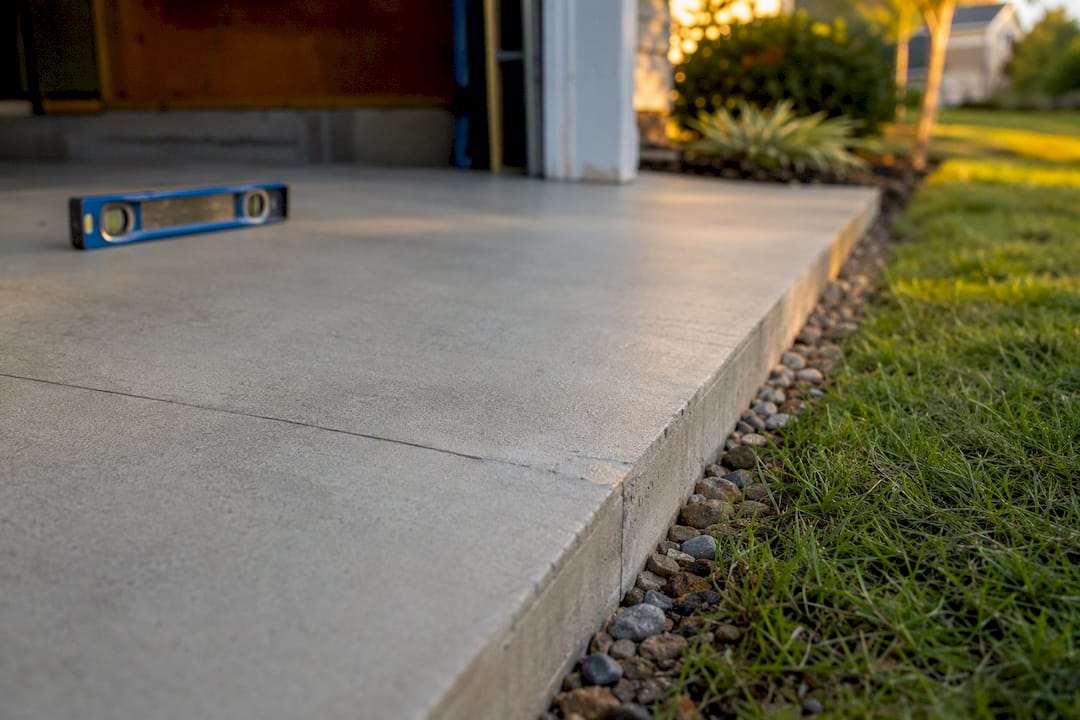
[Before/after photo placeholder] [Testimonial placeholder]
See more completed projects in Foundation RESQ’s case studies.
Real Numbers Behind Disruption Cost Savings
Quantifying disruption savings gets easier once you break a job into its cost line items. A typical mudjacking or replacement project on a driveway or patio racks up charges most homeowners don’t see coming: equipment mobilization, landscape restoration, extended parking loss, and a second visit if the slab settles again within a year or two.
Foam lifting strips several of those line items out entirely. Because the access ports are small, there’s rarely any landscaping to restore. Because the surface cures fast, there’s no multi-day loss of driveway or garage access. Consumer-facing cost comparisons put the savings from skipping full replacement, with its demolition and hauling, at 20 to 40 percent.
Homeowners researching why concrete replacement costs more than expected often find the same pattern: it’s rarely the concrete itself that inflates the bill. It’s the disposal, the equipment rental, and the days of lost driveway access stacked on top.
The clearest example is a two-car driveway with a sunken slab section that requires expert concrete pouring and finishing in Durham Region – La Rocks Renovations. A replacement job means jackhammering, hauling debris, pouring new concrete, and waiting days for cure, often with a rental car or rideshare bill added in. A foam lift on the same slab means a few small drilled ports, an hour of injection work, and traffic-ready concrete before dinner. The dollar difference isn’t just in the invoice. It’s in every avoided day of disrupted routine.
Environmental and Safety Factors That Affect Downtime
Foam lifting carries a lighter environmental footprint on-site than excavation-based repairs, and that translates directly into less downtime for you.
Because there’s no large-scale digging, there’s minimal soil disturbance and no runoff concerns tied to exposed dirt sitting through a rainstorm mid-project. Crews aren’t hauling debris off-site in dump trucks, which means no extended equipment staging on your street and no multiple-day disposal logistics. The material itself is a two-part reactive foam that expands and cures in place, so there’s little dust and no wet slurry runoff to manage or clean up afterward.
Safety-wise, the smaller equipment footprint reduces the risk profile of the job itself. There’s less heavy machinery maneuvering near your home, less risk to underground utility lines compared to deep excavation, and a shorter window where a work zone actually exists on your property. Reputable contractors should still follow standard safety protocols, including checking for material safety compliance and working within recognized construction practices. Homeowners can reasonably ask whether the materials used meet relevant industry testing standards, particularly for any work near a water source or crawl space.
All of this compounds into fewer downtime hours. A shorter, cleaner job means fewer disruptions to daily routines, less noise exposure over time, and a lower chance that weather delays turn a one-day job into a three-day one.
Property Value and Insurance Implications of Foam Lifting
A leveled, properly documented slab repair generally protects property value better than a visibly sunken or cracked one, and it can matter during a home sale inspection or appraisal.
Foundation and slab issues are among the first things a home inspector flags, and unresolved settling can spook buyers or trigger a price renegotiation. A documented foam lift, especially one with before-and-after laser-level measurements and a contractor warranty, gives sellers something concrete to show buyers: proof the issue was addressed, not painted over.
Insurance is more nuanced. Most homeowner policies don’t cover gradual settling since it’s considered a maintenance issue rather than a sudden covered event, so foam lifting repairs are typically an out-of-pocket cost regardless of method. Where foam lifting can help indirectly is in claims tied to a covered peril, like a burst pipe that eroded soil under a slab. In those cases, having documented repair records, including the type of repair and warranty terms, can support a smoother claims conversation with an adjuster. It’s worth asking your insurer directly how they treat foundation and slab repairs before assuming coverage either way, since policies vary significantly by carrier and state.
Either way, a warrantied repair with documentation tends to read as a maintained property rather than a deferred problem, which matters more to buyers and appraisers than most homeowners expect.
When I’d Recommend Foam Lifting Over the Alternatives
For the driveway, garage, sidewalk, and small foundation-corner problems most homeowners actually deal with, foam lifting is the right call almost every time. The math is straightforward: a same-day cure, a footprint of a few dime-sized holes, and a lower likelihood of paying for the same repair again in three years. Piering still has its place, but only when the problem is genuinely structural, not cosmetic settling.
Get a Free Inspection From Foundation RESQ
If a sunken driveway, garage slab, or small foundation settling issue is costing you sleep, Foundation RESQ can usually get it resolved in a single visit instead of a week of disrupted access.
Foundation RESQ serves homeowners across North Florida, South Georgia, and Alabama with polyurethane foam lifting designed around minimal site disruption, small access ports, and same-day usability. You can browse the full services lineup to see what’s covered beyond concrete lifting, including crawl space and waterproofing work, or review real project outcomes on the case studies page before deciding. If financing is a concern, Foundation RESQ also offers financing options to spread out the cost. Request a free, no-obligation inspection to get a same-week estimate on your specific slab or foundation issue.
Sources
- How Polyurethane Foam Injection Works | Superior Grouting
- Mudjacking vs Polyurethane Foam: Which Is Better? | HMI
- Polyurethane Foam Injection in Austin 2026 | Cost, Process & Results
FAQ
Is foam jacking worth it?
For minor to moderate slab settling like driveways, garage floors, and sidewalks, foam jacking is usually worth the higher upfront cost because it cuts downtime and avoids the repeat repairs that add up over time.
What are the downsides of foam concrete?
The main downsides are a higher material price per square foot and limited lifting capacity for major structural failures, which still require piering or underpinning instead.
How long does foam jacking last?
Foam jacking is designed to be a long-term fix because closed-cell polyurethane resists moisture and doesn’t add weight that re-compresses soil, which lowers the odds of repeat settling compared with mudjacking.
What is better, mudjacking or polyurethane?
Polyurethane generally wins on total cost of ownership and disruption because it cures faster and uses smaller holes, though mudjacking can still be cheaper upfront for budget-limited projects.
Recommended
- Polyurethane Foam Leveling Benefits for Homeowners – Tallahassee Foundation Repair | Foundation ResQ
- PolyRenewal vs. Mudjacking: Which Concrete Lifting Method is Best for Your Home? – Tallahassee Foundation Repair | Foundation ResQ
- Polyurethane Concrete Lifting: Pros, Cons, and How It Works – Tallahassee Foundation Repair | Foundation ResQ
- How Homeowners Can Reduce Mold Remediation Costs – Tallahassee Foundation Repair | Foundation ResQ