
Stair-step cracks almost always point to foundation movement, most often differential settlement or drainage-related pressure against the wall. They aren’t automatically an emergency, but a crack wider than about a typical threshold used by homeowners, one that keeps growing, or one paired with sloping floors or sticking doors, means it’s time to schedule a professional inspection rather than wait and see.
TL;DR:
- Cracks wider than 1/8 inch that are actively growing or paired with sloping floors and sticking doors require professional inspection.
- The direction of a diagonal crack can indicate whether the ground is subsiding or heaving, aiding diagnosis.
- Water intrusion and poor soil compaction are primary causes, with expansive clay soils and drainage issues being common accelerators.
- Monitoring cracks monthly with photos and measurements is essential to detect active movement before costly repairs are needed.
- Repair strategies depend on cause; structural stabilization is often necessary for active settlement, while drainage correction can prevent future cracking.
Table of Contents
- What Stair Step Cracks Look Like and Where They Form
- Why Stair-Step Cracks Happen: The Main Culprits
- How Serious Is the Crack? Width, Location, and Warning Signs
- What to Do the Same Day You Spot a Crack
- Repair Options: From Monitoring to Structural Stabilization
- Preventing Stair Step Cracks From Coming Back
- What Years of Foundation Inspections Have Taught Us
- The Real Lesson From Years of Cracked Foundations
- Get a Free Inspection Before a Small Crack Becomes a Big Repair
- Sources
- FAQ
What Stair Step Cracks Look Like and Where They Form
A stair-step crack runs diagonally in a zigzag pattern, following the mortar joints between blocks or bricks instead of cutting straight through them. Most follow a 30 to 60 degree angle, because mortar is softer than the masonry unit around it and gives way first when the wall shifts.
You’ll find these most often in:
- Concrete block (CMU) or brick foundation walls, basements, and crawl space stem walls
- Corners of the house, where two wall sections meet and settle at different rates
- Areas near windows and doors, where openings weaken the wall’s structure
Shrinkage cracks, by contrast, tend to be thin, straight, and vertical, and they show up in poured concrete rather than following a joint pattern. If your crack zigzags along mortar lines, you’re looking at movement in the structure itself, not surface curing.
Why Stair-Step Cracks Happen: The Main Culprits
Differential settlement is the most common cause. One section of the foundation sinks faster than another, often because soil compacted unevenly or a void formed under the footing after construction. The wall above that weak spot has nowhere to go but to crack along the path of least resistance, which is the mortar joint.
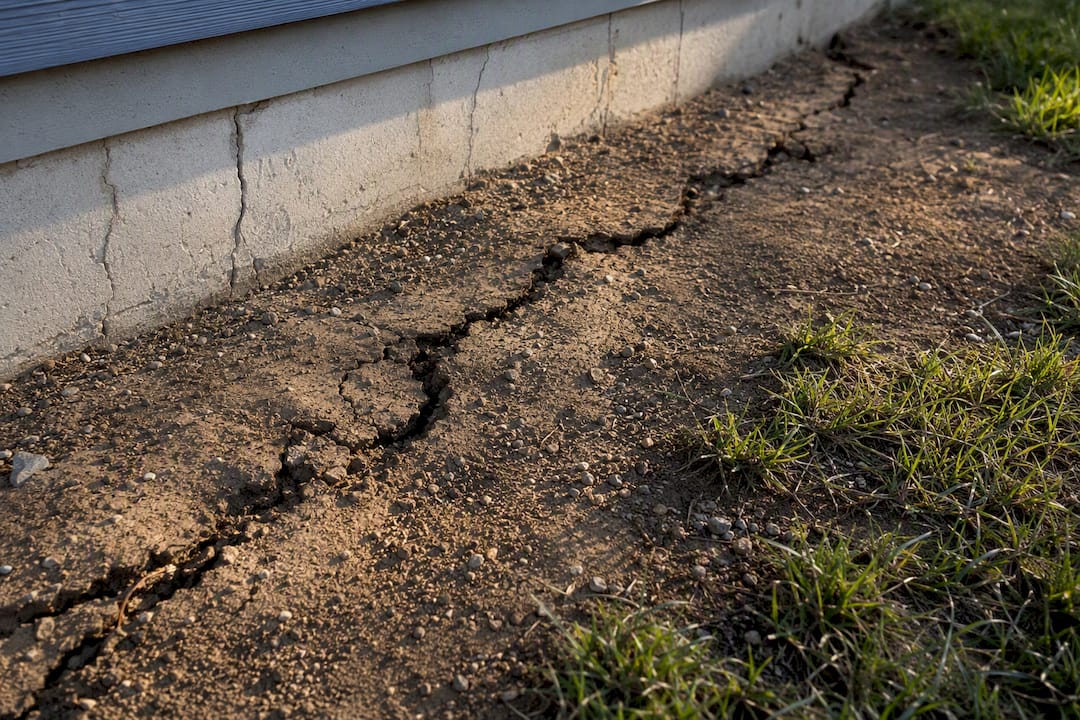
Water is the second major driver. When drainage fails, water pools against the foundation and builds hydrostatic pressure, pushing against the wall and softening the soil beneath it. The USGS Water Science School explains how water moves through soil layers and why saturated ground behaves so differently from dry ground when it comes to bearing weight.
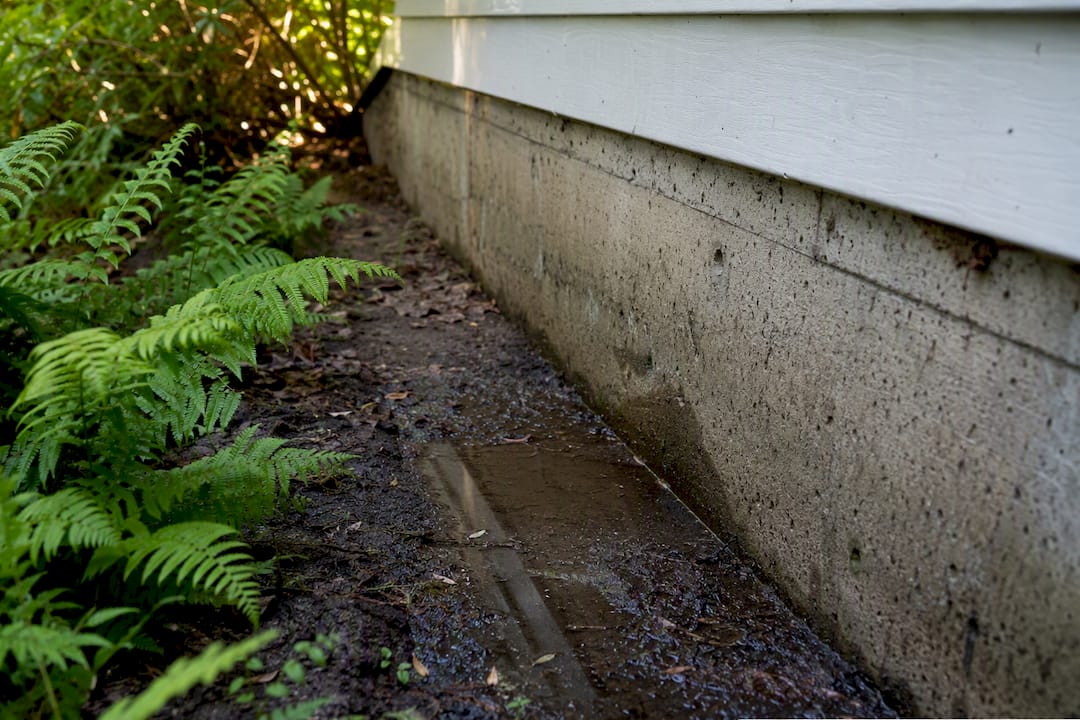
Expansive clay adds a seasonal wrinkle. These soils swell when wet and shrink when dry, and that cycle can open and close a crack depending on the time of year. The British Geological Survey documents this shrink-swell behavior as a major cause of shallow foundation movement, and frost heave produces a similar seasonal push-pull in colder climates.
A few other contributors show up often enough to mention:
- Footings poured on unconsolidated fill instead of undisturbed soil
- Concentrated loads (a heavy addition, a new deck, an added floor) sitting on a wall that wasn’t designed for it
- Tree roots or excavation nearby that disturbs the soil supporting the footing
Extending downspouts and regrading around the house resolves a meaningful share of drainage-driven cases before anyone touches the structure itself, according to FEMA’s guidance on site drainage.
How Serious Is the Crack? Width, Location, and Warning Signs
Crack width is the first thing to check, and it’s genuinely useful as a screening tool, even though it’s not the whole story.
- Hairline (under 1/16 inch). Common in masonry as it cures or settles slightly. Usually cosmetic, but worth a photo for your records.
- 1/16 to 1/8 inch. Watch this one. Not urgent by itself, but note the date and check back in a few weeks.
- 1/8 to 1/4 inch. Several homeowner guides, including Today’s Homeowner, flag this range as the point where a professional look makes sense, especially if the crack is still active.
- Over 1/4 inch, or growing. Schedule an inspection. At this width, InspectApedia’s analysis of block wall cracking notes the footing itself may already be compromised.
Location changes the calculus, too. A step crack at a corner or one that runs all the way to the footing carries more weight than the same width crack isolated near a window. And width alone never tells the full story: a hairline crack next to a door that suddenly won’t latch, or a floor that’s started sloping toward one wall, deserves attention regardless of the ruler reading.
Pro Tip: Draw a straight line perpendicular through the middle of the diagonal crack. The direction it points generally indicates where the ground is moving, toward the center for subsidence, away from center for heave. It’s a rough trick, but it helps a professional narrow down the cause faster.
Set a simple cadence: check monthly for the first season you notice a crack, then move to seasonal checks (late summer and spring) once you know it’s stable. A crack that widens noticeably between checks, rather than staying flat, is the clearest signal to stop monitoring and call someone.
What to Do the Same Day You Spot a Crack
Don’t panic, but don’t ignore it either. A few simple steps protect you and give a professional better information later.
- Photograph the crack with a coin or ruler next to it for scale, and date the photo.
- Measure the width at its widest point and note it alongside the photo.
- Check gutters and downspouts for clogs, and extend downspouts so water discharges several feet from the foundation.
- Turn off sprinklers that spray directly against the foundation wall.
- If water is actively pooling nearby, temporary grading or sandbags can buy time until drainage work happens.
Repeat the photo and measurement monthly. If you’re unsure how to read what you’re seeing, a foundation issue checklist can help you know what else to look for around the house. DIY monitoring works fine for tracking a stable, narrow crack. It stops working the moment you see rapid growth, a door that jams, or a floor that visibly slopes, at that point you need a licensed inspection, not another month of photos.
Repair Options: From Monitoring to Structural Stabilization
Not every stair-step crack needs a contractor. A hairline crack that hasn’t moved in two seasonal cycles can often be monitored and left alone. Once a crack is active or wide, though, the repair approach depends entirely on what’s causing it.
- Masonry patching (epoxy injection, crack stitching). These treatments seal the crack and can add some reinforcement, but they’re cosmetic if the underlying movement isn’t addressed. Patch over active settlement and the crack will likely reopen.
- Drainage correction and waterproofing. When hydrostatic pressure is the driver, fixing grading, extending drainage, or waterproofing the basement wall often resolves the problem at its source.
- Underpinning or helical piers. For genuine settlement, piers transfer the foundation’s load down to stable soil or bedrock. This is more invasive and more expensive, but it’s the fix that actually stops the movement rather than masking it.
- Rebuilding. In cases where the footing is severely damaged, InspectApedia notes that partial rebuilding may be the only durable option.
A contractor worth hiring diagnoses the cause first, soil, drainage, or structural, and treats the crack second. Sealing a symptom before fixing the source is the single most common mistake homeowners make with foundation repair.
Preventing Stair Step Cracks From Coming Back
Most prevention comes down to controlling water around the foundation, which is also the cheapest lever homeowners have.
- Grade soil so it slopes away from the house, and extend downspouts several feet beyond the foundation line.
- Clean gutters twice a year so water doesn’t overflow and pool at the base of the wall.
- Keep irrigation heads pointed away from the foundation, not toward it.
- Plant trees and large shrubs well away from footings so roots don’t disturb the soil supporting them.
- Walk the perimeter each spring and late summer, the two points where expansive soils and frost cycles are most likely to reveal new movement.
Pro Tip: If you live in an area with heavy clay soil, check cracks right after the first hard freeze-thaw cycle and again after the driest stretch of summer. Comparing those two snapshots tells you fast whether you’re dealing with seasonal cycling or a crack that’s actually getting worse.
What Years of Foundation Inspections Have Taught Us
Most of the stair-step cracks we see at Foundationresq trace back to one of two things: water that’s been finding its way to the foundation for years, or soil that was never properly compacted before the slab went in. The visible crack is rarely the actual problem. It’s a symptom pointing at something happening below grade, which is why guessing at a fix without diagnosing the cause almost always leads to a repeat visit a year or two later.
A Foundationresq inspection starts with measuring the crack, checking the surrounding grade and drainage, and looking for related symptoms inside the house, uneven floors, doors that stick, gaps around trim. From there, you get a written report with recommended repairs and, when the job calls for it, financing options so a bigger fix doesn’t have to wait.
The Real Lesson From Years of Cracked Foundations
Here’s what gets lost in most stair-step crack advice: the width chart is useful, but it’s a screening tool, not a diagnosis. I’ve seen plenty of homeowners fixate on a single measurement, decide a 1/8 inch crack is “fine,” and miss the fact that it grew from a hairline in six months. The rate of change matters more than any single number on a ruler.
The other piece conventional advice tends to skip is that cosmetic fixes and structural fixes solve different problems, and picking the wrong one wastes money twice. Epoxy on a crack that’s still actively moving isn’t a repair, it’s a placeholder that fails again once the wall keeps shifting.
If you take one thing from this guide, make it the monitoring habit. A dated photo with a coin for scale, checked monthly for a season, tells you more than any single inspection ever could. It’s the cheapest diagnostic tool a homeowner has, and almost nobody uses it consistently.
— Kayle
Get a Free Inspection Before a Small Crack Becomes a Big Repair
Foundationresq gives Tallahassee-area homeowners something a weekend of internet research can’t: a licensed inspector who can tell you, on site, whether your stair-step crack is cosmetic or the first sign of settlement. That’s the real value here, not another crack width chart, but an actual answer for your specific wall.

Foundationresq’s foundation settlement repair service handles everything from monitoring plans to helical pier installation, depending on what the inspection turns up. If drainage is feeding the problem, the team also handles basement waterproofing and crawl space work to stop water at the source instead of just patching the symptom. Every inspection comes with a written report and, if repairs are needed, financing options that spread the cost over time.
Start by photographing your crack with a coin for scale, then schedule a free inspection and ask to see past case studies similar to your situation. A written estimate costs you nothing and tells you exactly what you’re dealing with.
Sources
These sources back the diagnostic thresholds and causes covered above, and they’re worth a closer read if you want more technical depth:
- Foundation Cracks: Signs, Causes, & Fixes | Today’s Homeowner
- Diagonal or Step Cracks in Concrete Block Walls / Foundations | InspectApedia
- Clay shrink–swell | British Geological Survey
For anything site-specific, a local inspector or geotechnical engineer will always give you a more reliable answer than a general guide.
FAQ
Can stair-step cracks be fixed?
Yes. Options range from epoxy injection for stable, narrow cracks to underpinning or helical piers when active settlement is the cause, and the right choice depends on what’s driving the movement.
When should I worry about stair-step cracks?
Worry when a crack exceeds about 1/8 inch, keeps growing between checks, or shows up alongside sloping floors, sticking doors, or new cracks elsewhere in the house.
How much does it cost to fix stair-step cracks?
Cosmetic masonry patching costs far less than structural work like underpinning or helical piers, and pricing depends heavily on the cause, the extent of damage, and whether drainage correction is also needed; Foundationresq’s financing guide breaks down payment options for larger repairs.
Should I buy a house with stair-step cracks?
Not automatically a dealbreaker. Small, stable, documented cracks with no active movement are common in older masonry homes, but any active or wide crack should be professionally evaluated before you close, and the seller’s disclosure or a past inspection report can tell you whether it’s been monitored.