
A settled interior slab doesn’t always need replacement. PolyRenewal for interior concrete slabs uses injected polyurethane foam that expands beneath the concrete, fills voids, and helps lift and support the slab.
Uneven floors, cracks, or gaps near baseboards can make a concrete problem hard to ignore. The visible damage is only part of the picture: what matters is why the slab settled and whether empty or weakened areas beneath it can be stabilized.
This guide explains what PolyRenewal is, how the foam is injected, and how its expansion raises settled concrete. You’ll learn which signs may point to settlement, what the repair involves inside a home, and how an assessment can determine whether lifting suits the slab’s condition.
Key Takeaways
- See how expanding polyurethane compares with heavier conventional fillers and why the material beneath a slab matters.
- Learn what injection access involves, including how small holes help keep the repair visually unobtrusive.
- Understand how controlled foam expansion can lift a slab and when the surface can typically return to use.
- Recognize signs such as widening cracks, uneven floors, or gaps near baseboards that may call for a closer assessment.
What Is Polyurethane Concrete Lifting?
Polyurethane concrete lifting injects expanding foam beneath a settled slab to fill gaps and raise the surface. It addresses support below the concrete, unlike surface treatments that only change the floor’s finish.
Foam Lifting Versus Conventional Fillers
Polyurethane foam expands beneath concrete to fill gaps, while mudjacking pumps cement slurry under the slab. This difference can matter when weak soil is already struggling to support the concrete’s weight.
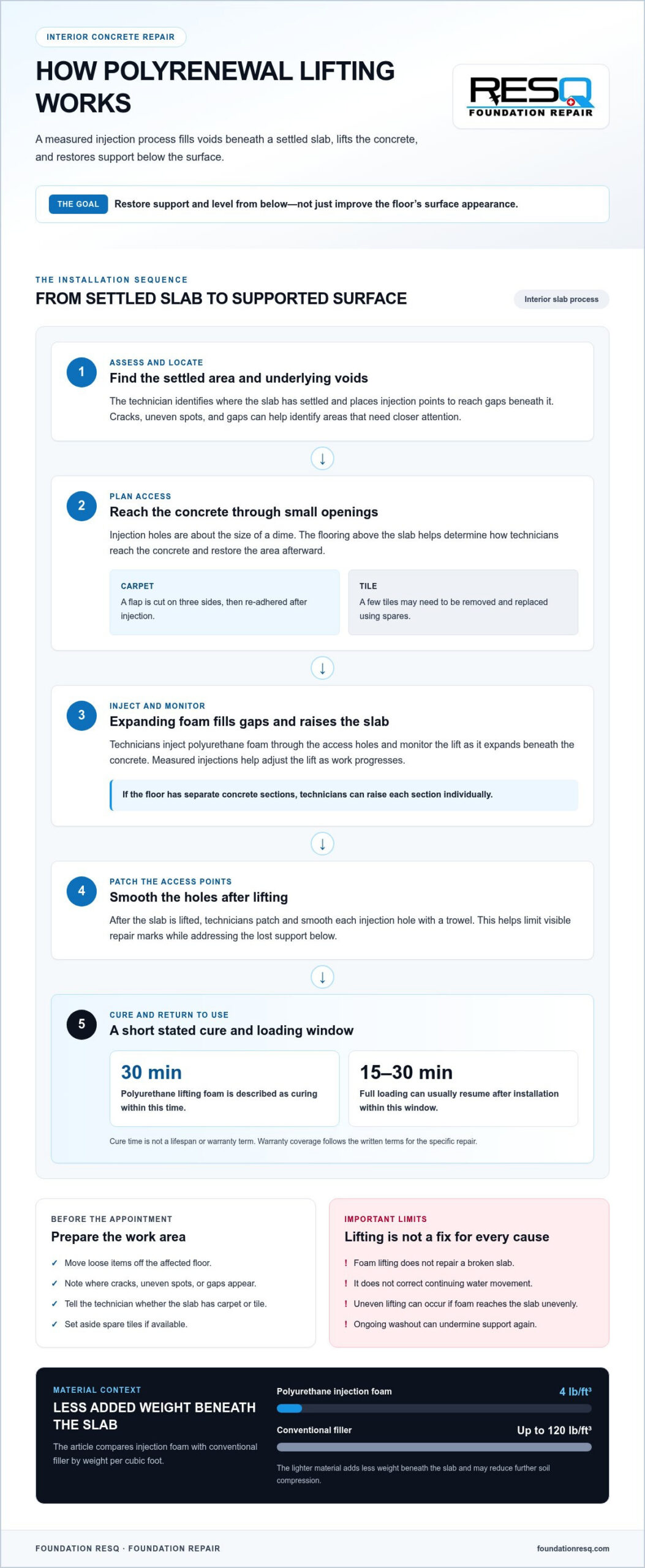
Injection foam weighs 4 pounds per cubic foot, while conventional filler can weigh up to 120 pounds per cubic foot. That lighter material adds less weight beneath the slab and may reduce further soil compression.
Both mudjacking and foam lifting raise settled concrete by filling space underneath. Mudjacking uses cement slurry; polyurethane foam expands into gaps through smaller injection openings, making the repair less invasive.
Foam Expansion and Soil Compaction
After injection, polyurethane foam expands into voids, presses against the slab, and hardens as it cures. It can compact loose soil while filling gaps, helping restore contact between the slab and its support.
For example, where soil washout leaves an empty pocket beneath one section, foam can fill that space and lift the concrete above it. Polyurethane lifting foam is described as curing within 30 minutes, allowing the material to harden beneath the repaired area.
Self-leveling compound serves a different purpose: it smooths surface irregularities rather than lifting a settled slab. It may improve a minor uneven finish, but it won’t fill an underlying void or restore the support lost through settlement.
Pier installation also addresses support, but serves a different structural purpose. Foam lifting raises settled slabs by filling and stabilizing areas beneath them. Helical or push pier installation is used in foundation repair when the concern is supporting a foundation, rather than leveling a sunken interior slab.
How contractors install PolyRenewal™ injections
For an interior slab, technicians inject expanding polyurethane through small access holes and monitor the lift as foam fills the spaces below. Measured injections help raise settled sections without merely treating the floor’s surface.
First, the technician identifies where the slab has settled and places injection points to reach voids beneath it. A hole about the size of a dime provides access. Once injected, the foam expands, fills gaps, and lifts the slab. If the floor has separate concrete sections, technicians can raise each one individually and adjust the lift as work progresses.
Floor coverings affect access. With carpet, the described method is to cut a flap on three sides and re-adhere it after injection. With tile, a few tiles may need to be removed and replaced using spares. The surface material and location of the settled area help shape the work plan.
After lifting, technicians patch and smooth each injection hole with a trowel. Polyurethane foam injection can address settled interior slabs and voids beneath other concrete surfaces. The repair targets concrete that has lost support below.
Pricing and availability by location depend on the slab’s size and condition, injection access, the extent of voids, and the amount of lifting required. Location and project scheduling also affect when the work can be arranged; the price is determined for the specific case after a quote request.
Risks include uneven lifting if foam reaches the slab unevenly, while ongoing washout can undermine support again. Foam lifting raises concrete, but it doesn’t repair a broken slab or correct a continuing source of water movement.
Foam is described as curing within 30 minutes, but that is not a lifespan or warranty term. Long-term performance depends on soil and water conditions; warranty coverage is governed by the written terms for the specific repair.
How polyurethane foam lifting raises settled concrete slabs
Polyurethane foam lifting raises sunken concrete by filling gaps beneath the slab and applying upward pressure. Controlled injection can restore a more even surface without replacing the entire slab.
Lifting Timelines and Return to Use
During concrete lifting, foam expands beneath the slab until the surface reaches the intended level. Technicians monitor uneven areas as they inject and adjust the process to avoid raising one section too far.
The foam is described as curing within 30 minutes, and full loading can usually resume 15 to 30 minutes after installation. That short return-to-use window helps homeowners plan around rooms that need to remain accessible.
Interior Slab Disruption and Cleanup
Interior lifting requires access through injection points, so disruption depends partly on the flooring above the concrete. With carpet, the described method is to cut a flap on three sides and re-adhere it after the work.
Tile may require removing and replacing a few tiles with spares. After injection, technicians patch and smooth the holes with a trowel. These steps help limit visible repair marks while addressing the settled area below.
Preparing an Interior Slab
Before the appointment, move loose items off the affected floor so the technician can access the slab and see its surface. Note where cracks, uneven spots, or gaps appear to help identify the area needing attention.
Tell the technician whether the slab has carpet or tile, since each covering affects access. Set aside spare tiles if available in case replacements are needed. For carpet, identify the affected area so the flap can be restored after lifting.
As injection continues, expanding foam fills voids and supports the concrete from below. The method can address settled interior slabs, but it doesn’t repair a broken slab or resolve ongoing water movement. The goal is to restore support and level, not simply improve the surface appearance.
Assessing concrete for settling, cracks, voids, and weak spots
A sound assessment looks beyond a crack to the slab and the support beneath it. Since settlement problems differ in cause and extent, a professional assessment helps determine whether lifting addresses the underlying issue.
Note where the floor feels uneven and where cracks appear. Compare the affected area with nearby flooring, doorways, and baseboards. Settling interior slabs can leave gaps of an inch or more between the flooring and wall base plates or baseboard molding. Record where a gap starts and whether it runs along a wall or appears in one spot.
These signs can point to lost support, but they don’t identify the cause by themselves. Soil erosion, compaction, or washout can create voids beneath concrete. For example, a sunken section beside a crack may indicate lost support. A crack without noticeable settlement is a different condition and needs its own assessment.
An assessment should consider the extent and pattern of movement, visible cracks, and possible voids beneath the slab. An interior floor has different access and finish conditions than an outdoor driveway. That distinction helps determine whether foam lifting fits or whether another structural issue needs attention. Polyurethane injection can fill voids and raise a settled slab, but it doesn’t address every cause of cracking.
- Note the locations of uneven spots and cracks.
- Look for gaps between flooring and baseboards.
- Describe whether the issue affects one section or several areas.
Share these observations during a professional assessment. A specialist can evaluate the cause and extent of settlement, then determine whether lifting is appropriate for the slab. For an assessment of a settled interior slab, request a concrete lifting evaluation.
Foundation ResQ: Foundation repair
Foundation ResQ provides foundation repair for homeowners whose concrete concerns may extend beyond a settled interior slab. If cracks continue into walls, doors become difficult to close, or several areas show movement, a foundation assessment can help distinguish slab settlement from broader structural concerns.
Foundation repair services include Helical Pier Installation and Push Pier Installation. The right approach depends on the structure and the conditions causing movement, so identifying the underlying issue is an important next step. A surface-level symptom and a shifting foundation may require different repair strategies.
If your assessment points to a foundation concern, contact Foundation ResQ to discuss foundation repair or visit foundationresq.com.
Choose a Clear Next Step for Your Home
Connect visible floor changes with the conditions around them. Note which rooms feel uneven, whether nearby doors or walls have changed, and whether moisture concerns occur in the same area. These details help frame a useful conversation about the property, rather than focusing only on one crack or dip.
Choosing PolyRenewal for interior concrete slabs starts with determining whether the slab needs lifting or a broader structural concern needs attention. Foundation ResQ provides concrete and foundation repair services. For a separate mold issue, its Mold Remediation Services address that concern.
Share what you’ve observed and discuss an appropriate path forward with Foundation ResQ. Contact Foundation ResQ about your slab to take the next step toward a steadier home.
Frequently Asked Questions
What Is PolyRenewal™?
PolyRenewal is a polyurethane concrete-lifting method that supports settled slabs from below. Technicians inject foam beneath the concrete, where it expands into gaps and helps raise the surface. Unlike self-leveling compound, which changes the floor’s finish, this method addresses voids beneath the slab. It is intended to lift and stabilize concrete, not fill surface cracks or restore a severely broken slab.
What is PolyRenewal for interior concrete slabs, and how does the process work?
For interior slabs, PolyRenewal uses polyurethane foam to fill empty spaces beneath concrete and raise settled areas. A technician selects injection points, injects the foam, and monitors the slab as it lifts. The foam supports the concrete as it expands and hardens. Technicians patch the small access holes afterward, and the room’s floor covering can affect how they reach the slab.
What types of interior concrete slab damage can PolyRenewal repair?
PolyRenewal can address settled interior slabs where lost support has created uneven areas or voids underneath. Soil erosion, compaction, and washout can contribute to those voids. Cracks may occur alongside settlement, but lifting is not the same as repairing broken concrete or sealing cracks. In Tallahassee, Foundation ResQ offers free inspections and estimates for homeowners and businesses.
How does PolyRenewal compare with mudjacking and full slab replacement?
PolyRenewal injects expanding polyurethane foam beneath concrete; mudjacking pumps cement slurry beneath it. Foam is lighter than conventional filler, which can matter where soil support is weak. Full replacement means removing and replacing the concrete instead of lifting the existing slab. The slab’s condition helps determine the suitable approach: lifting addresses settlement, while a severely damaged slab may need a different repair plan.
How long does PolyRenewal take, and when can the floor be used again?
Concrete lifting with foam injection can take under an hour, according to Foundation ResQ’s service information. After installation, full loading of the treated surface can usually resume 15 to 30 minutes later. These are separate timing points: the first describes the lifting work, while the second concerns returning the treated area to full use after installation.
Can PolyRenewal be used under flooring, cabinets, or finished basements?
Polyurethane injection can lift interior concrete slabs, including those beneath finished floors. The surface covering affects access: technicians may lift a carpet flap for the work, while tile may require removing and replacing a few tiles. Cabinets and other fixed items can affect access to injection points, so their placement and the slab’s condition matter during assessment.