
Light, occasional sweating on exposed ductwork is normal on a humid afternoon. Dripping, pooling, or condensation that shows up day after day is not, and it needs attention before it turns into rot or mold.
Start with three quick moves. Wipe down the wet duct section and note exactly where the moisture formed. Snap a photo with a timestamp so you can track whether it’s getting worse. Then knock down indoor humidity temporarily by running your air conditioner or a portable dehumidifier while you investigate.
- Active dripping that’s pooling on insulation, drywall, or a floor
- Visible mold (fuzzy, black, green, or white patches) on ducts or nearby materials
- Soft, sagging, or discolored insulation and ceiling stains that keep spreading
Pro Tip: Keep a simple log with your phone: date, time of day, outdoor humidity, and which duct section was wet. That pattern is the single most useful thing you can hand a contractor.
Key Takeaways
Persistent duct condensation almost always traces back to a humid unconditioned space, missing insulation, or an oversized HVAC system, and the fix has to address whichever one applies.
| Point | Details |
|---|---|
| Know the red flags | Dripping, mold, or spreading stains mean it’s time to stop DIY-ing and call a professional. |
| Match insulation to climate | Use R-13 for buried ducts in hot-humid or mixed-humid regions, R-8 elsewhere, with a low-perm vapor barrier. |
| Seal with the right material | Mastic or foil HVAC tape holds up; cloth duct tape fails within a year or two. |
| Fix the humidity, not just the duct | Dehumidification and crawl-space encapsulation stop moisture at its source. |
| Foundation RESQ addresses root causes | Their inspections diagnose crawl-space and basement humidity driving repeat duct sweating, then encapsulate and dehumidify. |
Table of Contents
- What Causes Condensation on Ductwork in the First Place
- Signs Your Duct Sweating Has Become a Real Problem
- How to Check Your Own Ductwork for Moisture Problems
- How to Stop Condensation on Ductwork for Good
- When Ductwork Condensation Needs a Professional
- Why Duct Sweating Is Usually a Structural Moisture Problem in Disguise
- Let Foundation RESQ Fix the Moisture, Not Just the Duct
- Sources
- FAQ
What Causes Condensation on Ductwork in the First Place
Condensation on ductwork happens for the same reason a cold glass of iced tea sweats on a summer porch. Warm, humid air hits a cold surface, cools below its dew point, and can’t hold onto its moisture anymore. That excess water condenses right on the metal or duct wrap. The duct doesn’t have to be leaking anything for this to happen. It just has to be colder than the surrounding air’s dew point.
A handful of conditions push a duct past that threshold:
- High ambient humidity in the attic, crawl space, or basement where the ductwork runs
- Ducts sitting in unconditioned space with no insulation, or insulation that’s compressed, wet, or torn
- Duct leaks pulling humid outside air across a cold duct surface
- An oversized air conditioner that short cycles, cooling the air quickly but not running long enough to actually pull moisture out of it, a sizing problem AHS explains in detail
Location matters. Ducts in a vented attic in July are fighting both heat and humidity at once, while the same ductwork tucked into a sealed, encapsulated crawl space rarely sweats at all, because the surrounding air never gets humid enough to hit the dew point.
Signs Your Duct Sweating Has Become a Real Problem
Rust on metal ductwork, brown staining on ceiling drywall below a duct run, and a musty smell in a room that never had one before all point to moisture that’s been sitting too long. Soft or sagging fiberglass duct insulation is another giveaway. Once that insulation gets wet, it tends to stay wet and can hold onto mold spores even after the surface dries.
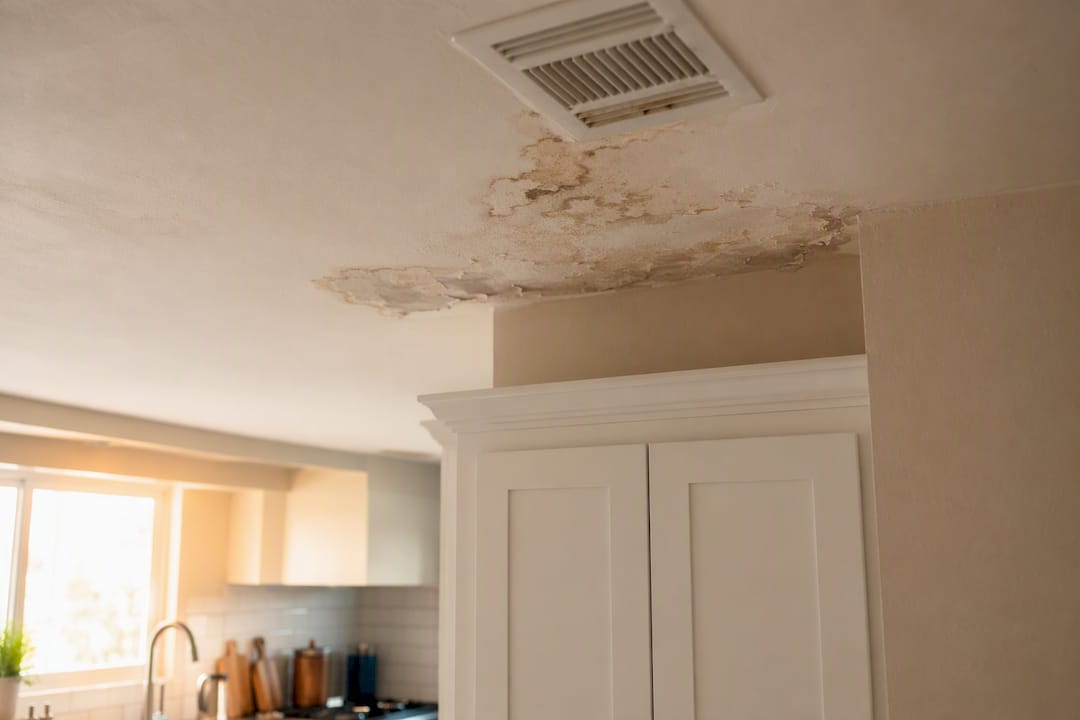
The risks compound quickly. Wet insulation loses its R-value, so your system works harder and your energy bills climb. Persistent moisture can corrode metal ducts and rot wood framing nearby. And mold needs moisture to establish itself, so any duct that’s stayed wet for more than a day or two is a candidate for growth, with real indoor air quality consequences for anyone breathing that air daily.
How to Check Your Own Ductwork for Moisture Problems
- Note when and where it happens. Condensation that only shows up on the hottest, most humid days points to a capacity or humidity issue. Condensation on one specific joint points to a leak or insulation gap.
- Check the insulation and vapor barrier. Look for tears, compressed spots, or seams where the foil or plastic wrap has pulled away from the duct.
- Inspect duct seams and boots for leaks. Feel around joints for airflow you shouldn’t feel, and check that your filter isn’t so clogged it’s restricting airflow and stressing the system.
- Get a humidity reading. A $15 hygrometer in the affected room or crawl space tells you whether you’re dealing with a localized duct problem or a whole-house humidity issue.
Pro Tip: Photograph every spot you check, wet or dry. If you end up calling a professional, that documentation cuts diagnostic time and often cuts the bill.
How to Stop Condensation on Ductwork for Good
Fixing sweating ducts usually comes down to three levers: insulate better, seal tighter, or control the humidity around the duct. Most homes need some combination of all three.
Insulation and vapor barriers. Ducts running through unconditioned attics or crawl spaces need insulation with a vapor retarder facing, not just bare fiberglass wrap. Building science research recommends R-13 for buried ducts in hot-humid and mixed-humid climates, and R-8 for ducts elsewhere, paired with genuinely airtight ductwork and a low-permeability vapor barrier. Skip any of those three elements and the duct will find a way to sweat again.
Sealing. Mastic sealant or foil-faced HVAC tape closes duct seams and boot connections properly. Cloth-backed “duct tape” degrades in heat and humidity within a year or two, which is why professionals don’t use it on actual ducts despite the name.
Humidity control. A single portable dehumidifier helps one room. A whole-house or crawl-space dehumidification system addresses the humid air actually touching your ducts, which is usually the more durable fix when ductwork runs underneath the house. Crawl spaces with open vents pull in humid outside air constantly, so pairing a dehumidifier with sealed crawl space doors and vents matters more than the dehumidifier alone.
HVAC maintenance and sizing. Clean filters, clear condensate drains, and a coil inspection restore the dehumidification performance your system already has. If sweating persists after all that, an oversized unit may be short cycling. A Manual J load calculation determines the correct system size for your square footage and climate, which is a job for an HVAC contractor, not a guess.
| Fix | Best for |
|---|---|
| Insulation with vapor retarder (R-8 to R-13) | Ducts in unconditioned attics or crawl spaces |
| Mastic or foil tape sealing | Leaking seams and boot connections |
| Dehumidification and encapsulation | Chronic humidity in crawl space or basement duct runs |
| Manual J load calculation | Short cycling from an oversized system |
Pro Tip: DIY sealing and insulation fixes are fine for isolated dry spots. Once you see mold, standing water, or ducts sagging under wet insulation, that’s a job for a licensed contractor, not a weekend project.
When Ductwork Condensation Needs a Professional
Call a professional once you see any of these: mold on ducts or nearby materials, condensation that keeps coming back after you’ve sealed and insulated, ceiling or wall stains that keep spreading, or indoor humidity that stays high no matter what you adjust. Ducts that have stayed wet for an extended period often need to be inspected and, in some cases, replaced rather than just dried out, since wet fiberglass liner can harbor mold long after the surface looks dry.
A qualified pro typically handles this in a few stages:
- Duct leakage testing to find every gap, not just the one you noticed
- A Manual J load calculation if short cycling or chronic humidity is suspected
- Insulation upgrades or replacement using proper R-value and vapor-barrier materials
- Crawl-space or basement encapsulation if ambient humidity is the root cause
- Mold testing and remediation if contamination is confirmed
Ask any contractor for their certifications, a written scope of work, before-and-after photos from similar jobs, and clear pricing before signing anything.
Why Duct Sweating Is Usually a Structural Moisture Problem in Disguise
Most homeowners treat sweating ducts as an HVAC repair. Often it’s a symptom of a wetter crawl space or attic doing exactly what humid, unsealed spaces do. Insulate and seal the duct without addressing the humidity source, and the sweating tends to come right back within a season. Foundation RESQ’s approach starts with diagnosing where the moisture is actually coming from, then encapsulating and dehumidifying that space so the ductwork stops fighting a losing battle against its own environment. That sequence, diagnose, encapsulate, dehumidify, tends to outlast duct tape and good intentions.
— Kayle
Let Foundation RESQ Fix the Moisture, Not Just the Duct
Foundation RESQ tackles the humidity source instead of just patching the symptom, so you’re not resealing the same duct joint every other summer. Our crawl space encapsulation, dehumidification, and mold remediation work address the conditions that make ductwork sweat in the first place.

A free inspection typically covers your crawl space, basement, and the areas where ductwork runs through unconditioned space, checking humidity levels, insulation condition, and any active mold growth. From there, our team recommends a scope, whether that’s crawl space encapsulation, a properly sized dehumidifier, or targeted mold remediation. Financing options are available for larger jobs. Schedule your free inspection through our services page and get a straight answer on what’s driving the moisture behind your ducts.
Sources
- No-sweat condensation on ductwork and boots in hot humid and mixed-humid climates — Building Science (Joseph Lstiburek)
- Excessive HVAC condensation and how to fix it — Trane
- Mold course, chapter 2 — EPA
- How to stop condensation on air ducts — Today’s Homeowner
FAQ
How Can I Fix an HVAC Condensation Problem?
Seal duct leaks with mastic or foil tape, upgrade insulation to the recommended R-value with a vapor barrier, and control humidity in the space around the ductwork with a dehumidifier or encapsulation.
Is It Normal for Ductwork to Sweat in Summer?
Light, occasional sweating on exposed ducts during peak humidity is common, but dripping or daily condensation signals an insulation, sealing, or humidity problem that needs fixing.
How Do I Get Moisture Out of Air Ducts?
You can’t dry out a duct that’s still sitting in humid air. Lower the ambient humidity around it with a dehumidifier, fix any insulation gaps, and improve airtightness so moist air can’t reach the cold duct surface.
Why Is My HVAC Unit Producing So Much Condensation?
An oversized air conditioner often cools the air fast without running long enough to remove humidity, leaving moisture behind that condenses on ductwork; a Manual J load calculation can confirm if sizing is the issue.