
Mold remediation is the structured, multi-phase process of safely removing mold contamination, correcting the moisture source driving it, and verifying that indoor air quality has returned to safe levels. The process goes far beyond scrubbing a visible patch of mold. It follows the ANSI/IICRC S520 standard, which defines assessment, containment, removal, cleaning, drying, and independent verification as required phases. Understanding what does the mold remediation process involve helps homeowners and property managers set realistic expectations, evaluate contractors, and avoid the costly mistake of treating a symptom instead of the cause.
What does the mold remediation process involve, step by step?
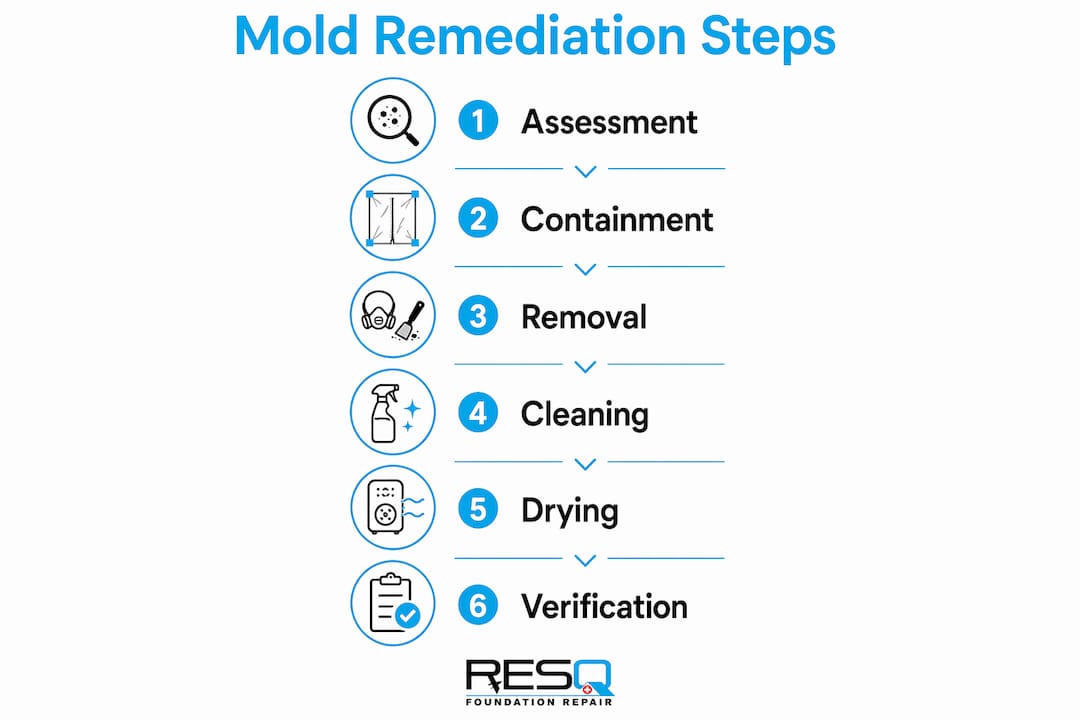
Professional mold remediation follows a fixed sequence. Skipping or reordering steps creates gaps that allow mold to return or spread to unaffected areas. Each phase builds on the one before it.
-
Inspection and moisture mapping. A certified inspector assesses the full extent of contamination using moisture meters, infrared cameras, and air sampling. Thermal imaging and humidity readings detect hidden mold colonies that a visual scan misses entirely. This step defines the scope of the project.
-
Moisture source identification and repair. The water intrusion driving mold growth must be identified and corrected before any cleaning begins. Failure to fix the moisture source guarantees mold regrowth regardless of how thorough the cleaning is. Common sources include roof leaks, plumbing failures, crawl space condensation, and poor exterior drainage.
-
Containment setup. Workers seal the affected area using 6-mil polyethylene sheeting and negative air pressure machines equipped with HEPA filters. This prevents mold spores from migrating to clean areas of the home during physical removal. Containment is the primary defense against cross contamination in mold remediation.
-
Removal of unsalvageable materials. Porous materials like drywall, insulation, and carpet that are saturated with mold cannot be cleaned effectively. Crews cut drywall 24 inches beyond the visible mold margin to capture hidden growth. All removed material is bagged inside the containment zone before transport.
-
Cleaning and treatment of remaining surfaces. The correct sequence is HEPA vacuuming first, then damp wiping, then HEPA vacuuming again. Skipping HEPA vacuuming before wiping redistributes spores across surfaces instead of capturing them. Antimicrobial agents are applied after mechanical cleaning, not as a substitute for it.
-
Structural drying. Industrial air movers and dehumidifiers bring the moisture content of structural materials down to target levels. This step prevents trapped moisture from feeding new mold growth under replacement materials. Drying is verified with moisture meters before reconstruction begins.
-
Post-remediation verification (PRV). An independent certified inspector, not the remediation crew, collects air and surface samples. Independent PRV is the only objective confirmation that spore counts have returned to safe background levels. Clearance from the same crew that did the work is a conflict of interest, not a quality check.
Pro Tip: Ask your contractor to provide the name and credentials of the independent inspector before work begins. If the contractor controls the verification, the result is not objective.
How does mold remediation differ from mold removal?
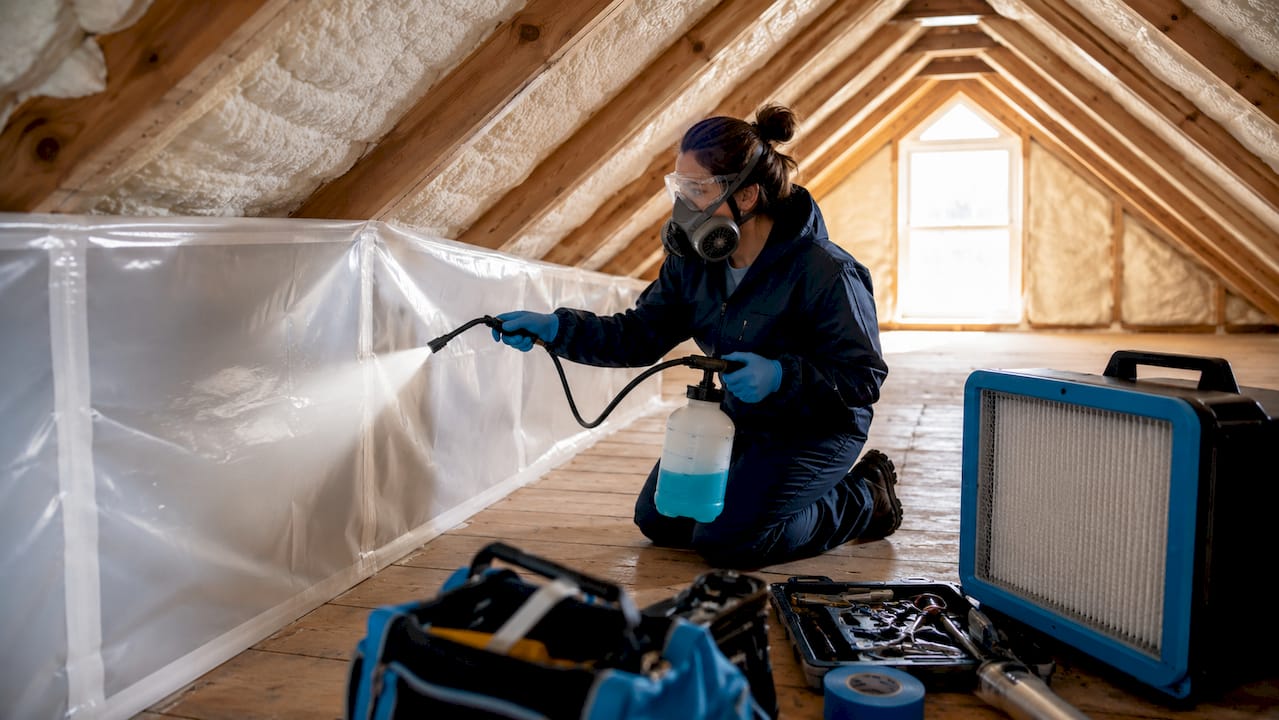
Mold removal and mold remediation are not the same thing, and the difference has real consequences for your home. Mold removal typically refers to surface cleaning without containment, moisture correction, or independent verification. Remediation is a managed, multi-phase process that addresses the full contamination cycle.
One critical fact shapes the entire field: complete mold elimination is biologically impossible. Mold spores exist everywhere, indoors and outdoors. The goal of remediation is to return indoor spore levels to the same concentrations found in outdoor air, not to achieve zero mold. Any contractor promising “100% mold elimination” is misrepresenting the science.
Partial treatments carry real risks. Cleaning mold without containment spreads spores to previously unaffected rooms. Treating visible mold without fixing the moisture source means the same colony regrows within weeks. Skipping post-remediation verification means no one has confirmed the job actually worked.
| Factor | Mold removal | Mold remediation |
|---|---|---|
| Scope | Surface cleaning only | Full contamination cycle addressed |
| Containment | Rarely used | Required with negative air pressure |
| Moisture correction | Not included | Mandatory before cleaning begins |
| Material removal | Optional | Porous materials removed and disposed of |
| Verification | None | Independent inspector with lab testing |
| Industry standard | None | ANSI/IICRC S520 |
The table above shows why how mold removal differs from remediation matters when choosing a contractor. A lower quote that skips containment and verification is not a bargain. It is a temporary fix that will cost more to redo.
What role does moisture control play in remediation success?
Moisture is the single cause of mold growth in homes. Without a sustained moisture source, mold cannot colonize building materials. Most mold recurrence cases trace directly back to a moisture problem that was never corrected before or during remediation.
Common moisture sources that drive residential mold include:
- Roof and plumbing leaks that saturate wall cavities and ceiling assemblies
- Crawl space condensation caused by warm humid air contacting cool ground surfaces
- Poor exterior drainage that pushes groundwater against foundation walls
- High indoor relative humidity above 60%, often from inadequate ventilation
- Basement seepage through cracks in foundation walls or floor slabs
Detecting the source requires more than a visual check. Infrared cameras reveal temperature differentials that indicate wet building assemblies behind finished surfaces. Moisture meters measure the actual water content of wood framing, drywall, and concrete. Without these tools, a crew may clean visible mold while leaving a saturated wall cavity untouched.
Moisture correction and mold cleaning are separate but coordinated phases. Repairs to the building envelope, drainage, or plumbing must be completed before cleaning begins. Starting removal while the source is still active means workers are cleaning a surface that is still getting wet. For crawl spaces specifically, crawl space waterproofing and vapor barriers address the ground moisture that feeds mold colonies in floor joists and subfloor assemblies.
Pro Tip: After moisture repairs are complete, run a dehumidifier in the affected area for 48–72 hours and recheck moisture readings before remediation crews begin cleaning. This confirms the source is truly resolved.
What industry standards govern professional mold remediation?
The ANSI/IICRC S520 Standard for Professional Mold Remediation is the recognized benchmark for the industry in the United States. It defines minimum requirements for every phase of a remediation project and provides the framework contractors and inspectors use to evaluate scope, methods, and outcomes.
Key requirements under ANSI/IICRC S520 include:
- Contamination assessment using sampling and moisture mapping before work begins
- Written remediation plan that defines the scope, containment strategy, and disposal methods
- Containment appropriate to the contamination level, from local containment for small areas to full critical containment for large or severe infestations
- Cleaning sequence following HEPA vacuuming, damp wiping, and secondary HEPA vacuuming
- Structural drying to documented moisture content targets before any reconstruction
- Post-remediation verification conducted by a party independent of the remediation contractor
EPA and OSHA both recommend professional protocols with containment for any mold area exceeding 10 square feet. That threshold is smaller than most homeowners expect. A single water-damaged wall section can easily exceed it.
Reconstruction is a separate phase governed by different standards and contracts. Combining remediation and reconstruction in a single contract can obscure quality control and make it harder to verify that remediation was completed correctly before new materials were installed. Keeping the phases separate protects the homeowner.
Certified industrial hygienists performing independent verification bring laboratory-tested clearance results that carry legal and insurance weight. Their clearance report is the document you want in hand before any reconstruction begins. Knowing these standards helps you ask the right questions when evaluating contractors and choosing a mold inspection service.
Key Takeaways
Mold remediation requires moisture correction, physical containment, sequenced cleaning, structural drying, and independent post-remediation verification to produce lasting results.
| Point | Details |
|---|---|
| Remediation vs. removal | Remediation follows ANSI/IICRC S520 with containment and verification; removal is surface cleaning only. |
| Moisture correction is mandatory | Fixing the water source before cleaning is the only way to prevent mold from returning. |
| Containment prevents spread | 6-mil polyethylene sheeting and negative air pressure stop spores from migrating during removal. |
| Cleaning sequence matters | HEPA vacuum first, then damp wipe, then HEPA vacuum again. Reversing the order spreads spores. |
| Independent verification is required | Post-remediation clearance must come from an inspector unconnected to the remediation crew. |
What I’ve learned watching homeowners get this wrong
The most common mistake I see is homeowners treating mold as a cleaning problem rather than a building science problem. They hire someone to spray and wipe, the mold disappears for six weeks, and then it comes back in the same spot. Every single time, the moisture source was never addressed.
The second most common mistake is accepting verification from the same crew that did the work. I understand why it happens. The contractor says “we’ll test it when we’re done” and that sounds reasonable. It is not reasonable. It is the equivalent of asking a student to grade their own exam. Independent post-remediation verification is not a formality. It is the only way to know the job was done correctly.
Moisture management is also consistently underestimated. Homeowners focus on the visible mold and want it gone fast. But a crawl space with standing condensation, or a basement wall with active seepage, will grow mold again within weeks of cleaning. The fix for mold in those spaces is crawl space dehumidification and waterproofing, not just cleaning the joists.
One practical tip I give every homeowner: get the remediation and reconstruction scoped separately. When they are bundled, it becomes very difficult to confirm that the remediation phase actually cleared before new drywall went up. Separate contracts give you a clear checkpoint and protect you if the mold returns.
— Kayle
Foundationresq’s approach to mold remediation and moisture control
Mold problems in Tallahassee homes rarely exist in isolation. They connect to crawl space moisture, foundation drainage, and basement seepage issues that require more than surface treatment.

Foundationresq’s team handles the full scope: professional mold remediation following ANSI/IICRC S520 protocols, crawl space encapsulation, basement waterproofing, and dehumidification systems that address the moisture conditions driving mold growth. Every project starts with a thorough inspection so the remediation scope is defined by actual conditions, not guesswork. You can review Foundationresq’s full range of services or explore financing options if upfront cost is a concern. A free inspection is the right first step for any homeowner dealing with visible mold or persistent moisture.
FAQ
What is the difference between mold removal and mold remediation?
Mold removal refers to surface cleaning without containment, moisture correction, or independent verification. Mold remediation is a structured process governed by ANSI/IICRC S520 that addresses the full contamination cycle, including moisture source repair and post-remediation clearance testing.
Can mold be completely eliminated from a home?
Complete mold elimination is biologically impossible because mold spores exist everywhere in the environment. Remediation returns indoor spore levels to the same concentrations found in outdoor air, which is the accepted safe standard.
What determines the scope of a mold remediation project?
Scope is determined by the size of the contaminated area, the types of materials affected, the moisture source involved, and the contamination level found during assessment. EPA and OSHA recommend professional containment protocols for any mold area exceeding 10 square feet.
Why does mold remediation require containment?
Containment using 6-mil polyethylene sheeting and negative air pressure prevents mold spores from migrating to unaffected areas during physical removal. Without containment, the remediation process itself can spread contamination throughout the home.
Who should perform post-remediation verification?
Post-remediation verification must be performed by an independent certified inspector, not the remediation contractor. Independent lab-tested clearance is the only objective confirmation that spore counts have returned to safe background levels.
Recommended
- How Homeowners Can Reduce Mold Remediation Costs – Tallahassee Foundation Repair | Foundation ResQ
- Professional Mold Remediation in Tallahassee, FL: The Homeowner’s Guide to Permanent Solutions – Tallahassee Foundation Repair | Foundation ResQ
- Mold Remediation Costs Uncovered: A Homeowner’s Guide – Tallahassee Foundation Repair | Foundation ResQ
- Black Mold in Crawl Space Removal: A Professional Remediation Guide – Tallahassee Foundation Repair | Foundation ResQ