
Understanding the Choice Between Crawl Space and Basement Foundations
Choosing between a crawl space and basement foundation is a critical decision when building or buying a home, with major differences in cost, function, and maintenance.
Quick Comparison: Crawl Space vs. Basement
| Feature | Crawl Space | Basement |
|---|---|---|
| Height | 1-4 feet | 7-10 feet |
| Cost to Build | $5-$16 per sq ft | $25-$50 per sq ft |
| Primary Use | Utility access only | Storage or living space |
| Resale Value | Lower impact | Higher impact (especially if finished) |
| Best For | Budget-conscious builds, cold climates | Extra living space, storm shelter |
A basement is a full-height, livable underground floor, while a crawl space is a shallow area for utility access. The key difference is livability and height; basements provide standing room and potential living space, while crawl spaces do not.
Both foundation types have unique pros and cons. Basements add valuable square footage but cost more to build and maintain. Crawl spaces save money upfront but can become breeding grounds for moisture, mold, and pests if not properly maintained.
Most homeowners ignore their foundation until a musty smell or sagging floors signal an expensive problem. Understanding these foundation types helps you make informed decisions, whether you’re building, buying, or fixing existing issues.
I’m Kayle Vernon, and my goal is to provide practical information on crawl space and basement foundations to help you protect your home’s value and your family’s health.
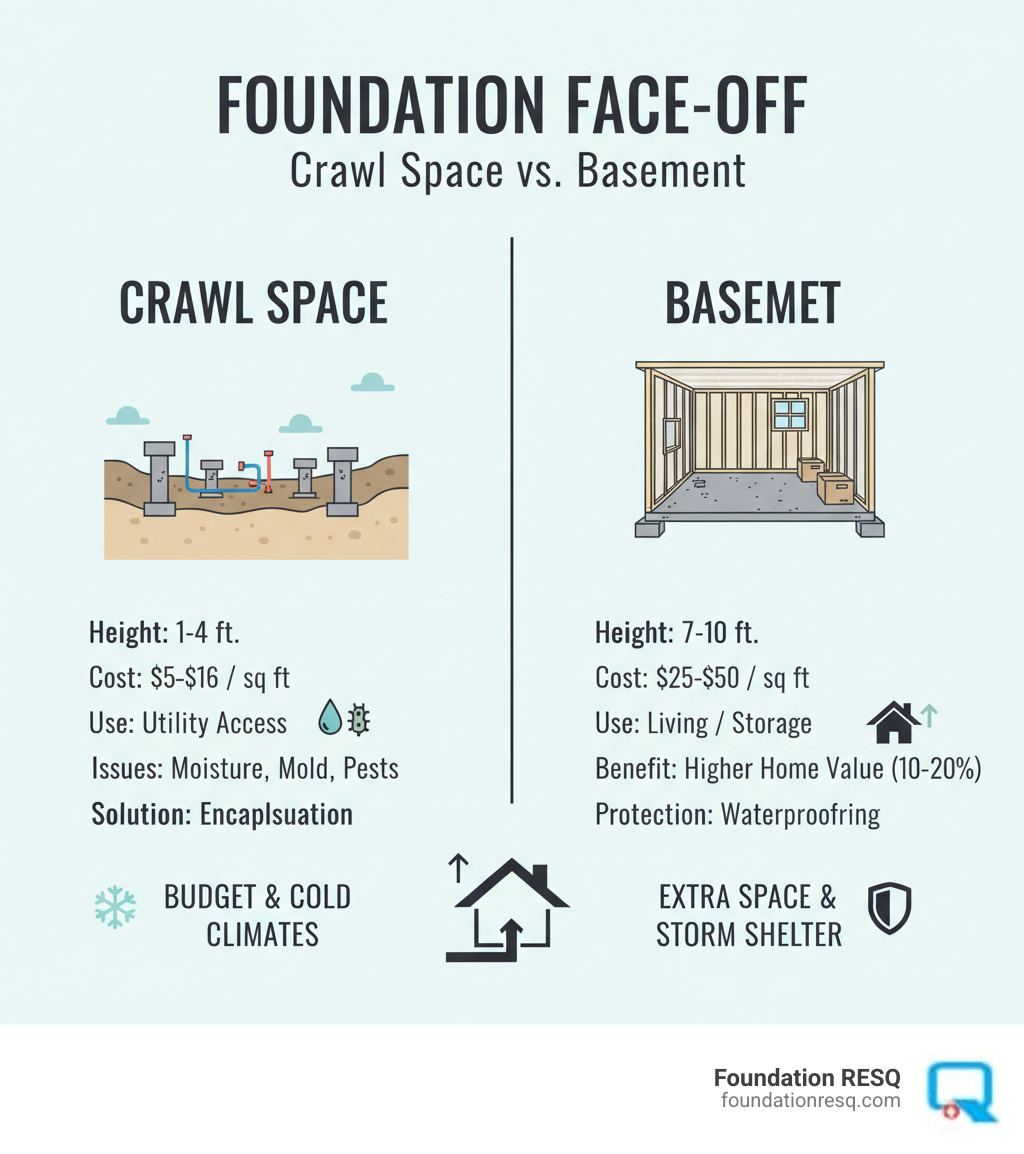
Infographic comparing a crawl space (1-4 ft, utility access, moisture-prone) with a basement (7-10 ft, living space, adds value).
What’s Under Your Feet? Defining Basements and Crawl Spaces
Understanding the space beneath your floors is key to home maintenance and health. Both crawl space and basement foundations lift your home and house utilities, but their differences are significant.
What is a Basement?
A basement is essentially an underground floor. It’s a full-height space (typically seven to ten feet) with concrete walls and a concrete slab floor. This construction allows basements to be finished into livable spaces like family rooms or bedrooms. Unfinished basements are ideal for storage and housing utilities like furnaces and water heaters.
What is a Crawl Space?
A crawl space is a short-height space beneath a home, usually one to four feet high. It has short foundation walls and a dirt or concrete floor. Its purpose is to lift your home off the ground and provide utility access for plumbing, wiring, and HVAC systems. A crawl space is non-livable and unconditioned (not heated or cooled).
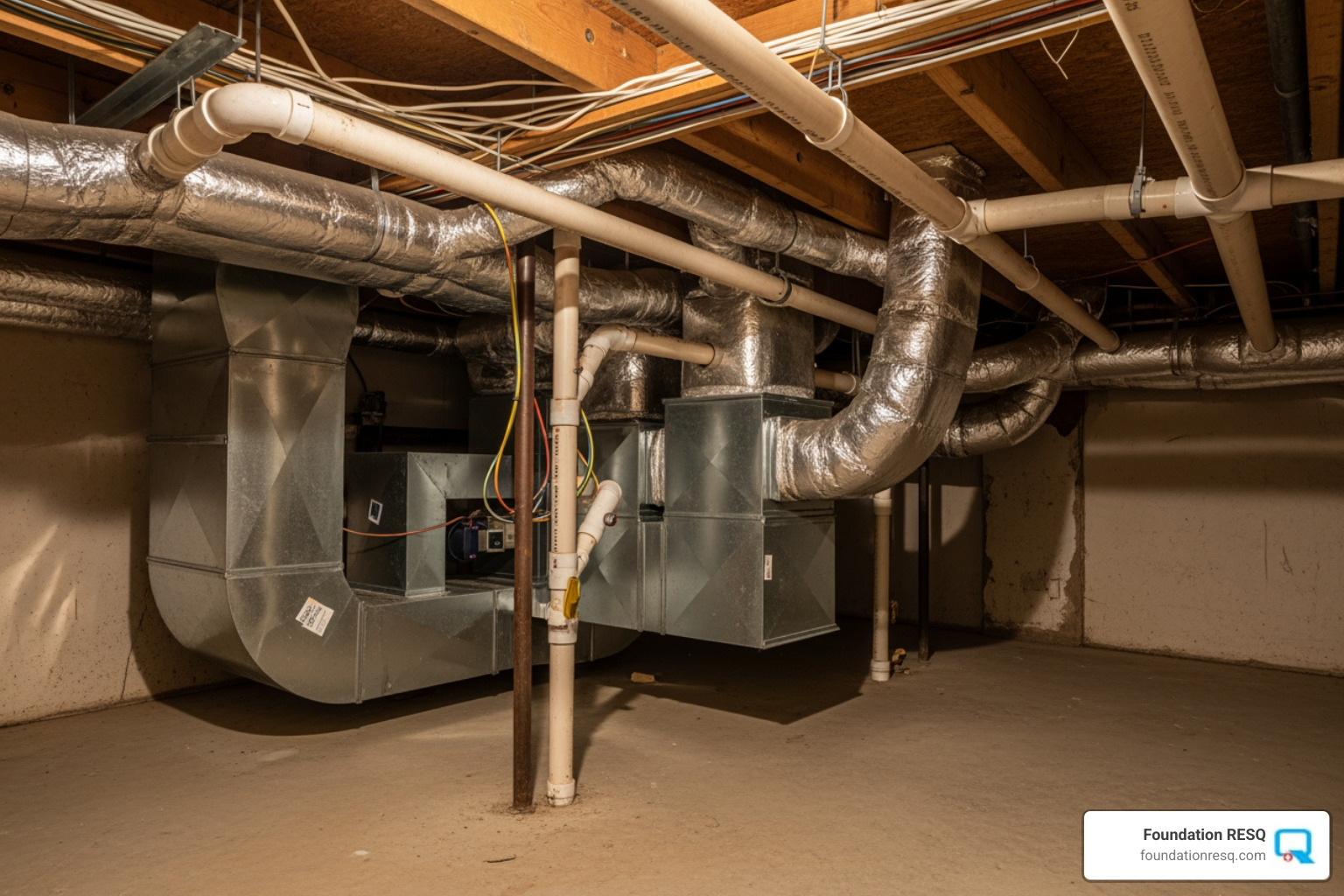
The Primary Difference: Livability and Height
The primary difference between a crawl space and basement is livability and height. A basement offers standing room and can be conditioned as a true extension of your living area. A crawl space is purely functional, offering no extra living potential.
A third type, the slab foundation, sits directly on the ground with no space underneath. It’s the cheapest option but offers no utility access or extra room. This guide will focus on crawl spaces and basements.
The Pros and Cons: A Side-by-Side Comparison
Which foundation is right for you? There’s no single answer, only trade-offs. This table compares the key factors:
| Feature | Crawl Space | Basement |
|---|---|---|
| Initial Cost | Lower ($5-$16/sq ft) | Higher ($25-$50/sq ft) |
| Potential Living Space | None | High (can be finished) |
| Ease of Utility Access | High | High (better headroom) |
| Maintenance Needs | High (moisture, pests) | Moderate (moisture, flooding) |
| Impact on Resale Value | Lower impact | Higher impact (especially if finished) |
| Storm Shelter | No | Yes |
Advantages and Disadvantages of a Basement
A basement is versatile and valuable but comes at a higher price.
Pros: The most significant benefit is additional living space. A basement can be finished into extra bedrooms, a home office, or a family room, adding square footage without expanding the home’s footprint. This directly translates to increased home value, as buyers pay a premium for flexible, usable space. In storm-prone regions, a basement serves as a vital storm shelter. It also offers ample storage and a place to house laundry facilities and noisy mechanical systems away from the main living areas.
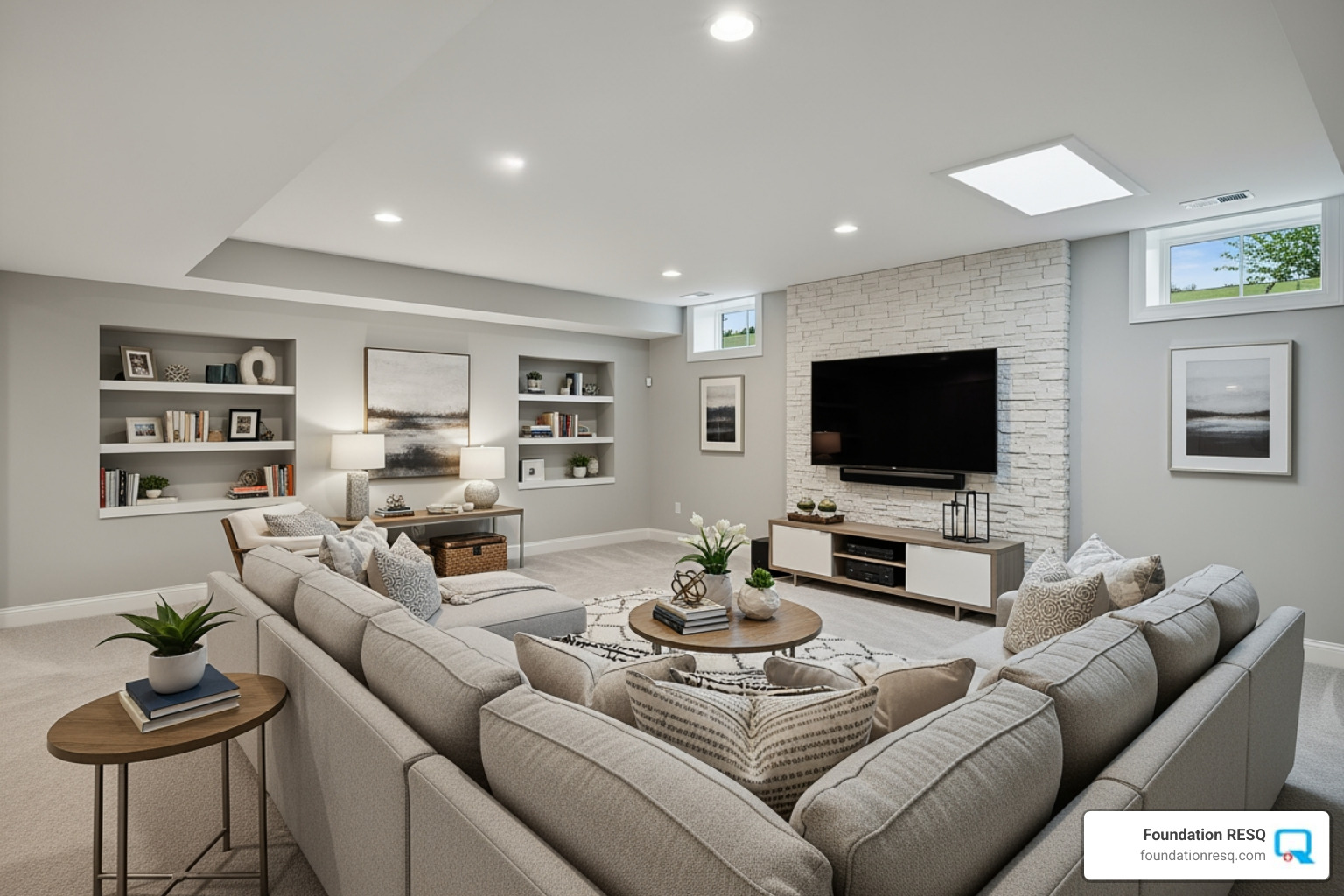
Cons: The primary drawback is the high construction cost ($25-$50 per square foot) due to deep excavation and extensive concrete work. Basements are also prone to moisture risk and flooding, especially in areas with high water tables like Florida, Alabama, and Georgia. This can lead to mold and costly structural damage. Other challenges include accessibility issues due to stairs and potential design challenges like low ceilings and limited natural light.
Advantages and Disadvantages of a Crawl Space
Crawl spaces are a budget-friendly option that requires diligent maintenance.
Pros: The main advantage is the lower initial cost ($5-$16 per square foot) due to less excavation. They also provide easy utility access, simplifying repairs for plumbing and HVAC systems. In some climates, they are preferred for reaching below the frost line or for structural integrity in earthquake-prone areas. They also lift your home from damp ground, which helps protect the structure if the space is properly managed.
Cons: A crawl space offers no living space and is not suitable for storage. More importantly, they are moisture magnets, prone to mold, mildew, and wood rot that can cause structural damage and musty odors. The dampness also invites pest infestations. This leads to poor air quality, as the “stack effect” can pull up to 50% of your first-floor air from the crawl space, bringing mold spores and allergens into your living area. These issues are preventable with proper maintenance like encapsulation and waterproofing, which are crucial for protecting your investment.
Cost, Construction, and Climate: The Deciding Factors
When choosing between a crawl space and basement, your budget, climate, and location are often the deciding factors.
Cost to Build and Maintain a Crawl Space and Basement
Building a crawl space is more affordable, costing $5 to $16 per square foot ($14,000 average total). Basements are significantly more expensive at $25 to $50 per square foot ($30,000+ average), with finishing costs adding even more.
However, the cheaper upfront cost of a crawl space can be offset by long-term maintenance needs. Both foundation types require ongoing moisture control to prevent expensive problems. Crawl spaces often need encapsulation and dehumidifiers, while basements may require Basement Waterproofing Services and sump pumps to combat leaks. Regular maintenance is key to avoiding major repair bills for either type.
Geographic and Climate Influence
Regional differences in foundation types are due to climate and geography. In colder climates, foundations must extend below the frost line to prevent damage from frozen ground, making basements a logical choice. In the South, including Florida, Alabama, and Georgia, high water tables make constructing a dry basement difficult and expensive.
Soil type and regional building traditions also influence the decision. For homes in flood zones, crawl spaces can be used to lift the living area above flood levels, a practice supported by FEMA guidance on flood-resistant construction. However, this requires careful design to avoid other risks.
Impact on Home Value and Resale
Your foundation choice impacts resale value. Basements are value-boosters, especially when finished, potentially increasing a home’s value by 10-20% by adding usable square footage.
Crawl spaces don’t add living space, but their condition is critical. A damp, moldy crawl space can kill a sale, while a clean, encapsulated one is a major selling point, signaling a well-maintained home. The condition of your crawl space and basement directly impacts your home’s value and health, making its maintenance a smart investment.
Common Issues with Your Crawl Space and Basement and How to Fix Them
No foundation is immune to problems, and moisture is the usual suspect for both crawl space and basement issues. Fortunately, every problem has a solution.
Tackling Crawl Space Problems: Moisture, Pests, and Mold
Crawl spaces are prone to issues from high humidity and standing water, especially in the humid climates of Alabama, Florida, and Georgia where vents let in moist air. This moisture leads to wood rot in floor joists and support beams, threatening structural integrity and causing sagging floors. The dampness also attracts pests like rodents and termites. Inevitably, mold growth follows, releasing spores that can travel into your home, causing musty odors and triggering allergies and asthma, which pose significant health risks.
We offer several solutions. Crawl Space Waterproofing manages water intrusion with drainage and sump pumps. For a complete fix, our Crawl Space Encapsulation System seals the entire area with a heavy-duty vapor barrier, closing vents and adding a dehumidifier. This controls moisture, deters pests, improves air quality, and can lower energy bills. Our specialized Crawl Space Dehumidification systems maintain optimal humidity, while a Crawl Space Drainage System removes any standing water via a sump pump.
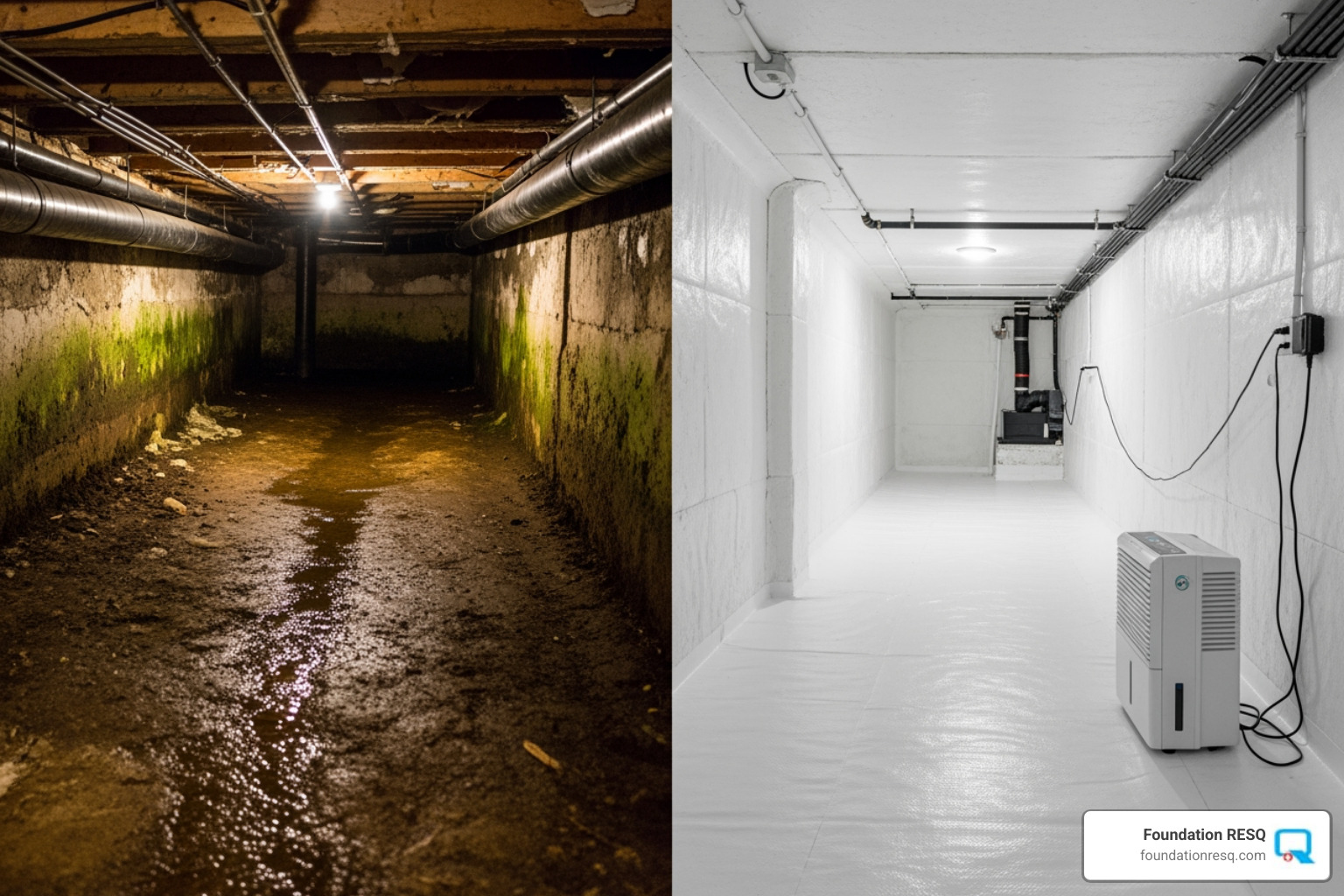
Managing Basement Woes: Leaks, Flooding, and Humidity
Basements also face moisture issues. Wall cracks and leaks can develop from foundation settling, allowing water in. The primary culprit is hydrostatic pressure, where saturated soil forces water through foundation walls and floors. This can lead to minor leaks or major flooding, which can destroy finished spaces and belongings. Even without flooding, high humidity causes musty odors and mold growth, harming indoor air quality.
Our solutions keep basements dry. Sump pumps are a key defense, collecting and ejecting water. Our Basement Dehumidification systems control humidity to prevent mold and musty odors. For total protection, our Basement Waterproofing Services combine crack sealing, interior drainage, and exterior water management to create a comprehensive defense against water.
Can You Convert a Crawl Space into a Basement?
Yes, you can convert a crawl space into a basement, but it is a complex, expensive, and massive construction project. The process involves lifting the house, excavating tons of soil, and building an entirely new foundation before lowering the house back down. This requires structural engineers and foundation experts. The cost and timeline are substantial. Foundation RESQ can provide expert advice to help you determine if this major project is feasible for your home or if more cost-effective solutions exist.
Frequently Asked Questions about Foundations
We hear these questions all the time from homeowners who are trying to understand what’s happening beneath their homes. Let’s address the most common concerns.
Why do some regions have basements and others don’t?
The choice between basements and crawl spaces is largely regional. In colder climates, foundations must be dug below the deep frost line, making it practical to create a full basement. In the Southeast (including Florida, Alabama, and Georgia), high water tables make basement construction difficult and costly due to constant water pressure. Soil conditions and regional building traditions also play a significant role in which foundation type is standard for an area.
Does a damp crawl space really affect the rest of my house?
Yes, absolutely. A damp crawl space significantly affects your entire house. Due to the stack effect, warm air rises and escapes from your home’s upper levels, creating suction that pulls air up from below. Building scientists estimate that up to 50% of the air on your first floor comes from your crawl space. If that space is damp or moldy, you are breathing in mold spores, allergens, and musty odors, which can trigger allergies and asthma. This moisture also leads to wood rot, causing structural damage like sagging floors, and forces your HVAC system to work harder, increasing energy bills. A damp crawl space is a threat to your health, home, and wallet.
Is a crawl space or basement better for storm protection?
For storm protection, a basement is the clear winner. Its underground structure provides a safe shelter from tornadoes and hurricanes, shielding you from high winds and debris. A crawl space offers no shelter for people during a storm. While both foundation types must be engineered for structural resistance, and crawl spaces can be designed to mitigate flood damage to the house itself, only a basement provides a safe refuge for your family. If personal safety during severe weather is a priority, a basement is the superior choice.
The Final Verdict: Which Foundation is Right for You?
In the crawl space and basement debate, the right choice depends on your budget, location, and desire for extra living space.
A crawl space is the economical choice if your priority is a simple, functional foundation. It’s less expensive upfront and, with proper maintenance like encapsulation, serves its purpose well.
If you want additional living space, a workshop, or a storm shelter and your budget allows for the higher cost, a basement offers versatility and value that a crawl space cannot.
Regardless of your choice, maintenance is non-negotiable. For both a crawl space and basement, moisture is the primary enemy, leading to mold, pests, and structural damage that can harm your home and health. A small issue can quickly become an expensive repair.
We specialize in protecting foundations in Alabama, Florida, and Georgia from our region’s unique climate challenges. If you notice musty odors, sagging floors, pests, or visible moisture, don’t wait. Early intervention is always cheaper. We offer free inspections to diagnose the problem and provide clear, honest options.
Whether you need Basement Waterproofing Services, crawl space encapsulation, or other foundation repairs, we provide affordable, lasting solutions. Your foundation supports everything—let us help you keep it solid, dry, and healthy.