
Will crawl space encapsulation for pest control stop pests already moving through your home? It can help make the space less favorable to some pests by managing moisture, but it isn’t an extermination treatment or a substitute for closing pest entry points. If you’re seeing activity, it’s reasonable to wonder whether damp conditions or openings beneath your home are part of the problem, and whether encapsulation alone will resolve it.
Encapsulation is a moisture-control solution, not a one-step answer to every pest concern. For Tallahassee-area homes, a lasting plan may pair crawl space moisture management with pest-specific treatment or exclusion, depending on what an assessment finds. Foundation ResQ provides crawl space encapsulation, dehumidifiers, and sump pump systems to help address crawl space conditions and protect the home.
In this article, you’ll learn what encapsulation changes, what it can’t do for an active infestation, and when pest treatment or exclusion may also be needed. You’ll also find practical ways to note moisture, openings, and pest activity so you can choose a sensible next step for your home.
Key Takeaways
- Understand how crawl space encapsulation for pest control changes moisture conditions without serving as a pesticide treatment.
- Learn which system elements can help manage moisture and why the right setup depends on the crawl space and home.
- Compare encapsulation, exclusion, and pest-specific treatment to see which concerns each approach addresses.
- Use a safe, step-by-step visual check to note moisture, possible openings, and signs of pest activity without entering an unsafe space.
- See how a crawl space assessment can help guide moisture-control options, including encapsulation, a sump pump, or a dehumidifier.
How Crawl Space Encapsulation Can Support Pest Control
Crawl space encapsulation is a moisture-control approach, not a pesticide application. It typically involves covering exposed ground, sealing selected openings and air leaks, and managing humidity with equipment such as a dehumidifier when appropriate. The goal is to create a more controlled space beneath the home. The general role of a crawl space and the way encapsulation can limit air passage help explain why the condition of this area can matter to the home above it.
For homeowners considering crawl space encapsulation for pest control, the key distinction is what the work changes: moisture conditions and, in some cases, access routes. It doesn’t directly eliminate pests. Its usefulness depends on the home’s condition and the pest involved.
Why crawl space conditions matter to pest pressure
Moisture, organic debris, and accessible openings can each contribute to conditions some pests may use. Damp materials and persistent wet areas affect the crawl space environment, while leaves, wood scraps, or other debris may offer shelter. Gaps around vents, utility penetrations, or other openings can provide routes into the space. These factors don’t mean an infestation will occur, and dampness alone doesn’t explain every pest problem.
In Tallahassee, homeowners can consider crawl space conditions when trying to understand pest activity inside the home. Look for specific clues, such as standing water beneath one section of the house, debris near an opening, or signs of pests close to a foundation gap. Considering these observations together can help distinguish a moisture concern from a pest issue that needs a different response.
What encapsulation can, and cannot, do
A properly planned encapsulation system can help manage ground moisture and reduce some air movement through openings sealed as part of the work. Those changes may make the crawl space less favorable to pests that benefit from damp conditions. But a moisture-control barrier isn’t a universal pest barrier: it may not close every possible route into the home, and different pests respond to different conditions.
Encapsulation can support pest prevention by improving crawl space conditions, but it doesn’t treat an active infestation. If pests are already present, pest-specific treatment may be needed alongside moisture management. Exclusion may also be appropriate where openings remain accessible. The right combination depends on what’s found, rather than an assumption that one solution will address every cause.
- Moisture clues: Note standing water, damp soil, or visibly wet materials.
- Possible access clues: Look for visible gaps or openings from a safe vantage point.
- Pest clues: Record what you can see, such as pest activity or related damage, without assuming moisture control will remove it.
For a Tallahassee home, start by identifying whether moisture, access, pest activity, or a combination is present. That can help clarify where encapsulation may contribute to a lasting plan and where pest-specific measures may also be needed.
How Encapsulation Changes Crawl Space Moisture and Access
Encapsulation works as a system, not as a sheet of plastic laid over the soil. Ground coverage helps separate exposed earth from crawl space air, while sealing selected openings can limit air movement and some access routes. Moisture-management equipment may also be needed, depending on conditions beneath the home. For crawl space encapsulation for pest control, these parts work together to change the environment, but none should be mistaken for pesticide treatment or a guarantee that pests can’t enter.
The role of barriers, sealing, and drainage
A vapor barrier covers exposed soil to reduce the transfer of ground moisture into the crawl space. Sealing can address selected vents, gaps, or penetrations as part of the project, but a barrier alone doesn’t close every route pests might use. If water is collecting or entering the area, drainage needs attention too. A sump pump may be appropriate when conditions call for active water removal, rather than humidity control alone.
When humidity control may be part of the solution
A crawl space dehumidifier helps manage humidity within the enclosed area. It supports moisture control, but it doesn’t remove an existing pest population or block every opening. The appropriate setup depends on the space’s moisture, drainage, and layout. Tallahassee homeowners can review how these project considerations fit together in this Tallahassee crawl space encapsulation buying guide.
The practical question is what the crawl space needs to remain controlled. A dry-looking surface doesn’t necessarily show whether moisture is entering from the ground, collecting after water intrusion, or lingering in the air. Likewise, sealing one visible gap doesn’t prove that every possible access point has been addressed. An assessment helps match the system to the actual conditions instead of relying on a one-size-fits-all installation.
- Exposed soil: Ground coverage helps limit moisture moving from soil into the space.
- Visible openings: Sealing can address selected routes, while other access points may still need attention.
- Standing water or recurring water intrusion: Drainage measures, potentially including a sump pump, may be needed.
- Persistent humidity: A dehumidifier can support moisture management within the crawl space.
Moisture management can make a crawl space less favorable to some pests, but it doesn’t replace pest-specific control. Keep that distinction in mind when deciding what to address first. If pest activity is established, moisture improvements may complement treatment or exclusion, not take their place. Foundation ResQ’s crawl space encapsulation services address moisture conditions with a plan suited to the home and crawl space.
Encapsulation vs. Pest Treatment: Which Problem Does Each Solve?
These approaches address different parts of a crawl space concern. Encapsulation focuses on moisture and the condition of the space, exclusion focuses on specific routes pests may use to enter, and pest-specific treatment responds to active pest activity. For a Tallahassee home, one measure may be enough for a particular concern, or assessment findings may point to a combination. Crawl space encapsulation for pest control can support prevention, but it isn’t a cure-all.
| Approach | Purpose and typical target | What it does not address |
|---|---|---|
| Encapsulation | Manages ground moisture and crawl space conditions through ground coverage, selected sealing, and moisture-control equipment where appropriate. | Doesn’t apply pesticides, remove an established pest population, or necessarily close every possible entry route. |
| Exclusion | Reduces access through specific openings, gaps, or penetrations identified during inspection. | Doesn’t control crawl space humidity or resolve pest activity already established inside. |
| Pest-specific treatment | Targets active pest activity based on the pest involved and the extent of the problem. | Doesn’t correct underlying moisture conditions or automatically prevent future entry. |
Encapsulation and exclusion address different conditions
Encapsulation changes the crawl space environment by helping manage moisture; exclusion addresses access points. A ground barrier may limit moisture moving from soil, while sealing selected openings can reduce certain routes into or through the space. Neither step should be assumed to block every path. Assessment findings help determine whether moisture control, targeted sealing, or both are relevant to the home.
For example, if there’s evidence of dampness but no visible pest activity, moisture management may be an important part of protecting the crawl space. If a specific gap is visible near a utility line, that opening may call for focused exclusion. These observations point to different work, even when they occur in the same area.
Pest-specific treatment addresses active pest activity
When pests are already present, the response depends on identifying the pest and understanding the extent of activity. While companies like Battle Born Pest Control specialize in targeted eradication for existing colonies, a general moisture-control system won’t eliminate an active infestation. Conversely, treatment aimed at current activity doesn’t necessarily correct damp materials, standing water, or other conditions that may remain beneath the home.
That’s why the measures can complement each other. Pest-specific treatment may address the immediate activity, while encapsulation and any needed exclusion address relevant crawl space conditions. If moisture has also affected building materials, homeowners can learn about related property concerns in this mold remediation guide for Tallahassee homeowners.
Encapsulation manages moisture, exclusion limits identified access, and pest-specific treatment targets active activity. An assessment can help clarify which issue is present and prevent a mismatch, such as expecting a vapor barrier to remove pests or expecting pest treatment to resolve moisture. No single method prevents every pest or resolves every infestation; the appropriate combination depends on what the inspection reveals.
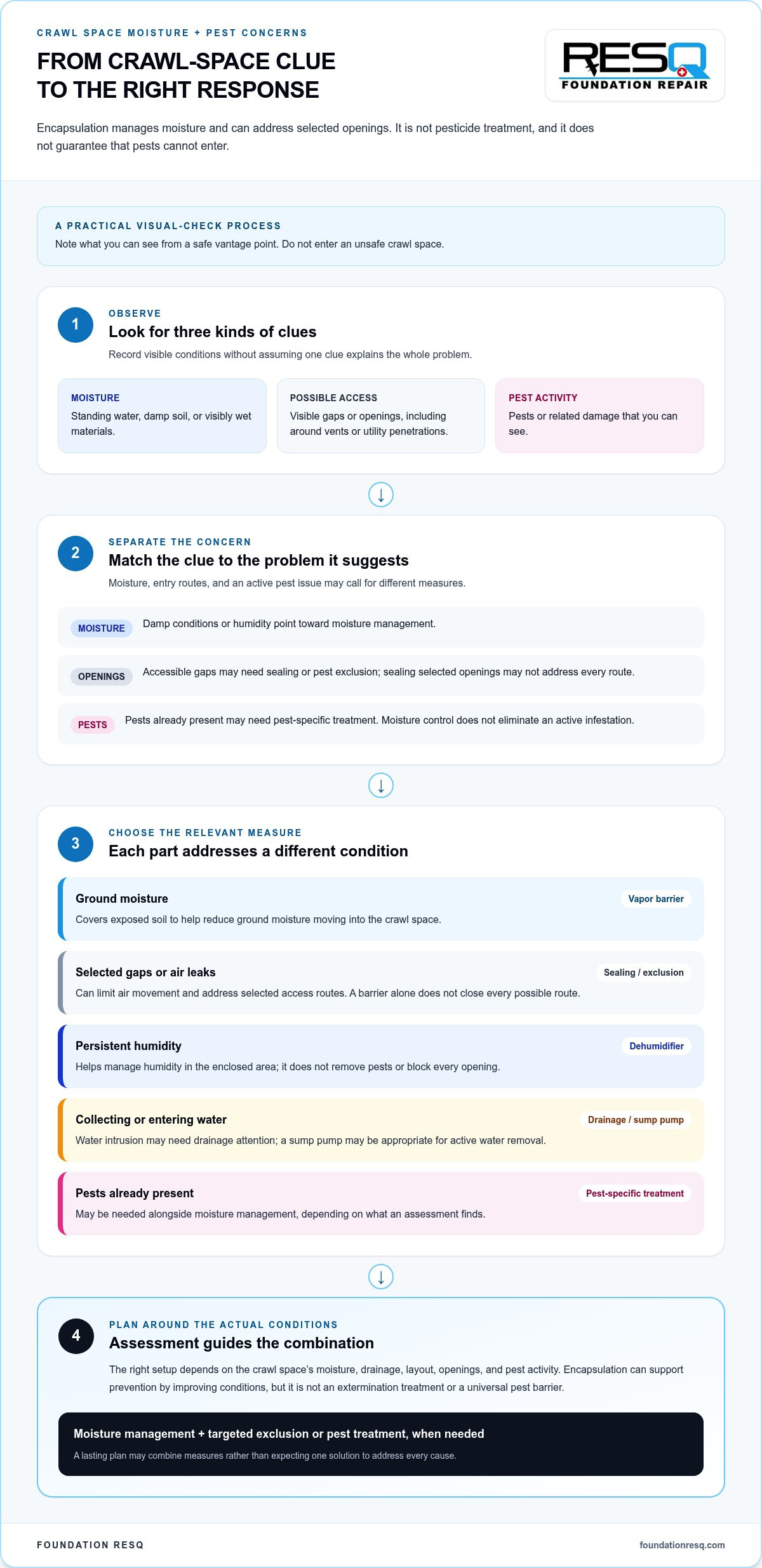
How to Assess a Crawl Space Before Choosing Pest-Control Measures
A few careful observations can help clarify whether a crawl space concern involves moisture, possible pest access, visible pest activity, or more than one issue. You don’t need to enter the space to gather useful details. For a Tallahassee home, record what you can see from a safe location and leave closer inspection to a professional if access or conditions raise concerns. These notes can inform an assessment, but they can’t identify every pest or reveal every source.
What homeowners can observe from a safe location
Start outside or at the crawl space access point. Don’t crawl inside, move debris, disturb suspected nests, or approach standing water. If the opening looks damaged, materials appear unstable, or you’re unsure the area is safe, stop there and arrange a professional assessment.
- Note moisture: From a safe vantage point, look for visible standing water, wet soil, or damp materials. Record where you saw it and whether the condition appears limited to one area or more widespread.
- Look for access points: Note visible gaps around the access door, vents, or utility penetrations. A visible opening is a clue to document, not proof that pests are using it.
- Record pest evidence: Write down visible activity or damage near the access point. Don’t touch, collect, or disturb anything that might be a nest or contaminated material.
- Track odors and timing: Note persistent musty or unusual odors, where they’re strongest, and when you notice pest activity. Dates and locations can help distinguish a recurring pattern from a single observation.
How findings inform the next step
Separate your notes by category instead of treating every sign as evidence of one cause. Standing water or damp materials point toward a moisture concern; visible gaps may indicate a possible access route; pest activity calls for pest-specific assessment. An odor is worth recording, but by itself it doesn’t establish the source or identify a pest.
Issues can overlap. A home may have both moisture concerns and active pest activity, so one measure may not address everything. Findings can help determine whether moisture management, focused exclusion, pest-specific treatment, or coordinated measures deserve consideration. For project-planning context, the Florida crawl space moisture guide explains crawl space encapsulation considerations for Tallahassee homeowners.
Observations are a starting point, not a diagnosis. They can help focus a professional assessment, especially if you’re weighing crawl space encapsulation for pest control against measures aimed at an active infestation. For prospective homebuyers evaluating a property, a comprehensive assessment from A Premier Home Inspection can help uncover existing moisture, drainage, and crawl space conditions before purchase. If there’s standing water, questionable structural safety, or no safe way to view the area, don’t enter to gather more information.
Use your notes to explore a moisture-control plan suited to your home. Explore crawl space encapsulation options for your Tallahassee property.
Foundation ResQ Crawl Space Encapsulation for Long-Term Moisture Control
Choosing a lasting solution starts with understanding what’s happening beneath the home. Foundation ResQ provides crawl space encapsulation and moisture-control services for existing homes in Tallahassee. An assessment helps identify the conditions the project needs to address, so the approach fits the crawl space rather than relying on a single component to solve every concern.
Encapsulation is intended to manage moisture and support the condition of the home. It may also complement a pest-control plan by changing crawl space conditions, but it isn’t pesticide application and doesn’t promise to eliminate pests. If pest activity is present, keep that concern distinct when planning moisture-control work.
What a Foundation ResQ moisture-control project may address
Project planning considers the crawl space’s condition and the home’s needs. Encapsulation may be paired with a dehumidifier to help manage humidity, or a sump pump system when water-management conditions make one relevant. These components serve different moisture-control purposes, so an assessment helps determine which are appropriate. The plan is aimed at addressing the conditions affecting the space and protecting the home’s overall condition.
Before an assessment, gather details that can help explain the concern. Note where you’ve seen water, damp materials, odors, visible openings, or pest activity, and when you noticed them. Don’t enter an unsafe crawl space to investigate further. Observations help inform the evaluation, but they don’t establish the source of moisture or identify every pest.
Plan a crawl space assessment in Tallahassee
During an assessment, visible conditions and the home’s needs help shape the moisture-control plan. A dehumidifier may be relevant where humidity management is needed; a sump pump may be considered where water conditions call for it. Encapsulation can be part of the broader plan. These measures address crawl space conditions, while active pest concerns may require separate, pest-specific attention.
- Record the location: Note where moisture, an opening, or pest evidence appears, such as near the access point or beneath a particular room.
- Describe what you observed: Distinguish standing water from damp materials, and visible pest activity from possible entry gaps.
- Share any changes: Mention whether the concern appears recurring or was noticed once, without assuming its cause.
For additional project-planning context, review the crawl space encapsulation services and homeowner guide. It can help you understand considerations involved in planning moisture-control work for a Tallahassee property.
If you’re ready to discuss your crawl space concerns, schedule a crawl space assessment with Foundation ResQ. A clear assessment is a practical first step toward a moisture-control plan suited to your home.
Choose a Clear Next Step for Your Crawl Space
You don’t have to decide on a full solution based on one sign beneath your home. A focused assessment can help turn what you’ve noticed into a practical plan, whether the priority is moisture control, pest activity, or both. That distinction matters: crawl space encapsulation for pest control can support a less favorable environment, but the right next step depends on the conditions found at your property.
For Tallahassee homeowners, Foundation ResQ can assess crawl space conditions and plan moisture-control work, including encapsulation, sump pump systems, or a crawl space dehumidifier where appropriate. Notes about visible concerns can help make the assessment more useful.
Schedule a crawl space assessment with Foundation ResQ to discuss a solution suited to your home. A clear starting point can make protecting your property feel manageable.
Frequently Asked Questions
Does crawl space encapsulation kill termites?
No. Encapsulation doesn’t kill termites or replace an inspection and treatment plan for active termite activity. It can help manage moisture in the crawl space, which may support protecting wood and other materials, but it isn’t a pesticide. If you notice damaged wood, discarded wings, or mud-like shelter tubes, document what you can see and arrange a pest-specific assessment before relying on moisture-control work.
Can crawl space encapsulation help keep rodents out?
It may help limit access when the project seals openings rodents could use, but encapsulation alone can’t guarantee they’ll stay out. Rodents may enter through gaps elsewhere in the structure, including areas not addressed by crawl space work. If you hear movement or see droppings near an access point, note the location and avoid disturbing the area. An assessment can help identify whether exclusion is also needed.
Is a vapor barrier enough to prevent pests in a crawl space?
No. A vapor barrier covers exposed ground to help manage moisture, but it doesn’t automatically seal foundation openings, utility gaps, or other possible routes into the crawl space. For crawl space encapsulation for pest control to support prevention, the overall approach needs to account for conditions beyond the ground surface. For example, a covered floor won’t resolve an opening beside a pipe or remove pests already present.
What happens if pests are found during crawl space encapsulation?
If signs of an active infestation appear, the pest issue should be assessed and addressed with measures suited to the pest before encapsulation closes off the space. The response depends on what’s present and where activity is occurring. Don’t handle suspected nests, droppings, or damaged materials yourself. Recording their location can help guide next steps and reduce the chance of overlooking affected areas.
Can encapsulation help prevent mold as well as pests?
Encapsulation can support mold prevention by helping control moisture, one condition that can contribute to mold growth. It doesn’t remove existing mold or correct every source of water on its own. For example, a leak or recurring water intrusion may need attention in addition to humidity management. If you notice visible growth or a persistent musty odor, have the underlying moisture concern assessed and consider mold remediation where appropriate.
How much does crawl space encapsulation for pest control cost?
There isn’t one price that applies to every crawl space, and encapsulation is moisture-control work rather than a pest-treatment package. Project scope can depend on the space’s size and condition, required preparation, and whether moisture-management equipment such as a sump pump or dehumidifier is appropriate. Pest-specific work is a separate consideration. An assessment for your Tallahassee home can clarify which components the conditions call for.
Should pest treatment happen before or after encapsulation?
If an active infestation is found, it generally needs pest-specific assessment and treatment before the crawl space is enclosed. That sequence lets the pest concern be addressed before access becomes more limited. If there’s no active infestation, the plan may focus on moisture management and any identified openings. In either case, the order should reflect the findings, not an assumption that encapsulation itself will remove pests.