
Why Your Home’s Air Quality Starts Below
Crawl space odor removal is essential for a healthy home, as up to 40% of the air on your first floor originates from your crawl space. That unpleasant, musty smell isn’t just annoying—it’s a warning sign that damp, contaminated air is being pulled into your living spaces via the stack effect. This air can carry mold spores, pest droppings, and other contaminants that threaten your home’s structure and your family’s health.
Quick Solutions for Crawl Space Odors:
- Identify the source – Check for moisture, mold, standing water, pests, or sewage leaks
- Remove debris – Clear out organic materials, wet insulation, and any contamination
- Dry the space – Use fans and dehumidifiers to reduce humidity below 60%
- Control moisture – Install vapor barriers and address drainage issues
- Seal and encapsulate – Create a conditioned space to prevent future problems
The good news is that you don’t have to live with the stink. Whether you’re dealing with moisture, mold, or decaying organic matter, there are proven solutions ranging from DIY fixes to professional remediation.
I’m Kayle Vernon, and for over a decade, I’ve helped homeowners solve foundation and crawl space issues. My work focuses on translating complex topics like crawl space odor removal into actionable steps. This guide will walk you through identifying the cause of the smell and implementing permanent solutions to keep your crawl space clean, dry, and odor-free.

Unmasking the Source: Common Causes of Crawl Space Odors
The first step in effective crawl space odor removal is identifying the cause. Most crawl space odors trace back to one common villain: moisture. When humidity gets out of control, it creates the perfect environment for all sorts of odor-producing problems.
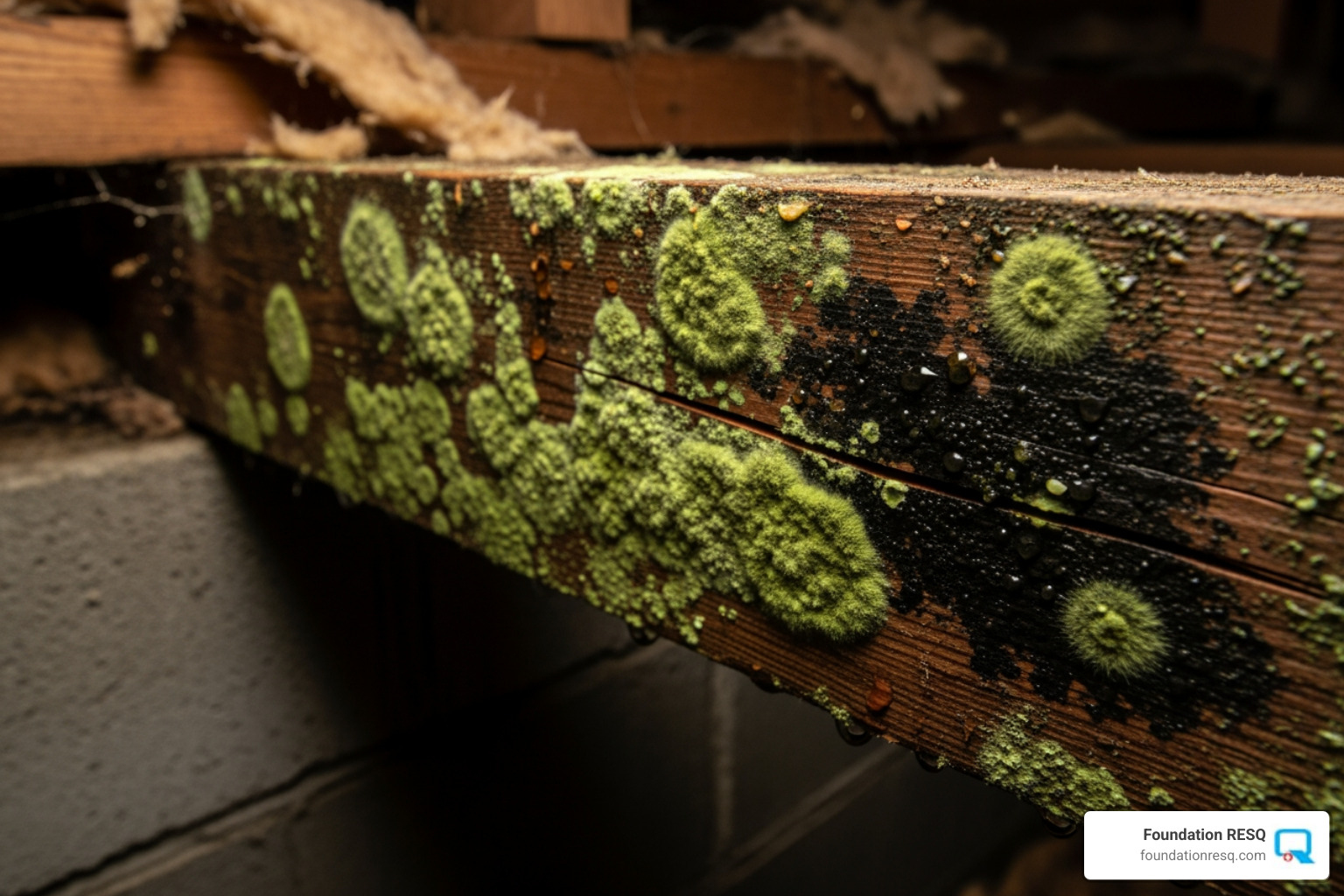
- Moisture and high humidity are the root of the problem. When warm, humid air enters a cool crawl space, it condenses on surfaces. Once relative humidity climbs above 60%, you’re in the danger zone for mold.
- Mold and mildew are the primary culprits behind that musty smell. These fungi thrive in dark, damp spaces and can start growing in just 24-48 hours, releasing odorous gases and spores.
- Pests and rodents seek shelter in crawl spaces, and their urine, droppings, and nesting materials contribute to odors. A decomposing animal can create a smell that permeates the entire home.
- Stagnant water from leaks or poor drainage becomes a breeding ground for foul-smelling bacteria and microorganisms.
- Sewage leaks from a cracked pipe are a serious health hazard and create an unbearable stench. This requires immediate professional attention.
- Rotting debris and damp insulation act like sponges for moisture. As organic materials like wood scraps, cardboard, and old fiberglass insulation decompose, they release strong, unpleasant odors.
- Earthy smell from soil itself can be an issue. A constantly damp earthen floor will release its own musty odor into the space.
Here are the warning signs that your crawl space needs attention:
- A persistent musty, damp, or earthy smell on your first floor
- Odors that get stronger after rain or during humid weather
- Visible mold growth on walls, joists, or insulation
- High indoor humidity even when your AC is running
- Worsening allergy or asthma symptoms at home
- Evidence of pests like droppings or nests
- Sagging floors or soft wood that indicates rot
Why Crawl Space Odors Are a Health Concern
That musty smell is a warning sign. Because of the stack effect, up to 40% of the air on your first floor comes from the crawl space, pulling mold spores, pest allergens, and bacterial gases into the air your family breathes.
Mold is an environmental allergen that is the primary source of most musty odors. For the one in five Americans with environmental allergies, mold spores can trigger sneezing, congestion, and skin rashes. For those with asthma, exposure can lead to flare-ups and difficulty breathing. Even in healthy individuals, prolonged exposure can cause respiratory issues.
Some molds produce mycotoxins, and while less common, severe or prolonged exposure to these airborne compounds can lead to more serious health problems. This isn’t just about making your home smell better—it’s about protecting your family. If you suspect mold, our Mold Remediation Services can help you address the problem safely and thoroughly.
A Practical Guide to DIY Crawl Space Odor Removal
For homeowners ready to tackle the smell, crawl space odor removal starts with getting to the root of the problem safely. While some issues can be handled with a DIY approach, others require professional help.

Step 1: Inspect and Clean Out the Space
Before entering, prioritize safety. A crawl space can harbor mold, pests, and sharp objects. Your safety gear should include: a respirator or N95 mask, safety goggles, heavy-duty gloves, long sleeves, pants, and sturdy boots.
Once suited up, use a flashlight to inspect for visible mold, standing water, plumbing leaks, pest droppings, and decaying debris. Now, begin cleaning:
- Remove all debris: Bag and discard old cardboard, wood scraps, leaves, and trash.
- Remove wet insulation: Saturated fiberglass insulation is a primary source of odors and must be removed.
- Address minor leaks: Fix small plumbing drips if you have the skill. If you find standing water, it must be pumped out, which indicates a larger moisture problem.
- Look for pests: Remove any nests or droppings. If you find a deceased animal, it must be carefully removed.
Step 2: Dry the Area and Neutralize Odors
With the space clean, focus on drying and deodorizing.
- Increase air circulation: Use industrial fans or air movers to help evaporate moisture from wood and concrete surfaces.
- Use odor absorbers: For general mustiness, place activated charcoal bags or shallow pans of baking soda around the space to absorb odors and moisture.
- Apply commercial neutralizers: For stubborn smells, use products that chemically alter odor molecules. Oxidizers (like OdorXit AQM) work over time, while enzymatic cleaners (like Nisus Bac-A-Zap) digest organic sources like urine or decomposition.
A word of caution: avoid using a pressure washer on concrete stains, as it can drive the odor source deeper. Also, skip air fresheners, which only mask the problem. Ozone generators can be effective but are lung irritants and require the home to be vacated during use.
When to Stop DIY and Call a Professional
Some problems are too large or hazardous for a DIY approach. It’s time to call a professional if you find:
- Widespread mold: Anything covering more than 10 square feet requires professional Mold Remediation Services.
- Structural damage: Significant wood rot on joists or beams is a safety issue requiring expert repair.
- Recurring flooding: Persistent standing water signals a serious drainage problem that needs a professional Crawl Space Waterproofing solution.
- Sewage contamination: This is a serious health hazard that requires specialized cleanup protocols.
- Major pest infestations: These need to be handled by a pest control expert before cleanup.
- Persistent odors: If smells return after your best efforts, a professional can diagnose the underlying cause.
Our teams in Alabama, Florida, and Georgia have the expertise to diagnose the true source of your crawl space odor removal challenges and implement lasting solutions.
Permanent Solutions: How to Stop Odors for Good
Temporary fixes won’t stop musty smells from returning. True crawl space odor removal means controlling moisture at its source and changing your crawl space into a clean, dry, conditioned environment.
Controlling Water with Drainage and Vapor Barriers
Water is the primary enemy. In Alabama, Florida, and Georgia, groundwater infiltration is a common problem.
- Drainage Systems: An interior perimeter drain, like a French drain connected to a sump pump, is the best way to manage groundwater. Our Crawl Space Drainage System collects water and pumps it safely away from your foundation.
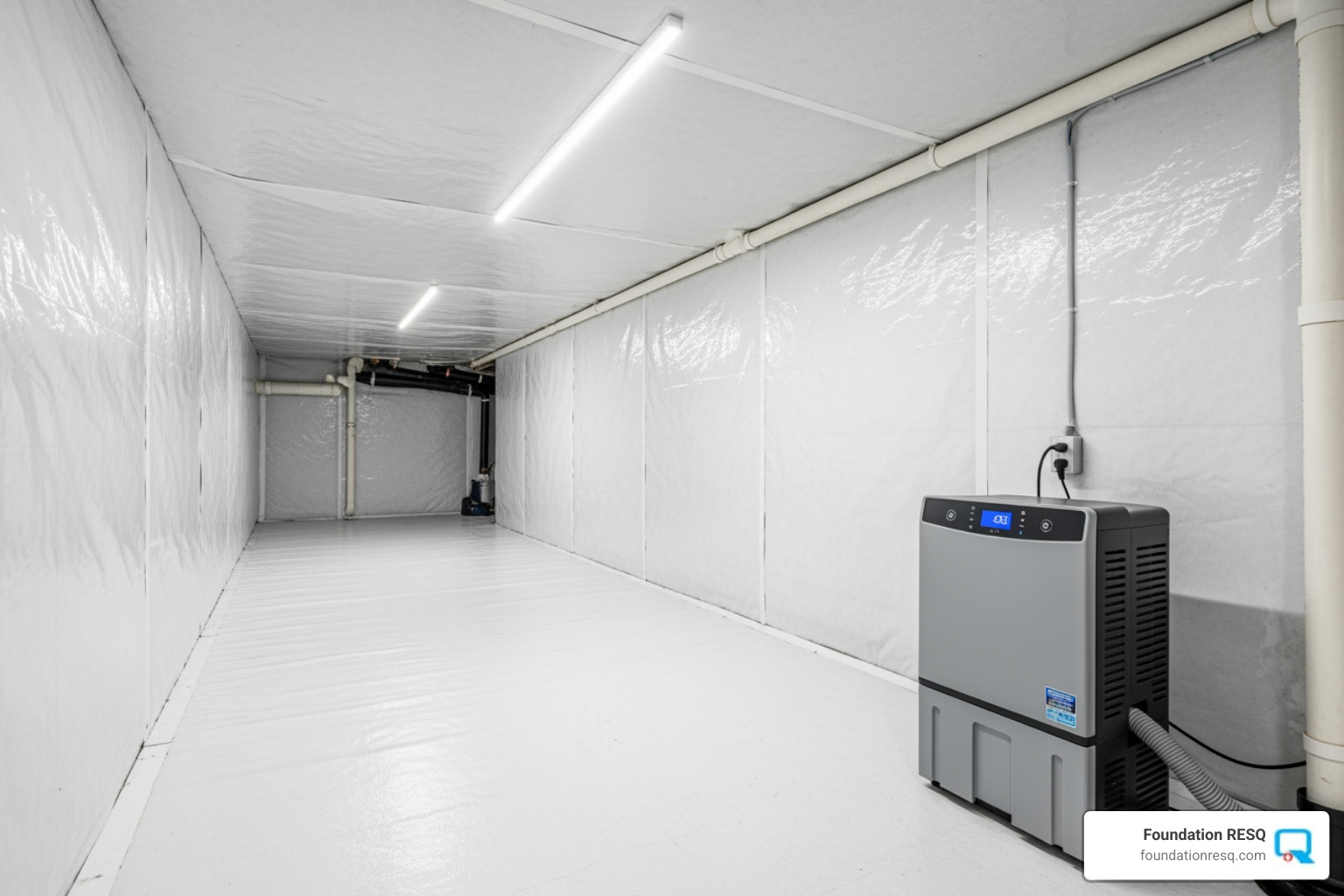
- Vapor Barriers: Moisture also evaporates from the bare earth. A heavy-duty (12-20 mil) vapor barrier is laid across the entire dirt floor and up the walls, creating a physical shield that stops this moisture from entering your crawl space air.
- Sealing Vents: In humid climates, open foundation vents do more harm than good by inviting in moist air that causes condensation and mold. Sealing these vents is a crucial step in controlling the environment.
Proper exterior drainage, including gutters and downspouts, is also vital. Many of the same principles are used in our Basement Waterproofing services.
The Role of a Dehumidifier in crawl space odor removal
Even with drainage and a vapor barrier, a crawl space dehumidifier is your secret weapon for long-term odor control. Its job is to keep the relative humidity below 60%—the threshold mold needs to grow. No mold means no musty smell.
You need a rugged, crawl space-specific model that is powerful and efficient in cooler temperatures. Standard home units are not built for these conditions. Look for a self-draining feature that automatically pumps collected water to a drain or sump pump, ensuring continuous, effort-free operation. A quality dehumidifier is an investment in your home’s health. Learn more about our Crawl Space Dehumidification solutions.
The Ultimate Fix: Professional crawl space odor removal via Encapsulation
For a permanent solution to crawl space odor removal, encapsulation is the gold standard. It transforms your crawl space into a clean, dry, conditioned part of your home.
The process involves:
- Complete Sealing: All vents, gaps, and cracks are sealed to block outside air, moisture, and pests.
- Heavy-Duty Liner: A durable, reinforced 12-20 mil vapor barrier is installed across the floor and up the walls, with all seams and penetrations sealed.
- Insulation & Conditioning: The walls are often insulated, and a dehumidifier is installed to create a conditioned space with actively managed humidity.
The benefits of encapsulation are significant:
- Eliminates Odors: By stopping moisture and mold, it removes the source of the smell for good.
- Improves Air Quality: The stack effect now pulls clean, dry air into your home, reducing allergens and dust.
- Increases Energy Efficiency: Your HVAC system works less, potentially lowering utility bills by 15-20%.
- Prevents Pest Infestations: A dry, sealed space is inhospitable to pests.
Encapsulation is a professional job requiring expertise to ensure a perfect seal. Our teams often combine this service with our Foundation Repair Services to address any structural issues simultaneously. It’s the ultimate investment in your home’s health and value.
Frequently Asked Questions about Crawl Space Odors
We hear these questions all the time from homeowners in Alabama, Florida, and Georgia. Here are some straight answers.
Is it normal for a crawl space to have a slight smell?
A very faint earthy smell from the soil can be normal. However, strong, musty, or foul odors are not. These smells are clear signs of a problem like excess moisture, active mold growth, or pests. If you can smell it on your first floor, it’s a problem that needs attention before it requires a major crawl space odor removal project.
How long does it take for mold to grow in a crawl space?
Under the right conditions—temperatures above 40°F, humidity over 60%, and an organic food source like wood—mold can begin growing in as little as 24 to 48 hours. The naturally cool, humid environment in a Southeastern crawl space is often a perfect breeding ground, which is why addressing any water intrusion quickly is critical.
Will simply opening my crawl space vents get rid of the smell?
No. In humid climates like ours, opening crawl space vents usually makes the odor problem worse. It invites warm, moisture-laden air into the cooler crawl space, where it condenses on surfaces. This added moisture fuels more mold growth and stronger odors. The modern, effective approach to crawl space odor removal involves sealing vents and conditioning the space with a dehumidifier.
Take Back Your Home from Crawl Space Odors
That musty smell from your crawl space doesn’t have to be a permanent problem. The key to crawl space odor removal is to identify the source, clean the area thoroughly, and then implement a long-term solution.
While DIY cleaning can help, the only way to solve the problem for good is to control moisture at its source. This means installing proper drainage, vapor barriers, and a quality dehumidifier. For the ultimate peace of mind, encapsulation is the definitive solution, changing your crawl space into a clean, dry area that protects your home’s air quality and structural integrity.
At Foundation RESQ, we’ve helped countless homeowners across Alabama, Florida, and Georgia reclaim their homes from crawl space problems. We start every project with a free inspection to diagnose the issue correctly. Our teams use advanced techniques to deliver affordable, lasting solutions—not temporary fixes.
You deserve to breathe easy in your own home. Don’t let crawl space odors control your life. Get a free inspection for your crawl space encapsulation system and let us show you how we can banish the stink for good.