
What if the vapor barrier under your home is still in place but no longer covers the ground effectively? Tears, gaps, and shifted sections can make crawl space vapor barrier replacement worth considering. But the liner is only part of the picture: moisture can have more than one source, and replacing the barrier alone may not address the conditions causing dampness below.
For Tallahassee homeowners, deciding what work is needed starts with looking at both the barrier and the surrounding crawl space. This guide explains signs the barrier may need attention, what replacement work can involve, and how it differs from full crawl space encapsulation.
A useful assessment connects the barrier’s condition with broader moisture-control needs. Depending on the crawl space, a plan may focus on ground coverage or include encapsulation, a crawl space dehumidifier, or a sump pump system. Knowing what each option addresses can help you choose a scope that responds to the conditions beneath your home, not just the visible liner.
Key Takeaways
- Learn which signs can indicate that crawl space vapor barrier replacement deserves attention.
- Understand why ground coverage may not address moisture from other sources, including drainage conditions or plumbing leaks.
- Compare a ground-focused barrier project with the broader scope of crawl space encapsulation.
- See how an assessment, preparation, and project scope shape the work beneath your home.
- Explore how Foundation ResQ’s crawl space encapsulation and moisture-control services can address observed conditions with measures such as sump pump systems or dehumidifiers.
When Does a Crawl Space Vapor Barrier Need Replacement?
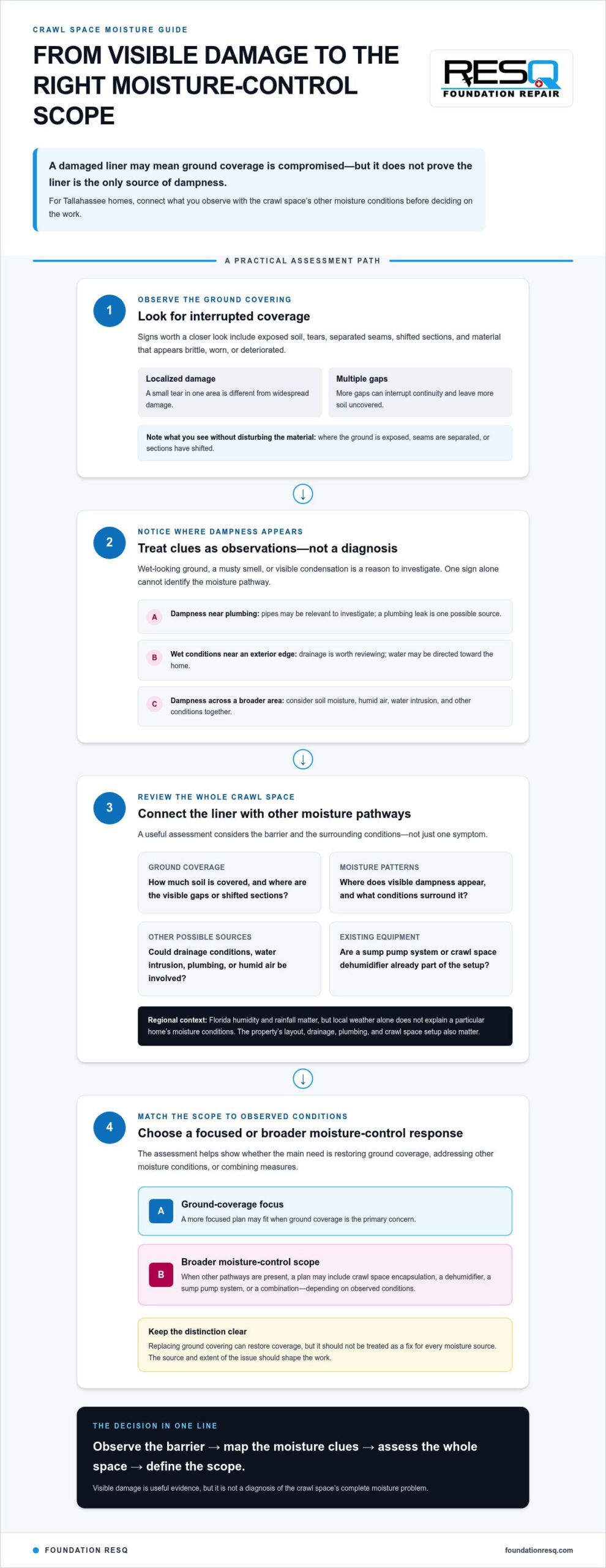
A crawl space vapor barrier covers the ground to limit moisture moving from the soil into the space beneath a home. If it has tears, gaps, or sections that have shifted aside, the ground may no longer be covered continuously. These signs warrant a closer look, but they don’t prove that the barrier is the only cause of dampness.
A crawl space can have several moisture pathways. A damaged liner may be visible, while water intrusion, drainage conditions, plumbing leaks, or humid air may also contribute. In Tallahassee, replacing ground covering without evaluating the surrounding conditions can leave another moisture source unaddressed.
Visible damage suggests that ground coverage may be compromised. It doesn’t, by itself, identify the cause of moisture in the crawl space.
What signs suggest the existing barrier needs attention?
Look for exposed soil where the covering has torn or shifted, separated seams, or sections pulled out of position. Material that appears brittle, worn, or deteriorated also merits an assessment. A small tear in one area is different from widespread damage: multiple gaps can interrupt the barrier’s continuity and leave more soil uncovered.
If you can safely see into the space, note where the damage is and whether dampness appears nearby. Treat these as observations, not a diagnosis. Wet-looking ground or a musty smell doesn’t establish that the barrier is the source. A crawl space assessment can consider the liner alongside other visible conditions.
Why can crawl space barriers deteriorate or become displaced?
Activity beneath a home can disturb ground coverage. Foot traffic during maintenance, items moved across the liner, or other work in the crawl space may snag, puncture, or shift sections. Wear can also become visible over time, although the condition of a barrier depends on its history and the environment around it.
Water intrusion or persistent dampness calls for a broader review. Water may enter or collect for reasons a ground barrier alone doesn’t address, such as drainage conditions or a plumbing leak. A wet patch doesn’t prove that the barrier needs replacement throughout the crawl space, or that replacing it will resolve the moisture. The source and extent of the issue should shape the work.
Before planning crawl space vapor barrier replacement, record what you can observe without disturbing the material: exposed ground, separated seams, shifted sections, or visibly worn areas. Share those details during an assessment. Reviewing the space can help distinguish localized damage from a broader need for ground coverage and show whether additional moisture-control measures may be appropriate.
What Causes Moisture Problems Beneath Tallahassee Homes?
A ground vapor barrier helps limit moisture moving from soil into a crawl space, but it addresses only one pathway. Dampness may also relate to humid air, water entering from outside, drainage conditions, or a plumbing leak. These sources can overlap, and they don’t affect every home in the same way. A wet area, musty odor, or visible condensation is a reason to investigate, not enough information to identify the cause remotely.
Florida’s humidity and rainfall provide useful regional context for Tallahassee homeowners, but local weather alone doesn’t explain a particular home’s moisture conditions. The property’s layout, drainage, plumbing, and crawl space setup all matter. Identifying where moisture comes from helps determine whether the response should focus on ground coverage, another moisture-control measure, or a combination.
How can moisture enter or remain in a crawl space?
Soil moisture and humid outdoor air are different conditions to consider. Ground covering is intended to limit moisture from the soil, while humid air can enter through openings and contribute to damp surfaces. Water intrusion may have another explanation, such as drainage that directs water toward the home or a plumbing leak beneath it. One sign alone can’t establish which pathway is involved.
For example, dampness concentrated near plumbing makes the pipes relevant to investigate. Wet conditions near an exterior edge may make drainage worth reviewing. These are possibilities, not diagnoses. Crawl space vapor barrier replacement can restore ground coverage, but it shouldn’t be treated as a fix for every source of moisture.
What should a crawl space assessment examine?
A useful assessment looks at the space as a whole rather than relying on one symptom. It can review how much ground the barrier covers, where visible moisture appears, and whether drainage conditions or plumbing need closer attention. Existing moisture-control equipment, such as a sump pump system or crawl space dehumidifier, is also relevant when evaluating the current setup.
Conditions vary from one Tallahassee property to another. The assessment should connect what’s observed with the home’s specific needs rather than assume every damp crawl space requires the same work. If the barrier is damaged and other moisture pathways are present, those findings can help define a broader scope. If ground coverage is the primary concern, the plan may be more focused.
Before an assessment, note where dampness appears and whether it seems concentrated near plumbing, along an exterior edge, or across a broader area. These observations can help guide a review of the crawl space, though they don’t replace it. Foundation ResQ’s crawl space moisture-control services help Tallahassee homeowners address observed conditions in existing homes.
Vapor Barrier Replacement vs. Crawl Space Encapsulation: What Is the Difference?
Both approaches address moisture concerns beneath a home, but their scope differs. Vapor barrier replacement focuses on restoring coverage over the ground. Crawl space encapsulation takes a broader approach to sealing the space and managing its moisture-control needs. The right scope depends on the assessment, not just on whether the existing liner looks worn.
| Approach | Main focus | When it may fit |
|---|---|---|
| Vapor barrier replacement | Addressing damaged coverage and restoring coverage over the ground. | The assessment finds that the ground barrier is the primary issue and other conditions don’t call for a broader scope. |
| Crawl space encapsulation | A wider approach to sealing and managing the crawl space environment. | The assessment indicates that ground coverage alone may not address the space’s moisture-control needs. |
A new ground barrier may not resolve a separate water or humidity source. If water is entering the crawl space or humid air is contributing to damp conditions, the project may need to address those conditions too. For more on the broader approach, see this Tallahassee crawl space encapsulation guide.
When might replacing the barrier be the focused scope?
A focused replacement may fit when an assessment finds damaged, displaced, or deteriorated ground coverage to be the primary concern. For example, a liner that has shifted and left areas of soil exposed may call for work centered on restoring that coverage. The recommendation should still account for other visible conditions, such as standing water or nearby dampness, rather than treating the barrier in isolation.
When may encapsulation address a broader moisture-control need?
Encapsulation may be appropriate when the findings point to a need beyond ground coverage, such as managing moisture across more of the crawl space environment. Depending on the conditions, the plan may include a sump pump system or crawl space dehumidifier. These aren’t automatic additions; their relevance depends on the home and the project scope.
Crawl space vapor barrier replacement and encapsulation aren’t interchangeable terms for the same work. One centers on the ground covering, while the other considers a wider moisture-management approach. The broader option isn’t always necessary, but a focused replacement may be insufficient if the assessment finds another moisture source.
For Tallahassee homeowners, a sound recommendation connects the observed condition to the proposed work: what needs attention, why the scope fits, and whether additional moisture-control measures are relevant. This keeps the plan grounded in the crawl space’s actual needs without suggesting that one measure will solve every moisture concern.
What Happens During Crawl Space Vapor Barrier Replacement?
Crawl space vapor barrier replacement follows a practical sequence: assess the space, define the work, prepare for access, complete the agreed scope, and review the findings. The existing barrier’s condition is only one factor. Access, visible moisture, crawl space features, and the need for broader moisture-control work can all shape the project.
Assessment comes before installation because the barrier’s condition alone doesn’t establish what work the crawl space needs.
How is the replacement scope determined?
An assessment considers the barrier’s condition alongside visible moisture, drainage, plumbing, and other crawl space features. The findings help distinguish a focused project to restore ground coverage from broader moisture-control work. Recommendations should reflect the specific home rather than rely on assumed material specifications or a standard scope for every crawl space.
The work generally follows these stages:
- Assess conditions. Review the existing ground coverage, access points, visible moisture, and relevant features of the space.
- Define the scope. Use the findings to determine whether the project focuses on barrier replacement or includes additional moisture-control measures.
- Prepare the area. Plan access and identify items or obstacles that could affect the work. Determine how stored belongings and access to the crawl space should be handled for the selected scope.
- Complete the work. Address the ground coverage or other agreed work according to the project plan. Existing conditions and access can affect how the work is carried out.
- Review the findings. Go over the completed work and any relevant moisture-control components, including conditions that may need further attention.
What should homeowners expect during and after the work?
Access is a practical consideration. Keep the route to the crawl space clear and make a plan for nearby storage or household items before work begins. Preparation and disruption depend on the home’s access, existing conditions, and project scope, so don’t assume every job will follow the same pattern.
After the work, review what was completed and how it relates to the original findings. If the assessment identified a separate moisture concern, understand how that factor fits into the overall plan. Barrier replacement alone shouldn’t be treated as a promise to eliminate moisture or prevent mold. Homeowners can also learn more about preventing mold in a crawl space to better understand moisture-related concerns.
For Tallahassee homeowners, a measured process connects what’s visible beneath the home with the work selected for it. If you’re concerned about a damaged barrier or broader moisture conditions, schedule a crawl space assessment to discuss an appropriate moisture-control plan.
How Foundation ResQ Helps Tallahassee Homeowners Address Crawl Space Moisture
A damaged ground barrier can be a visible concern, but the right response depends on what else is happening beneath the home. Foundation ResQ provides crawl space encapsulation and moisture-control services for Tallahassee homeowners. The goal is to connect observed conditions with a practical project scope rather than assume one measure fits every home.
How does an integrated moisture-control plan help?
An integrated plan considers ground coverage alongside other conditions identified during an assessment. If the findings point to moisture concerns beyond the barrier, crawl space encapsulation provides a broader approach. A sump pump system or crawl space dehumidifier may also be relevant when conditions call for it. These components aren’t necessary for every project; recommendations should reflect the specific home.
This approach clarifies what each part of the project is intended to address. Crawl space vapor barrier replacement may be one element when ground coverage needs attention, while other measures address separate moisture-control needs. An assessment helps define how those pieces relate, what work is included, and which conditions warrant further attention. No single measure should be treated as a guaranteed solution for every moisture concern.
For an existing Tallahassee home, an assessment can consider the barrier’s condition, visible moisture, drainage observations, and any existing moisture-control equipment. Those findings help shape a project around the crawl space rather than a general assumption. Foundation ResQ tailors the scope to observed conditions and the home’s moisture-control needs.
What is a practical next step for a Tallahassee homeowner?
Start by recording what you can observe safely, such as torn or shifted coverage, exposed ground, or where dampness appears. Note any changes you’ve noticed, but don’t treat those clues as a diagnosis. A professional crawl space assessment can review conditions directly and help determine whether focused ground coverage work or broader moisture control is appropriate.
Clear findings make it easier to understand the recommended scope and how it relates to your home. To explore an assessment-based approach, explore Foundation ResQ crawl space solutions for your Tallahassee home.
Move Forward With a Clear Plan for Your Crawl Space
Turn uncertainty into a clear project decision by understanding what the proposed scope is meant to address and how any separate moisture concern fits into the plan. That clarity can help you decide whether crawl space vapor barrier replacement is the right focus for your home or whether the project calls for a broader approach.
A well-defined plan connects observed conditions with the recommended work. You don’t need to diagnose the crawl space yourself. Focus on understanding the reasoning behind the scope and the next steps for your property.
Foundation ResQ helps Tallahassee homeowners consider crawl space moisture-control options based on their home’s conditions. Explore Foundation ResQ crawl space solutions to take a practical next step toward an informed plan for your home.
Frequently Asked Questions
How do I know if my crawl space vapor barrier needs to be replaced?
Exposed soil, tears, separated seams, or shifted sections are reasons to have the barrier assessed. Note where the damage appears and whether it is isolated or spread across several areas. A few visible issues don’t automatically mean the entire liner needs replacement, and dampness alone doesn’t identify its source. An assessment can help determine whether the barrier is the main concern or part of a wider moisture issue.
Can I replace a crawl space vapor barrier myself?
Some homeowners may be able to handle a limited repair in an accessible area, but full replacement can be more involved. Tight access, obstacles, the condition of the existing covering, and signs of water or dampness can complicate the work. Before starting, consider whether you can inspect the full area and distinguish barrier damage from other moisture concerns. If not, a professional assessment can help clarify the scope for your home.
Does a new vapor barrier stop water from entering a crawl space?
No. A ground barrier is intended to limit moisture coming from the soil, not stop every form of water intrusion. Water collecting near an exterior wall or beneath plumbing, for example, may have a separate cause that needs investigation. Replacing the barrier without addressing that source may leave the crawl space wet. The appropriate moisture-control plan depends on where water is coming from and what conditions are present.
What is the difference between vapor barrier replacement and crawl space encapsulation?
Vapor barrier replacement focuses on the ground covering. Crawl space encapsulation takes a broader approach to sealing and managing the crawl space environment. The distinction matters when a home has concerns beyond damaged ground coverage. An assessment can help show whether focused replacement fits the observed conditions or whether a wider plan, potentially including a dehumidifier or sump pump system, may be relevant.
How long does crawl space vapor barrier replacement take?
There isn’t one reliable timeframe for every project. The work can depend on access, the condition of the existing barrier, obstacles in the work area, and whether the agreed scope includes other moisture-control measures. The planned scope and conditions that could affect the schedule should be clear before work begins.
Can Tallahassee humidity affect a crawl space vapor barrier?
Humidity is relevant to moisture conditions beneath homes in Tallahassee, but it doesn’t by itself show that a barrier has failed. Ground covering addresses moisture from the soil; humid air entering the space is a different condition to consider. If the barrier looks intact but the crawl space still seems damp, an assessment should look beyond the liner and consider the space’s broader moisture-control needs.
Will replacing a crawl space vapor barrier prevent mold?
Replacement alone can’t guarantee that mold will be prevented. A new barrier may improve ground coverage, but mold concerns can remain if another moisture source is present or damp conditions continue. If you see suspected mold, don’t treat the liner as the only issue. A professional assessment can help identify moisture concerns, and mold remediation may need to be considered where growth is present.