
Why Crawl Space Water Damage Demands Your Attention
Crawl space water damage is a common but serious issue where water enters the area beneath your home from plumbing leaks, poor drainage, foundation cracks, or groundwater seepage. Because this space is often ignored, the moisture can lead to mold growth, wood rot, pest infestations, and structural instability, affecting your entire home.
Key facts about crawl space water damage:
- Up to 50% of the air you breathe on your first floor comes from your crawl space due to the “stack effect.”
- Water damage causes wood rot, mold, termites, and compromised floor joists.
- A wet crawl space can increase heating and cooling costs by 15-25%.
- Problems often go undetected for months or years, causing extensive damage.
- Solutions include drainage systems, sump pumps, vapor barriers, and encapsulation.
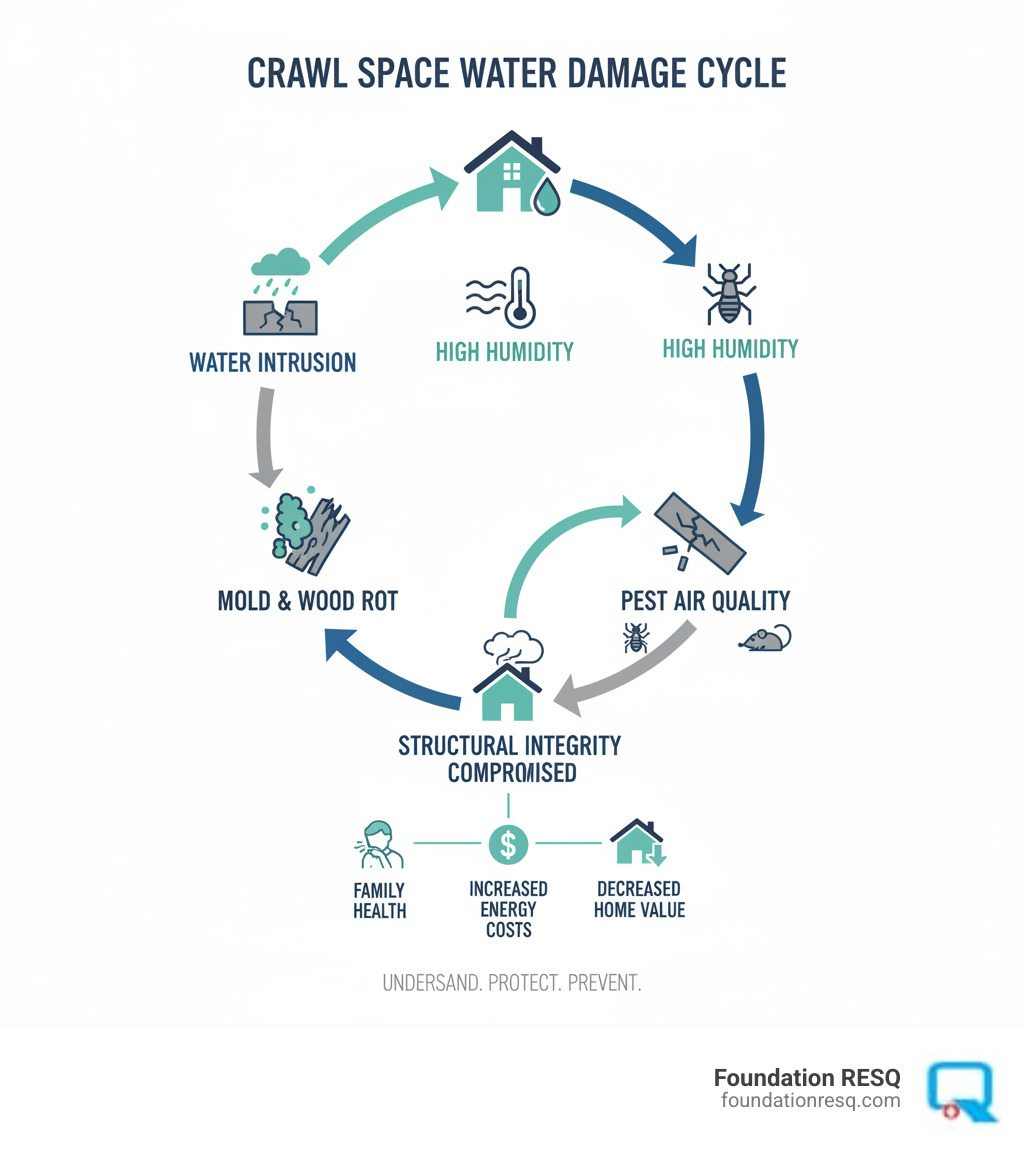
When water accumulates in your crawl space, it evaporates and rises into your living areas. This is due to the stack effect, where warm air rising in your home pulls replacement air from below. This means mold spores, musty odors, and humidity from the crawl space are pulled directly into the air your family breathes.
The damage extends beyond air quality. High humidity causes wooden support beams and floor joists to rot, weakening your home’s structural integrity. Damp environments also attract termites and other pests, while your HVAC system works harder to condition humid air, driving up energy bills.
The good news is that crawl space water damage is fixable. The key is to identify the water source, recognize the warning signs, and take action before minor moisture escalates into major structural or health problems.
My name is Kayle Vernon, and my experience in strategic problem-solving has shown me how preventable issues like crawl space water damage can spiral into expensive repairs. This guide will help you understand the causes, consequences, and solutions to protect your home and family.
Uncovering the Source: Primary Causes of Water in a Crawl Space
To fix crawl space water damage, you must first find the source. Water typically enters a crawl space in one of three ways: from the ground, from outside drainage issues, or from inside your home. Identifying the cause is the key to an effective solution. For a comprehensive guide, see Got Water in Your Crawl Space? Here’s How to Fix It.
Groundwater and Foundation Issues
Heavy rains, common in Florida, Alabama, and Georgia, saturate the soil around your foundation. This creates hydrostatic pressure—the force of water-soaked soil pushing against your foundation walls. Water exploits any weakness, turning tiny cracks into entry points.
In areas with a high water table, groundwater is a constant threat, always ready to push its way up into your crawl space. Common entry points include:
- Foundation cracks: Small fractures can widen over time, allowing water to seep in.
- Porous concrete: Some concrete allows water to pass directly through it, even without visible cracks. Mortar joints in block walls are especially vulnerable.
If you see foundation issues with your water problems, our Foundation Repair Services can address both concerns.
Exterior Drainage and Grading Problems
Often, water problems start at the surface. If rainwater doesn’t drain away from your home, it pools against the foundation and seeps into the crawl space.
- Improper grading: The ground around your home should slope away from the foundation. If it slopes toward it, you’re funneling water directly to your crawl space.
- Gutters and downspouts: Clogged gutters overflow, dumping water next to the foundation. Downspouts should discharge water at least five to ten feet away from your home.
- Surface water runoff: Patios, driveways, and neighboring properties can channel water toward your house.
- Window wells: These can fill with water during storms, which then seeps through window frames.
Interior Plumbing Leaks and Condensation
Sometimes the water source is inside your home, where leaks can go unnoticed for months.
- Plumbing leaks: Slow drips from pipes in the crawl space can saturate the ground over time. A burst water heater can cause a sudden flood.
- HVAC system: Air conditioners produce condensation. If the drain line clogs, water overflows into the crawl space.
- High humidity: In the humid South, warm, moist air entering a cool crawl space creates condensation on pipes, walls, and the ground. This constant dampness is just as damaging as a leak.
Understanding these sources, which often work in combination, is the first step toward a permanently dry crawl space.
The Ripple Effect: Damage, Dangers, and Hidden Costs
Water in your crawl space triggers a cascade of problems that threaten your home’s structure, your family’s health, and your finances. What starts as a small puddle can lead to significant damage.
What are the long-term effects of crawl space water damage?
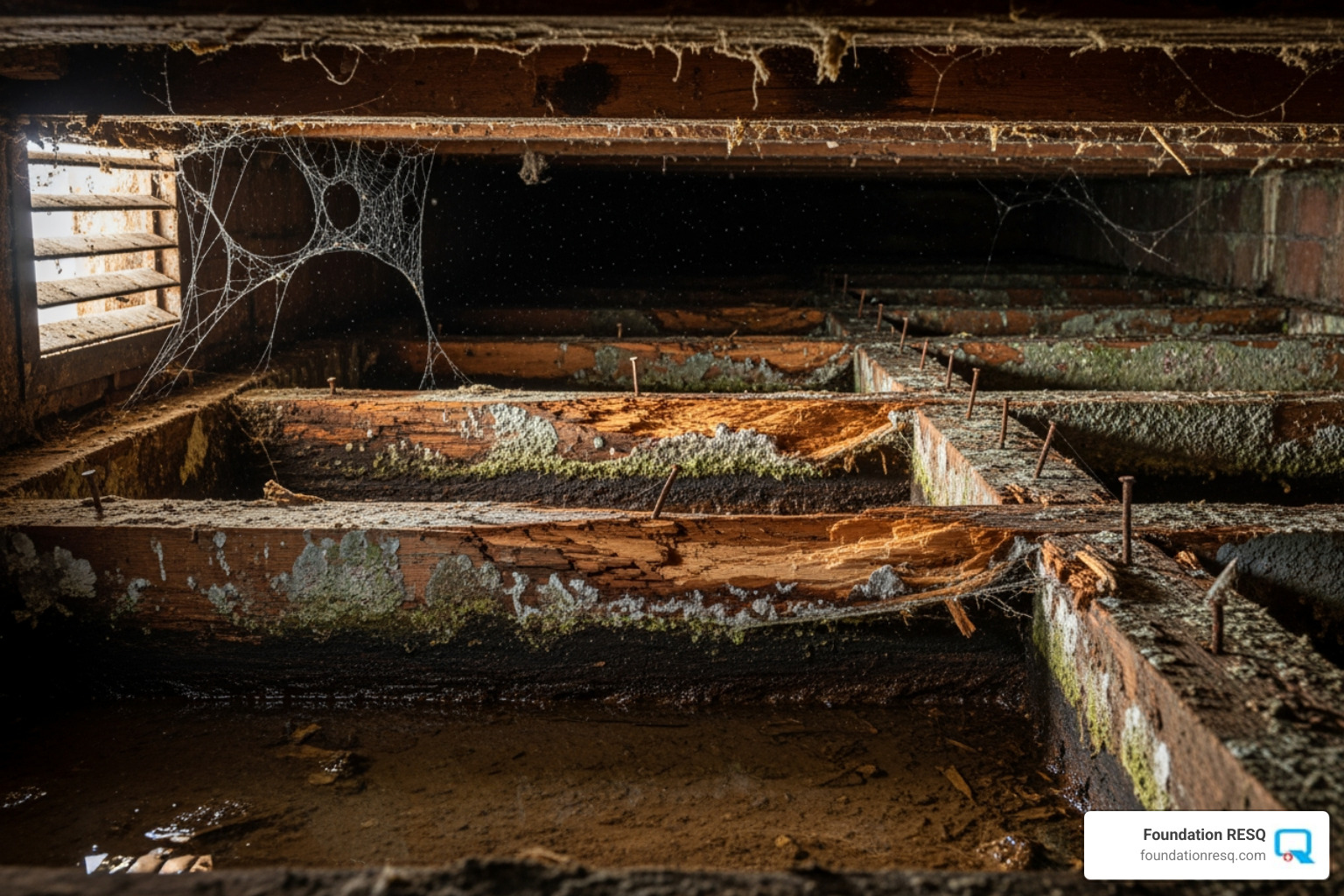
Moisture is destructive to your home’s wooden framework. Wood rot can quickly set in, causing floor joists, beams, and subflooring to soften and weaken. This leads to sagging or bouncy floors as the structural supports fail.
A damp crawl space is also an open invitation for pests. Termites, cockroaches, rodents, and other pests are drawn to moist wood and dark spaces. Furthermore, saturated soil can cause foundation settlement, where the ground shifts and your foundation cracks or sinks, creating more entry points for water.
These issues compromise your home’s structural integrity. If you see signs of weakness, our Crawl Space Stabilization System can help restore stability.
Health Risks of a Wet Crawl Space
Due to the stack effect, air from your crawl space circulates into your living areas. This means you’re breathing whatever is growing below.
- Mold and mildew thrive in damp spaces, releasing spores that can cause coughing, sneezing, and other respiratory issues. That musty smell is a clear warning sign of mold.
- Poor indoor air quality results from mold spores, bacteria, and dust mites, which flourish in high humidity. This can trigger or worsen allergies and asthma.
If you suspect mold, our Mold Remediation Services can safely remove it and help prevent its return.
Impact on Your Home’s Energy Efficiency
Crawl space water damage also leads to higher utility bills. Damp air costs more to heat and cool because your HVAC system must work harder to remove the extra moisture. Wet insulation loses its effectiveness, allowing heat to escape in winter and enter in summer.
This constant battle results in higher utility bills. Studies show that properly addressing crawl space moisture can reduce heating and cooling costs by 15-25%, saving you money and making your home more comfortable.
For more information on how a conditioned crawl space improves home performance, see this resource on Conditioned Crawl Space Construction, Performance and Codes.
Your Action Plan for Crawl Space Water Damage
Finding water in your crawl space requires action, not panic. With the right approach, you can transform a damp, problematic area into a dry, healthy part of your home. Here’s a step-by-step plan.
Step 1: Immediate Water Removal and Drying
Your first priority is to safely remove standing water and dry the area to prevent mold growth.
- Safety First: If there is standing water near electrical wiring or appliances, turn off the power at the breaker box before entering. When in doubt, call a professional.
- Remove Water: Use a wet/dry vacuum for small puddles or a submersible utility pump for significant standing water.
- Dry the Space: After removing the water, use industrial fans to circulate air and a heavy-duty dehumidifier to pull moisture from the air and structural materials. This may take several days.
Step 2: Installing Permanent Drainage Solutions
Removing the water is a temporary fix. To prevent future crawl space water damage, you need a permanent drainage solution.
An interior perimeter drain system is a highly effective method. This system uses a perforated pipe installed around the inside edge of the crawl space to collect water that seeps in. The water is then channeled to a sump pump, which is installed at the lowest point. The pump automatically activates to discharge water safely away from your foundation.
For complete protection, especially during storms, a battery backup system ensures your sump pump works even if the power goes out. Our professional-grade Crawl Space Drainage System is designed for the unique challenges of keeping your crawl space dry year-round.
Step 3: Isolating the Crawl Space from the Earth
The final step is to control moisture at its source by creating a barrier between your crawl space and the damp earth.
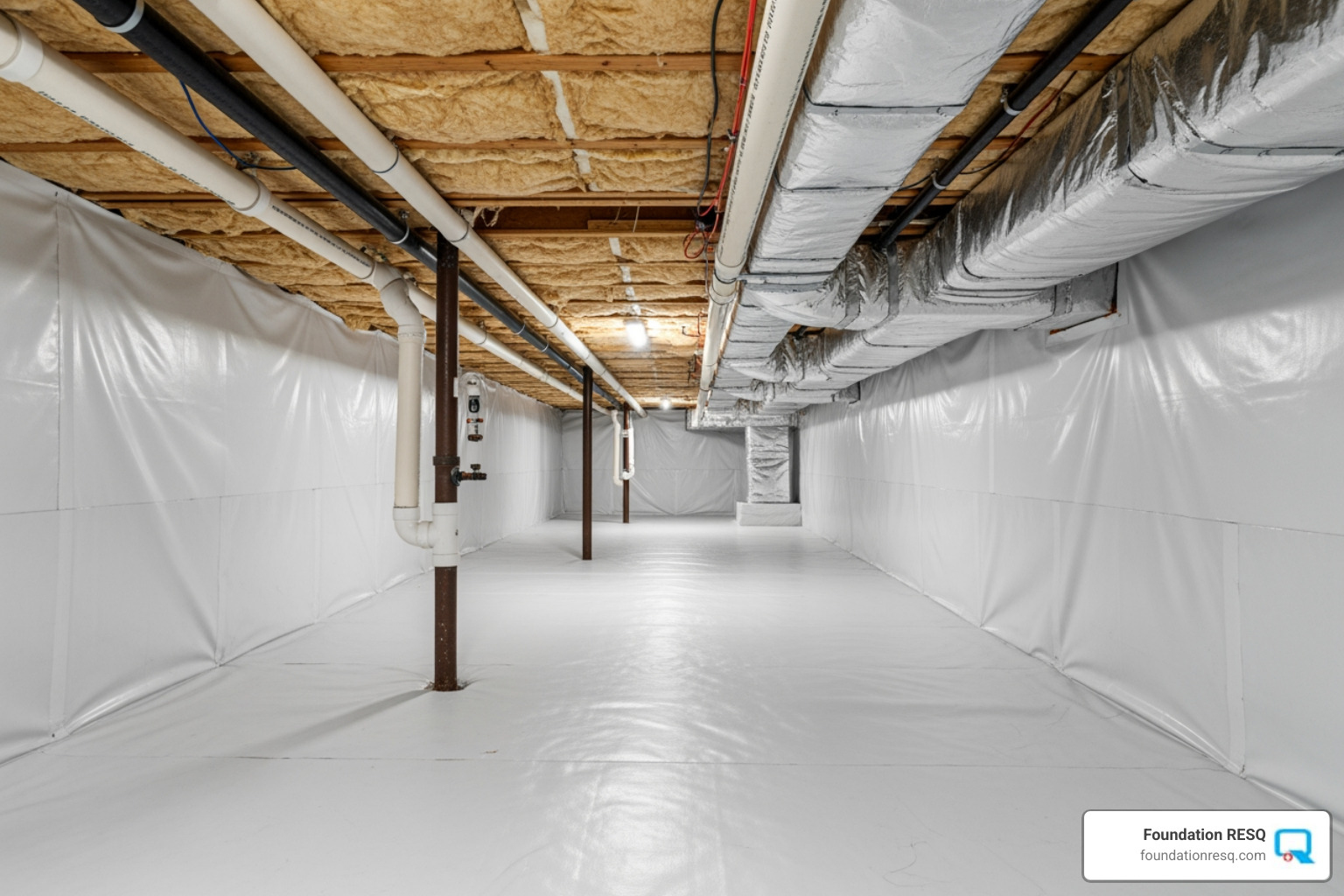
This starts with a vapor barrier, a thick sheet of polyethylene that covers the entire crawl space floor and extends up the foundation walls. This barrier stops ground moisture from evaporating into your crawl space.
In humid climates like Alabama, Florida, and Georgia, crawl space vents often do more harm than good by letting in moist air that causes condensation. Sealing these vents is a critical step in moisture control.
For the most complete protection, consider full crawl space encapsulation. This process seals the entire crawl space with a heavy-duty vapor barrier and adds a dehumidifier to control humidity. The benefits include:
- Improved indoor air quality by blocking mold and allergens.
- Lower energy bills (often 15-25%) as your HVAC system runs more efficiently.
- Pest prevention by eliminating the damp environment they love.
- Protection for floor joists and subflooring from wood rot.
- Creation of a clean, dry space suitable for storage.
Navigating the Aftermath: Insurance and Professional Expertise
Dealing with crawl space water damage involves figuring out insurance coverage and who to call for help. Making the right decisions can save you time and money.
Does Homeowners Insurance Cover This Damage?
Insurance coverage for crawl space water damage depends on the source of the water and your policy.
- Sudden and Accidental Damage: Standard policies typically cover damage from sudden events like a burst pipe.
- Gradual Damage: Damage that occurs over time from slow leaks, seepage, or high humidity is usually not covered.
- Flood Damage: You need a separate flood insurance policy to cover damage from natural flooding events like heavy rainfall or overflowing rivers.
- Ground Seepage: Many policies specifically exclude damage from water seeping up from the ground due to hydrostatic pressure.
Always document the damage immediately with photos and videos. This evidence is critical if you file a claim.
Who to Call: Restoration vs. Plumber vs. Waterproofing Specialist
Knowing which expert to call is crucial for a fast and effective solution.
- Plumber: Call a plumber first for an active leak from a broken pipe, water heater, or appliance. They will stop the immediate water source.
- Restoration Company: These specialists handle the cleanup. They remove standing water, dry the space with professional equipment, and perform mold remediation. Our Mold Remediation Services can help with this step.
- Waterproofing Specialist: Call a specialist like Foundation RESQ for long-term prevention. We address water entering from outside due to groundwater, poor drainage, or foundation cracks. We install drainage systems, sump pumps, and encapsulation to keep your crawl space permanently dry.
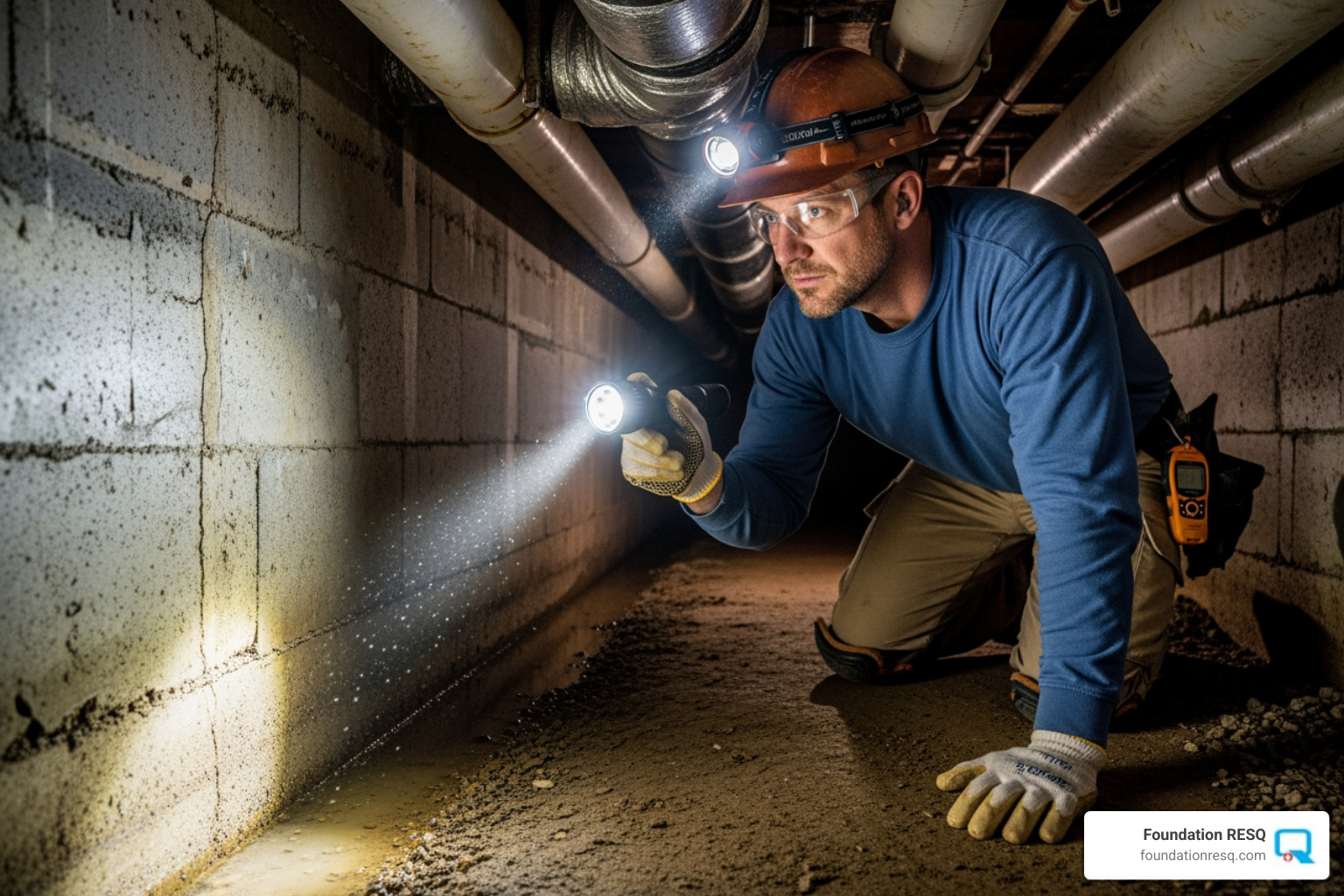
In some cases, you may need all three. Foundation RESQ offers free inspections in Alabama, Florida, and Georgia to assess the problem and recommend the right course of action, providing honest, straightforward advice.
Frequently Asked Questions about Wet Crawl Spaces
Homeowners across Alabama, Florida, and Georgia often have questions about water in their crawl spaces. Here are answers to the most common concerns.
Is it normal to have a little water or moisture in my crawl space?
No. While a damp crawl space is common in humid climates, it is not normal or healthy for your home. Any standing water or constant dampness is a red flag. Even without puddles, high humidity is enough to cause mold, wood rot, and pest infestations. A healthy home requires a dry foundation, and any moisture should be addressed.
What are the signs of crawl space water damage?
Crawl space water damage often reveals itself through subtle signs inside your home. Look for:
- Musty or earthy smells, especially on the first floor.
- Sagging or bouncy floors due to rotted floor joists.
- Sticking doors and windows caused by wood swelling from moisture.
- High indoor humidity that makes your home feel clammy.
- Increased pest activity, as insects and rodents are drawn to damp areas.
- Visible mold or white, powdery mineral deposits (efflorescence) on crawl space walls.
How much does crawl space water damage repair cost?
The cost to repair crawl space water damage varies widely, but homeadvisor.com reports an average of around $5,500, with a typical range of $1,500 to $15,000.
The final price depends on several factors:
- Scope of damage: Minor water removal is less expensive than repairing rotted wood or foundation issues.
- Type of solution: A simple vapor barrier costs less than a full encapsulation with a drainage system and sump pump.
- Size of the crawl space: Larger spaces require more materials and labor.
- Mold remediation: The need for professional mold removal will add to the cost.
While the cost can be significant, addressing the problem now is always cheaper than waiting for it to cause more severe structural damage. We offer free inspections to provide a clear understanding of the problem and your options without any pressure.