
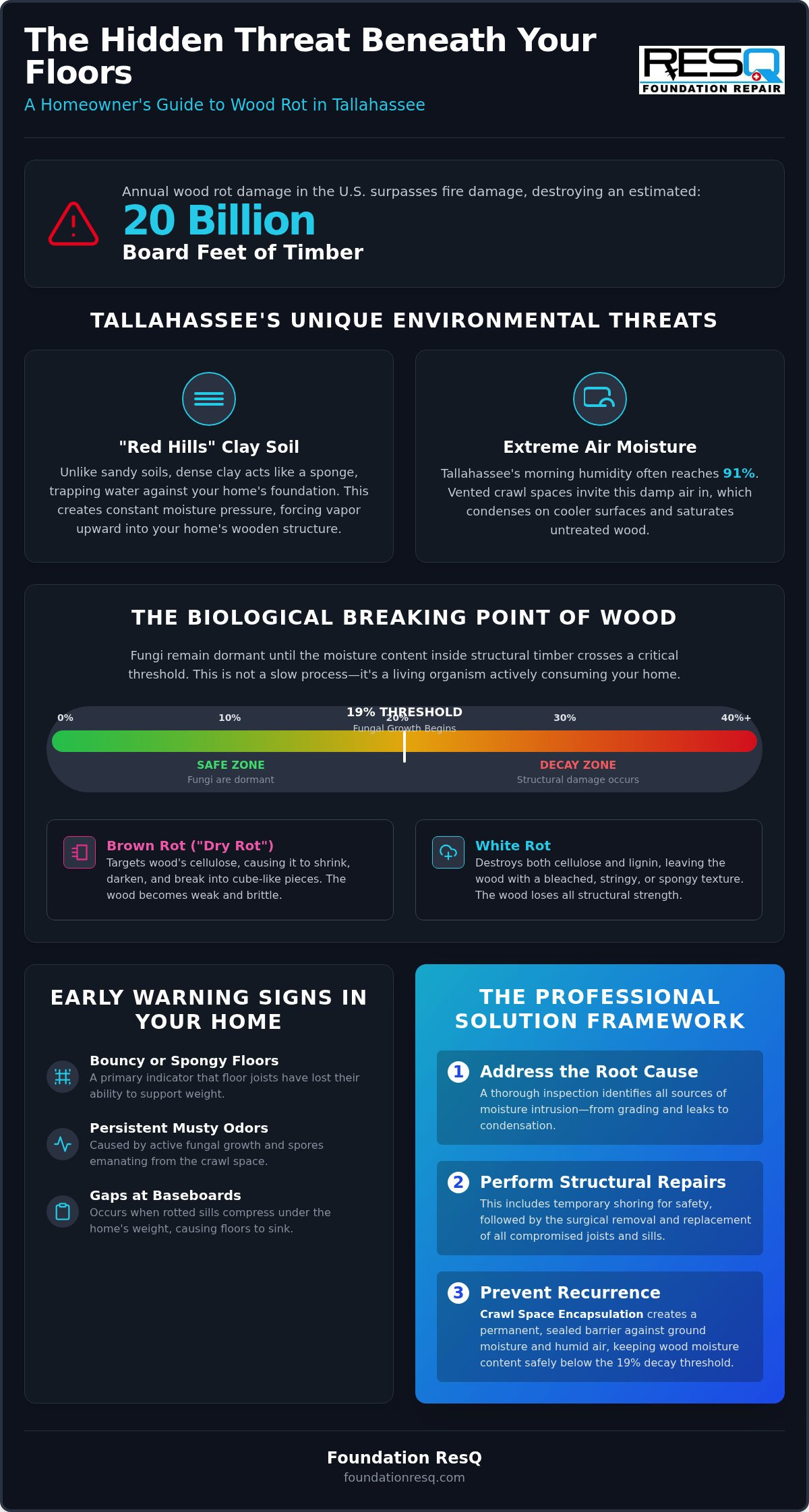
Did you know that wood rot destroys approximately 20 billion board feet of timber in the United States every year, which is more damage than that caused by fire? If you’ve noticed bouncy floors or a persistent musty odor in your home, you’re likely feeling the weight of Tallahassee’s unique environmental pressures. It’s stressful to wonder if your home’s structural integrity is at risk, especially when our local “Red Hills” clay soil and high humidity create the perfect breeding ground for fungal decay.
You can stop the damage and regain your peace of mind by understanding how crawl space encapsulation for wood rot Tallahassee works to create a permanent barrier against the elements. We agree that your home should be a place of stability, not a source of respiratory concern or structural anxiety. In this article, you’ll learn how to identify the early signs of decay, the most effective ways to repair compromised joists, and why professional moisture management is the only way to ensure your floors stay level and your air remains clean for the long term.
Key Takeaways
- Understand how Tallahassee’s Red Hills clay soil and high humidity levels contribute to wood decay by trapping moisture against your home’s foundation.
- Identify the biological triggers of wood decay and why maintaining moisture levels below the 19% threshold is essential for structural safety.
- Discover how crawl space encapsulation for wood rot Tallahassee provides a permanent moisture barrier to protect your floor joists and sills.
- Learn the professional techniques used to stabilize compromised foundations, including temporary shoring and the surgical replacement of rotted timber.
- Find out how professional inspections address the root cause of moisture intrusion to prevent rot from returning to your living space.
Why Tallahassee Homes are Prone to Crawl Space Wood Rot
Wood rot isn’t just a cosmetic flaw. It’s a biological process where specific fungi consume the structural components of your home. To understand The Science of Wood Decay, one must look at the environment beneath the floorboards. Fungi thrive in the dark, damp, and stagnant conditions found in many North Florida crawl spaces. When structural timber remains damp, these organisms break down the cellulose and lignin that give wood its strength. This eventually leads to a total loss of structural integrity.
Tallahassee sits in the “Red Hills” region, which is characterized by heavy, clay-rich soil. Unlike sandy coastal areas where water drains quickly, our local clay acts like a dense sponge that refuses to let go of moisture. This soil traps water directly against your foundation footings. This constant moisture contact creates a high-pressure environment where water vapor is pushed upward into your floor joists. Investing in crawl space encapsulation for wood rot Tallahassee is often the only way to counteract the natural water-retention properties of our local landscape.
With morning humidity levels often reaching 91% in Tallahassee, the air itself carries enough moisture to saturate untreated wood. Common entry points for this moisture include poor yard grading that directs rainwater toward the foundation, leaking plumbing fixtures hidden from view, and condensation forming on air conditioning vents. Without a protective barrier, your home’s skeleton is constantly under attack from these environmental factors.
The Role of Tallahassee’s Geography in Timber Decay
Leon County features a complex water table that fluctuates with our frequent heavy rainfalls. This often increases the vapor pressure in crawl spaces, forcing moisture through the soil and into the home’s structure. Traditional vented crawl spaces, once thought to provide necessary airflow, actually invite Tallahassee’s humid air inside. When this warm, wet air hits the cooler underside of your home, it condenses into liquid water. Because the local clay soil prevents natural drainage around residential footings, this water pools and sits, fueling the decay process.
Identifying Early Warning Signs in Your Living Space
You don’t always need to crawl under the house to know there’s a problem. Bouncy or spongy floors are often the first sign that your floor joists have lost their structural integrity. You might also notice musty odors in your living room; these are directly linked to fungal spores thriving under your floorboards. Over time, as rotted sills compress under the weight of the house, you may see visible gaps between your baseboards and the flooring. Professional crawl space encapsulation for wood rot Tallahassee addresses these structural threats by removing the moisture that fungi need to survive.
The Science of Wood Decay: Understanding the Biological Threshold
Wood is a resilient building material, but it has a specific biological breaking point. For fungi to actively consume structural timber, the moisture content within the wood must reach a critical threshold of 19% to 20%. Below this level, fungi remain dormant. Once the humidity in a Tallahassee crawl space pushes the wood past this 19% rule, the decay process begins in earnest. This isn’t a slow chemical reaction; it’s a living organism eating your home’s skeleton. Relying on a professional moisture management framework is the most effective way to monitor these levels and protect your investment.
Homeowners often encounter two primary types of decay: brown rot and white rot. Brown rot, frequently mislabeled as “dry rot,” causes the wood to shrink and break into distinct, cubical cracks. It targets the cellulose in the wood, leaving behind the dark brown lignin. White rot is equally destructive but targets both cellulose and lignin, leaving the timber looking bleached and feeling stringy or spongy. While surface mold is a cosmetic concern that sits on the exterior of the wood, structural rot is far more dangerous because it destroys the internal fibers that support your floors.
The dark, unventilated environment beneath many Leon County homes acts as a natural incubator. High temperatures in North Florida accelerate fungal metabolism, meaning decay can progress much faster here than in cooler climates. Without intervention, a joist can lose a significant portion of its load-bearing capacity in just a few seasons. If you suspect your home is at risk, scheduling a professional inspection for crawl space encapsulation for wood rot Tallahassee can identify these biological threats before they require massive structural overhauls.
Wood Rot vs. Termite Damage: How to Tell the Difference
It can be difficult to distinguish between fungal decay and pest infestations. Rot typically causes wood to crumble or crack into cubes, while termites leave behind hollowed-out galleries often filled with mud or debris. You can perform a simple “screw test” by pressing a screwdriver into a suspicious joist. If the tool sinks in easily with little resistance, the wood is likely rotted. In the damp Florida climate, these two issues often occur together. Moisture attracts termites, and the damage they leave behind creates even more surface area for rot-inducing fungi to take hold.
The Health Impact of Crawl Space Fungi
The problems in your crawl space don’t stay there. A phenomenon known as the “stack effect” causes air to rise from the lowest point of your home to the highest. As warm air escapes through your attic, it pulls “makeup air” from the crawl space into your bedrooms and living areas. This means you’re breathing in the fungal spores and musty gases produced by the decay process. Long-term exposure can lead to respiratory issues, persistent allergies, and a general decline in indoor air quality. Simply cleaning the visible mold won’t solve the problem. You must stop the biological decay process by removing the moisture that fuels it.
Structural Repair Methods for Rotted Floor Joists and Sills
Restoring a home’s structural integrity requires a methodical approach that prioritizes safety and long-term stability. The repair process begins with temporary shoring. This involves installing temporary supports to carry the home’s weight while the damaged components are addressed. Once the structure is stabilized, technicians remove heavily decayed timber. It is vital to treat the remaining wood and surrounding areas with specialized solutions to kill any lingering fungal spores. This step ensures that once you invest in crawl space encapsulation for wood rot Tallahassee, the biological threat is fully neutralized.
For joists that have lost their load-bearing capacity, technicians often employ joist sistering. This involves bolting a new, pressure-treated lumber member alongside the weakened beam. In cases where the rot has reached the perimeter of the home, a sill plate replacement becomes necessary. This is a complex task that involves lifting the home slightly to swap out the rotted horizontal member that rests on the foundation wall. Finally, installing adjustable crawl space support jacks provides a permanent way to relevel sagging floors and prevent future settlement.
What is Joist Sistering and When is it Used?
The logic behind joist sistering is simple: it transfers the structural load from a compromised member to a healthy one. This method is highly effective when the decay is localized and hasn’t compromised the entire span of the wood. However, if the rot is widespread or the original joist is crumbling, a full replacement is required. To be structurally effective, a sistered joist must overlap the healthy section of the original beam by at least three feet on either side of the damage to ensure proper load distribution. These Structural Repair Methods are essential for maintaining the safety of older Tallahassee homes.
Stabilizing the Foundation with Support Jacks
Many older homes in Leon County rely on outdated wood shims that eventually rot or compress. We replace these temporary fixes with permanent, heavy-duty steel support systems. These adjustable jacks allow for precision floor leveling, enabling technicians to lift sagging areas back to their original position over time. To ensure these supports don’t sink into the soft Tallahassee soil, each jack is installed on a solid, engineered concrete base. This setup, combined with crawl space encapsulation for wood rot Tallahassee, creates a dry and stable environment that protects your home for decades.
Preventing Recurrence: The Moisture Management Framework
Repairing rotted timber provides a fresh start, but it doesn’t change the humid environment that caused the decay. Without a permanent solution, the biological process described earlier will simply restart. Implementing crawl space encapsulation for wood rot Tallahassee is the definitive solution for homeowners who want to protect their structural repairs. This process involves sealing the entire area with a high-performance vapor barrier. While building codes often allow for 6-mil polyethylene, Florida’s climate demands a 12-mil or thicker barrier to ensure a lifespan of 20 to 25 years. This reinforced liner prevents ground moisture from evaporating into your floor joists and sills.
A complete moisture management framework also addresses active water intrusion. Heavy Tallahassee rainstorms can quickly overwhelm a crawl space, leading to standing water. Sump pump systems are installed to collect and remove this water automatically before it can saturate the soil or the new wood. Finally, industrial dehumidification serves as the final line of defense. These units maintain a consistent relative humidity, ensuring the wood moisture content stays well below the 19% threshold required for fungal growth.
Why Encapsulation is Non-Negotiable in North Florida
In our region, traditional vented crawl spaces act as a gateway for humidity. By sealing these vents and installing a permanent barrier, you stop the stack effect. This prevents contaminated air from rising into your living spaces, which significantly improves indoor air quality and reduces allergens. Additionally, a sealed crawl space acts as an extra layer of insulation. This reduces the cooling load on your HVAC system, leading to noticeable energy savings during our long, hot summers. For a deeper look at the technical specifications, read our crawl space encapsulation Tallahassee guide.
The Role of Sump Pumps and Dehumidifiers
Standard hardware store dehumidifiers aren’t designed for the high-volume moisture found in Leon County. We utilize industrial-grade units that are built for the rigors of a crawl space environment. These systems include automatic drainage, so you don’t have to worry about emptying buckets. When paired with a professional sump pump, your new structural repairs are protected even during extreme weather events. To keep your system active through 2026 and beyond, we recommend annual inspections to check pump operation and replace dehumidifier filters. If you’re ready to secure your home’s future, you can schedule a comprehensive crawl space evaluation with our local team.
Professional Crawl Space Restoration with Foundation ResQ
Foundation ResQ stands as the steadfast local expert for homeowners facing structural decay. While many contractors offer quick fixes, our approach combines deep roots in Leon County with industry-leading engineering principles. This allows us to provide solutions that are both locally informed and scientifically proven. Our team specializes in crawl space encapsulation for wood rot Tallahassee to ensure your home remains safe and stable for decades. When we address timber damage, we aren’t just replacing wood; we’re implementing a permanent remedy that accounts for the specific environmental pressures of North Florida.
A successful restoration starts with a comprehensive inspection that goes far beyond surface-level observations. Our technicians are trained to identify the root cause of moisture intrusion, whether it’s a drainage issue in the Red Hills clay or a failure in an existing vapor barrier. By understanding the source of the decay, we design customized remediation plans. These plans often integrate structural repair with crawl space encapsulation for wood rot Tallahassee, creating a protective barrier that safeguards your home’s longevity. This methodical process ensures we treat the disease, not just the symptoms.
Our Local Tallahassee Expertise
Tallahassee features a diverse range of architecture, from historic mid-century homes in Myers Park to modern developments. Each era presents unique structural nuances that require specialized knowledge. For instance, older homes often have different ventilation needs and foundation depths compared to new construction. We’re committed to the safety of our North Florida communities by providing professional foundation repair in Tallahassee that respects these architectural differences. Our goal is always to provide a warrantied, permanent fix that gives you total peace of mind.
Just as we strive to protect the physical foundations of our neighborhoods, we also recognize the importance of movements like Freedom Aide that work to uphold the constitutional principles that serve as the foundation for all American communities.
Get Started with a Structural Evaluation
If you’ve noticed bouncy floors or musty smells, the first step is a professional evaluation. During a Foundation ResQ inspection, you can expect a thorough assessment of your home’s support system, moisture levels, and soil conditions. We provide a detailed report and a clear path forward for restoration. We understand that structural work is a significant investment in your property. To help make these essential repairs more accessible, we offer flexible financing options for qualified homeowners. Don’t wait for a small issue to become a major structural failure. Take the first step toward a stable, dry living environment by scheduling your evaluation today.
Secure Your Home’s Structural Future Today
Tallahassee’s unique Red Hills soil and high humidity levels create a persistent threat to your home’s foundation. We’ve explored how structural repairs like joist sistering and sill plate replacement restore immediate stability to your living space. However, these fixes only remain permanent when you address the underlying moisture that fuels biological decay. By keeping wood moisture levels below the critical 19% threshold, you effectively neutralize the fungi responsible for rot and structural failure.
Implementing professional crawl space encapsulation for wood rot Tallahassee provides the final line of defense your property needs to remain level and healthy. Our A+ rated local team utilizes certified structural engineers to design custom moisture management solutions specifically for North Florida’s climate. We don’t just treat the symptoms of a damp crawl space; we provide a warrantied remedy that protects your home’s value and your family’s air quality.
Schedule Your Free Crawl Space Inspection with Foundation ResQ to take the first step toward a dry and stable home. You don’t have to face these structural challenges alone. Our experts are here to help you restore the long-term integrity of your property.
Frequently Asked Questions
Is wood rot in a crawl space common in Tallahassee?
Wood rot is exceptionally common in Tallahassee due to the region’s high humidity and clay-rich soil. The local Red Hills clay tends to hold moisture against foundation footings, creating a damp environment where fungi thrive. When combined with our frequent heavy rainfall, structural timber often reaches the biological decay threshold. This makes professional moisture management a necessity for many Leon County homeowners who want to avoid structural failure.
Can I just replace the rotted wood without fixing the moisture problem?
Replacing rotted timber without addressing the source of moisture is only a temporary solution. New wood will eventually reach the same moisture levels as the previous joists, allowing fungal growth to restart. To protect your investment, it’s essential to combine repairs with crawl space encapsulation for wood rot Tallahassee. This creates a permanent barrier that ensures your new structural members remain dry and stable for the life of the home.
How much does crawl space wood rot repair typically cost in Florida?
The cost of repairing wood rot varies significantly based on the extent of the structural damage and the number of joists affected. Factors such as the accessibility of the crawl space and the need for specialized support systems also influence the final investment. Because every home in North Florida has unique structural requirements, we recommend a professional evaluation to receive an accurate assessment tailored to your specific needs.
Will homeowners insurance cover wood rot repair in my crawl space?
Most standard homeowners insurance policies do not cover wood rot repair because it’s typically classified as a maintenance issue. Insurance generally covers sudden and accidental damage, such as a burst pipe, rather than gradual decay caused by humidity or soil moisture. It’s best to review your specific policy or speak with your agent to understand what structural protections are included in your coverage and if any endorsements apply.
How long does it take to repair rotted floor joists?
A typical repair for rotted floor joists can take anywhere from one to three days, depending on the complexity of the project. If the work involves extensive sill plate replacement or the installation of multiple support jacks, the timeline may extend. Our team works methodically to ensure the structure is stabilized during the process, minimizing disruption to your daily routine while restoring your home’s integrity and safety.
What happens if I ignore wood rot in my crawl space?
Ignoring wood rot leads to progressive structural failure and increasingly expensive remediation costs. As fungi consume the load-bearing fibers of your joists, your floors will begin to sag, bounce, or pull away from the walls. Beyond the physical damage to the building, the resulting mold growth can significantly degrade indoor air quality. This often leads to persistent musty odors and potential respiratory issues for those living in the home.
Can wood rot spread to other parts of my house?
Wood rot can spread if the conditions for fungal growth exist in other areas of your structure. While the rot itself doesn’t move like a pest, the spores are ever-present and will colonize any timber that reaches a high moisture content. If moisture travels upward through wall cavities or if the stack effect pulls damp air into your subflooring, the decay can expand beyond the initial crawl space area.
How can I tell if my floors are bouncy because of rot or just age?
Bouncy floors in older homes are sometimes caused by settling, but persistent sponginess is often a sign of active decay. You can check for musty odors or visible gaps between baseboards and the floor as indicators of rot. A professional inspection for crawl space encapsulation for wood rot Tallahassee can determine if the bounce is due to the natural flexibility of aged timber or a dangerous loss of structural mass.