Why Foundation Problems Demand Expert Attention
If you’ve noticed diagonal wall cracks, sticking doors, or sloping floors, your home’s structural integrity may be at risk. These aren’t cosmetic issues; they are warning signs of foundation settlement caused by unstable soil, moisture changes, or poor construction.
Foundation experts underpinning services offer a permanent solution. Underpinning strengthens and stabilizes compromised foundations by extending them to reach stable soil or distributing the load over a larger area. Unlike temporary fixes, professional underpinning protects your home’s value and ensures your family’s safety.
Here’s a quick overview of what underpinning involves:
What Underpinning Solves:
- Arresting ongoing settlement – Stops your home from sinking further
- Strengthening weak foundations – Reinforces structures compromised by soil movement
- Transferring loads to stable soil – Bypasses problem soils by reaching bedrock
- Preventing structural damage – Stops cracks, sticking doors, and uneven floors from worsening
Common Underpinning Methods:
- Push Piers or Helical Piers – Steel piers driven to bedrock.
- Mass Concrete Underpinning – Traditional excavation and concrete pouring.
- Polyurethane Resin Injection – Minimally invasive soil stabilization.
Typical Project Snapshot:
- Timeline: 4-6 months for engineering/permitting, plus 2-6 weeks for construction.
- Cost: $4,000-$35,000 on average, with complex cases ranging from $40,000-$80,000+.
This guide will walk you through everything you need to know about underpinning, from recognizing the signs to choosing the right contractor and understanding the repair process.
Why Your Foundation is Failing: Common Signs and Root Causes
A foundation can fail when the ground beneath it shifts. While minor settlement (gradual sinking) is normal, subsidence (a sudden or dramatic drop) is a serious problem requiring foundation experts underpinning services. Both are often caused by underlying issues with soil and water.
Common Causes of Foundation Failure
- Unstable Soil: In Alabama, Florida, and Georgia, reactive clay soils are a primary culprit. They swell when wet and shrink when dry, putting immense stress on foundations; these are often called expansive clays.
- Water and Drainage Issues: Poor drainage that allows water to pool around your home saturates and weakens the soil. Leaking plumbing can cause the same issue underground. Changes in the water table can also cause soil to expand or compact.
- Tree Roots and Excavation: Large tree roots can draw moisture from the soil, causing it to shrink, or physically push against the foundation. Nearby construction or excavation can also disturb the soil and cause shifts.
- Poor Initial Construction: Problems can start from day one. If soil wasn’t properly compacted, or if footings are too shallow, the foundation may settle unevenly for years. Buried organic material like tree stumps can also decay, creating voids under the home.
If you have moisture issues in your crawl space, our Crawl Space Repair Services can address these problems before they impact your foundation.
Telltale Signs Your Property Needs Underpinning
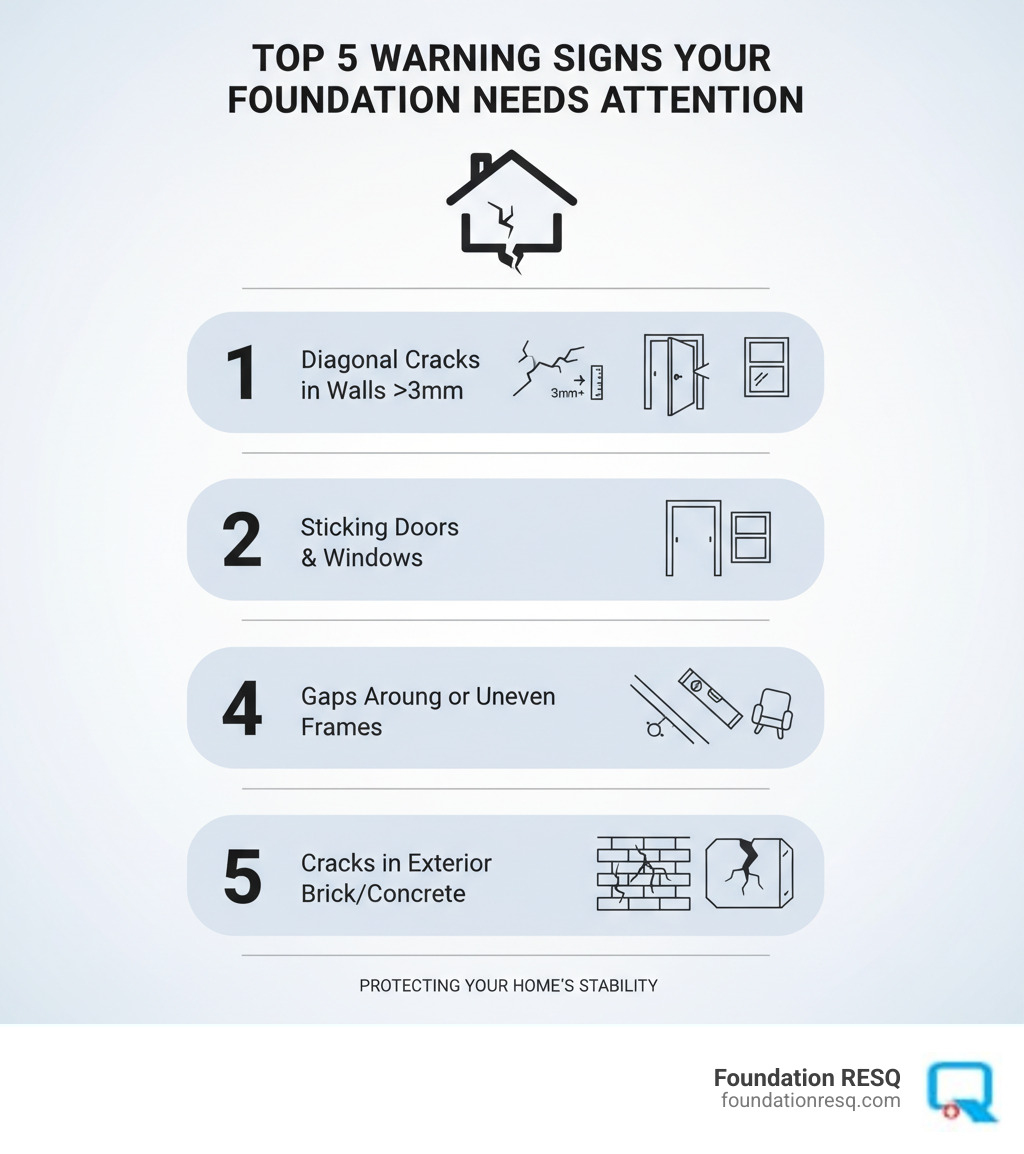
Your home will show signs of distress when the foundation is in trouble. Look for these red flags:
- Wall Cracks: Diagonal cracks in interior or exterior walls, especially wider than 3mm, are a key indicator of movement.
- Foundation Cracks: Cracks in the concrete slab or perimeter walls that are widening over time signal a problem.
- Sloping or Uneven Floors: A floor that feels like it’s tilting is a classic sign of uneven settlement.
- Sticking Doors and Windows: When doors and windows suddenly stick or refuse to close, it often means the frame is no longer square due to foundation movement.
- Gaps Around Frames: Visible gaps between window or door frames and the wall indicate your house frame is shifting.
- Separating Chimney: A chimney pulling away from the house is a serious warning that requires immediate attention. For related issues, learn about Bowing Walls.
These issues require professional diagnosis. Foundation RESQ offers free inspections to identify the root cause before the damage worsens.
A Guide to Underpinning Techniques: From Traditional to Modern
Underpinning strengthens a foundation by transferring the building’s weight to deeper, more stable soil. The right method depends on the soil type, the structure, and the cause of the foundation problem. Foundation experts underpinning services offer a range of solutions, from traditional methods to modern, minimally invasive techniques.
Traditional Underpinning: Mass Concrete Method
This long-standing method involves excavating pits beneath the existing foundation in a careful sequence and filling them with concrete. This extends the foundation deeper, creating a broad base that distributes the home’s weight over a larger area. While effective for heavy structures and very unstable shallow soil, it is labor-intensive and requires significant excavation.
Modern Piering Systems for Targeted Support
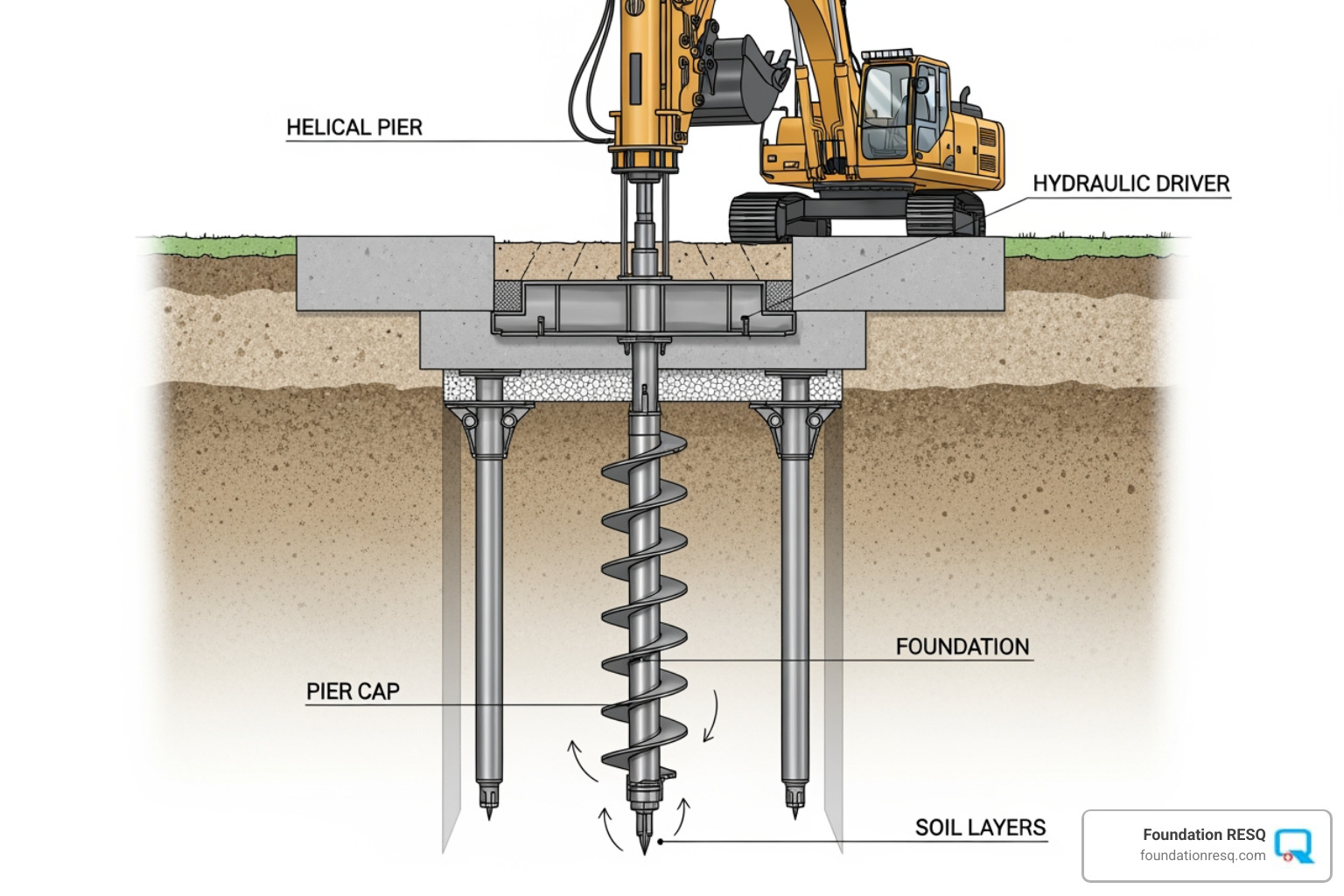
Steel piering systems act like anchors, driven deep into the earth to reach bedrock or stable soil. They are less disruptive than mass concrete and can both stabilize and lift settled foundations.
- Push Piers: Steel pipes are hydraulically driven straight down, using the home’s weight for resistance. Once they reach stable strata, brackets are attached to the foundation, allowing hydraulic equipment to lift the structure back toward level.
- Helical Piers: These are essentially giant steel screws twisted into the ground. The helical plates provide excellent bearing capacity. This method is ideal for lighter structures or tight access situations and produces less vibration.
Both systems offer a precise, reliable, and permanent solution. Learn more on our Piering services page.
Innovative Solutions: Polyurethane Resin Injection
This minimally invasive technique is ideal for stabilizing loose soil, filling underground voids, and lifting settled concrete slabs. A two-part polyurethane foam is injected through small, penny-sized holes in the concrete. As it expands, it compacts the surrounding soil, fills voids, and gently lifts the slab. With over 25 years of experience using this technology, we know its benefits: there is minimal dust, the foam cures in as little as 15 minutes, and it’s an eco-friendly, long-term solution. It is particularly effective for sunken driveways, patios, and interior floors. Visit our Concrete Leveling Services page for more details.
Comparing Underpinning Methods
| Method | Cost (Relative) | Time (Relative) | Invasiveness | Best Use Cases |
|---|---|---|---|---|
| Mass Concrete | Moderate to High | Long | High | Heavy structures; broad support needed; very unstable shallow soils |
| Piering (Push/Helical) | Moderate | Medium | Medium | Residential/light commercial; lifting structures; reaching deep stable strata |
| Resin Injection | Low to Moderate | Short | Low | Soil stabilization; void filling; slab lifting; quick repairs; limited access |
A professional assessment is crucial to determine which technique is right for your home.
The Underpinning Project: From Inspection to Completion
With the right foundation experts underpinning services, the process of fixing your foundation is straightforward. At Foundation RESQ, we keep you informed every step of the way, from the initial assessment to the final cleanup.

Step 1: The Critical Foundation Assessment
The process begins with a professional inspection to identify the root cause of your foundation problems. Our team takes measurements, evaluates soil and drainage conditions, and documents all damage to create an accurate repair plan. We offer free inspections throughout Alabama, Florida, and Georgia to provide you with honest answers without obligation.
Step 2: The Role of the Structural Engineer
A structural engineer designs the specific underpinning solution for your home. They perform detailed load calculations and create blueprints that meet all local building codes. The engineer’s design ensures a precise, permanent repair, and their oversight during the project confirms the work is done to specification. Proper engineering is critical for effective foundation stabilization, as outlined in resources like FEMA’s Techniques for the Seismic Rehabilitation of Existing Buildings.
The Typical Underpinning Process
Once plans are approved and permits are secured, our team begins the work, which generally follows these steps:
- Site Preparation: We clear work areas and protect your landscaping.
- Excavation: Careful, precise digging is performed where needed for pier installation or concrete work.
- Pier/Pile Installation: Depending on the method, we drive steel piers to stable soil or pour new concrete footings.
- Lifting and Stabilization: We may use hydraulic lifting to gently raise the foundation. The new supports are then permanently connected to your foundation, transferring the load to stable ground.
- Site Cleanup: We backfill excavated areas and restore your property.
Understanding Project Costs and Duration
Cost: The price of an underpinning project is influenced by the scope of work, the chosen method, property access, and permit fees. Most projects range from $4,000 to $35,000, while more complex jobs can cost $40,000 to $80,000+. This investment protects your home’s value and structural integrity.
Duration: The on-site construction typically takes two to six weeks. However, the engineering and permitting process can take four to six months before work begins. It’s important to factor this preparatory phase into your timeline.
Choosing the Right Foundation Experts Underpinning Services
Choosing a contractor for your foundation is a high-stakes decision. You need foundation experts underpinning services you can trust to protect your home for decades. With over 20 years of serving homeowners in Alabama, Florida, and Georgia, we know what separates exceptional work from a mediocre repair.
Credentials and Experience to Look For
When vetting a company, look for a proven track record. Key qualifications include:
- Substantial Experience: Look for a company with 20+ years in business. Foundation RESQ has been in the field since 1991.
- Proper Credentials: Ensure they have any required certifications, like a Master Builder certification, which demonstrates a commitment to best practices.
- Licensing and Insurance: Always ask for proof of current liability insurance and workers’ compensation. This is non-negotiable and protects you from liability.
- Strong Warranties: A reputable company will offer a solid, transferable warranty on both materials and labor.
- Positive Referrals: A high rate of referral business is a strong indicator of customer satisfaction. Over 90% of our clients at Foundation RESQ come from referrals. Learn more on our About Us page.
Why Local Expertise Matters
Foundation repair is not one-size-fits-all; it’s highly dependent on local soil conditions. A local expert understands the challenges of the Southeast’s expansive clay soils and sandy coastal areas. They are also familiar with regional building codes and have an established reputation within the community, which ensures accountability. To see if we serve your area, please view our service area.
Questions to Ask Potential Contractors
Before hiring, ask these essential questions to ensure you’re choosing the right partner:
- “Are you licensed and insured in my state?”
- “Can you provide references or case studies of similar projects?”
- “Who will manage the project on-site, and what are their qualifications?”
- “What is your proposed solution, and why is it the best choice for my home?”
- “Will you provide a detailed, itemized written estimate?”
- “What does your warranty cover, and is it transferable?”
- “How will you minimize disruption to my property and daily life?”
- “What are your safety protocols for your crew and my property?”
- “How do you handle unexpected issues or changes during the project?”
A trustworthy contractor will welcome your questions and provide clear, honest answers.
The Long-Term Payoff: Benefits of Professional Underpinning
Investing in professional foundation experts underpinning services is about more than just patching cracks; it’s about securing your home’s future. The benefits include increased property value, lasting stability, and invaluable peace of mind. You can see the transformative results of our work on our Case Studies page.
Securing Your Investment and Increasing Property Value
Foundation problems can drastically reduce your home’s value and make it difficult to sell. Professional underpinning solves this by arresting settlement and halting further damage. In many cases, it can even lift the foundation back toward its original position. A properly repaired foundation, complete with engineering documents and a transferable warranty, becomes a major selling point, protecting and often increasing your property’s value.
How Underpinning Creates Lasting Stability
Underpinning provides a permanent solution by addressing the problem at its source. The primary mechanisms include:
- Transferring the Load: Underpinning transfers your home’s weight from unstable shallow soil to deep, load-bearing strata like bedrock. This bypasses the problematic soil layers entirely.
- Strengthening the Foundation: The new piers or concrete footings work with your existing foundation, reinforcing it against future movement.
- Improving the Soil: Techniques like polyurethane resin injection can also stabilize loose soil and fill voids, increasing the ground’s load-bearing capacity directly beneath your foundation.
The result is a foundation engineered to provide stability for the life of your home.
The Ultimate Benefit: Safety and Peace of Mind
A compromised foundation can create safety hazards, from tripping on uneven floors to threatening the home’s overall structural integrity. Underpinning eliminates these structural hazards, restoring a safe living environment. Perhaps the greatest benefit is the removal of the constant stress and worry that comes with foundation issues. Once the repair is complete, you can have confidence in your home’s stability and enjoy your space without anxiety. For related issues like bowing walls, we may also recommend solutions like Carbon Fiber Reinforcement to ensure total structural integrity.
Frequently Asked Questions about Foundation Underpinning
Here are answers to some of the most common questions we receive from homeowners in Alabama, Florida, and Georgia about foundation underpinning.
What is the difference between underpinning and house leveling?
Though often used interchangeably, these terms refer to different processes.
- Underpinning is a structural solution that strengthens and deepens a foundation to arrest settlement. It adds new support elements (like piers) to transfer the home’s weight to stable soil.
- House leveling (or slab jacking) focuses on correcting the position of a settled foundation or slab, often by injecting material like polyurethane foam to lift it.
Often, these processes are used together. Foundation experts underpinning services will first stabilize the foundation with underpinning, then use leveling techniques to bring the structure back to its original position.
How long does an underpinned foundation last?
A properly engineered and installed underpinning solution is a permanent repair designed to last for the life of your home. It is not a temporary patch; it’s an integral, long-term addition to your home’s foundation that provides stability for decades.
Can I live in my house during the underpinning process?
Yes, in most cases. Modern methods like piering and polyurethane injection are minimally disruptive, with most of the work occurring outside. While there will be some noise and designated work areas, your daily life inside the home should be largely undisturbed. Our team prioritizes clear communication to minimize any inconvenience and ensure your comfort and safety throughout the project.
Secure Your Home’s Future Today
Your foundation is the bedrock of your home’s safety and value. As we’ve covered, foundation experts underpinning services are not just about fixing cracks—they’re about providing a permanent solution that secures your peace of mind.
Foundation problems don’t fix themselves; they only worsen over time, leading to more extensive and costly repairs. The good news is that these issues are entirely fixable with modern solutions like precision piering and polyurethane injection that can permanently stabilize your home.
For over 20 years, Foundation RESQ has helped homeowners across Alabama, Florida, and Georgia protect their most valuable asset. Our customer-focused approach is simple: we provide a thorough free inspection, explain your options clearly, and deliver lasting, affordable solutions backed by solid engineering. We solve problems the right way, which is why over 90% of our clients come from referrals.
Don’t let foundation issues compromise your family’s safety or your financial investment. Take the first step toward a stable, secure home today.
Contact Us for a free inspection, and let our experienced team assess your foundation with no obligation. To learn more about our full range of solutions, Explore our Foundation Repair Services and find why homeowners throughout the Southeast trust Foundation RESQ.