
A foundation repair warranty covers the materials and workmanship used in your specific repair, for a term that depends entirely on the method your contractor used. That’s the short answer. The far more important answer is what you do next: before you sign anything, get the full written warranty document in hand and confirm, in plain language, whether it transfers to a future buyer and under what conditions.
Don’t accept a verbal promise or a marketing brochure that says “lifetime guarantee” in bold letters. Ask for the actual contract language. A manufacturer’s product warranty covers the piers or polymer itself; a contractor’s workmanship warranty covers their labor. Foundation RESQ, like any credible foundation repair company, should hand you both in writing, not promise them over a handshake.
Key Takeaways
A foundation repair warranty protects you only when its terms are in writing, its transfer rules are confirmed before you sign, and the contractor backing it has the longevity to honor it.
| Point | Details |
|---|---|
| Get it in writing | Never rely on verbal promises; request the full warranty document before signing any service agreement. |
| Match term to method | Pier systems often carry lifetime coverage; mudjacking and foam injection typically run 1 to 15 years. |
| Confirm transfer terms | Ask about notification windows, fees, and whether the term shortens for a second owner. |
| Maintain to stay covered | Keep gutters, grading, and drainage in the condition the warranty specifies to avoid claim denial. |
| Choose documented backing | Foundation RESQ pairs free inspections and financing with written, transferable warranties across its service area. |
Table of Contents
- What Foundation Repair Warranties Typically Cover
- Exclusions That Can Quietly Void Your Coverage
- Can You Transfer a Foundation Warranty When You Sell?
- Filing a Claim and Keeping Your Warranty Valid
- Questions to Ask Before You Sign Anything
- How Foundation RESQ Handles Warranty-Backed Repairs
- An Editorial Note on Trusting the Fine Print
- Get a Documented Warranty Before You Commit to Repairs
- Sources
- FAQ
What Foundation Repair Warranties Typically Cover
Coverage depends heavily on which repair method fixed your foundation. Push piers, helical piers, and steel piers are permanent structural fixes, so contractors back them with the strongest terms. Mudjacking and polyurethane foam injection are often less invasive and shorter-lived by design, so their warranties reflect that.
Here’s how coverage generally breaks down by repair type:
- Steel and helical piers: Often carry lifetime transferable workmanship warranties since the fix is meant to be permanent.
- Carbon fiber wall reinforcement: Usually covered for the life of the product against further bowing at the treated location.
- Polyurethane foam injection: Commonly 5 to 15 years, shorter because the material and application differ from pier systems.
- Mudjacking: Frequently the shortest warranty window, sometimes just 1 to 5 years, since the technique is more prone to settling again.
The manufacturer warranty and the contractor’s workmanship warranty aren’t the same document, and that distinction matters. If the piers themselves fail due to a defect, the manufacturer stands behind the product. If the installation was done incorrectly, the workmanship warranty is what protects you. A contractor who sells you a product warranty but skips the workmanship guarantee is only giving you half the protection you need.
Exclusions That Can Quietly Void Your Coverage
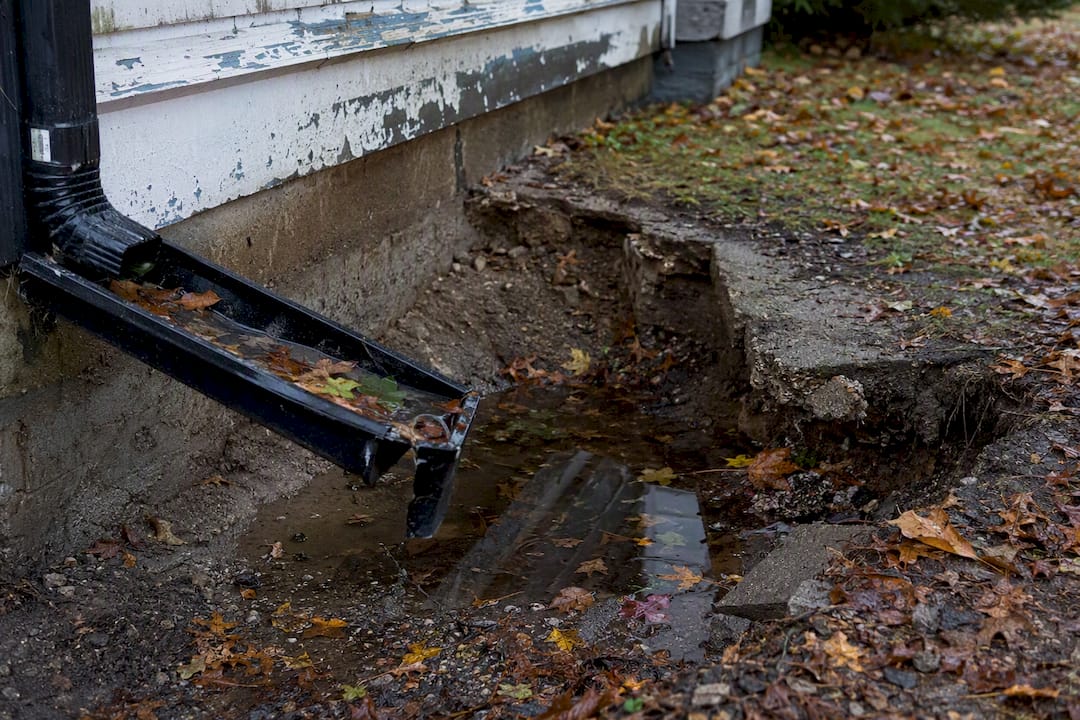
Every foundation repair warranty has limits, and most homeowners never read them until they’re filing a claim and getting denied. Standard exclusions include new movement outside the originally treated area, plumbing leaks, flooding, earthquakes, sinkholes, and other forms of catastrophic earth movement. Drainage and landscaping changes made after the repair often void coverage too, since altered grading can redirect water toward the foundation in ways the original fix never anticipated.
Watch for these red flags before you sign:
- Vague exclusion language that doesn’t define what counts as a “covered failure.”
- Pro-rated coverage that shrinks in value every year, so a “25-year warranty” pays out almost nothing by year 20.
- Required annual paid inspections just to keep the warranty active.
- Verbal promises with nothing matching in the written contract.
- A brand-new company offering an unusually long warranty with no financial backing to support it.
Drainage disputes are the most common flashpoint. A contractor fixes your foundation, then two years later you regrade your yard or let gutters clog, and the warranty gets denied because the contract required maintained drainage as a condition of coverage.
Pro Tip: Photograph your gutters, downspouts, and yard grading right after the repair is finished. That baseline record is your best evidence if a contractor ever tries to blame a maintenance issue that didn’t exist at installation.
Can You Transfer a Foundation Warranty When You Sell?
A transferable warranty is one of the strongest selling points a home can have, because it tells a buyer the structural risk has already been addressed and backed by a contract. Most transfers follow a similar pattern:
- Notify the contractor within the required window, often 30 to 90 days after closing.
- Pay any transfer fee, which varies by company and is sometimes waived entirely.
- Provide the original warranty document and proof of sale so the new owner is officially registered as the covered party.
Some warranties shorten the remaining term for a second owner, so never assume the transfer carries the exact same years of coverage. Sellers should package the original warranty paperwork with other disclosure documents at closing. A buyer who sees a documented, transferable warranty hesitates far less than one staring at a patched crack with no paperwork behind it.
Filing a Claim and Keeping Your Warranty Valid
Most warranty claims get denied not because the repair failed, but because the homeowner skipped a step the contract required. Here’s the sequence that actually works:
- Document the new symptom immediately with dated photos and a written description.
- Contact your contractor promptly rather than waiting to see if it “gets worse.”
- Bring in a structural engineer if your insurer is also involved in the claim.
- Submit the paperwork, photos, and any prior inspection reports together.
- Schedule the inspection and stay available for follow-up questions.
Warranties routinely tie coverage to homeowner maintenance duties that are easy to forget: functioning gutters and downspouts, positive grading away from the foundation, no unauthorized plumbing changes, and no third-party repairs to the covered area. Some contracts get surprisingly specific, requiring downspout extensions of four to six feet or a minimum grading slope. Miss that detail and you’ve handed the contractor a legitimate reason to deny the claim.
The pitfalls that sink claims most often: waiting weeks to report new cracking, letting a different company touch the repaired area, missing a registration deadline after a sale, or refusing a required inspection because it feels unnecessary.
Questions to Ask Before You Sign Anything
A warranty is only as good as the company standing behind it. Before signing a service agreement, ask for:
- The complete warranty document, not a summary sheet or sales flyer.
- A clear definition of “covered failure” so you know exactly what triggers a claim.
- Who honors the warranty if the company closes, since some programs use third-party insurance backing specifically to survive a contractor going out of business.
- The exact transfer steps and any associated fees.
- A written list of your maintenance obligations as the homeowner.
- A realistic timeline for how claims get inspected and resolved.
Trust signals worth weighing: how long the company has operated, industry affiliations, whether the repair system itself carries a manufacturer backing, and whether you get the written warranty before you hand over payment, not after. A 25-year promise from a company that opened its doors eight months ago is a marketing line, not a guarantee. Prefer documented terms and a company with a track record over a bigger number with nothing behind it.
How Foundation RESQ Handles Warranty-Backed Repairs
A warranty only protects you if the company behind it makes the process easy when something actually goes wrong. Foundation RESQ builds that into how it operates across North Florida, South Georgia, and Alabama:
- Free inspections before any contract is signed, so you know the scope of work before committing.
- Financing options that let homeowners choose the right repair method instead of the cheapest one.
- Documented case studies showing completed repairs and how warranty follow-up actually played out.
- Clear transfer support for homeowners planning to sell, including packaged paperwork at closing.
A repair is only as trustworthy as the paperwork behind it. When a warranty transfer is simple and the maintenance terms are spelled out clearly, homeowners stop worrying about the fine print and start trusting the fix.
An Editorial Note on Trusting the Fine Print
Most homeowners treat a warranty like an afterthought bundled into the repair price. That’s backward. The warranty is often the more consequential document, because foundation problems can resurface years after the original crew has moved on to other jobs. I’ve seen how often disputes come down to a single sentence about drainage maintenance that nobody read closely at signing.
Keep every warranty document, inspection photo, and maintenance record in the same folder you’d use for your home’s title paperwork. If you sell, that folder becomes part of your pitch, not paperwork nobody asks for.
— Kayle
Get a Documented Warranty Before You Commit to Repairs
Foundation RESQ gives you something a lot of contractors skip: the full written warranty in hand before you pay a dollar, not a sales pitch about “lifetime protection” with nothing to back it up. Every inspection is free, every repair method comes with clearly defined coverage terms, and every warranty is built to transfer cleanly if you sell down the road.
If cost is the thing holding you back from fixing a real structural problem, look at Foundation RESQ’s financing options before you decide to wait it out. Waiting rarely makes foundation issues cheaper to fix. Request your free inspection through the foundation repair services page, and ask directly for a sample warranty packet so you can see exactly what coverage and transfer terms look like before a single repair begins.
Sources
- Foundationcosts
- Does homeowners insurance cover foundation repair? | Forbes Advisor
- Does home insurance cover foundation repair? | Progressive
- Foundation Repair Warranty Guide | Attack A Crack
FAQ
Does Foundation Repair Come With a Warranty?
Yes, most professional foundation repairs include a written warranty covering materials and workmanship for the treated area, though exact terms vary by repair method and contractor.
Can You Live in Your House While the Foundation Gets Repaired?
In most cases, yes. Foundation repair work like pier installation or crack injection is typically done from outside or beneath the home, so residents can usually stay in place during the project.
How Long Should a Foundation Repair Last?
Pier-based repairs are designed to last the life of the home when installed correctly, while methods like mudjacking may need reassessment within several years depending on soil conditions.
Will Homeowners Insurance Pay for a Cracked Foundation?
Usually not for gradual settling. Insurance typically covers foundation damage only when caused by a sudden, covered peril like a burst pipe, not routine settling or earth movement, which is exactly what a foundation repair warranty is meant to address instead.