
A full waterproofing system costs between $3,000 and $30,000, depending on the method, basement size, and severity of the moisture problem. Interior systems sit at the lower end of that range, while exterior excavation projects push costs well past $10,000. Knowing what does full waterproofing system cost before you call a contractor puts you in a much stronger position to evaluate quotes, avoid surprises, and budget realistically. This guide breaks down both system types, the factors that move the price up or down, and the hidden expenses most homeowners miss.
What does a full waterproofing system cost in 2026?
A full interior waterproofing system averages $3,000 to $8,000, while exterior systems run $8,000 to $30,000 or more. That wide range reflects real differences in labor, materials, and the scope of work required. Interior methods manage water after it enters the foundation. Exterior methods stop water before it reaches the wall. The right choice depends on what is actually causing your moisture problem, not just on price.
Waterproofing system pricing also runs $10 to $35 per square foot, with basement size as the main driver because larger perimeters require more drainage footage and more labor hours. A 1,000-square-foot unfinished basement costs far less to waterproof than a finished 1,500-square-foot space with drywall and flooring that must be removed first. Regional labor rates, soil conditions, and local permitting requirements add another layer of variability on top of those base figures.
What are the typical costs for interior waterproofing systems?
Interior waterproofing is the industry standard for most residential seepage problems. It costs roughly 30–50% of what exterior waterproofing costs and installs in 1–3 days with minimal disruption to your home. The system works by collecting water that enters through the cove joint or wall cracks and routing it to a sump pump for removal.
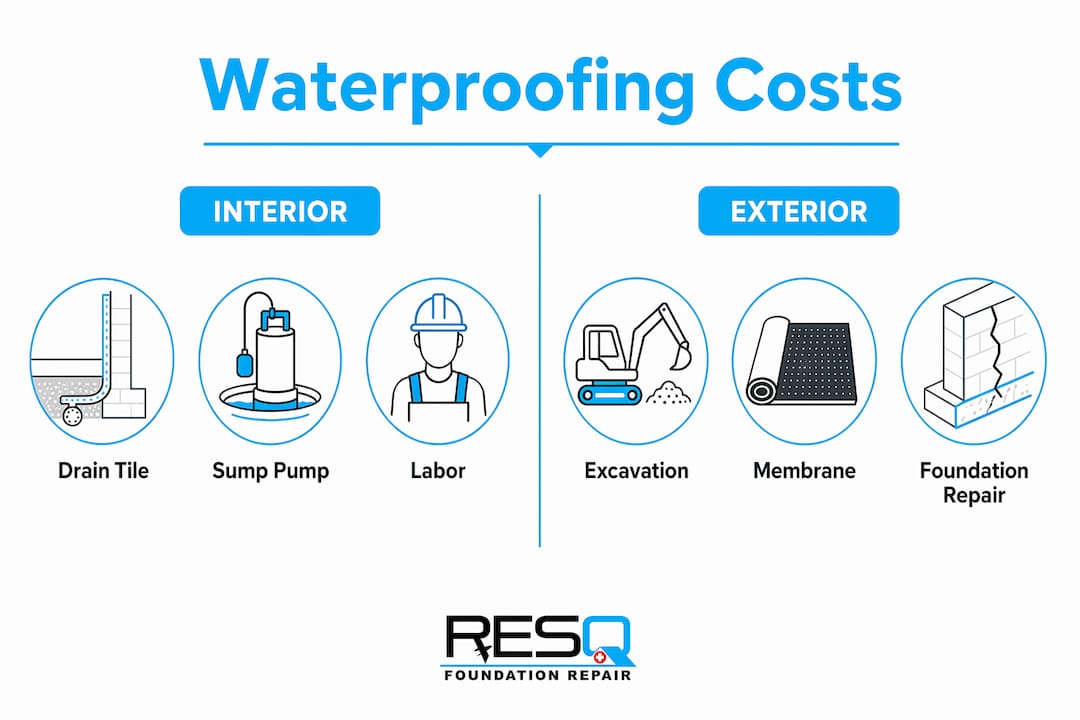
Core components and their costs
A complete interior system includes three main elements:
- Perimeter drain tile: Installed along the footing to collect seeping water and channel it toward the sump pit.
- Sump pump: The mechanical heart of the system, which pumps collected water out and away from the foundation.
- Wall vapor barriers: Plastic sheeting that directs wall seepage down into the drain rather than onto the floor.
These core components cover the full basement perimeter and handle the majority of residential water intrusion cases effectively.
Additional interior system costs
The base quote rarely covers everything. Budget for these add-ons:
- Battery backup sump pump: $600 to $1,200. Power outages happen exactly when storms are worst, so a backup unit is not optional in flood-prone areas.
- Finished basement removal: Drywall, flooring, and trim must come out before installation and go back in after. That restoration adds cost on top of the waterproofing itself.
- Discharge line extension: The pump needs a properly routed exit path for the water it removes.
Pro Tip: Ask your contractor to include a written line item for discharge line installation in the quote. Many homeowners discover this cost only after signing the contract.
| Component | Typical Cost Range |
|---|---|
| Interior drain tile system | $3,000–$8,000 |
| Sump pump (standard) | Included or $500–$1,000 |
| Battery backup unit | $600–$1,200 |
| Vapor barrier installation | Often included in system price |
| Finished basement restoration | 15–30% added to base cost |
How much does exterior waterproofing cost and when is it necessary?
Exterior waterproofing costs $8,000 to $30,000 or more, and the price climbs fast once excavation begins. The process requires digging down to the base of the foundation, applying a waterproof membrane to the exterior wall, installing a drainage board, and backfilling the trench. That work takes 1–2 weeks and involves heavy machinery, which means your yard, landscaping, and driveway access all take a hit.
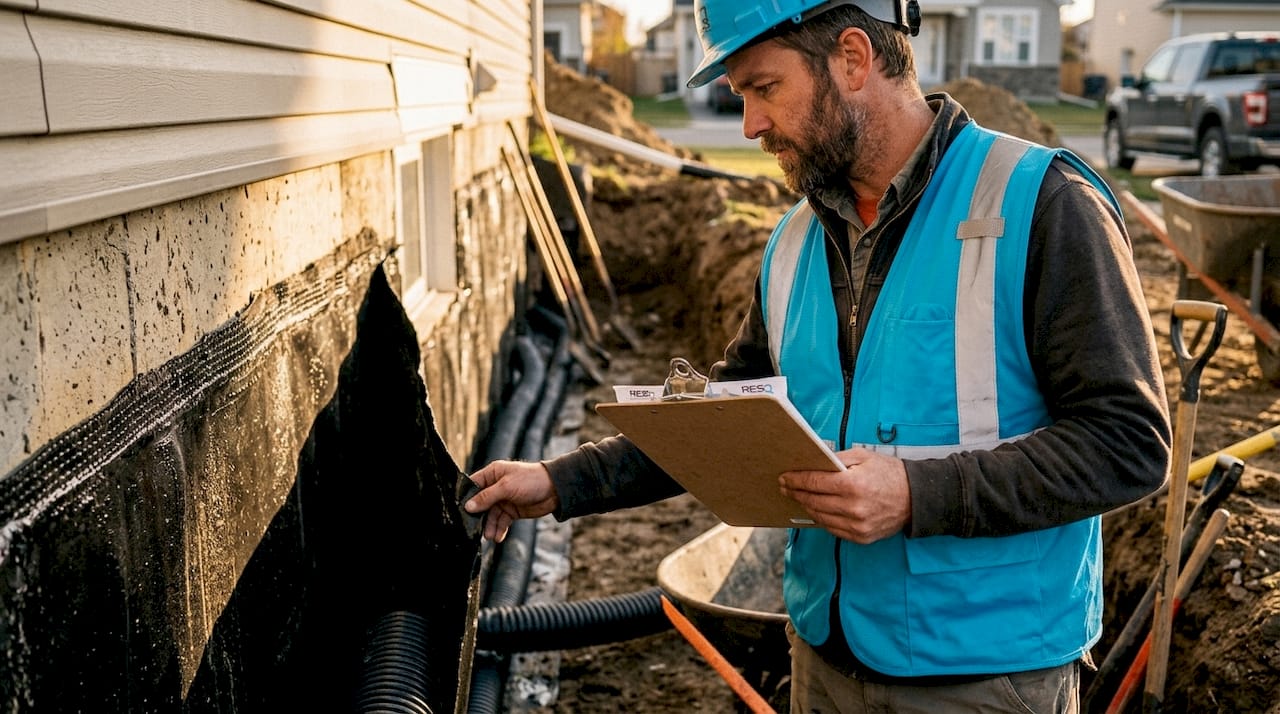
Rocky soil and deep foundations add thousands of dollars to excavation and membrane costs alone. A home with difficult access, mature landscaping, or a deep poured-concrete foundation will sit at the top of that price range. Landscaping removal and restoration after excavation can add $1,000 to $4,000 to the final bill.
When exterior waterproofing is the right call
Exterior waterproofing is not a luxury upgrade. It is a structural necessity in specific situations:
- Bowing or cracked foundation walls: Hydrostatic pressure pushing against the wall requires exterior membrane protection and sometimes structural stabilization before any waterproofing can work.
- Severe water intrusion through the wall face: Interior systems handle cove joint seepage well. Water coming through the wall itself often signals exterior failure.
- Foundation deterioration: Spalling concrete or failing block walls need exterior treatment to stop further damage.
- New construction or major renovation: Applying an exterior membrane during construction costs a fraction of retrofitting it later.
For foundations with severe structural issues, waterproofing alone is not enough. Structural stabilization must come first, which adds cost before the waterproofing work even starts.
Pro Tip: Get a structural engineer’s opinion before committing to exterior waterproofing. If the wall is bowing more than two inches, you may need wall anchors or carbon fiber straps before any membrane goes on.
What factors influence the total cost of a waterproofing system?
Basement size is the single biggest cost driver because every linear foot of perimeter requires drain tile, labor, and materials. A small 600-square-foot basement costs significantly less than a 1,500-square-foot footprint, even with identical soil and foundation conditions.
Foundation condition shapes the method choice, which in turn shapes the price. A foundation with minor cove joint seepage needs an interior drain system. A foundation with bowing walls and hydrostatic pressure needs structural reinforcement plus exterior waterproofing, which can push total costs well above $30,000 before restoration begins.
Regional labor rates and permitting add another significant variable. High-cost markets or union labor areas can push costs 20–60% above national averages. Urban permits and inspections add both time and money to any project. Soil type matters too. Clay-heavy soil retains water and creates sustained hydrostatic pressure, which demands a more powerful sump pump and may require soil stabilization work.
Finished basements cost 20–30% more to waterproof because contractors must remove and reinstall drywall, flooring, trim, and sometimes cabinetry. That removal and restoration is labor-intensive and often underestimated in early budget conversations. Homeowners who skip this line item in their planning routinely find their final bill far exceeds the initial quote.
Pro Tip: Measure your basement perimeter before calling contractors. Knowing the linear footage lets you compare quotes on a per-foot basis, which makes it much easier to spot outliers.
What additional costs should homeowners expect after installation?
Restoration costs are the most commonly missed budget item in waterproofing projects. Replacing drywall, flooring, and cabinetry after an interior system installs adds 15–30% to the total project cost. A $6,000 waterproofing job can become a $7,500 to $8,000 project once the basement is put back together.
Here is a realistic list of post-installation expenses to budget for:
- Drywall, flooring, and trim restoration: $1,000 to $3,000 or more depending on finish level and basement size.
- Battery backup sump pump: $600 to $1,200 if not included in the original system quote.
- Landscaping repair after exterior excavation: $1,000 to $4,000 depending on what was removed and what needs replanting or regrading.
- Discharge line design and installation: Sump pump discharge lines must extend 10–20 feet from the foundation to prevent water from cycling back in. Routing this line properly through finished spaces or around landscaping adds cost.
- Annual maintenance: Sump pump testing, battery replacement, and drain flushing are ongoing costs that protect your investment.
Understanding what causes recurring basement water problems helps you anticipate whether your system will need upgrades over time. A properly designed system with a backup pump and correct discharge routing should last 10–25 years with routine maintenance.
Pro Tip: Ask your contractor whether the quote includes discharge line routing and finished material removal. These two items account for the majority of unexpected cost overruns on interior waterproofing projects.
Key Takeaways
A full waterproofing system costs $3,000 to $30,000 depending on method, basement size, foundation condition, and restoration needs, with interior systems offering the most cost-effective solution for most homeowners.
| Point | Details |
|---|---|
| Interior system cost range | Interior drain tile and sump pump systems average $3,000 to $8,000 installed. |
| Exterior system cost range | Exterior excavation and membrane systems run $8,000 to $30,000 or more. |
| Restoration adds 15–30% | Budget for drywall, flooring, and trim replacement on top of the waterproofing quote. |
| Regional costs vary widely | Labor rates and permitting can push costs 20–60% above national averages. |
| Discharge line is often missed | Sump pump lines must extend 10–20 feet from the foundation and add to total cost. |
What I have learned about waterproofing costs after years in the field
Most homeowners come to me after getting two or three quotes that vary by thousands of dollars. The confusion is understandable. Waterproofing contractors quote differently, scope differently, and sometimes leave out the same line items. Here is what I tell every homeowner who asks me to make sense of it.
Interior waterproofing handles the vast majority of residential moisture problems at a fraction of the cost of exterior work. If your walls are not bowing, your foundation is structurally sound, and you are dealing with seepage rather than wall failure, an interior drain system is almost certainly the right call. Spending $20,000 on exterior excavation when a $5,000 interior system would solve the problem is a real mistake I see homeowners make when they assume more expensive means more effective.
Exterior waterproofing earns its price tag only when the foundation itself is compromised. Bowing walls, active cracking under hydrostatic pressure, or deteriorating block foundations genuinely require exterior treatment. In those cases, skipping it to save money creates a much larger repair bill later.
The detail most people miss is restoration. Get a quote that explicitly covers finished material removal, reinstallation, and discharge line routing. A quote that omits those items is not a bargain. It is an incomplete number. Ask every contractor to break those costs out separately so you can compare apples to apples.
Finally, budget for the long term. A sump pump with a battery backup and a properly routed discharge line costs more upfront. It also protects your home during the storms that matter most. The interior waterproofing methods that last are the ones designed and installed with maintenance in mind from day one.
— Kayle
Foundationresq waterproofing services for Tallahassee homeowners
Moisture problems do not wait, and neither should your budget planning. Foundationresq offers basement waterproofing services tailored to the specific conditions of your home, with clear explanations of every system option before any work begins.
Foundationresq’s team assesses your foundation, identifies the source of moisture intrusion, and recommends the most cost-effective solution for your situation. Whether your home needs an interior drain system or a more involved exterior approach, you get a detailed quote with no hidden line items. Flexible financing options make it possible to move forward without putting the full project cost out of pocket at once. Contact Foundationresq for a free inspection and a quote you can actually compare.
FAQ
How much does a full basement waterproofing system cost?
A full basement waterproofing system costs between $3,000 and $30,000 depending on whether you need an interior or exterior system. Interior systems average $3,000 to $8,000, while exterior excavation projects run $8,000 to $30,000 or more.
Is interior or exterior waterproofing more affordable?
Interior waterproofing costs roughly 30–50% of what exterior waterproofing costs, making it the more affordable option for most homes. It is also faster to install, typically completing in 1–3 days versus 1–2 weeks for exterior excavation.
What hidden costs should I budget for in a waterproofing project?
Restoration of drywall, flooring, and trim adds 15–30% to the base waterproofing cost. Discharge line installation, battery backup sump pumps ($600 to $1,200), and landscaping repair after exterior work are also commonly missed expenses.
Does basement size affect waterproofing system pricing?
Basement size directly drives waterproofing cost because larger perimeters require more drain tile, more labor, and more materials. Pricing typically runs $10 to $35 per square foot, so a larger or finished basement costs significantly more to waterproof.
When is exterior waterproofing worth the higher cost?
Exterior waterproofing is necessary when foundation walls are bowing, cracking under hydrostatic pressure, or structurally deteriorating. In those cases, an interior system alone cannot stop the damage, and exterior membrane protection becomes the only effective solution.