Your foundation repair isn’t just a purchase of steel and labor; it’s a strategic investment in the very ground beneath your Tallahassee home. It’s natural to feel a sense of dread when you see cracks in your drywall or doors that won’t shut, especially when you’re worried about an unpredictable final bill. You want a solution that stops the settling for good, but you don’t want to be misled by technical jargon or “cheap” fixes that don’t last. We understand that your home is your most significant asset, and protecting its structural integrity is a serious responsibility that requires a steady, expert hand.
This guide will clarify the helical pier installation cost by breaking down the real-world variables that dictate a professional project’s budget. You’ll learn how the unique soil profiles in Leon County and the requirements of the 8th edition of the Florida Building Code influence the scope of your repair. We’ll explore why installation depth is the primary driver of stability and how to evaluate a quote based on long-term value rather than just the bottom line. By the end, you’ll have the confidence to move forward with a permanent remedy that serves as a final line of defense for your property.
Key Takeaways
- Learn why the depth of stable soil beneath your Tallahassee home is the most critical factor in determining your final project quote.
- Understand how per-pier pricing and depth variables combine to determine your total helical pier installation cost for permanent structural stabilization.
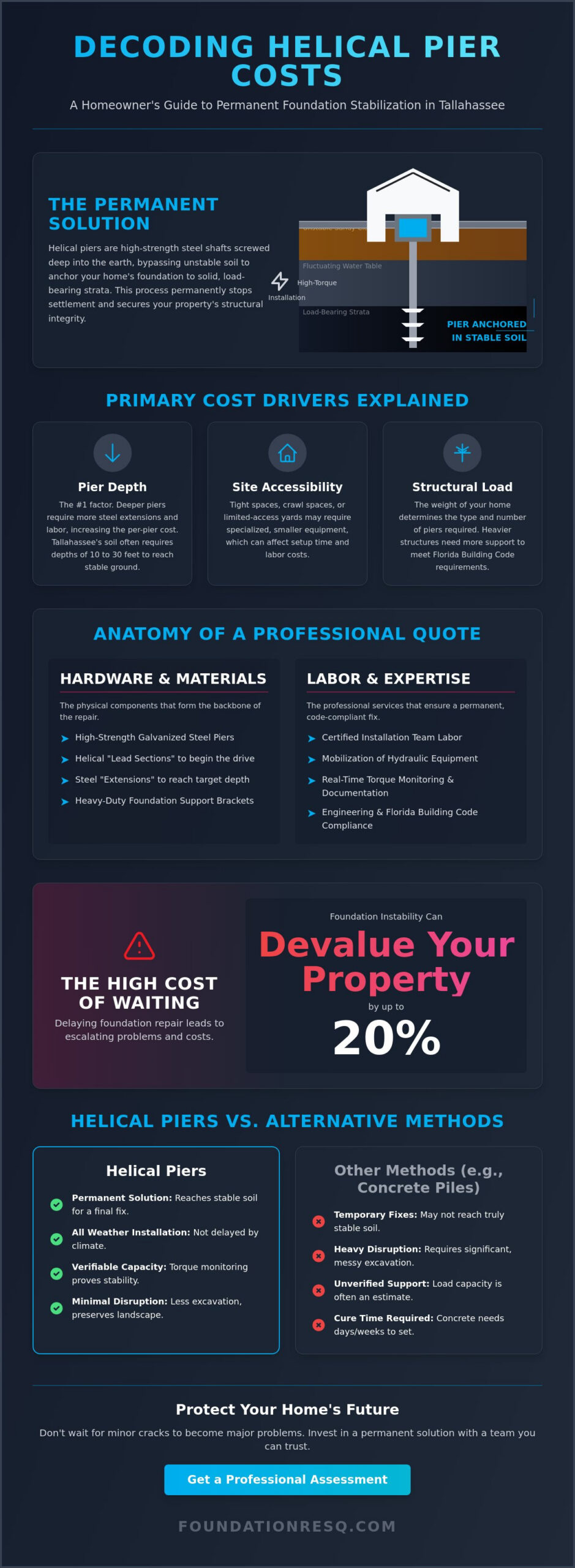
- Discover the financial risks of delaying repairs, including how foundation instability can devalue your property by up to 20 percent.
- Compare helical piers against alternative methods to see why they are often the most reliable solution for the variable soil conditions in Leon County.
- Gain clarity on the installation process so you can distinguish between a quick fix and a professional, code-compliant structural remedy.
Understanding Helical Pier Installation Costs in 2026
The primary way foundation experts stabilize a sinking home is through the use of helical piles, often referred to as helical piers. These are high-strength steel shafts featuring helical plates that act like screws, allowing them to be driven deep into the earth until they reach load-bearing strata. When you begin researching the helical pier installation cost, you’ll find that the industry almost exclusively uses a “per pier” pricing model. This approach is the most transparent way to handle the geological variability of Tallahassee soil, ensuring you only pay for the structural support your specific home requires. It accounts for the fact that one side of your house might sit on stable ground while the other requires deep intervention.
A comprehensive quote for foundation repair is different from a simple hardware purchase. While you can find the price of raw steel components online, an installed price includes the engineering, specialized equipment, and professional labor required to secure your home’s future. The final investment is dictated by the depth required to reach “torque,” which is the measurable resistance that proves the pier can support the weight of the structure. In Leon County, where soil conditions can shift rapidly, this precision is what separates a permanent remedy from a temporary fix.
What is Included in a Professional Quote?
A professional quote covers more than just the steel driven into the ground. It begins with mobilization, which involves transporting heavy hydraulic machinery and specialized rigs to your property. The quote also includes the high-strength galvanized steel pier sections and the heavy-duty foundation brackets that transfer the weight of your home onto the piers. Perhaps most importantly, it covers the labor of a certified installation team. These experts perform real-time torque monitoring during the drive process, documenting the exact capacity of every pier to ensure it meets the requirements of the 8th edition of the Florida Building Code.
Hardware vs. Installation Labor
The expense of a project is split between physical materials and the technical labor required to install them. Hardware costs include the “lead section,” which features the helical blades, and any necessary “extensions” used to reach the required depth. Because Tallahassee’s sandy clay often requires piers to reach depths of 10 to 30 feet, the number of extensions used can vary between pier locations. The labor portion of the helical pier installation cost reflects the use of specialized hydraulic equipment. This machinery is necessary to provide the massive rotational force required to screw the piers into the ground without disturbing the surrounding landscape or damaging the existing foundation.
Key Factors That Drive Your Foundation Repair Quote
Every home in Leon County sits on a unique geological footprint. While two houses might look identical from the street, the helical pier installation cost for each can vary significantly based on the physical realities of the property. Engineers and technicians don’t use a one-size-fits-all approach because the solution must be tailored to the specific weight of the building and the soil conditions beneath it. Factors like site accessibility, structural load, and the depth of stable soil layers are the primary drivers of your final project investment.
Site accessibility is a practical factor that often influences labor requirements. If a foundation requires stabilization in a confined crawl space or a narrow side yard with limited clearance, technicians must use smaller, more specialized hydraulic rigs. These scenarios often require additional setup time and manual effort compared to an open, accessible exterior wall. This precision work ensures that the repair process doesn’t cause collateral damage to your landscaping or existing structures.
Tallahassee Soil and Pier Depth
Tallahassee is known for its sandy clay soils and a fluctuating water table, which can create pockets of instability. To provide a permanent remedy, piers must bypass these soft upper layers to reach competent, load-bearing soil. This Helical Pile Foundation Guide explains how reaching these specific strata is essential for structural integrity. Most installations begin with a lead section, but if stability isn’t found at the initial depth, technicians add extensions, typically in 5 to 7-foot increments. The ‘Depth Factor’ means one pier might find stability at 15 feet while another on the same property requires 30 feet to achieve the necessary torque.
Structural Load and Pier Diameter
The weight of your home dictates the grade and diameter of the steel shafts used. A multi-story brick home exerts far more pressure than a single-story frame structure, requiring larger diameter piers or more frequent spacing to safely distribute the weight. Technicians monitor torque levels throughout the drive process because higher torque readings correlate directly to a higher load-bearing capacity. If your structure has high load requirements, the helical pier installation cost will reflect the need for these heavy-duty materials and the engineering oversight required to install them. Selecting the right foundation repair strategy is the best way to ensure your home remains a safe and stable environment for decades.
Comparing Helical Piers to Alternative Stabilization Methods
Choosing a stabilization method involves balancing the initial budget against the performance of the repair over time. While the total helical pier installation cost might be slightly higher than some alternatives, the engineering advantages often justify the difference. Helical piers provide active lift, which allows technicians to potentially restore a home’s level rather than just halting further movement. This mechanical advantage is particularly useful in Tallahassee, where soil conditions vary from one city block to the next. By using hydraulic power to rotate the pier into the earth, we ensure the structure is anchored to deep, competent strata.
The technical differences between helical piers vs push piers are significant for residential applications. Push piers rely on the structure’s own weight to drive the steel into the ground. If you are dealing with a lighter structure like a sunroom, a deck, or a chimney, push piers may not be an option because the building lacks the mass required for installation. Helical piers thrive in these scenarios because their screw-like design allows them to be installed independently of the building’s weight. Homeowners should understand that the 10-15% price delta often represents the difference between a specialized tool and a general one.
The True Cost of Concrete Underpinning
Older methods like concrete underpinning or “pressed pilings” are frequently marketed as budget-friendly options. However, these methods often fail in Florida’s unique environment. Concrete blocks are passive. They sit in the same unstable upper soil that caused the initial problem. These heavy blocks can actually increase the stress on the soil, leading to further sinking over time. When these blocks fail, the homeowner is forced to pay for a second, more intensive repair. This is why steel piers are the primary choice for professional foundation repair in Tallahassee. They offer a permanent remedy that protects the home from future soil movement and environmental shifts.
Investing in a steel-based solution is a strategic decision. While a “cheap” fix might seem attractive today, the cost of repeating a failed repair is always higher than doing it correctly the first time. Steel piers reach the load-bearing strata that shallow concrete simply cannot access, providing the durability required for North Florida’s climate. If you’re noticing signs of settlement, choosing a method backed by precision engineering is the most reliable way to protect your property value. Homeowners who want to understand all of their options should review the available permanent foundation repair solutions before committing to any single approach.
The ROI of Structural Stabilization: Long-Term Value vs. Upfront Expense
Viewing the helical pier installation cost as a long-term investment rather than a one-time expense is essential for protecting your home’s equity. In the Tallahassee real estate market, foundation instability is a significant red flag that can devalue a property by 15% to 20% according to many real estate professionals. Buyers today are well-informed and usually hire inspectors who are trained to spot the subtle signs of settlement, such as stair-step cracks in brickwork or uneven flooring. Addressing these issues proactively ensures that you maintain the full market value of your asset while providing peace of mind for your family.
Beyond the immediate resale value, the cost of inaction is a primary concern for homeowners. Foundation movement rarely remains isolated; it creates a ripple effect throughout the entire structure. When a corner of your home sinks, it puts immense stress on the framing, plumbing lines, and roofing system. Ignoring the problem today often leads to much larger bills for interior restoration and utility repairs tomorrow. When evaluating the total helical pier installation cost, consider the savings generated by avoiding these secondary repairs. Professional stabilization serves as a protective barrier, stopping this cycle of damage before it spreads.
Impact on Property Resale Value
A home inspection report that mentions structural movement can derail a sale or lead to aggressive price negotiations. To facilitate a smooth closing, most lenders and buyers require a certified engineer’s report and a transferable lifetime warranty. Providing documentation that the foundation has been permanently stabilized with helical piers transforms a potential liability into a verified structural upgrade. It gives future owners the confidence that the home sits on a secure, engineered foundation that meets the 8th edition of the Florida Building Code, which is a significant selling point in Leon County.
Preventing Secondary Damage Costs
The hidden expenses of a shifting foundation often manifest as cracked ceramic tiles, warped hardwood floors, and separated chimneys. These cosmetic issues are expensive to fix and will simply return if the underlying cause isn’t resolved. By anchoring the building to deep, load-bearing soil, helical piers arrest further structural decay and prevent the escalating costs of cosmetic and functional interior repairs. If you are concerned about the health of your home, you should request a professional foundation evaluation to understand your specific needs. Many homeowners find that exploring structural health solutions now is far more affordable than managing the extensive secondary damage that occurs when repairs are delayed.
Professional Installation in Tallahassee: What to Expect from Foundation ResQ
Choosing the right partner for your project is just as important as the materials used. At Foundation ResQ, we combine precision engineering with a deep understanding of Tallahassee’s unique geological challenges. While the helical pier installation cost is a significant consideration for any homeowner, the value of a professional, code-compliant installation cannot be overstated. We focus on providing a methodical, thorough service that treats your property with the respect it deserves, ensuring that the final remedy is both effective and long-lasting.
Our teams prioritize minimal landscape disruption throughout the process. Unlike industrial contractors who might use heavy tracked vehicles that tear up turf, we use specialized equipment designed to access tight residential spaces with surgical precision. This approach protects your gardens and walkways while we focus on the structural health of the building. By the time we finish, the only evidence of our work is a stable, secure foundation that no longer threatens the integrity of your home’s interior or exterior.
Our Step-by-Step Installation Process
The process begins with careful site preparation and localized excavation to expose the foundation footing where each pier will be attached. Next, we use hydraulic machinery to advance the pier into the ground. During this phase, we monitor torque levels in real-time to verify that each pier has reached the necessary load-bearing capacity as dictated by the weight of your home. Finally, we attach a heavy-duty steel bracket to the footing and perform the structural lift or stabilization required to arrest further settlement. This methodical approach ensures every pier performs exactly as engineered.
Why Local Expertise Matters for Tallahassee Foundations
Navigating the 8th edition of the Florida Building Code requires a seasoned professional who understands local permit requirements and soil conditions. Homeowners should be aware that the City of Tallahassee charges a $55.00 foundation repair permit fee, while Leon County’s fee is $291.12. Our experience isn’t limited to residential work; we also specialize in foundation repair for commercial buildings, which gives us a broader perspective on large-scale engineering stability. As a Groundworks-backed company, we offer the resources of a national leader with the dedicated, neighborly service of a local expert.
If you’ve noticed signs of foundation failure, the most responsible next step is to seek professional guidance. A thorough assessment can determine the exact helical pier installation cost for your specific situation and provide a roadmap for restoration. You don’t have to guess about the safety of your home. Contact us today to schedule your structural evaluation and take the first step toward protecting your property’s future with a permanent stabilization remedy.
Secure Your Home’s Future with Professional Stabilization
Protecting your Tallahassee home requires more than just addressing the visible symptoms of settlement. It demands a permanent remedy that bypasses unstable soils to find true structural support. You now understand that the helical pier installation cost represents a strategic investment in your property’s longevity and resale value. By choosing a solution backed by precision engineering and local geological knowledge, you ensure that your home remains a safe and stable environment for your family.
Foundation ResQ provides the peace of mind that comes with Groundworks-backed structural integrity and the expertise of certified Tallahassee field technicians. Our work is supported by a lifetime transferable warranty, making your foundation repair a verified asset if you ever decide to sell. Don’t let uncertainty about the ground beneath you cause unnecessary stress or lead to expensive secondary damage. Schedule Your Free Foundation Inspection and Quote Today. We’re here to serve as your steady, local partner in structural restoration and protection.
Frequently Asked Questions
How many helical piers does a typical house need?
Most residential foundation repair projects in Tallahassee require between 5 and 10 helical piers to stabilize the sinking section of the home. The exact number is determined by the total weight of the structure and the length of the foundation wall that requires support. An expert evaluation is necessary to identify the specific placement needed to ensure permanent stability for your property.
Does homeowners insurance cover the cost of helical pier installation?
Standard homeowners insurance policies generally do not cover foundation repairs caused by soil settlement or earth movement. These issues are typically viewed as a maintenance concern rather than a sudden, covered peril. It’s best to review your specific policy for any riders or endorsements, but you should expect to handle the helical pier installation cost as a direct investment in your home’s structural health.
How long does the installation of helical piers take?
The installation process for a standard residential home is efficient and typically takes between 1 and 3 days to complete. Because these piers are mechanically driven into the earth, there is no need to wait for concrete to cure. This allows our team to stabilize or lift the structure immediately after the piers reach the required load-bearing depth.
Can helical piers be installed in any weather conditions?
Yes, we can install helical piers in almost any weather, including the frequent rain and high humidity found in North Florida. The hydraulic drive process isn’t affected by wet soil or temperature fluctuations. This reliability ensures that your foundation project can stay on schedule regardless of the season or daily forecast.
Is there a difference in cost between residential and commercial helical piers?
Commercial projects often involve significantly higher structural loads and require larger diameter steel shafts and specialized brackets. These heavy-duty material requirements and the need for more intensive engineering oversight mean the helical pier installation cost for commercial buildings is typically higher than standard residential applications. Each project is quoted based on the specific load requirements of the building.
Will installing helical piers damage my landscaping or driveway?
We prioritize protecting your property by using compact, specialized machinery designed to navigate residential yards with minimal impact. While we must perform localized excavation at each pier site to expose the foundation footing, our team works carefully to preserve your lawn and landscaping. We focus on a clean installation process that leaves your property in excellent condition once the work is finished.
What is the typical warranty for a helical pier system in Florida?
Professional foundation stabilization should always be backed by a long-term guarantee of performance. Foundation ResQ provides a lifetime transferable warranty on our helical pier systems. This warranty stays with the structure, providing a significant selling point for future buyers and ensuring that the structural remedy remains a permanent asset for the home.
Do I need a structural engineer to sign off on the pier installation?
Yes, the 8th edition of the Florida Building Code requires a building permit and professional engineering oversight for foundation repairs. A licensed structural engineer must review the installation plan and verify that each pier has reached the necessary torque to support the home’s weight. This official sign-off is essential for code compliance and ensures the safety of the stabilization work.