
Why Your Foundation Needs the Right Support System
Helical pier installation is a proven foundation repair method using steel shafts with helical plates (like large screws) to transfer your home’s weight from weak soil to stable, load-bearing soil or bedrock.
Foundation settlement occurs when the soil beneath your home can no longer support its weight. You’ll notice warning signs like wall cracks, sticking doors and windows, or sloping floors. These aren’t just cosmetic issues—they’re signs your home is losing its structural support.
Helical piers solve this by acting like underground stilts, anchoring deep into stable soil layers. The helical plates work like a screw, creating solid bearing surfaces as they are driven down. Once installed, these piers immediately support your home’s weight with no curing time.
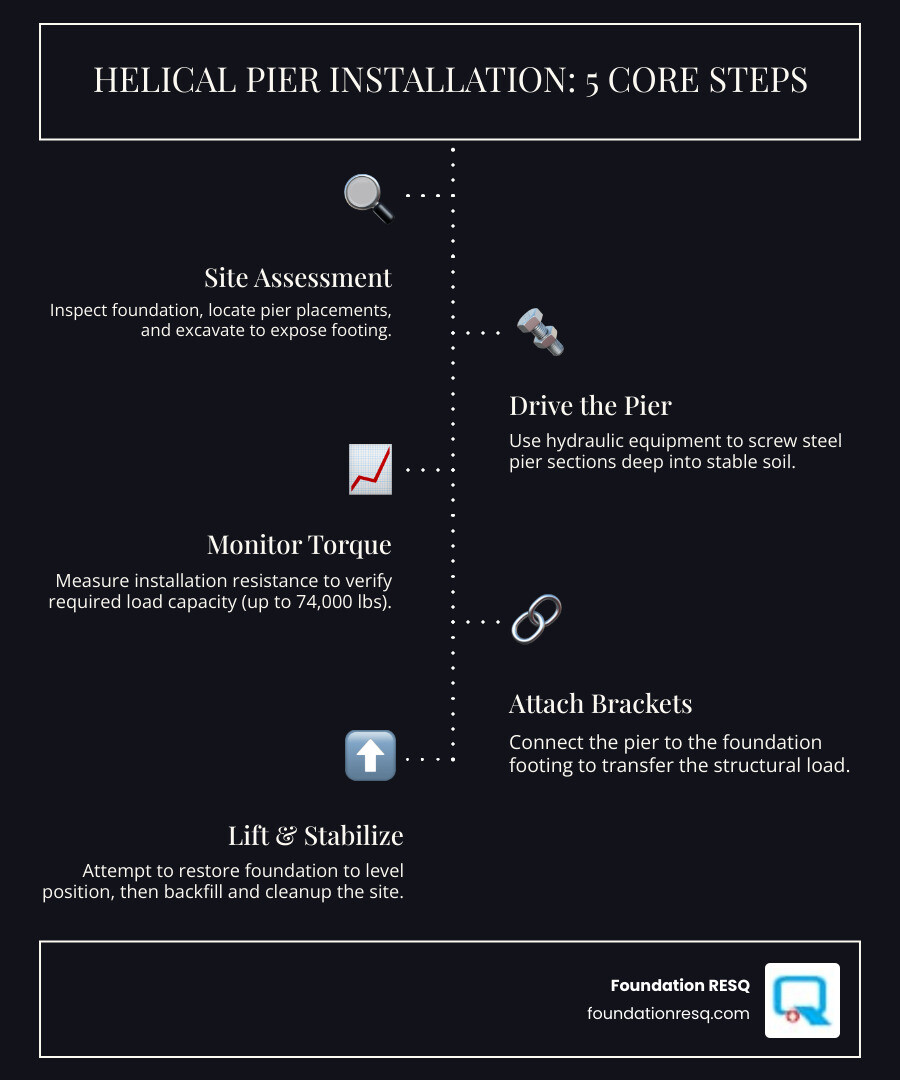
The process involves five core steps:
- Site Assessment & Excavation
- Driving the Pier into stable soil
- Monitoring Torque to verify load capacity
- Attaching Brackets to the foundation
- Lifting, Stabilizing & Cleanup
Most helical piers reach depths of 10 to 25 feet, and installation typically takes just days. They work in almost any weather and have a minimal environmental footprint.
I’m Kayle Vernon, founder of Vernon Enterprises. Over the past decade, I’ve helped countless property owners with foundation solutions, including helical pier installation. Whether you have a settling foundation or are planning new construction on challenging soil, this guide will walk you through how professionals install helical piers.
Understanding Helical Piers: The Modern Foundation Solution
Think of a screw versus a nail. A nail is forced in, but a screw threads itself in, creating a much stronger grip. That’s how helical pier installation works. A helical pier is a steel shaft with spiral plates (helices). Using hydraulic equipment, we rotate the pier into the ground, and the helices pull it downward, anchoring it deep into competent soil or bedrock. This process transfers your home’s weight from weak surface soil to stable ground below, providing a solid, lasting foundation.
For a closer look at how our solutions work, check out our Piering options.
When you compare helical piers to traditional concrete footings, the advantages become crystal clear:
| Feature | Helical Piers | Traditional Concrete Footings |
|---|---|---|
| Installation Time | Hours or days | Days to weeks (requires excavation, rebar, pouring, curing) |
| Soil Disturbance | Minimal impact on landscape; small footprint | Significant excavation; large footprint |
| Cost | Average $900-$1,300 per pier ($10-$30/linear ft) | Initially cheaper per footing, but higher labor/material for large projects |
| Weather Dependency | Can be installed in almost any weather condition | Often delayed by rain, freezing temperatures, or high humidity |
| Load-Bearing | Immediate load-bearing capacity | Requires curing time (days to weeks) before bearing load |
| Environmental Impact | Minimal; can be removed and repurposed | More disruptive; concrete waste |
| Versatility | Effective in unstable, water-saturated soils; limited access | Less effective in poor soils; requires open access |
Key Advantages Over Traditional Methods
Working throughout Alabama, Florida, and Georgia, we’ve seen how helical piers outperform traditional methods in our region’s challenging soil. Key benefits include:
- Immediate Load-Bearing Capacity: Piers support your home’s full weight the moment they are installed, eliminating the weeks of waiting for concrete to cure.
- Minimal Excavation: The process requires only small access points, keeping your lawn and landscaping largely intact.
- All-Weather Installation: Helical piers can be installed year-round in nearly any weather, keeping your project on schedule.
- Environmentally Friendly: Piers can be removed and reused, leaving a minimal environmental footprint with no concrete waste.
- Versatility for Limited Access: Our compact hydraulic equipment can operate in tight spaces like crawl spaces where traditional machinery can’t go.
Learn more about how these advantages apply to your specific situation through our Foundation Repair Services.
When Are Helical Piers the Right Choice?

Helical piers are ideal for many situations we see across the Southeast, especially:
- Expansive Clay & Poor Soils: Common in Alabama, Florida, and Georgia, these soils cause foundation movement. Helical piers bypass these unstable upper layers to anchor in solid ground below and are also effective in loose fill, organic layers, and water-saturated soil.
- New Construction: Installing helical piers from the start on challenging ground prevents future settlement issues.
- Existing Foundation Repair: For homes with settlement signs like cracks or sticking doors, helical piers can stabilize and often lift the foundation.
- Lighter Structures: They are perfect for supporting decks, porches, and stairs, which may not be heavy enough for other pier types.
While driving piers through dense rock can be challenging, they are a superior solution for most foundation problems caused by problematic soils.
The 5 Essential Steps of Helical Pier Installation
Helical pier installation is precision work requiring professional expertise, specialized equipment, and adherence to engineering plans and safety protocols. Before our crew arrives, a structural engineer develops a custom plan for your home, followed by a permitting process that can take 4 to 12 weeks. Every installation we perform follows strict engineering specifications. If you’d like to see the process in action, check out this video showing the installation process.
Step 1: Site Assessment and Preparation
Before we install a single pier, our team conducts a thorough inspection of your home. We measure floor elevations and identify signs of settlement to determine precise pier placements. You’ll receive a detailed CAD drawing showing what’s happening beneath your home.
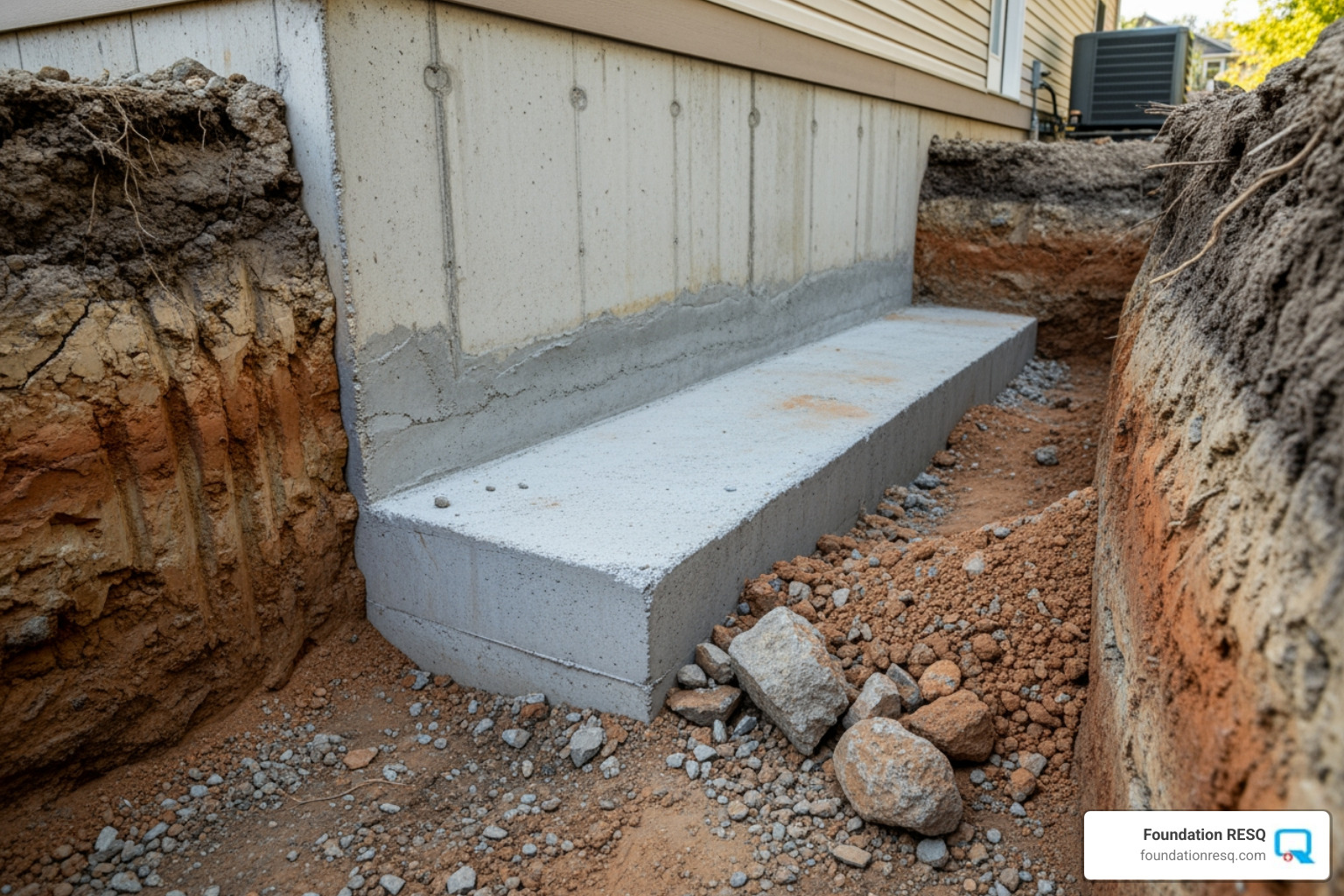
Once we’ve mapped everything out, we carefully excavate around your foundation at each pier location to expose the footing. These excavations are typically about 3×3 feet. We also smooth the footing surface to create a flat base for the bracket, which is essential for ensuring an even load transfer.
Step 2: Driving the Pier
Using specialized hydraulic equipment, we rotate the helical pier into the ground. We start with the lead section, which has the helical plates, positioning it exactly where the engineer specified. As the pier rotates, the plates pull it smoothly down into the earth. When the lead section is fully embedded, we add extension sections one at a time to go deeper.
The pier keeps going until it reaches competent, load-bearing soil or bedrock, which in our region is typically 25 to 30 feet deep but can be up to 100 feet. This process bypasses any weak soil layers so your home can rest on something solid.
Step 3: Monitoring Torque and Verifying Capacity
This step separates professional helical pier installation from guesswork. As each pier is driven, we constantly monitor the torque—the rotational force needed to advance it. There’s an empirical relationship between installation torque and the pier’s ultimate load capacity (Qult = Kt × T).
Our torque monitoring gauges give us real-time data, confirming that each pier is reaching the required load capacity. Every reading gets documented, creating a permanent record that each pier meets its engineered specifications. These piers are incredibly strong—some can handle up to 74,000 pounds—and this process verifies they can support your home permanently. For more information about how we ensure structural integrity, visit our Foundation Experts Underpinning Services page.
Step 4: Attaching Brackets and Transferring the Load
Once a pier reaches its predetermined depth and torque, we connect it securely to your foundation using a heavy-duty underpinning bracket. We cut the pier shaft to the right elevation and attach the bracket firmly to your home’s footing. This creates a seamless connection that transfers your home’s structural load directly to the deeply anchored pier.
For foundation repair projects, this step often involves carefully lifting the foundation using hydraulic devices. Our goal is “Maximum Practical Recovery”—lifting as much as safely possible without causing new problems. This process often helps close existing cracks and gets sticky doors and windows working smoothly again. Once the lift is complete, the brackets are locked into place, securing your home against further movement.
Step 5: Cleanup and Final Walkthrough
With all piers installed and brackets secured, we focus on leaving your property in great shape. We backfill all excavated areas, remove any debris, and restore your property to its original condition. Because helical piers require minimal excavation, this cleanup is usually quick and has minimal impact on your landscaping.
The final step is walking through everything with you. We’ll review the work, compare new floor elevation measurements to the initial readings, and visually confirm that your foundation is stabilized. This is our commitment to providing lasting solutions and genuine peace of mind. Want to see how we’ve helped other homeowners? Check out our Case Studies to learn more about our successful projects.
Planning Your Project: Equipment, Costs, and Engineering
A successful helical pier installation starts with careful planning and engineering. We handle these details, but understanding the process can help you feel confident.
The project timeline begins with engineering, which takes about 3 to 4 weeks. A structural engineer creates a custom plan, calculating pier placement, depth, and required load capacity. Once the plan is complete, the permitting phase begins, which can take 4 to 12 weeks depending on your location in Alabama, Florida, or Georgia. The engineer’s design considers your structure’s weight, soil reports, and local building codes to ensure a safe and effective repair.
Essential Equipment for Helical Pier Installation
Helical pier installation requires specialized equipment for precision work. The key machinery includes:
- Specialized Hydraulic Equipment: Powerful torque motors and drive heads rotate piers into the ground with controlled force. We have various sizes, from compact units for tight spaces like crawl spaces to heavy-duty excavator-mounted units for larger projects.
- Hand-held Hydraulic Equipment: For cramped quarters with low clearance, we use portable equipment that can access areas larger machines cannot.
- Torque Drive Heads and Pressure Gauges: This equipment provides our technicians with real-time feedback on the installation force, which translates directly to the pier’s load-bearing capacity. This data ensures your repair is built to last.
Factors Determining Pier Number and Depth
Engineering expertise is critical in determining the number and depth of piers. Several factors influence the design:
- Structure’s Weight: A heavier home requires more support. We typically space piers every six to nine feet for residential buildings, but heavier structures may need closer spacing to ensure a high Factor of Safety.
- Soil Conditions: Soil reports with SPT ‘N’ values (from Standard Penetration Tests) tell us how deep to go to reach competent soil that can support your home’s weight.
- Local Building Codes: We adhere to all local codes in Alabama, Florida, and Georgia, which set minimum requirements for safety and stability.
- Frost Line Depth: Though less of a concern in our warm climate, the top helical plate must be installed below the frost line to prevent movement from freeze-thaw cycles.
These factors inform the structural engineer’s specifications, which dictate the precise design for a long-lasting, stable solution.
Decoding the Costs of Helical Pier Installation
Foundation repair is an investment, and it’s important to understand the costs of helical pier installation. While a single pier costs more than a concrete footing, the overall project cost is often comparable due to faster installation and lower labor needs.
Key cost factors include:
- Number and Depth of Piers: More piers or deeper installations increase material and labor costs. Piers typically cost $10 to $30 per linear foot.
- Site Accessibility: Difficult terrain or tight spaces may require more time or specialized equipment, affecting the cost.
- Engineering and Permitting Fees: These are necessary expenses to ensure the project is designed correctly and meets local codes.
On average, expect to pay $900 to $1,300 per pier for residential projects. Heavy-duty piers can cost $2,000 to $3,000 per pier. A typical repair with five to ten piers usually costs between $5,000 and $30,000. We provide a detailed, no-obligation quote after our inspection, so you know exactly what to expect.
After the Install: Maintenance and Long-Term Peace of Mind
Here’s the good news: once your helical pier installation is complete, you can truly relax. These aren’t temporary fixes or band-aid solutions—they’re engineered for the long haul. Your helical piers are crafted from galvanized steel, which means they’re specifically treated to resist rust and corrosion even while buried underground. This protective coating allows them to maintain their structural integrity for decades, quietly doing their job of supporting your home year after year.
The longevity of helical piers is one of their most appealing features. Unlike some foundation solutions that may degrade or require replacement, properly installed helical piers provide a permanent foundation solution. Many systems come with substantial warranties—often 25 years or more—giving you documented assurance that your investment is protected. That’s the kind of peace of mind that helps you sleep better at night, knowing your home’s foundation is stable and secure.
Is Maintenance Required for Helical Piers?
This is one of the most common questions we hear, and the answer is wonderfully simple: helical pier installation systems require virtually no ongoing maintenance. There’s no annual servicing, no parts to replace, and no special treatments needed. Once they’re in the ground and supporting your home, they just keep working.
That said, we do recommend a few simple practices to keep your foundation in top shape. Take a walk around your home every few months and do a quick visual inspection of your foundation and interior walls. You’re looking for any new cracks or signs of movement—though these are rare with helical piers, it’s always smart to stay aware. External factors like significant landscaping changes, new drainage issues, or plumbing leaks could potentially affect other parts of your foundation, even if your piers are performing perfectly.
Pay attention to how your windows and doors operate. If they suddenly start sticking when they’ve been opening smoothly, or if you notice floors developing new slopes, it’s worth investigating. These could be signs of issues completely unrelated to your helical piers, but catching them early is always beneficial.
We also suggest scheduling annual foundation check-ups with our team. Think of it like a yearly physical for your home. During these quick assessments, we can compare current floor elevations to the measurements we took right after installation, ensuring everything remains exactly where it should be. These visits are typically brief, and they provide valuable documentation of your foundation’s continued stability. While problems with properly installed helical pier systems are uncommon, this proactive approach helps catch any potential concerns early—and gives you continued confidence in your home’s structural integrity.
Key Considerations for a Successful Installation
The difference between a helical pier system that performs flawlessly for decades and one that causes problems often comes down to how it was installed in the first place. Hiring certified installers is absolutely crucial. Our team at Foundation RESQ has extensive training in the specific techniques, equipment, and methodologies required for helical pier systems. This isn’t general construction work—it’s a specialized skill that demands precision and experience.
Equally important is working with a qualified structural engineer. This professional conducts independent analysis of your property, designs the optimal pier layout for your specific situation, and specifies the exact depths and load capacities each pier must achieve. They ensure every aspect of the installation complies with state and local building codes in Alabama, Florida, and Georgia. Their engineering plans become the blueprint for your foundation’s future stability.
Following local building codes isn’t just about checking boxes—it’s about ensuring your foundation repair is both structurally sound and legally compliant. These codes exist for good reasons, often reflecting decades of experience with regional soil conditions and construction challenges unique to our area.
Finally, verifying soil reports is fundamental to success. We never guess about what’s beneath your property. Detailed soil reports and Standard Penetration Test (SPT) data tell us exactly what soil conditions we’re dealing with, how deep we need to go, and what load-bearing capacity we can expect. This information directly informs our engineering designs, ensuring your piers reach the most competent bearing strata available.
When you partner with Foundation RESQ, you’re working with professionals who understand that every one of these considerations matters. We provide insights from our professional engineers and transparent communication throughout your project, because we believe that knowledge is power when it comes to foundation repair. Your home is your biggest investment, and protecting it with a properly engineered and expertly installed helical pier system means you’re choosing permanent stability and safety for years to come.
Conclusion
Your home deserves a foundation that won’t let you down—literally. Helical pier installation delivers exactly that: a modern, efficient, and remarkably durable solution whether you’re dealing with a settling foundation or planning new construction on challenging soil.
Think about what we’ve covered together. These engineered “underground screws” provide immediate load-bearing capacity the moment they’re installed—no waiting for concrete to cure, no delays to your life. They work in any weather, cause minimal disruption to your landscaping, and can reach stable soil or bedrock 25 to 30 feet below the surface (sometimes even deeper). That’s real, permanent stability anchored where it counts.
The process itself—from the initial site assessment through driving the piers, monitoring torque, attaching brackets, and lifting your foundation back toward level—is guided by precise engineering and executed by certified professionals who know exactly what they’re doing. This isn’t guesswork. It’s science, experience, and a commitment to getting your home back on solid ground for decades to come.
We understand that foundation problems can feel overwhelming. Those cracks in your walls, those doors that won’t close right, that nagging worry about your home’s value—they weigh on you. But here’s the good news: you don’t have to face this alone, and you don’t have to wonder if the solution will actually last.
At Foundation RESQ, we’ve built our reputation on customer-focused service, advanced techniques, and solutions that truly stand the test of time—all at prices that make sense for real families in Alabama, Florida, and Georgia. We’re not here to sell you something you don’t need. We’re here to protect your most valuable investment with honest recommendations and work that we stand behind.
We provide free, no-obligation inspections to assess your foundation needs. No pressure, no sales pitch—just a thorough evaluation and clear answers to your questions. You’ll know exactly what’s happening with your foundation and what options make the most sense for your situation and budget.
Don’t let foundation issues steal your peace of mind or compromise your home’s safety and value any longer. Contact us to stabilize your home’s foundation today, and let’s get your home back on the solid footing it deserves.