
A staged foundation repair plan is the practice of completing foundation restoration in deliberate phases rather than all at once, balancing structural urgency, budget, and timing to protect your home’s long-term stability. Most homeowners discover foundation problems gradually, through a sticking door here or a new crack there, and the good news is that gradual problems respond well to a phased approach to repairs. Understanding the foundation repair timeline, from the first inspection through post-repair monitoring, gives you real control over the process. This guide covers every stage, the common mistakes to avoid, and the maintenance strategies that keep your foundation solid for years.
What are the typical foundation repair stages and timelines?
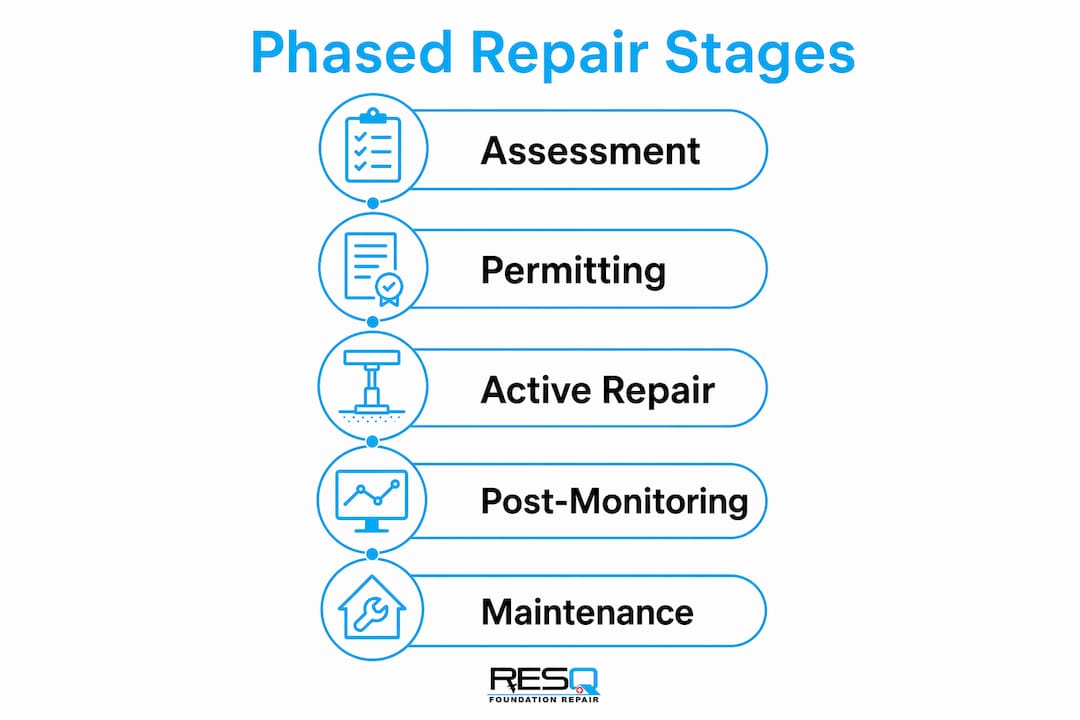
Foundation repair is a multi-phase lifecycle involving monitoring, stabilization, and restoration. Treating it as a single event is the most common planning error homeowners make. Each stage has a distinct purpose, and skipping ahead creates expensive problems.
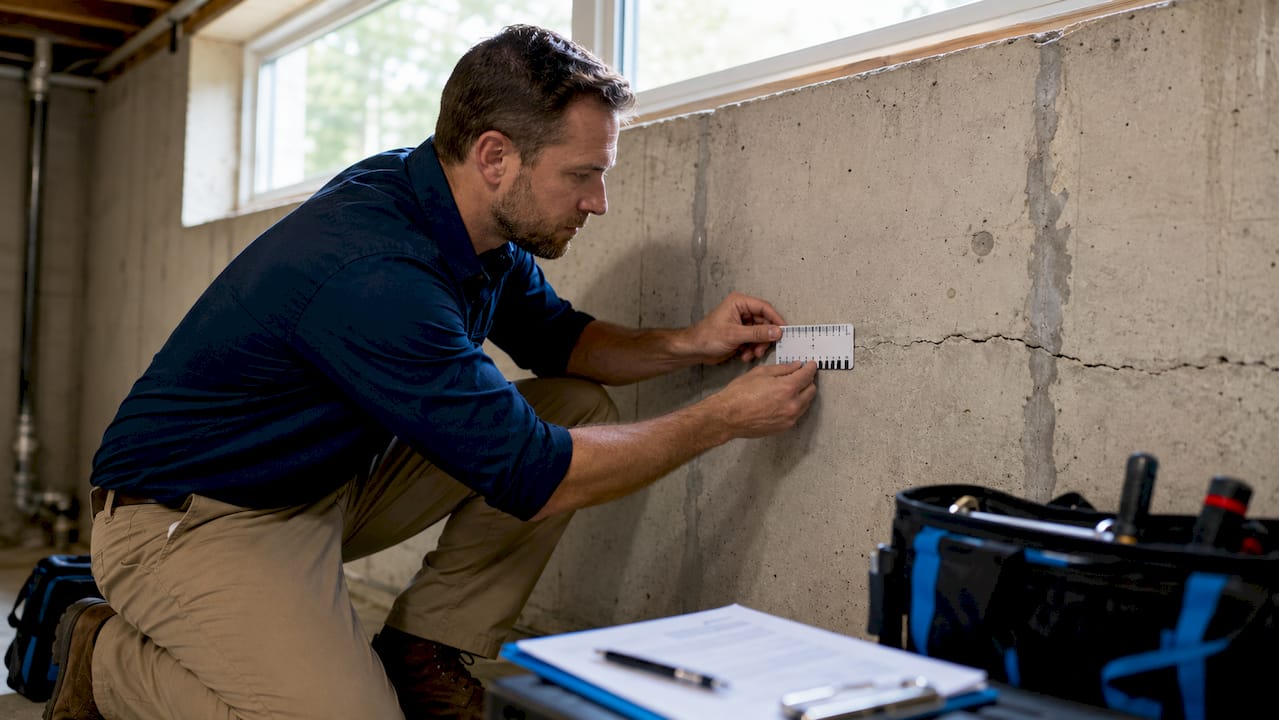
The first stage is assessment and inspection. A structural engineer or qualified contractor evaluates crack patterns, wall movement, and drainage conditions. This stage typically takes one to three days and produces a written scope of work that drives every decision that follows.
The second stage is permitting. Most foundation repairs require permits, especially structural underpinning, and waiting for permit approval adds approximately one to two weeks before work can begin. That delay is not wasted time. Use it to confirm your contractor’s schedule and prepare the work area.
The third stage is active repair. The active repair phase typically takes 1–3 days for most residential jobs. Minor crack injections finish in as little as two to four hours. Complex underpinning or pier installation can run a week or more. The full project timeline, from first inspection to permit closeout, ranges from 4–12 weeks depending on repair type and local permitting speed.
| Repair type | Active repair time | Full project timeline |
|---|---|---|
| Hairline crack monitoring | Ongoing (3–6 months) | No permit required |
| Crack injection | 2–4 hours | 2–4 weeks |
| Pier installation | 1–3 days | 6–10 weeks |
| Structural underpinning | 1 week or more | 8–12 weeks |
The fourth stage is post-repair monitoring. Post-installation monitoring lasts 30–90 days as the structure settles before cosmetic restoration and permit closeout. Skipping this window is a mistake that leads to re-cracking.
Pro Tip: Apply for permits the same week you receive your contractor’s written scope. That single step can shave two weeks off your foundation repair timeline without changing anything else.
How can you plan phased repairs to manage cost and safety?
The decision to phase repairs over time should be driven by damage severity, not budget alone. Structural safety always comes first. That said, a well-structured staged foundation repair plan lets you address the most urgent problems now while scheduling less critical work for a later phase.
The clearest trigger for immediate action is a crack wider than 1/8 inch, horizontal bowing in a wall, or active water intrusion. Hairline cracks may only require monitoring for 3–6 months before any intervention is needed. Stable hairline cracks are a watch-and-wait situation. Cracks that grow, or walls that bow, are not.
Early intervention pays off financially. Repairing at the first sign of 1-inch foundation bowing can save 75% of costs compared to waiting until the damage requires full replacement. That number reflects a real pattern: small problems fixed early stay small. Problems left alone compound into structural failures.
A sound phased plan follows this priority order:
- Stabilization first. Stop active movement before anything else. Pier installation, wall anchors, or carbon fiber straps belong in Phase 1.
- Drainage correction second. Poor grading and clogged gutters cause the soil movement that drives foundation shifts. Fix the source, not just the symptom.
- Crack repair and waterproofing third. Once the structure is stable and drainage is corrected, seal cracks and address moisture intrusion.
- Cosmetic restoration last. Drywall patching, floor leveling, and paint belong at the end, after the 30–90 day settling period.
Delaying stabilization to save money in the short term always costs more. Delaying cosmetic work, on the other hand, is smart planning.
Pro Tip: Get a written foundation repair cost breakdown for each phase before you start. Knowing the cost of Phase 2 and Phase 3 upfront lets you budget accurately and avoid surprises.
What maintenance strategies support long-term foundation stability?
Post-repair maintenance is not optional. The 30–90 day settling window after structural work is the period when the foundation adjusts to load transfers and finds its new stable position. Rushing cosmetic work during this window causes premature re-cracking as the structure adjusts. Patience here protects your investment.
Remote monitoring technology is changing what long-term foundation maintenance looks like. The industry is shifting toward remote monitoring systems that track structural movement after repairs, giving homeowners real data instead of guesswork. These systems reduce uncertainty and catch new movement before it becomes a new repair project.
Beyond technology, the most effective maintenance habits are straightforward:
- Maintain positive drainage. Grade soil away from the foundation at a slope of at least 6 inches over 10 feet.
- Keep gutters and downspouts clear. Direct water at least 4 feet away from the foundation.
- Monitor crack benchmarks. Mark existing cracks with pencil lines and dates. If a crack grows past the line, call a professional.
- Inspect crawl spaces seasonally. Moisture buildup in crawl spaces accelerates soil movement and wood rot.
- Avoid large plantings near the foundation. Tree roots and large shrubs draw moisture from soil unevenly, causing differential settlement.
| Maintenance strategy | Frequency | Purpose |
|---|---|---|
| Drainage inspection | Every spring and fall | Prevent soil saturation near foundation |
| Crack monitoring | Monthly for first year | Detect new or growing movement |
| Crawl space inspection | Twice yearly | Catch moisture and pest issues early |
| Remote monitoring review | Ongoing (if installed) | Real-time structural health data |
| Gutter cleaning | Twice yearly | Redirect water away from foundation |
The homeowners who avoid repeat repairs are the ones who treat maintenance as a year-round habit, not a one-time task after the contractor leaves.
What mistakes do homeowners make with phased foundation repairs?
The most expensive mistake in a staged repair plan is fixing the cosmetic damage before the structural problem. Patching drywall cracks or repainting walls while the foundation is still moving wastes money. Those repairs will fail within months.
The second most common mistake is skipping or rushing the permit process. Permits and inspections protect resale value by creating a documented history of compliant structural repairs. A home with unpermitted foundation work can face complications at closing. Buyers and their lenders notice missing permit history.
The following numbered list covers the most frequent errors and how to avoid each one:
- Cosmetic repairs before stabilization. Always complete structural work first. Drywall and paint are the final phase, not the first.
- Skipping permits. Pull permits for all structural work. The permit process averages 4–6 weeks and provides legal protection and resale documentation.
- Ignoring movement during monitoring. Check crack benchmarks monthly during the 30–90 day settling period. New movement means the repair scope may need adjustment.
- Delaying stabilization to save money. Small stabilization jobs become large replacement jobs when ignored. The cost curve accelerates sharply once bowing or settlement passes critical thresholds.
- Choosing a repair schedule without professional input. A qualified structural engineer or experienced contractor can identify which problems are urgent and which can wait. That judgment is not something a homeowner can reliably make alone.
- Neglecting drainage after repairs. The repair fixes the damage. Drainage fixes the cause. Without correcting drainage, the same forces that created the problem will create it again.
Avoiding these mistakes does not require expertise. It requires following the correct sequence and resisting the urge to rush visible results.
Key Takeaways
A phased foundation repair plan succeeds when structural stabilization comes first, permits are pulled early, and cosmetic work waits until the 30–90 day settling period ends.
| Point | Details |
|---|---|
| Stabilization before restoration | Stop active movement first; cosmetic repairs always come last in the sequence. |
| Permit early, not late | Pulling permits at the start of planning avoids 1–2 week delays before work begins. |
| Monitor for 30–90 days post-repair | The settling window is when re-cracking risk is highest; patience protects the repair. |
| Early action saves money | Addressing 1-inch bowing early can reduce repair costs by 75% versus waiting. |
| Maintenance prevents recurrence | Drainage control, crack monitoring, and crawl space inspections stop new damage from forming. |
Why sequencing is the part most homeowners underestimate
I have seen homeowners do everything right on paper and still end up with failed repairs. The culprit is almost always the same: they rushed the sequence. They stabilized the wall, felt relieved, and immediately called the drywall crew. Six months later, the cracks were back because the structure had not finished settling.
The 30–90 day monitoring window feels like dead time. It is not. That period is when the foundation redistributes load, soil recompacts around new piers, and the structure finds its new equilibrium. Skipping it does not save time. It resets the clock entirely.
The other thing I see consistently is homeowners treating permits as a bureaucratic inconvenience rather than a financial asset. A complete foundation repair permit history is one of the most undervalued documents in a home sale. Buyers pay more for homes with documented, inspected structural repairs. That paperwork is worth keeping.
My honest advice: work with a contractor who builds the monitoring period into the project schedule from day one, not as an afterthought. And ask specifically about their permit process before signing anything. Those two questions will tell you a lot about whether they understand phased repair or are just selling you a single-day fix.
— Kayle
Foundationresq’s phased repair services for Tallahassee homeowners
Foundationresq specializes in the full foundation repair lifecycle, from initial assessment through structural stabilization and long-term monitoring, for homeowners across the Tallahassee area.
Their foundation repair services cover pier installation, structural underpinning, crawl space remediation, and concrete leveling, all sequenced to match the staged repair approach described in this guide. Foundationresq also offers financing options for 2026 that let homeowners spread repair costs across phases without delaying critical stabilization work. If you are seeing cracks wider than 1/8 inch, bowing walls, or water intrusion, a free inspection is the right first step. Contact Foundationresq to schedule yours and get a written scope for each phase of your repair plan.
FAQ
What does it mean to phase foundation repairs over time?
Phasing foundation repairs means completing restoration in planned stages, starting with structural stabilization, then drainage correction, then cosmetic work, rather than attempting everything at once. This approach manages cost and reduces the risk of failed repairs from rushing the sequence.
How long does a full foundation repair timeline take?
The full foundation repair timeline ranges from 4–12 weeks, including assessment, permitting, active repair, and the 30–90 day post-installation monitoring period before cosmetic restoration begins.
When do foundation cracks require immediate repair vs. monitoring?
Cracks wider than 1/8 inch, horizontal bowing, or active water intrusion require immediate professional assessment. Stable hairline cracks can be monitored for 3–6 months before intervention is needed.
Do all foundation repairs require a permit?
Most structural foundation repairs, especially pier installation and underpinning, require permits. The permit process averages 4–6 weeks and creates documented repair history that protects resale value.
Why should cosmetic repairs wait until after structural work is complete?
Structural stabilization must precede cosmetic restoration because the foundation continues settling for 30–90 days after repair. Patching drywall or repainting before that period ends almost always results in re-cracking as the structure adjusts.