
Interior foundation repair works from inside the home and costs less, while exterior repair excavates around the perimeter to address root causes at a higher price. Neither method is universally better. The right choice depends on what is actually failing: water seeping through a floor joint calls for a different fix than a wall bowing inward from soil pressure. Here is the bottom line before you read further:
- Interior repair suits minor to moderate seepage, settled floors, and crack injection; costs run in the lower thousands with a few days of work
- Exterior repair is necessary for bowing walls, severe hydrostatic pressure, and structural failures; costs tend to be higher and require about one to two weeks of excavation
- Structural damage (horizontal cracks, wall bowing) cannot be fixed from inside; exterior access is required
- Water source matters: sub-slab groundwater rising from below cannot be stopped by exterior work alone
- A hybrid approach combining both methods is common for severe or complex cases
Why foundation cracks form and what happens when you ignore them
Foundation cracks rarely appear without cause. The most common driver is soil movement: expansive clay soils swell when wet and shrink when dry, cycling pressure against the foundation wall season after season. Poor drainage concentrates water against the footing, building hydrostatic pressure that eventually forces its way through concrete. Settlement occurs when the soil beneath a footing compresses, washes away, or dries out, dropping the structure above it.
Ignoring cracks accelerates every one of these problems. Water that enters through a hairline crack widens it through freeze-thaw cycles in colder climates. Wet concrete spalls over time, and in block walls, mortar joints crumble. Structural cracks that go unaddressed allow walls to bow progressively inward until stabilization is no longer enough and full wall reconstruction becomes the only option.
Common causes and their consequences:
- Expansive clay soil: repeated shrink-swell cycles push walls inward and crack footings
- Poor yard drainage: water pools against the foundation, raising hydrostatic pressure
- Differential settlement: one section of the footing sinks faster than another, producing diagonal or stair-step cracks
- Tree root intrusion: roots draw moisture from soil beneath footings, causing localized settlement
- Plumbing leaks: water saturates sub-slab soil, undermining bearing capacity
- Neglected gutters: water discharges directly against the foundation instead of away from it
Interior foundation repair methods: what works and what does not
Interior foundation repairs address problems from inside the home using four main techniques: slab piers, hydraulic push piers through the floor, crack injection, and interior drain tile systems. Each targets a specific failure mode.
Slab piers are steel sections driven through holes cored in the concrete floor until they reach stable bearing soil below. They are the right tool when an interior slab is sinking because the sub-grade soil has failed. They do not stabilize perimeter walls. Crack injection fills non-structural cracks with epoxy (for bonding) or polyurethane (for a flexible waterproof seal). It works for hairline to moderate cracks that are not actively widening. If a crack is growing or accompanied by wall movement, injection treats the symptom without touching the cause. Interior drain tile systems cut a channel around the basement perimeter, lay perforated pipe, and route water to a sump pump before it spreads across the floor. This is the most common solution for cove joint seepage and sub-slab groundwater.
Pro Tip: If a contractor proposes crack injection on a wall with a horizontal crack, that is a red flag. Horizontal cracks signal lateral soil pressure, which injection cannot relieve. Ask specifically whether the wall is bowing before accepting any interior-only proposal.
Advantages of interior methods:
- Lower cost ($3,000–$10,000 versus exterior alternatives)
- Faster installation: 1–5 days with limited disruption to daily life
- No yard excavation or landscaping damage
- Interior drain tile handles sub-slab groundwater that exterior work cannot reach
- Suitable for finished basements with limited yard access
Limitations to understand:
- Interior drainage manages water after it enters; it does not stop the wall from staying wet
- Cannot relieve soil pressure causing wall bowing or horizontal cracking
- Sump pump dependency means a power outage can compromise the system
- Lifespan of 15–25 years with pump replacement every 7–10 years
Exterior foundation repair methods: when you need to go outside
Exterior repair involves excavating around the foundation, typically 6–10 feet deep, to expose the wall and footing. From there, contractors can apply waterproof membranes, install footing drains, correct grading, stabilize soil, and add structural reinforcements. It is the only approach that actually keeps water from contacting the foundation wall.
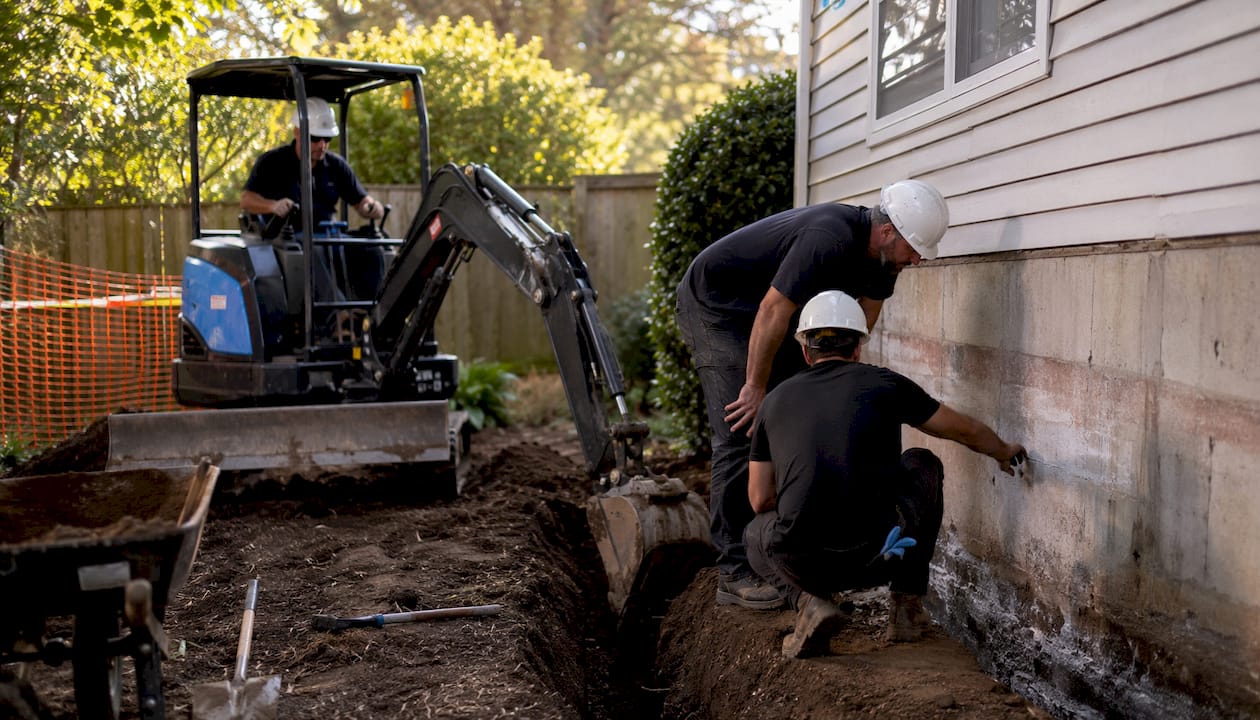
Structural failures like bowing walls require exterior excavation plus reinforcements: carbon fiber straps for early-stage displacement under one inch, steel I-beams or helical wall anchors for more advanced movement. Interior methods cannot relieve the soil pressure driving the wall inward. Exterior waterproofing is also the only method the International Building Code recognizes as fully protecting the structure from water.
| Aspect | Interior Waterproofing | Exterior Waterproofing |
|---|---|---|
| Average cost | $3,000–$10,000 | $7,000–$18,000+ |
| Installation time | 1–5 days | 1–5 days |
| Disruption level | Low to moderate | High (excavation, yard restoration) |
| Addresses root cause | Partially | Yes |
| Lifespan | 15–25 years | 25–40 years |
| Structural repair possible | No | Yes |
| Yard impact | None | Significant |
Advantages of exterior methods:
- Prevents water from ever contacting the foundation wall
- Addresses structural failures that interior work cannot touch
- Longer lifespan: 25–40 years for membrane systems
- Corrects drainage and grading at the source
- Pairs waterproofing with structural reinforcement in one mobilization
Drawbacks worth knowing:
- Two to three times more expensive than interior systems
- Weather-dependent scheduling can delay projects
- Landscaping, patios, and walkways may need full removal and restoration
- Not always physically possible near neighboring structures, utility lines, or zero-lot-line construction
- Longer recovery period: restored landscaping takes weeks or months to reestablish
For homeowners planning any exterior work, reviewing a yard drainage checklist before the project starts can prevent the same drainage problems from recurring after backfill.
How to decide between interior and exterior foundation repair
The decision comes down to four factors: what is failing, how severely, what the site allows, and what the budget supports. Start with the failure mode, not the price.
Failure mode first:
- Is the floor sinking? Slab piers or polyjacking address sub-grade soil failure from inside.
- Is water seeping through the cove joint or floor cracks? Interior drain tile solves this completely.
- Are walls bowing or showing horizontal cracks? Exterior excavation plus structural reinforcement is required. Interior drainage alone will not stop the wall from moving.
- Is water entering through the wall face itself (broad damp area, no obvious point source)? The exterior membrane has failed; exterior work is needed.
- Is groundwater rising from below the slab? Interior sub-slab drainage is the only practical fix; exterior work cannot stop upward water movement.
Site and budget considerations:
- A finished basement with limited yard access favors interior methods
- Exterior access blocked by a deck, addition, or hardscaping makes excavation impractical
- Budgets under $5,000 realistically support interior drain tile or crack injection only
- Homes with high water tables or clay-heavy soil often benefit from a hybrid approach combining interior drainage with targeted exterior membrane work on the most problematic walls
- New construction or an already-excavated site is the least expensive time to do exterior work
A professional assessment matters here because the same symptom (a crack in the wall) can indicate cosmetic settling, active water intrusion, or structural failure. Each calls for a different fix, and misdiagnosing one as another wastes money or leaves the real problem untouched. Understanding what drives foundation repair costs before getting quotes helps you evaluate contractor proposals more critically.
DIY versus hiring a professional for foundation repair
Foundation repair is one of the few home projects where DIY attempts regularly make things worse. The core problem is diagnosis: a crack that looks cosmetic can be the visible sign of active wall movement, and treating it with a tube of hydraulic cement delays proper repair while the wall continues to shift.
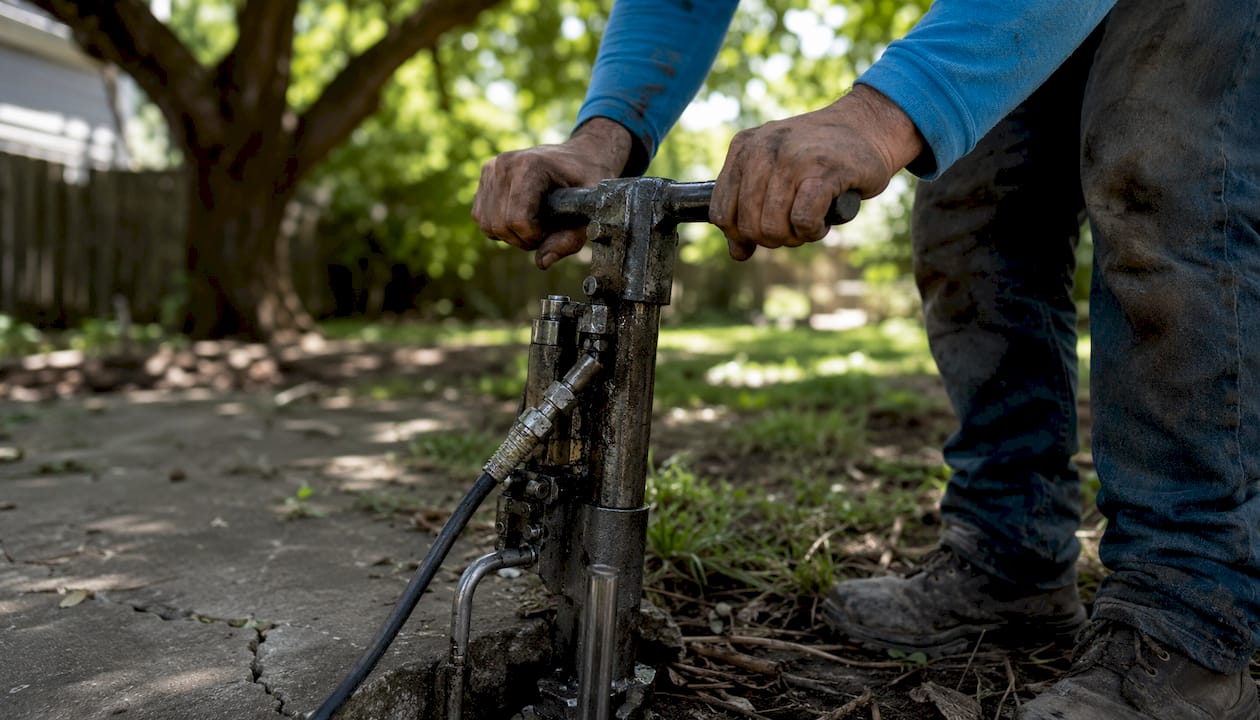
Beyond diagnosis, the work itself requires equipment most homeowners do not own: hydraulic pier drivers, concrete core drills, excavation machinery, and specialized membrane applicators. Exterior excavation near a foundation without shoring can destabilize the very structure you are trying to fix.
Pros and cons of DIY:
- Pro: Surface crack sealing with polyurethane caulk is genuinely manageable for hairline cracks with no movement
- Pro: Improving yard grading and cleaning gutters costs almost nothing and reduces water pressure against the foundation
- Con: Misdiagnosing a structural crack as cosmetic delays proper repair and allows progressive damage
- Con: Pier installation, drain tile systems, and exterior excavation require permits in most municipalities
- Con: Improper backfill after any excavation can increase soil pressure against the wall
Pro Tip: Before calling a contractor, photograph every crack with a coin for scale and note whether doors or windows in that area have started sticking. That information helps a professional distinguish active movement from old, stable cracking in the first five minutes of an inspection.
Foundationresq offers free inspections for Tallahassee homeowners, which removes the guesswork from diagnosis entirely. Getting a professional read on the failure mode before committing to any repair method is the single most cost-effective step you can take.
Foundationresq’s approach to foundation repair in Tallahassee
Foundationresq specializes in foundation repair, crawl space remediation, basement waterproofing, and mold removal for homeowners in Tallahassee and the surrounding area. The company’s approach centers on matching the repair method to the specific failure mode rather than defaulting to one solution for every job.
“Foundation RESQ focuses on lasting stability and moisture control, offering free inspections and financing options backed by well-reviewed local service. Their team emphasizes consistent quality and reliable scheduling for Tallahassee homeowners.”
— Foundation RESQ official site
Advanced techniques in Foundationresq’s toolkit include hydraulic push piers for settlement, interior drain tile systems for water management, and exterior waterproofing membranes for severe cases. Financing options are available for homeowners who need to spread the cost of larger repairs, and the free inspection removes the barrier of paying for a diagnosis before knowing what you are dealing with.
Tallahassee’s clay-heavy soils create the same shrink-swell pressure cycles that drive wall bowing and settlement across the Southeast. Foundationresq’s local experience with these specific soil conditions means their repair recommendations are grounded in what actually works in this climate, not generic national playbooks.
Foundationresq is ready to assess your foundation
If this article has clarified one thing, it is that the wrong repair method can cost as much as the right one while leaving the actual problem in place. Foundationresq gives Tallahassee homeowners a direct path from symptom to solution: a free inspection, a clear diagnosis, and repair options matched to what your foundation actually needs.
Whether your home needs interior drain tile to manage seepage, hydraulic push piers to stop settlement, or exterior waterproofing to address a failing membrane, Foundationresq’s team handles the full scope. Financing options make larger repairs accessible without delaying work that protects your home’s structural integrity. Schedule your free inspection at foundationresq.com/services and get a straight answer on what your foundation needs.
Key Takeaways
Exterior repair addresses root causes and lasts longer, but interior methods solve most residential water problems at a fraction of the cost, and the right choice depends entirely on your specific failure mode.
| Point | Details |
|---|---|
| Match method to failure mode | Bowing walls require exterior excavation; sub-slab water and seepage are solved from inside. |
| Cost difference is real | Interior systems run $3,000–$10,000; exterior work costs $7,000–$18,000 or more. |
| Lifespan gap | Interior systems last 15–25 years; exterior membranes last 25–40 years. |
| Hybrid approach for complex cases | Combining interior drainage with targeted exterior membrane work handles severe or multi-wall problems. |
| Foundationresq | Offers free inspections and financing for Tallahassee homeowners to match the right repair to the specific failure. |
FAQ
Is it better to repair interior or exterior foundation cracks?
It depends on the crack type. Horizontal cracks and bowing walls require exterior excavation and structural reinforcement; interior drainage alone cannot stop lateral soil pressure. Vertical and diagonal cracks from settlement or minor seepage are typically handled from inside at lower cost.
What is the best foundation repair method overall?
There is no single best method. Foundation repair requires matching the technique to the failure mode: hydraulic push piers for settlement, wall anchors or carbon fiber straps for bowing walls, and interior drain tile for water intrusion. A contractor who recommends the same fix for every job is a red flag.
Can you live in a house while foundation repair is done?
Usually yes. Interior repairs require clearing furniture from affected rooms and tolerating noise and dust for 3–7 days. Exterior excavation keeps the home’s interior accessible, though heavy equipment and yard disruption are significant. Only extensive structural work occasionally requires temporary relocation.
What time of year is best for foundation repair?
Interior repairs can be done year-round since they are not weather-dependent. Exterior excavation is best scheduled in dry seasons, as wet or frozen ground complicates excavation and membrane application. In Tallahassee, late fall through early spring typically offers the driest and most workable conditions for exterior work.
Recommended
- Foundation Repair Financing Options: 2026 Guide – Tallahassee Foundation Repair | Foundation ResQ
- Foundation Repair Cost Estimator: A 2026 Homeowner’s Guide – Tallahassee Foundation Repair | Foundation ResQ
- What Affects Foundation Repair Cost: 2026 Guide – Tallahassee Foundation Repair | Foundation ResQ
- How Foundation Underpinning Works: A 2026 Homeowner’s Guide – Tallahassee Foundation Repair | Foundation ResQ