Could your crawl space be the silent culprit behind those persistent musty odors and the unusually high cooling costs you see every Florida summer? Many local homeowners find themselves asking is crawl space encapsulation worth it or if the project is simply an unnecessary upsell. It’s a fair question to ask when you’re balancing a budget against the long-term health of your property. You want a home that feels solid and stays dry, but you also want to ensure your investment provides a tangible benefit to your daily life.
Before you can properly assess or treat the area, it often helps to explore Junk Removal & Property Cleanouts options from Revive Services Central Florida to remove any old debris or stored items that might be hiding structural red flags or contributing to moisture retention.
This guide explores the real-world ROI of sealing your foundation in Tallahassee’s unique subtropical environment. We’ll show you how this professional remedy can lead to energy savings of approximately 15% on your utility bills while preparing your home for the stricter moisture control requirements in the 9th Edition of the Florida Building Code. You’ll learn how maintaining a relative humidity between 45% and 55% stops wood rot and mold growth at the source. We’ll also explain why a sealed, conditioned space is the most effective way to protect your building’s structural integrity and improve your indoor air quality for years to come.
Key Takeaways
- Learn how the “stack effect” pulls humid air from your foundation into your living areas and why a complete sealing system is the only way to stop it.
- Understand why traditional vented crawl spaces often fail in Florida’s humidity and how modern HVAC systems demand a more advanced approach to moisture control.
- Evaluate the long-term financial benefits to determine if is crawl space encapsulation worth it for your property by comparing investment costs against the price of major structural repairs.
- Identify the specific “red flag” symptoms of structural decay and active mold growth using our quick homeowner diagnostic checklist.
- Discover why an integrated system, combining high-mil liners, sump pumps, and specialized dehumidifiers, provides the most reliable defense against Tallahassee’s high water table.
Understanding Crawl Space Encapsulation in the Florida Climate
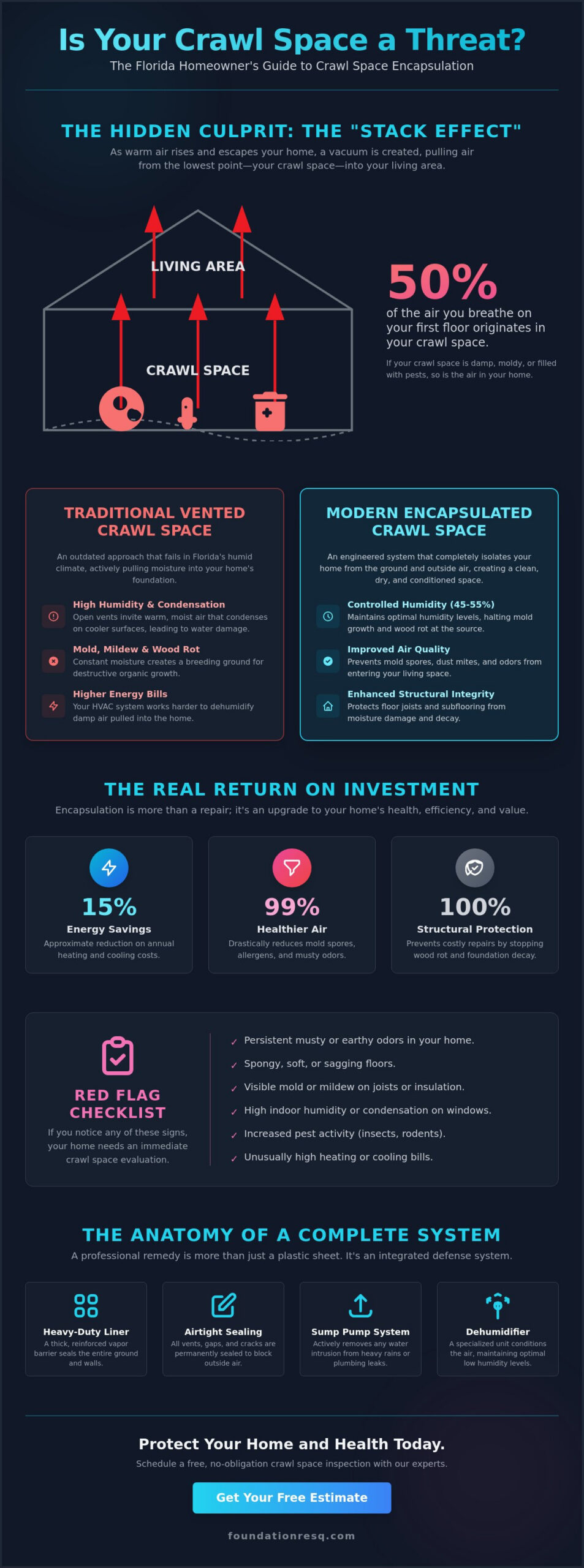
Many homeowners assume a basic sheet of plastic on the dirt floor is enough to keep moisture away. However, a standard vapor barrier is only one small component of a professional remedy. True crawl space encapsulation is an engineered system designed to isolate your home from the earth entirely. This comprehensive approach includes a heavy-duty reinforced liner, airtight sealing of all exterior vents, and the installation of specialized dehumidifiers and sump pumps. When you ask is crawl space encapsulation worth it, you have to consider the specific environmental pressures of North Florida. In our region, where relative humidity frequently exceeds 70%, a simple plastic sheet cannot provide the permanence or protection required to stabilize your foundation.
The Science of the Stack Effect
The air movement in your home follows a predictable physical pattern known as the stack effect. As warm air rises through your house and exits through the upper levels or attic, it creates a vacuum at the bottom of the structure. This vacuum pulls air upward from the lowest point of the building. Because of this process, approximately 50% of the air you breathe on the first floor comes directly from your Crawl space. If that area is damp or rotting, the stack effect introduces mold spores, dust mite allergens, and musty odors directly into your bedrooms and living areas. Sealing this space is the only way to break this cycle and ensure your indoor air quality remains healthy and consistent.
Why Traditional Vents Fail in Tallahassee
The 8th and upcoming 9th Edition of the Florida Building Code reflect a growing understanding of moisture dynamics in our subtropical climate. For decades, builders believed that open vents would allow a house to “breathe.” In Tallahassee, the opposite is true. When warm, humid air enters a relatively cool foundation area, it hits its dew point and condenses into liquid water on your wooden floor joists and insulation. This moisture creates a perfect breeding ground for organic growth and wood decay.
Our local environment presents two major challenges that traditional venting cannot handle:
- The Humidity Paradox: During Florida summers, open vents effectively pump gallons of water vapor into your home every day rather than letting it escape.
- Saturated Soil: Heavy North Florida rains quickly saturate the soil beneath the home. Without a sealed system and a sump pump, this groundwater evaporates directly into your subfloor.
Determining is crawl space encapsulation worth it often comes down to these physics. By replacing obsolete vents with a controlled, conditioned environment, you create a permanent protective barrier between your property and the elements.
Myth-Busting: ‘My Vented Crawl Space Has Been Fine for Years’
Many homeowners in the Florida Panhandle believe that because their home has stood for forty years with open vents, there’s no reason to change now. This perspective often misses the subtle, cumulative damage that humidity inflicts over decades. When evaluating is crawl space encapsulation worth it, you have to look past the surface. Wood rot doesn’t happen overnight; it’s a slow process of degradation that accelerates as our local climate becomes more erratic and our homes become more airtight.
The ‘Grandfathered’ Fallacy
Older Tallahassee homes were built to be “leaky.” They lacked the heavy insulation and high-efficiency windows we use today. This allowed air to circulate freely through the entire structure, which helped dry out moisture. However, modern energy-efficient upgrades trap humid air inside. When you seal your living space but leave the foundation open, you create a pressure imbalance. Your HVAC system now works harder, often pulling damp air through the floorboards to compensate for the tight seal upstairs. Modern building standards, including the 9th Edition of the Florida Building Code, have shifted because we now understand that controlling moisture in walls and foundations requires a total isolation strategy rather than just ventilation.
Myth: A Plastic Sheet on the Ground is Enough
It’s common to see a thin, 6-mil plastic sheet spread across the dirt in a crawl space. While this is better than bare earth, it’s far from a complete remedy. These thin barriers aren’t sealed to the foundation walls. Moisture doesn’t just come from the ground; it seeps through masonry and moves via capillary action. A standard vapor barrier also tears easily during routine maintenance. Professional crawl space encapsulation utilizes a heavy-duty, 20-mil reinforced liner that’s mechanically fastened and sealed to the walls. This creates a permanent, puncture-resistant barrier that stops moisture from bypassing the system.
Believing that “a little moisture” is normal for a Florida foundation is a risky assumption. Exposed wood in a humid environment will eventually lose its structural integrity. Encapsulated wood, by contrast, stays dry and stable for the life of the building. Homeowners often ask is crawl space encapsulation worth it when they weigh the cost against the long-term health of their foundation.
Calculating the Real ROI: Is the Investment Justified?
Evaluating the financial side of home maintenance requires looking at both immediate costs and avoided expenses. When asking is crawl space encapsulation worth it, Tallahassee homeowners must weigh the upfront project cost against the high price of structural neglect. A dry foundation isn’t just a comfort feature; it’s a financial strategy that protects your largest asset. This investment pays dividends through lower utility bills, a longer-lasting HVAC system, and the prevention of catastrophic wood decay.
Energy Savings and HVAC Longevity
Cooling a home in North Florida is an expensive endeavor. When your crawl space is vented, your air conditioner must work to remove the heavy humidity that seeps through the floorboards. Research indicates that crawl space encapsulation can lead to energy savings of approximately 15% on monthly heating and cooling bills. This happens because dehumidified air is significantly easier and cheaper to cool than moist, saturated air. You’re no longer paying to “condition” the outdoors.
Beyond monthly bills, consider the lifespan of your HVAC system. By reducing the ambient humidity, the unit doesn’t have to run as frequently or as long to maintain a comfortable temperature. This reduction in run time prevents premature wear and tear, potentially adding years to the life of an expensive AC unit. Utilizing ENERGY STAR certified dehumidifiers as part of the encapsulation system further enhances these savings, as these units consume about 15% less energy than conventional models. To understand how to select the right equipment for our local climate, our guide on crawl space dehumidifier installation Tallahassee homeowners rely on covers capacity requirements and long-term performance in detail.
Encapsulation vs. The Cost of Inaction
The most significant return on investment comes from what you don’t have to pay for later. If moisture is left unchecked, the cost of mold remediation can quickly escalate, often exceeding the cost of the original preventative measures. High humidity levels lead to wood rot, which eventually manifests as “bouncy” or sagging floors in your living area. These symptoms indicate that your home’s structural skeleton is failing.
Repairing these issues often requires sistering floor joists or installing new structural supports, which is a labor-intensive and invasive process. Encapsulation acts as a structural insurance policy. It maintains the relative humidity between 45% and 55%, ensuring your home’s wooden components remain dry and stable. This level of protection is a critical factor when determining is crawl space encapsulation worth it for your long-term budget.
Finally, think about the resale factor. In the Tallahassee market, savvy buyers and home inspectors look for signs of moisture damage. A professionally encapsulated crawl space is a major selling point that demonstrates proactive maintenance. It removes the deal-breaker concerns about mold or structural decay, often allowing for a smoother closing and higher property valuation when it’s time to sell.
How to Tell if Your Home Needs Encapsulation Immediately
Identifying foundation issues early can save you thousands in structural repairs. Most homeowners rarely venture beneath their floorboards, but your house often provides clear signals when the environment down there has become unstable. Determining is crawl space encapsulation worth it for your specific property starts with a simple assessment of your home’s current performance and a few physical checks in your living area.
The 5-Minute Crawl Space ‘Sniff Test’
One of the most reliable indicators of a moisture problem is a distinct, musty odor that resembles an old gym bag. This scent is actually caused by microbial volatile organic compounds (mVOCs) released by mold and fungal growth as they consume organic material like your wooden floor joists. These odors often become much more pungent on humid afternoons or immediately following heavy Tallahassee rainstorms when the soil beneath your home is saturated. If you notice these smells in your closets or laundry room, it’s a sign that the stack effect is pulling contaminated air into your home. For more tips on managing these conditions, you can review our guide on how to keep your crawl space dry.
Physical Warning Signs in the Living Area
Your home’s interior can reveal a great deal about the health of its foundation. When wood absorbs excess moisture from the crawl space, it expands and loses its structural rigidity. This often results in sticking doors or windows that are suddenly difficult to open or close. You might also notice “cupping” in your hardwood floors, where the edges of the planks sit higher than the center. This physical deformation is a direct result of a moisture imbalance between the top and bottom of the wood. It indicates that the subfloor is literally drinking water vapor from the air below.
Another critical red flag is a consistent indoor relative humidity level above 55%. If your air conditioner struggles to keep the air feeling crisp despite regular maintenance, your crawl space is likely introducing a heavy moisture load into the structure. Maintaining a dry environment is essential for both your family’s health and the longevity of your home’s skeleton.
It’s important to distinguish between “nuisance moisture,” like a small, temporary puddle after a tropical storm, and “structural threat moisture.” A structural threat exists when the wood moisture content remains high enough to support rot and fungal growth over long periods. If you identify any of these red flags, the question of is crawl space encapsulation worth it becomes an urgent matter of property preservation. If your home is showing these symptoms, a professional evaluation is the most reliable way to identify the root cause. You can schedule a crawl space inspection with our team to receive a detailed assessment of your home’s structural health.
The Foundation ResQ Approach: Engineered for Tallahassee
Foundation ResQ serves as the steadfast local expert for North Florida homeowners. As part of the Groundworks network, we combine regional specialized knowledge with industry-leading engineered solutions. We understand that a dry foundation requires more than just a single product. It requires a comprehensive system designed to withstand the heavy rainfall and high water table characteristic of Leon County. When you consider is crawl space encapsulation worth it, the answer lies in the permanence and reliability of the installation method. Our approach focuses on creating a total protective barrier that stabilizes your home’s structural health for the long term.
Why Professional Installation Trumps DIY
Attempting a DIY encapsulation often leads to unintended consequences. One of the greatest risks is “sealing in” existing moisture. If the wood and soil aren’t properly dried before the liner is installed, you can inadvertently accelerate rot and mold growth. Professional remediation involves a methodical drying process and the use of specialized equipment that retail stores simply don’t carry. For example, effective groundwater management often requires professional sump pump installation to direct water away from the foundation before it can pool.
The equipment used also makes a significant difference. While a retail dehumidifier might struggle in our 70% humidity, we utilize commercial-grade units. In high-humidity regions like Florida, a crawl space dehumidifier installation Tallahassee professionals recommend typically involves a capacity of 40-50 pints per 1,000 square feet to maintain the optimal 45% to 55% humidity level. These systems are designed for continuous operation in harsh environments, providing a level of durability and energy efficiency that standard home appliances cannot match.
Securing Your Home’s Future
The transformation of your crawl space changes it from a damp, neglected area into a clean, dry asset. This shift protects your floor joists, improves your indoor air quality, and ensures your home remains compliant with evolving standards like the 9th Edition of the Florida Building Code. Working with a local Tallahassee team means you’re getting a solution tailored to our specific soil types and tropical weather patterns. We don’t offer quick fixes; we provide stabilization and protection that lasts. If you’re ready to find out is crawl space encapsulation worth it for your property, the first step is a professional assessment. You can contact Foundation ResQ for a free inspection to understand the current state of your foundation and discover the best remedy for your home.
Secure Your Home’s Structural Integrity
Securing your home’s foundation is an investment in both daily comfort and structural longevity. By addressing the specific challenges of Tallahassee’s humid environment, you move beyond temporary fixes to a permanent protective barrier. We’ve seen how a sealed system provides a tangible return through roughly 15% lower utility costs and the prevention of expensive floor joist repairs. As you weigh the evidence, it’s clear that determining is crawl space encapsulation worth it depends on your commitment to long-term property health.
Foundation ResQ brings specialized Tallahassee soil expertise to every project as a proud member of the Groundworks Network. Our engineered systems are backed by transferable long-term warranties, ensuring that your home remains a dry, stable asset for years to come. Don’t let persistent moisture compromise your home’s skeleton or your family’s air quality. You deserve the peace of mind that comes with a professionally stabilized foundation. Take the final step toward a healthier living environment by partnering with a team that understands the unique pressures of North Florida.
Schedule Your Free Crawl Space Inspection Today
Our local experts are ready to help you protect your biggest investment with reliable, professional guidance.
Frequently Asked Questions
Will crawl space encapsulation increase my home’s resale value?
Yes, a sealed crawl space is a significant asset during the home-selling process in North Florida. Professional encapsulation demonstrates to potential buyers and inspectors that the property has been proactively protected against mold and structural decay. It removes the “red flag” of musty odors and provides documented proof of a stable foundation, which often leads to a smoother closing and higher appraisal value.
How long does crawl space encapsulation typically last?
A professionally installed system using heavy-duty 20-mil reinforced liners can last for 20 years or more with minimal maintenance. While the vapor barrier itself is designed for extreme durability, mechanical components like the dehumidifier and sump pump typically have a lifespan of 5 to 10 years. Regular inspections ensure these parts continue to protect your home’s structural integrity over the long term.
Can I encapsulate my crawl space myself to save money?
DIY encapsulation is generally discouraged in Tallahassee because of the high risk of trapping moisture against your floor joists. Without commercial-grade drying equipment and precise sealing techniques, a homeowner might inadvertently create a “greenhouse effect” that accelerates wood rot. Professional installation ensures the space is completely dry before the liner is sealed, which is essential for a permanent remedy.
Does encapsulation prevent pests like termites and roaches?
Sealing your foundation creates a physical barrier that significantly reduces pest activity. Termites, roaches, and rodents are drawn to the damp, dark environments found in traditional vented crawl spaces. By removing the moisture source and sealing entry points with a durable liner, you make your home’s foundation far less attractive to wood-destroying organisms and other common Florida pests.
What happens if I encapsulate without a dehumidifier?
In Florida’s subtropical climate, installing a liner without a dehumidifier often leads to a moisture buildup inside the sealed area. Even with a high-quality vapor barrier, humidity can still enter through masonry walls or small gaps. Without a dedicated unit to maintain a relative humidity between 45% and 55%, you risk creating an environment where mold can still thrive beneath your home.
Is encapsulation worth it if I don’t have standing water?
Yes, because water vapor is just as destructive as liquid water over time. Even if you never see puddles, the high humidity levels in Tallahassee can keep your floor joists damp enough to support fungal growth and wood decay. Determining is crawl space encapsulation worth it requires looking at the invisible moisture load that causes “cupping” floors and high cooling costs even in dry soil conditions.
How much energy will I actually save with encapsulation in Florida?
Homeowners in the Southeast typically see an average reduction of 15% on their monthly heating and cooling bills. This happens because your air conditioner no longer has to work to remove the heavy humidity that naturally rises through a vented foundation. This improved efficiency is a primary reason why many local residents find that is crawl space encapsulation worth it for their monthly household budget.
Does homeowner’s insurance cover the cost of encapsulation?
Standard homeowner’s insurance policies generally do not cover encapsulation because it is considered preventative maintenance or a home improvement. However, these systems are a strategic investment because they prevent the type of slow-acting water damage and mold growth that insurance companies often exclude from coverage. Investing now helps you avoid the massive out-of-pocket costs associated with future structural repairs.