
A musty smell almost always means moisture: hidden dampness feeding mold or mildew somewhere in your home. The priority is finding and stopping that moisture source, then drying affected materials within 24 to 48 hours as recommended by the EPA. In the meantime, check your indoor humidity and run a dehumidifier or exhaust fan if conditions allow.
TL;DR:
- Hidden moisture sources like leaks, mold in wall cavities, or HVAC issues often cause persistent musty smells that require thorough inspection.
- Monitoring indoor humidity levels and inspecting areas such as basements, crawl spaces, and behind appliances is essential to identify the odor’s origin.
- Immediate drying of wet materials within 24 to 48 hours and fixing moisture sources prevent mold growth and odor recurrence.
- Long-term prevention involves maintaining drainage, gutter cleaning, crawl space encapsulation, and ensuring proper ventilation to control moisture buildup.
- Professional remediation is recommended for large, hidden, or hazardous mold problems, especially when vulnerable household members are involved.
Table of Contents
- Common causes of musty smells in a house
- How to locate the source: a short homeowner inspection checklist
- Step-by-step fixes to remove a musty smell
- When to call a professional and what to expect
- Prevent recurrence: long-term fixes for drainage, crawl spaces, and ventilation
- Practical next steps for homeowners
- Schedule a free inspection for crawl space or basement odors
- FAQ
- Sources
Common causes of musty smells in a house
A musty odor usually traces back to one of a handful of culprits, and the smell’s location often points to the cause. Hidden mold or mildew growing inside wall cavities, under carpets, or inside HVAC ductwork is a frequent source, since these spots stay damp and dark long after a leak or spill dries on the surface. Leaky plumbing, roofs, foundations, or appliances like dishwashers and washing machines can quietly feed moisture into materials for weeks before anyone notices a stain.
High indoor humidity causes condensation on cold surfaces such as windows, pipes, and exterior walls, and that condensation gives mold exactly what it needs to take hold. Poor ventilation compounds the problem in closets, basements, attics, and bathrooms, where moist air has nowhere to escape. HVAC issues, including clogged drip pans or blocked dryer vents, trap humidity inside your living space instead of venting it outside.
Common sources to check include:
- Wall cavities, carpet padding, and ductwork where mold grows out of sight.
- Plumbing, roof, or foundation leaks that soak building materials over time.
- Condensation on cold surfaces from high indoor humidity.
- Poor airflow in basements, attics, closets, and bathrooms.
- Clogged HVAC drip pans or blocked dryer vents.
- Wet, porous materials like insulation or drywall that trap odor long after the water is gone.
The EPA’s guide to mold and moisture lists gutters, foundations, roofs, HVAC drip pans, and moisture-producing appliances as the places worth inspecting first.
How to locate the source: a short homeowner inspection checklist
Before you can fix a musty smell, you need to know where it starts. A room-by-room check, done in order, usually narrows the search faster than guessing.
- Use an inexpensive hygrometer to check relative humidity in several rooms, and flag any area reading above normal recommended indoor humidity levels.
- Compare odor strength at HVAC return vents, closets, carpeted areas, bathrooms, basements, and exterior-facing walls, especially right after rain.
- Inspect under sinks, behind dishwashers and washing machines, around the water heater, and check for roof or gutter problems from outside.
- Open crawl space or basement access points if it is safe to do so, and look for standing water, wet insulation, or a damaged vapor barrier.
- Check HVAC drip pans, condensate lines, and the dryer vent termination point outside the house.
- Note whether the smell gets stronger after rain, during AC cycles, or after laundry, since timing often reveals the trigger.
Pro Tip: Write down humidity readings and odor locations over a few days. A pattern tied to rain or appliance use tells you more than a single snapshot ever will.
Step-by-step fixes to remove a musty smell
Fixing a musty smell works best in a specific order: stop the water, dry the space, clean what remains, then lower humidity for good.
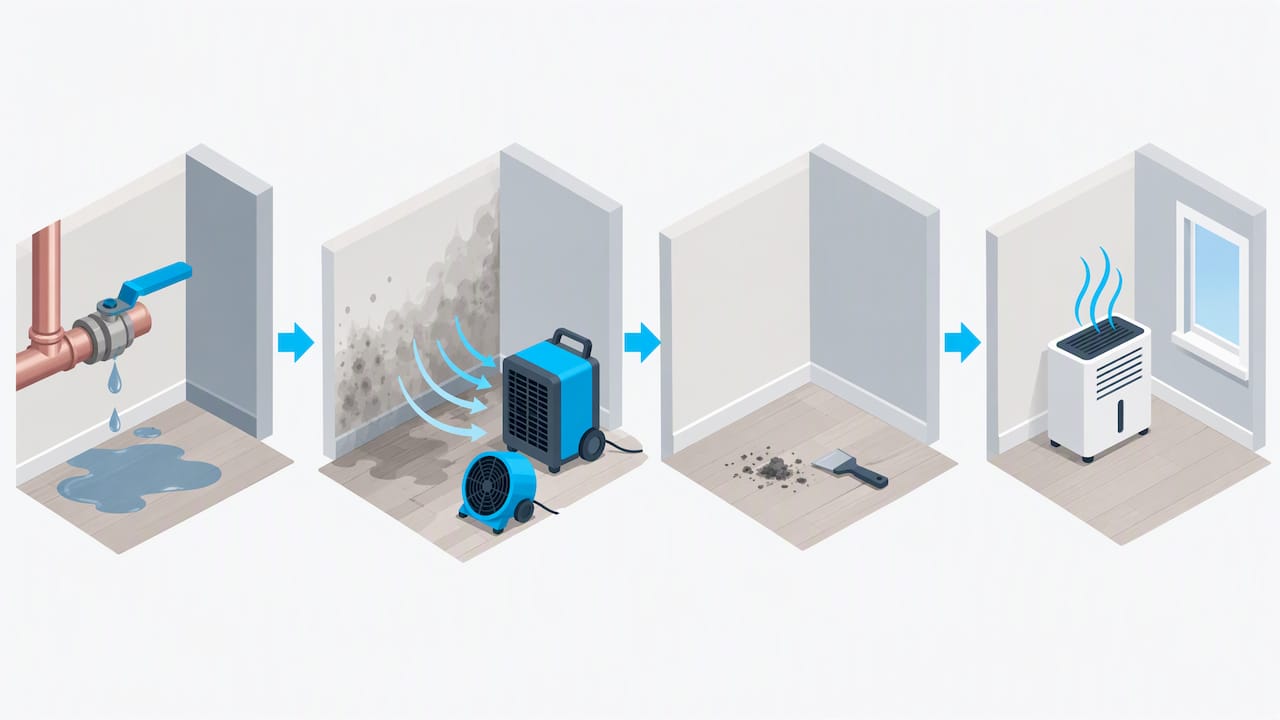
Start by repairing the plumbing leak, clearing clogged gutters, or fixing dryer venting that is pushing moist air back indoors. If you cannot fix the source immediately, set up temporary containment to limit how far the moisture spreads.
Once the source is controlled, dry wet materials within 24 to 48 hours using fans, ventilation, and dehumidifiers, as the EPA recommends to prevent mold from taking hold. Opening windows helps in dry climates but can backfire in warm, humid regions, where outside air actually adds moisture indoors rather than removing it, according to the Department of Energy’s ventilation guidance.
- Clean hard, nonporous surfaces with detergent, or a diluted bleach solution per the product label, following CDC cleanup guidance and never mixing bleach with ammonia or other cleaners.
- Remove and replace porous materials that stay moldy, including soaked carpet padding, saturated drywall, or upholstered furniture that cannot be fully dried.
- Lower humidity long-term with a portable or whole-house dehumidifier, plus bathroom and kitchen exhaust fans and an outside-vented dryer, aiming for relative humidity levels ideal for preventing mold growth, typically below 60% and ideally between 30% and 50%.
- Change HVAC filters, clear condensate lines, and clean drip pans, since contaminated HVAC components often need professional cleaning.
Pro Tip: Baking soda and activated charcoal absorb odor temporarily, but they mask the smell rather than fix it. Treat them as a stopgap, never a solution.
Wear a NIOSH-approved N95 respirator, gloves, and goggles during cleanup, and follow the CDC’s mold and health guidance on who should avoid cleanup work entirely.
When to call a professional and what to expect
Some situations call for a professional rather than a weekend project. Large contaminated areas, sewage or flood exposure, suspected HVAC contamination, hidden moisture sources, or a household with young children, elderly residents, or anyone with respiratory issues all warrant bringing in trained help.
- A qualified remediation team identifies the actual moisture source, not just the visible mold.
- Professionals correct the underlying problem through plumbing repair, drainage work, or foundation remediation.
- Proper containment and safe removal procedures limit cross-contamination to unaffected rooms.
- A thorough job includes recommendations to prevent the same problem from returning.
The EPA notes that cleaning mold without fixing the moisture problem behind it almost always leads to recurrence, often within weeks.
Prevent recurrence: long-term fixes for drainage, crawl spaces, and ventilation
Stopping a musty smell for good means addressing the structural conditions that let moisture build up in the first place. Grading soil away from your foundation and keeping gutters clear of debris keeps rainwater from pooling against your walls.
- Maintain gutters and downspouts so water drains well away from the foundation.
- Consider crawl space encapsulation with a sealed vapor barrier and properly designed dehumidification, since conditioned crawl spaces often run drier than vented ones according to Building America’s crawl space research.
- Insulate and air-seal exterior walls and windows to reduce condensation on cold surfaces.
- In warm-humid climates, a whole-house dehumidifier may do more than ventilation alone, since outdoor air can add moisture rather than remove it.
- Schedule regular checks of door and window seals, roof flashing, HVAC drip pans, and dryer vent termination points.
Sealing crawl space vents without checking combustion safety on gas appliances can create its own hazards, so that work is worth leaving to a professional who checks both at once.
Practical next steps for homeowners
Start with the basics: check humidity, walk through the likely spots, and act on what you find. Skip DIY remediation if anyone in the household is vulnerable to mold exposure, and bring in a professional the moment the source stays hidden after a reasonable search.
— Kayle
Schedule a free inspection for crawl space or basement odors
If the smell keeps coming back after cleaning, the source is probably hiding in the crawl space, basement, or foundation. We offer free inspections covering crawl space remediation, basement waterproofing, mold remediation, and dehumidification, so you get a clear answer before committing to any work.

A free inspection costs you nothing and tells you exactly what is driving the odor. Visit our services page to schedule one and get a straight answer on what your home needs.
FAQ
Can you have a musty smell without mold?
Yes, a musty smell can come from trapped moisture, mildew, or stagnant air in a poorly ventilated space before visible mold ever forms. The smell itself is a moisture warning sign, so it is worth investigating even if you see no visible growth.
How do I get rid of a musty smell in my house?
Find and stop the moisture source first, then dry affected materials within 24 to 48 hours using fans, ventilation, or a dehumidifier, following EPA guidance. Clean hard surfaces with detergent or a diluted bleach solution per the label, and remove porous materials that cannot be fully dried.
How do I stop my house from smelling musty?
Keep indoor humidity between 30% and 50%, run bathroom and kitchen exhaust fans, and make sure your dryer vents outside rather than into an attic or crawl space. Regular gutter cleaning and crawl space checks prevent the hidden moisture buildup that causes musty odors to return.
Why would my house suddenly smell musty?
A sudden musty smell usually points to a new leak, a spike in humidity after heavy rain, or an HVAC problem like a clogged drip pan or blocked dryer vent. Check your hygrometer reading and inspect common trouble spots like under sinks, around the water heater, and in the crawl space to narrow down the cause.
Sources
Concealed moisture in a crawl space or around a foundation can sustain mold growth even when every visible room feels dry. We find that professional remediation, including crawl space encapsulation, drainage correction, and dehumidification, addresses the cause rather than the symptom. Request a crawl space inspection if odor returns after cleaning, smells strongest near the foundation, or worsens after rain.
- EPA: A brief guide to mold, moisture, and your home
- CDC: Mold cleanup guidance
- DOE: Consumer guide to home ventilation
- Building America: Guide to ventilated crawlspaces