
A sidewalk repair doesn’t always mean days of disruption. Many leveling projects take only a few hours, and pedestrians can often use a polyurethane-injected sidewalk in just over an hour, depending on the project scale. PolyRenewal for uneven sidewalks uses small access holes to send expanding foam beneath sunken panels, helping lift them and reduce uneven walking surfaces.
It’s reasonable to wonder whether the holes will remain visible and how long the repaired area needs before it’s ready for foot traffic. This article explains the process and timing, what affects the work on residential and commercial sidewalks, and what to expect from the injection holes. You’ll also learn how to recognize when leveling may suit a sidewalk and when the concrete’s condition calls for a different repair approach.
Key Takeaways
- Project timing depends on slab size, settlement, access, and site conditions, so the work area can shape the schedule as much as the repair itself.
- Small injection holes are used to deliver foam beneath the slab, then patched after the lift.
- Expanding polyurethane fills voids and supports the concrete, with controlled application helping achieve a more even lift.
- Assess whether the slab has enough sound concrete to lift; extensive breaks or widespread wear may call for replacement instead.
- Learn how sidewalk leveling considerations apply to both residential paths and commercial walkways with regular foot traffic.
How Long Does Concrete Leveling Take?
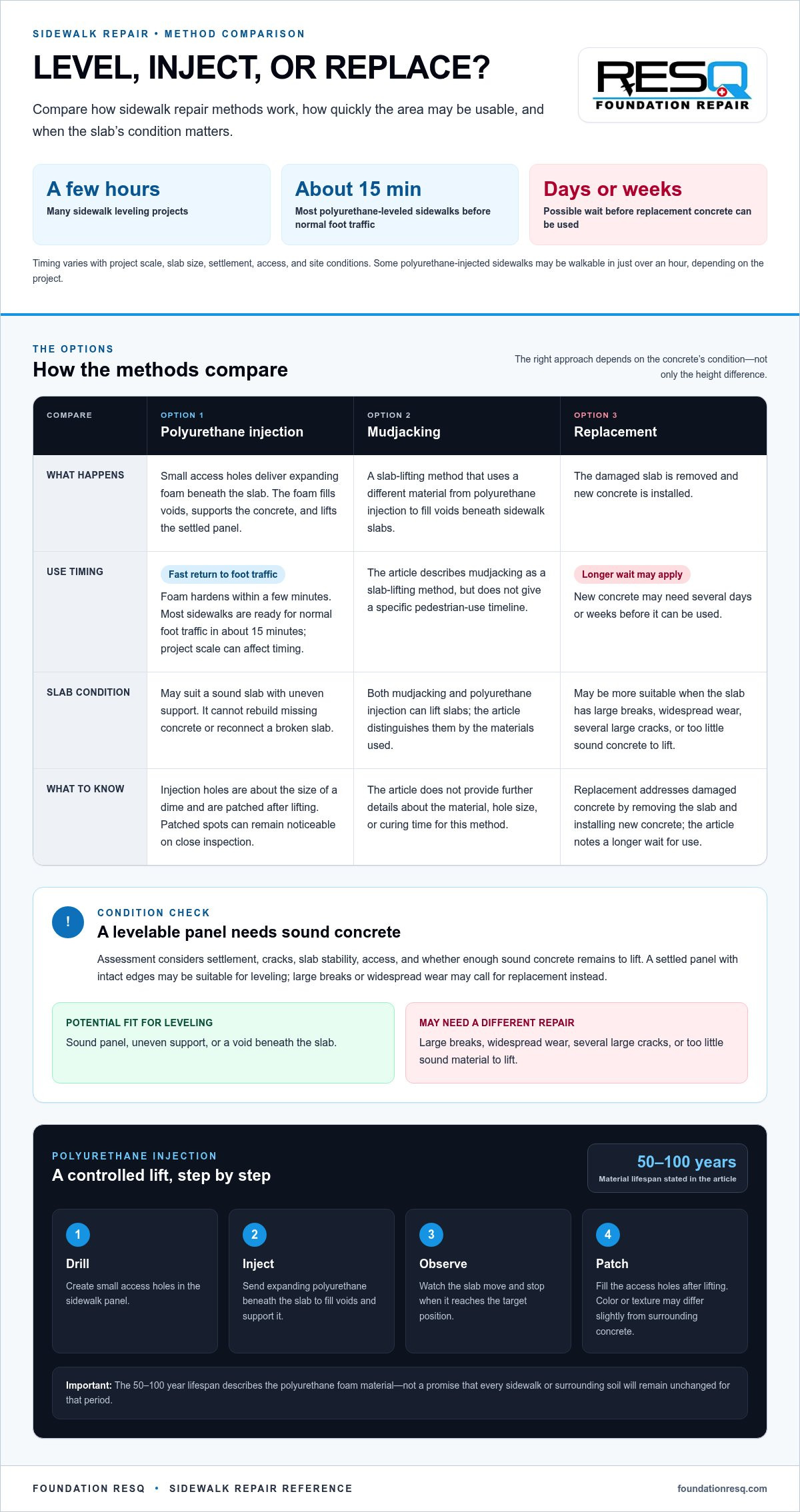
Many sidewalk leveling projects take only a few hours. The actual schedule depends on slab size, settlement, access to the work area, and site conditions. After polyurethane injection, pedestrians can walk on a repaired sidewalk in just over an hour, depending on project scale. Concrete leveling can often allow sidewalk use on the same day.
The repair method lifts and supports an existing slab instead of removing it. A crew drills small access holes, then pumps leveling material beneath the concrete. The material fills voids, supports the underside, and raises the settled panel toward the height of its neighbors. For polyurethane injection, the foam expands and hardens within a few minutes.
Mudjacking and polyurethane injection both lift slabs, but they use different materials. Mudjacking is one method used to fill voids beneath sidewalk slabs. Polyurethane injection uses expanding foam through small holes. Replacement removes the damaged slab and installs new concrete, which may need several days or weeks before it can be used.
A professional assessment considers the sidewalk’s condition, not just the height difference. It looks at settlement, cracks, slab stability, access, and whether enough sound concrete remains to lift. For example, a settled panel with intact edges may be suitable for leveling, while a slab with large breaks or widespread wear may need replacement. This helps match the repair to the actual problem.
There isn’t one nationwide answer to whether a sidewalk must be leveled or replaced. Requirements vary by jurisdiction and by whether the walk is public or private. Accessibility considerations may apply to pedestrian routes, but don’t determine the repair for every panel. In Tallahassee, contact the relevant local authority about requirements for the specific property and sidewalk.
Homeowners insurance coverage depends on the policy and the cause of the damage. A city program’s coverage depends on local eligibility rules and funding. Review the policy or program terms for the property and the cause before planning the repair.
Polyurethane injection has limitations. It can’t restore concrete with large breaks, widespread wear, several large cracks, or too little sound material to lift. Incorrect or excessive pumping of concrete mixtures can also leave voids unevenly filled and the sidewalk unbalanced. For severely cracked slabs, replacement may be more suitable.
For an estimate, document the affected panels, note where the sidewalk is located, and describe visible cracks or settlement. A professional assessment can then consider access, slab condition, and the area needing repair. When requesting a free inspection and estimate from Foundation ResQ in Tallahassee, share those details so the scope reflects the actual work.
Are Drill Holes Visible After Sidewalk Leveling?
Small injection holes are part of polyurethane sidewalk leveling, but they’re patched after the foam is placed beneath the slab. PolyRenewal uses an injection hole about the size of a dime. The patch closes the access point while the foam remains below the concrete, filling voids and supporting the lifted panel.
The repair follows a controlled sequence. The crew drills access holes, injects expanding polyurethane, observes the slab’s movement, and stops when it reaches the target position. Then the holes are filled with patching material. The patched spots may still be noticeable on close inspection because their color or texture can differ slightly from the surrounding concrete.
Foam expands and hardens within a few minutes after injection. That short curing stage helps the material occupy open spaces beneath the sidewalk and hold its shape. Most sidewalks leveled with polyurethane foam are ready for normal foot traffic in about 15 minutes. The repaired surface should still be treated carefully during the work and until the crew completes the patching.
How long does PolyRenewal foam last under sidewalks? The polyurethane foam material used for concrete leveling can last 50 to 100 years. That lifespan describes the material, not a promise that every sidewalk or surrounding soil will remain unchanged for the same period.
Foam adds support beneath the slab, but successful lifting depends on placement, not simply the amount injected. The foam needs to fill relevant voids and distribute support under the concrete. A hollow area left untreated can leave a panel unevenly supported, while excessive injection can raise a slab too far. Careful observation during lifting helps control the movement.
Weight and strength also depend on the repair context. The slab’s size, existing cracks, and the ground beneath it all affect how support is restored. For example, a sound panel that settled over a void presents a different repair task from a fractured panel with crumbling edges. Foam can lift and support concrete; it can’t rebuild missing concrete or reconnect a broken slab.
After patching, inspect each access point from a normal standing distance and look across neighboring panels. A slight color difference may remain, especially where older concrete has weathered differently. Focus on whether the patch is secure and the sidewalk surface is even, rather than expecting every drilled spot to disappear; for property owners who want a completely uniform look and extra surface protection once the concrete is level, companies like Elite Concrete Coatings specialize in professional coating finishes that seal and blend repaired surfaces.
Before scheduling work, mark the settled panels and note visible cracks or loose edges. That information helps frame an assessment of the slab and access points. For a sidewalk that may need lifting, an assessment of concrete lifting needs can help clarify whether injection fits the condition.
Polyurethane injection for sidewalk leveling
Polyurethane injection raises settled sidewalk panels by filling voids beneath the concrete. It can suit a sound slab with uneven support, while severe damage may call for replacement.
Signs a Sidewalk Needs Leveling
Look for a raised edge between neighboring panels, a sunken section, or a gap beneath the slab. Wear and tear or poor tree-root growth can contribute to sidewalk settlement. A one-inch lip is an example of a height difference that can create a safety hazard. Note which panels move or sit unevenly, and whether cracks or broken edges also appear.
The Polyurethane Injection Process
A crew drills small access holes through the settled slab, then injects two-part polyurethane foam beneath it. The foam reacts, expands into voids, and supports the concrete as it lifts. The crew observes the panel’s movement while applying material. Polyurethane foam expands and hardens within a few minutes; most sidewalks leveled this way are ready for normal foot traffic in about 15 minutes.
Leveling or Replacing the Sidewalk
Leveling may fit a panel that has settled but remains sound enough to lift. Replacement may be appropriate for large breaks, widespread wear, several large cracks, or too little sound concrete. Grinding can address minor unevenness under 1.5 inches, while replacement removes the old panel and installs new concrete. The right method depends on the slab’s condition, not just its height.
Before choosing a repair, inspect each panel and its adjoining edges. A single settled corner may have a different cause and scope from several panels that have dropped together. Record visible cracks, low spots, and nearby tree roots. These details help describe the settlement pattern and distinguish a localized uneven panel from more widespread sidewalk damage.
Polyurethane injection targets the space beneath the concrete rather than replacing the walking surface. As foam expands, the slab may lift by millimeters over several minutes. The crew monitors that movement during application and adjusts the injection as the panel approaches a more level position. This control matters because lifting too far can leave the sidewalk uneven in another direction.
Foam injection isn’t the only way to address uneven concrete. Grinding removes material from a raised edge and can help with minor differences. Leveling raises a settled panel by filling voids below it. Replacement addresses damaged concrete by removing the slab. Compare the panel’s condition, the location of settlement, and the extent of cracking before choosing a method.
Polyurethane leveling can restore a sinking slab in under an hour, while replacement may leave the sidewalk unusable for several days or weeks. After injection, the small access holes are patched. For a practical assessment, map the uneven panels and note whether each has intact edges, wide cracks, or visible wear. This helps determine whether lifting or replacement better suits the sidewalk.
Accurate lifting and trip hazard reduction
A level sidewalk depends on restoring support beneath the settled panel and controlling its movement. Homeowners can assess the result by comparing adjoining slab edges and walking surfaces.
Accurate Slab Lifting
Accurate lifting starts with identifying which panel has settled and where support is missing. During injection, foam is added beneath the slab as the crew observes how the concrete responds. The goal is to raise the panel toward its neighboring surface without lifting it past that point. A sound slab with a localized low area presents a different task from a cracked panel.
Movement provides feedback during the repair. As foam enters a void, the slab may rise; the crew can pause and assess its position before adding more. This measured sequence matters because excessive injection can lift concrete too far. Check the transition between the repaired panel and adjacent slabs, rather than judging just one edge.
Support beneath the slab also matters. A concrete mixture pumped incorrectly or in excessive amounts may not fill voids evenly, leaving the sidewalk unbalanced. Foam injection also requires attention to where material travels beneath the panel. For example, a low corner may need a different injection pattern from a panel that has settled across its full width.
After lifting, inspect the surface from both ends of the repaired section. Look for abrupt changes where panels meet, rocking underfoot, or a remaining low area. These observations help determine whether the repair addressed the uneven transition. Homeowners can note the exact panel and edge that still feels uneven when reviewing the finished work.
Trip Hazard Reduction
A raised edge between sidewalk panels can catch a toe, wheel, or cane. Leveling aims to reduce that abrupt change by bringing the settled slab closer to its neighbors. Walk the route after the repair and observe each joint from both directions. A smoother transition can reduce a specific trip point, but it won’t repair unrelated cracks or damaged sections.
Focus on the walking path, not only the injection area. For example, a lifted panel may meet one neighbor evenly while another joint remains uneven. Check each panel connection along the route, then note any remaining raised edges. This practical review helps distinguish the repaired hazard from other surface conditions that may need separate attention.
Accurate lifting also depends on the concrete’s condition. Large breaks, widespread wear, or insufficient sound material can make lifting unsuitable. A broken edge may remain a hazard even if the panel’s overall height changes. Inspect the edges and surface before deciding whether lifting addresses the problem or replacement is more appropriate.
Record the location of uneven joints before work begins, then compare those same points afterward. This before-and-after check keeps attention on the original hazard and the repaired transitions. If an edge remains noticeably out of alignment, identify it specifically during the final review.
Residential and commercial sidewalk applications
Sidewalk leveling serves different needs at a home entrance and a busy storefront. In both settings, start by identifying settled panels, nearby cracks, and how people use the route. That assessment helps distinguish a localized uneven section from damage spread across several slabs.
At a residence, inspect the walk from the driveway to the front door and along side-yard paths. A panel that slopes beside the porch may affect the transition into the home, while a low section near a tree may point to shifting support. Note which joints feel uneven underfoot and whether the concrete remains intact.
Commercial properties need a broader walkthrough. Check the main entrance, sidewalks beside parking areas, and paths connecting separate buildings. For example, a raised joint near a storefront entrance may affect customers, while a sunken panel along a side walkway may be less noticeable but still need attention. Record each location before planning the work.
Use patterns influence how a project is organized. A homeowner may focus on one entrance path, while a property manager may need to identify several walkways and entrances. Marking affected panels helps define the work area and identify access constraints, such as parked vehicles, landscaping, outdoor seating, or an active building entrance.
For either property type, the concrete’s condition remains central. A sound panel that has settled may be suitable for lifting, while large breaks, widespread wear, or several large cracks may make replacement more appropriate. A residential walkway with intact concrete presents a different case from a commercial route with broken edges and multiple damaged panels.
Plan the repair around how people move through the site. At home, keep the route to the front door clear for the work. At a business, identify alternate entrances or paths that can guide visitors around the work area. Concrete lifting and leveling restores a sinking slab in under an hour, but the crew still needs room to reach and treat the affected slabs.
After the work, walk the route residents or visitors actually use. At a house, compare the walkway’s transitions near the driveway and porch. At a commercial site, inspect the approach to each entrance and the joints between repaired and neighboring panels. This practical review checks whether the repair addressed the uneven areas that matter most on that property.
For a sidewalk assessment tailored to a home or commercial property, request an assessment for concrete lifting.
Foundation ResQ: Foundation repair
Foundation ResQ can help when uneven concrete appears alongside signs of a broader foundation concern. A settled sidewalk alone doesn’t establish a foundation problem, but changes near the home may warrant assessing both issues. Foundation repair addresses structural concerns, and Helical Pier Installation and Push Pier Installation can stabilize foundations when needed.
If the sidewalk is the primary concern, PolyRenewal Concrete Lifting can suit sound, settled concrete that needs lifting and support. Large breaks or widespread wear may point toward replacement instead. Sharing where the sidewalk has shifted and what other changes you’ve noticed helps clarify the next step.
Contact Foundation ResQ to discuss your sidewalk or foundation concerns.
Make a Clear Plan for Your Sidewalk
Before deciding on a repair, note which paths matter most to daily access and what changes you’ve observed around them. A decision about PolyRenewal for uneven sidewalks should consider the walking surface and whether nearby foundation movement or moisture concerns also deserve attention. Keeping those issues distinct helps focus the next conversation on the right remedy. Note whether the problem is isolated to one panel or appears across several parts of the route, since that pattern can guide an assessment.
Foundation ResQ provides PolyRenewal Concrete Lifting for concrete concerns, along with foundation repair, Helical Pier Installation, and Mold Remediation Services for other property needs. These services address different problems, so the appropriate next step depends on what you’ve found at the property. Clear notes about the sidewalk and any separate structural or moisture concerns can make the discussion more useful.
For a practical conversation about your sidewalk, contact Foundation ResQ about sidewalk leveling. A measured plan can help you move forward with a more stable, accessible path.
Frequently Asked Questions
How Do You Fix a Sunken Sidewalk?
Choose a repair based on whether the concrete is intact or badly damaged. A settled panel with sound edges may be lifted by injecting expanding foam beneath it. Grinding may work for a slightly raised edge, while broken or extensively worn concrete may need replacement. In Tallahassee, note where the panel has sunk and whether cracks extend through the slab before requesting an assessment.
How long before I can walk on my sidewalk after repair?
Polyurethane-leveled sidewalks are often ready for normal foot traffic in about 15 minutes, though project scale affects timing. Pedestrian access after injection may also take just over an hour, depending on the work. Follow the crew’s directions, especially if patching or work on adjacent panels is still underway. Replacement takes longer, since a new sidewalk may need several days or weeks before use.
Is Polyurethane Foam Safe for the Environment?
Polyurethane foam is synthetic, and its environmental profile depends on its formulation, installation, and lifecycle. Don’t assume every foam product has the same effects. For sidewalk work, useful considerations include how the material is handled during injection, what happens to unused product, and how the finished foam is contained beneath the slab. These details help you understand the application without treating all polyurethane products as identical.
What’s the cheapest way to fix an uneven sidewalk?
For minor unevenness under 1.5 inches, grinding is described as a quick, inexpensive option because it removes material from a raised edge. It won’t lift a sunken slab or address a void underneath. Compare the concrete’s condition and position first: grinding suits a small height difference, while lifting may address a settled panel. Replacement is generally considered for extensive damage, not just a minor lip.
What is PolyRenewal sidewalk lifting and how does it work?
PolyRenewal sidewalk lifting uses expanding foam injected beneath a sunken concrete slab. For homeowners considering PolyRenewal for uneven sidewalks, the method sends foam through small access holes into spaces beneath the concrete, where it expands to support and raise the panel. It can suit settled slabs that remain sound enough to lift; badly fractured concrete may need replacement.
How much does PolyRenewal cost per square foot for uneven sidewalks?
There isn’t a single per-square-foot price for every sidewalk project. The price depends on the case and is provided after an estimate request. Factors include the panels’ size and condition, the amount of settlement, access, and site conditions. Foundation ResQ offers a free inspection and estimate with a service request, so an assessment can account for the actual work rather than rely on a generic rate.
What factors affect the cost of PolyRenewal sidewalk repair?
The price depends on the case and is provided after an estimate request. Factors include the number and size of affected panels, the extent of settlement, concrete condition, equipment access, and site conditions. A sound panel with localized settlement differs from several cracked panels with broader damage. A free inspection helps define the repair area and determine whether lifting suits the slab’s condition.
How long does PolyRenewal sidewalk lifting take, and when can it be used?
PolyRenewal for uneven sidewalks can restore a sinking slab in under an hour, while a full project may take a few hours depending on slab size, settlement, access, and site conditions. Pedestrian use after injection may be possible in just over an hour, depending on project scale; most polyurethane-leveled sidewalks are ready for normal foot traffic in about 15 minutes. Follow site directions before reopening the walkway.