
Water in a crawl space can come from rainwater flowing toward the foundation, seepage through soil, or a plumbing leak. Repairing a leaking crawl space starts by identifying the source and addressing it, not simply removing pooled water.
It’s understandable to worry about what dampness may mean for your home. Moisture can contribute to mold growth, which may begin within 24 to 72 hours of a moisture event.
This guide explains common causes of crawl space water, how moisture can affect indoor air quality, and how grading and drainage help direct water away from the foundation. It also covers repair options and the factors that shape costs, so you can better understand what the problem may involve and why the right fix depends on its source and extent.
Key Takeaways
- Trace crawl space water to its source, such as runoff, seepage, plumbing leaks, or moisture rising from the soil.
- Mold can begin growing within 24 to 72 hours of a moisture event, so dampness deserves prompt attention.
- Sloping soil away from the foundation and directing downspouts four to six feet away can help manage surface water.
- Before dealing with standing water, make sure power to the area is off; the right repair depends on the cause and extent of the moisture.
What Causes Water in a Crawl Space?
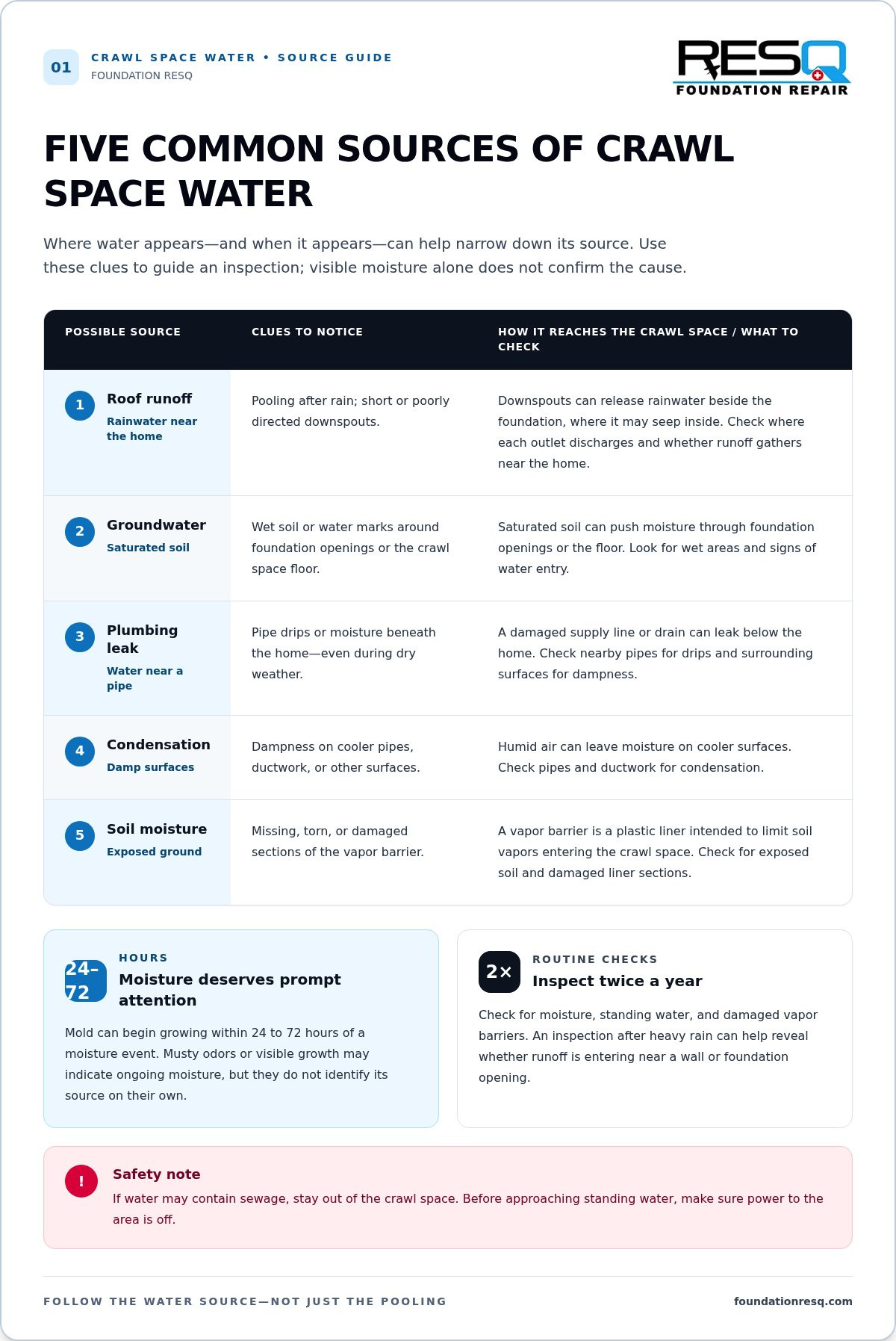
Crawl space water commonly comes from rain runoff, groundwater seepage, plumbing leaks, or condensation. Its location can offer clues: water near a pipe may point to a leak, while pooling after rain may indicate drainage problems or seepage. In Tallahassee, inspect both the crawl space and the ground around the foundation to help distinguish the source.
Common sources include:
- Roof runoff: Short or poorly directed downspouts can release rainwater beside the foundation, where it may seep into the crawl space.
- Groundwater: Saturated soil can push moisture through foundation openings or the crawl space floor.
- Plumbing leaks: A damaged supply line or drain can leave water beneath a home, even during dry weather.
- Condensation: Humid air can leave dampness on cooler pipes, ductwork, or other surfaces.
- Ground moisture: A vapor barrier is a plastic liner intended to prevent soil vapors from moving into a crawl space. A torn or missing liner can leave soil exposed.
Standing water can go unnoticed for months or years when the crawl space is difficult to access. Mold can begin growing within 24 to 72 hours of a moisture event, so lingering dampness deserves attention. Musty odors or visible growth may point to ongoing moisture, but they don’t identify its source on their own. Look for wet soil, pipe drips, water marks, and damaged liner sections.
Inspect the crawl space twice a year for moisture, standing water, and damaged vapor barriers. Checking after heavy rain can reveal whether runoff is entering near a wall or foundation opening. If water may contain sewage, stay out of the crawl space because contaminated water can pose a safety risk.
Building-code and permit requirements depend on the repair scope and local rules. Insurance coverage depends on your policy and the cause of the water, so review the relevant policy language before planning repairs.
Grading and drainage around the foundation
Good drainage carries rainwater away from the foundation instead of allowing it to collect beside the home. Check the yard’s slope, downspout outlets, and low areas where runoff gathers.
For minor grading problems, slope the yard away from the foundation so surface water flows outward. Downspouts should direct water at least four to six feet away from the home’s foundation. Check where each outlet discharges during rain: an extension that ends beside a low spot can send runoff back toward the crawl space. Also look for soil or landscaping that channels water toward foundation walls. These observations help pinpoint drainage paths before selecting a repair.
Drainage and Waterproofing Options
A sump pump removes collected water, a French drain redirects it through a drainage channel, and exterior waterproofing limits water entering through foundation walls. A sump pump can suit recurring water accumulation, while a French drain may help when water needs a route away from the foundation. Exterior waterproofing addresses entry through the outside wall. The appropriate option depends on where water collects and how it reaches the crawl space.
Site-Specific Drainage Recommendations
Drainage planning should account for soil, climate, and the property’s layout. Slowly draining soil can keep water near a foundation, while a slope may carry runoff toward one side of the home. Repeated storms can reveal weak drainage paths. Note where water pools after rain and match the drainage approach to those conditions rather than applying the same solution everywhere.
Start with surface runoff: correct grading and downspout discharge when rainwater travels toward the foundation. If water still collects below the home, a drainage system may be more appropriate. For a closer look at crawl space water protection, consider how drainage and moisture control work together.
Crawl space repair costs
The work involved in repairing a leaking crawl space depends on the water source, how far moisture has spread, and which materials need repair. Removing water and cleaning up differ from correcting drainage or repairing damaged structural members. Separating the tasks helps explain why homes with similar visible moisture can need different repair plans.
Pooled water may need to be removed and the area cleaned before other work begins. If moisture has damaged joists or support beams, those materials may also need repair. A recurring leak calls for addressing its source, since cleanup alone may leave the conditions that caused water to collect. The affected area and extent of damage shape the work required.
Homeowners may be able to handle limited tasks, such as redirecting a downspout or correcting minor grading, if the area is safe and accessible. Before approaching standing water, confirm the electricity to the area is off. Removing water may involve a pump or wet/dry shop vacuum, followed by fans and a dehumidifier. Stay out if the water may contain sewage.
For a project-specific price, the cost depends on the case and is given after a quote request. Factors include the water source, cleanup needs, drainage changes, moisture-control work, and damaged framing. Compare the proposed scope with those needs rather than treating water removal as the entire repair.
Before planning repairs, note where water appears, whether it returns after rain, and which materials look damaged. These observations can help distinguish surface runoff from a persistent leak or structural damage. When repairing a leaking crawl space, tie the plan to the source so it addresses more than visible pooling and accounts for the work involved.
How do you stop water from leaking into a crawl space step by step?
Follow a clear sequence: protect the area, identify the source, remove the water, then address the conditions that allow moisture to return.
- Make the space safe. Before approaching standing water, confirm the electricity to the area is off. Don’t enter if water may contain sewage. Note visible pooling, damp soil, pipe drips, and water marks from a safe location.
- Trace where water enters. Compare the wet area with nearby plumbing, foundation walls, and the ground outside. Water that appears after rainfall may point to runoff or seepage; a persistent wet spot near a pipe may suggest a plumbing leak.
- Remove standing water. Depending on the conditions, removal may involve a pump or wet/dry shop vacuum. Fans and a dehumidifier can help dry the space afterward. Keep the water source in mind, because extraction alone won’t prevent another leak.
- Redirect surface runoff. Check grading and downspout outlets around the home. Downspouts should direct water at least four to six feet away from the foundation. Minor grading problems can be addressed by sloping the yard away, helping rainwater flow outward.
- Address lingering ground moisture. A vapor barrier can help limit moisture rising from soil. A crawl space sump pump activates when water reaches a set level and pumps it out. A space that stays damp between rainstorms may benefit from a sump pump or dehumidifier.
After these steps, observe whether dampness returns and where it appears. Recurring water may mean the entry source remains active, or the space needs additional moisture control. Match the remedy to the cause: surface runoff calls for drainage correction, while persistent dampness may call for a different approach. To address ongoing crawl space moisture, explore crawl space moisture control.
Foundation ResQ: Foundation repair
Foundation ResQ provides foundation repair when crawl space moisture occurs alongside foundation damage or signs of structural movement. Cracks, uneven floors, or shifting supports may point to a concern beyond surface water. If moisture has also led to mold, Foundation ResQ offers Mold Remediation Services. Helical Pier Installation and Push Pier Installation can stabilize a foundation when the repair calls for pier support.
Let the water source and visible damage guide the next step. Surface runoff, persistent dampness, mold, and structural movement call for different remedies, so identifying the concern helps clarify the relevant work. If crawl space water is accompanied by foundation damage or mold, contact Foundation ResQ to discuss your repair needs.
Protect your home with a clear next step
Keep a simple record of where moisture appears, whether it follows rainfall, and whether it returns after cleanup. These details help connect the symptoms to the source and clarify the right scope of work. If you’re repairing a leaking crawl space, focus on addressing the cause, not just the visible water. A clear plan can help prioritize moisture concerns alongside longer-term protection for your home.
If water keeps returning or the crawl space shows damage that is difficult to assess, a professional evaluation can clarify the next step. Foundation ResQ can discuss crawl space moisture, mold, or foundation concerns and explain the repair options for your home.
Contact Foundation ResQ for crawl space help and take the next step toward a drier, better-protected home.
Frequently Asked Questions
What are the common causes of a leaking crawl space?
Rainwater intrusion, groundwater seepage, plumbing leaks, and condensation are common causes. Timing offers a useful clue: dampness after storms may point to outside water, while a wet patch that persists in dry weather may indicate a plumbing leak or ongoing ground moisture. Several sources can contribute at once, so compare where water gathers with recent weather and visible plumbing.
How can you identify where water is entering a crawl space?
Track the wettest area and note when it changes. For example, record whether a damp patch expands after rain or stays wet during a dry stretch. Look for water marks along walls, soil tracks leading toward an opening, and moisture concentrated around pipes. These clues help distinguish water entering from outside from a leak within the home, without relying on odor alone.
How much does crawl space leak repair cost in the United States?
There isn’t one reliable price for every crawl space repair. The work depends on what caused the leak, how much water needs removal, whether cleanup is needed, and whether moisture has damaged wood or other structural components. Drainage changes and ongoing moisture control can also affect the project scope. For a project price, the cost depends on the case and is given after a quote request.
What does a crawl space waterproofing contractor typically include in an estimate?
A useful estimate describes the moisture problem, its likely source, and the proposed work. It may separate water removal and cleanup from drainage improvements, moisture control, and repairs to damaged materials. Foundation ResQ provides free inspections and estimates for homeowners and businesses in the Tallahassee area. The proposed scope should clarify which problem each repair is intended to address.
What are the health and structural risks of a wet crawl space, mold, and standing water?
Persistent dampness can support mold growth and affect indoor air quality; moisture can also contribute to wood decay in floor framing. Standing water raises additional concerns, particularly near electrical equipment or when it may contain sewage. Watch for soft or visibly damaged wood, musty odors, and recurring dampness. These signs call for attention to both the moisture source and affected materials.
How do you dry, clean, and prevent mold in a leaking crawl space?
Before approaching standing water, confirm the electricity to the area is off, and stay out if sewage may be present. Water removal may involve a pump or wet/dry vacuum; fans and a dehumidifier can help dry the space afterward. Address the moisture source, damp ground, or recurring drainage problems, or the crawl space may remain wet after cleanup.