Understanding the Path to Recovery After Property Damage
When disaster strikes your home, understanding restoration and reconstruction is critical for recovery. These distinct approaches determine how your property is brought back from damage, and choosing the right one can save you time, money, and stress.
Quick Answer: Restoration vs. Reconstruction
| Aspect | Restoration | Reconstruction |
|---|---|---|
| Purpose | Repair and return to pre-damage condition | Rebuild or replace severely damaged structures |
| Damage Level | Moderate, repairable damage | Extensive damage beyond repair |
| Materials | Works with existing materials | Uses new construction materials |
| Timeline | Typically faster (days to weeks) | Longer process (weeks to months) |
| Cost | Generally less expensive | Higher investment required |
The global disaster restoration market was valued at $110.5 billion in 2022 and is projected to reach $178.2 billion by 2030. This massive industry exists because property damage from water leaks, fires, and storms affects millions of homeowners annually.
The difference between restoration and reconstruction is severity. Restoration focuses on repairing existing materials to return your property to its original condition. Reconstruction is necessary when damage is so severe that parts of your home must be demolished and rebuilt from scratch.
Determining which path your property needs requires a professional assessment. Factors like structural integrity, safety hazards, building codes, and the extent of damage all play crucial roles.
I’m Kayle Vernon, and with over a decade of experience working with property restoration and reconstruction professionals, I’ve seen that informed homeowners make better decisions when they understand the scope of their options.
Restoration vs. Reconstruction: What’s the Fundamental Difference?
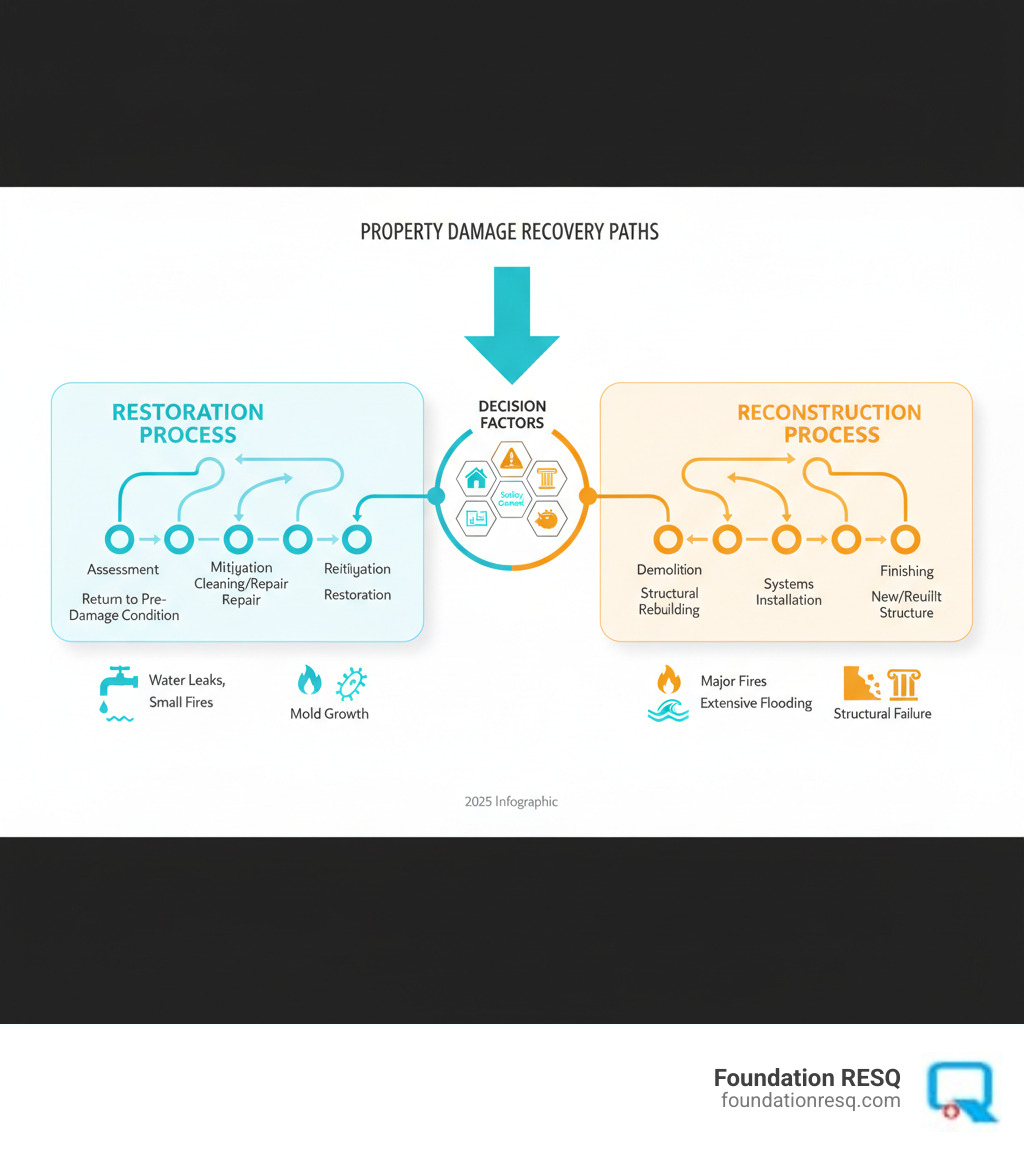
When your property is damaged, the fundamental difference between restoration and reconstruction comes down to the severity of the damage. Think of it this way: restoration repairs what’s there, while reconstruction rebuilds what’s lost.
Restoration saves and repairs existing materials, while reconstruction is necessary when parts of your home are too damaged to save and must be torn down and rebuilt. These different approaches have unique skills, timelines, and budgets. Understanding which your property needs is the first step toward recovery.
| Aspect | Restoration | Reconstruction |
|---|---|---|
| Goal | Repair existing structures and materials to pre-loss condition | Rebuild or replace severely damaged parts or entire structures |
| Scope | Focuses on cleaning, drying, sanitizing, repairing, and preserving salvageable elements | Involves demolition, structural rebuilding, and new construction with new materials |
| When to Use | Appropriate for moderate damage where the structure remains largely intact and salvageable | Necessary for extensive damage where structural integrity is compromised or elements are beyond repair |
| Outcome | Property returns to its condition before the damage occurred, often retaining original materials | Results in new structural elements or a new structure, built to current codes and standards |
Defining Restoration: The Art of Repair
Restoration brings your property back to life without major demolition. It’s the right choice for moderate damage—like from a burst pipe, a small kitchen fire, or storm water—where your home’s structure is still sound. The goal is to make your property look and function as it did before the damage by repairing materials rather than replacing them. For example, water-stained drywall can be refinished, and smoke-damaged cabinets can be restored.
Cleaning and disinfecting are major parts of restoration. After water damage, we remove all moisture to prevent mold. Fire damage requires specialized cleaning to remove soot and smoke residues. A key challenge is odor removal, and we use professional deodorization methods to neutralize smells at their source, not just cover them up.
Successful restoration depends on your salvageable structures remaining intact. If your foundation and walls are stable, restoration can bring everything back to its pre-damage condition, often faster and more affordably than reconstruction.
At Foundation RESQ, we handle restoration projects throughout Alabama, Florida, and Georgia. Whether you’re dealing with water damage, fire damage, or mold growth that needs remediation, our team can assess what can be saved.
Defining Reconstruction: The Science of Rebuilding
When damage is too severe for restoration—such as a compromised structure, major fire damage, or extensive flooding—reconstruction is necessary. This means rebuilding structures by demolishing damaged sections and constructing new ones.
The process begins with safe demolition and debris removal to prepare the site for new construction. Unlike restoration, reconstruction involves replacing materials entirely, from structural lumber and electrical systems to plumbing and interior finishes.
An advantage of reconstruction is bringing your home up to current building codes and standards, which can improve safety, energy efficiency, and property value. Reconstruction is the only option when structural integrity is compromised. If your foundation has failed, walls are collapsing, or fire has weakened the framing, repairs are not enough. Safety requires starting fresh with new construction.
If you’re facing issues like foundation failure or severe bowing walls, reconstruction might be part of your recovery plan. While the investment is significant, it’s the only path forward when your home’s structure is at risk. A professional assessment is key to determining whether your property needs restoration and reconstruction.
A Closer Look at Restoration Services
When disaster strikes, our restoration and reconstruction services across Alabama, Florida, and Georgia are designed to get your home back to normal as quickly and thoroughly as possible. Restoration work begins with damage mitigation—stopping the problem from getting worse. Every project starts with a thorough cleanup and debris removal so we can assess the damage and start the repair process.
Water and Fire Damage Restoration
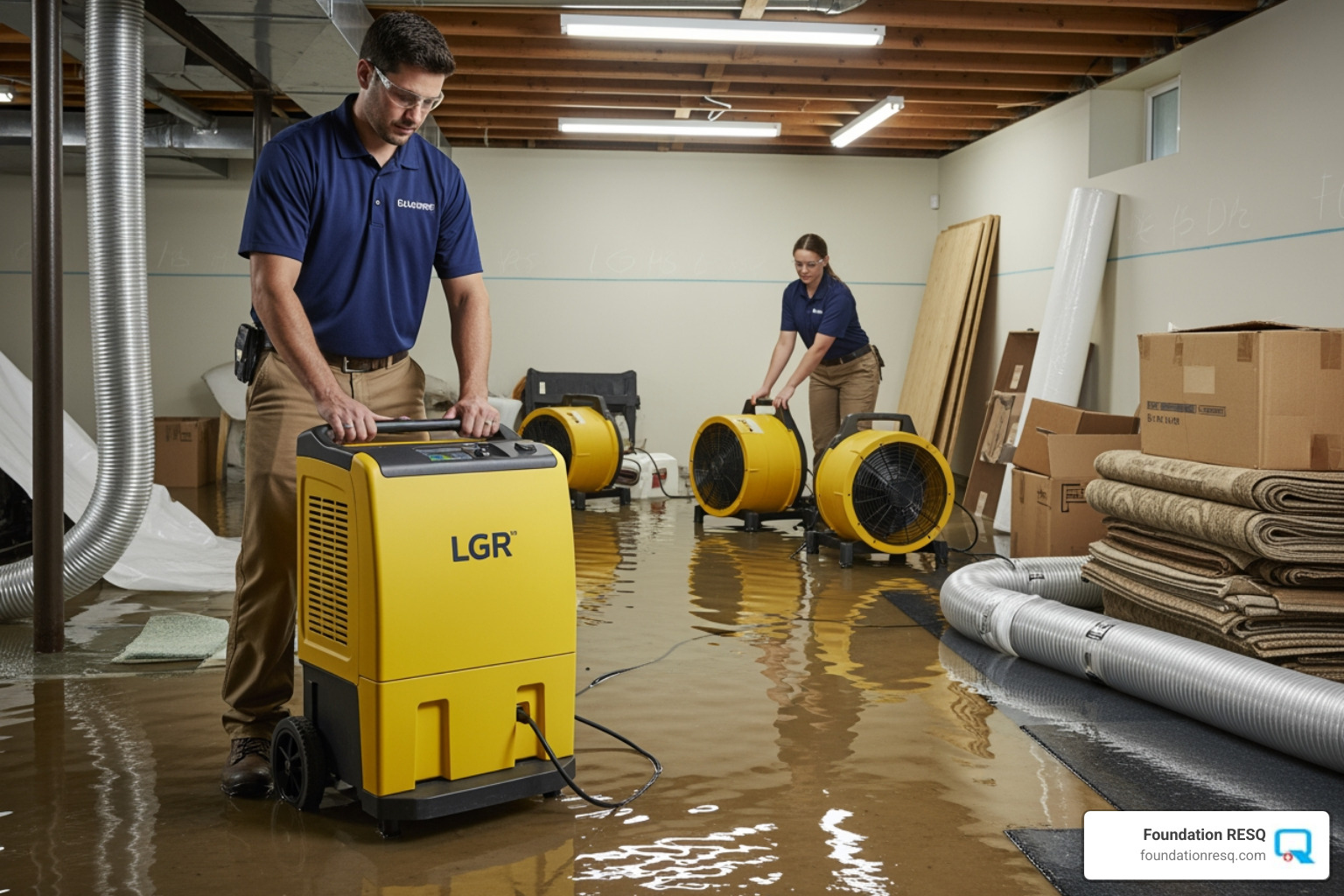
Water damage is the most common property disaster. Whether from a leak or a storm, water spreads quickly and can cause hidden damage. Our water extraction process uses powerful pumps and vacuums to remove standing water. Afterward, we use industrial dehumidifiers and air movers to pull hidden moisture from walls, floors, and insulation.
Once dry, we perform a thorough cleaning and disinfecting of all affected areas to prevent bacterial growth. We also offer content cleaning services to salvage and restore personal belongings like furniture, documents, and electronics.
Fire damage presents unique challenges, as even a small fire can cover a home in soot and smoke odor. Our soot and smoke removal process uses specialized cleaning agents that regular household cleaners can’t handle. For the lingering smell, our deodorization techniques neutralize odors at the molecular level. Per FEMA guidance on home safety after a fire, you should never enter a fire-damaged home until it’s declared structurally safe. Once cleared, we handle everything from structural repairs to restoring your belongings.
Water damage often leads to mold. Learn more info about our Mold Remediation Services and our comprehensive approach to eliminating it.
Storm Damage and Mold Remediation
In Alabama, Florida, and Georgia, severe weather is a reality. Our storm damage restoration services help you recover after a hurricane, tropical storm, or tornado. The first priority is securing your property with emergency tarping and board-up services to prevent further damage from the elements.
Storms often involve contaminated floodwater and widespread debris. Our crews handle debris removal and decontamination to clean and sanitize areas exposed to hazardous materials. Since mold can grow within 24-48 hours of water intrusion, mold remediation is a critical part of storm restoration. We use containment barriers and air filtration systems to prevent spores from spreading while we work.
Our mold removal process involves removing unsalvageable materials and treating surfaces with antimicrobial solutions. Crucially, we focus on preventing regrowth by addressing the original moisture source. If storm damage reveals underlying water intrusion issues, Our Basement Waterproofing solutions can prevent future issues. The final step is odor removal, ensuring your home is fresh and comfortable again.
The Scope of Post-Disaster Reconstruction
When damage is too deep for simple repairs, reconstruction becomes the path forward. This process is about rebuilding your home from the ground up, ensuring every new element meets current safety standards and building codes.
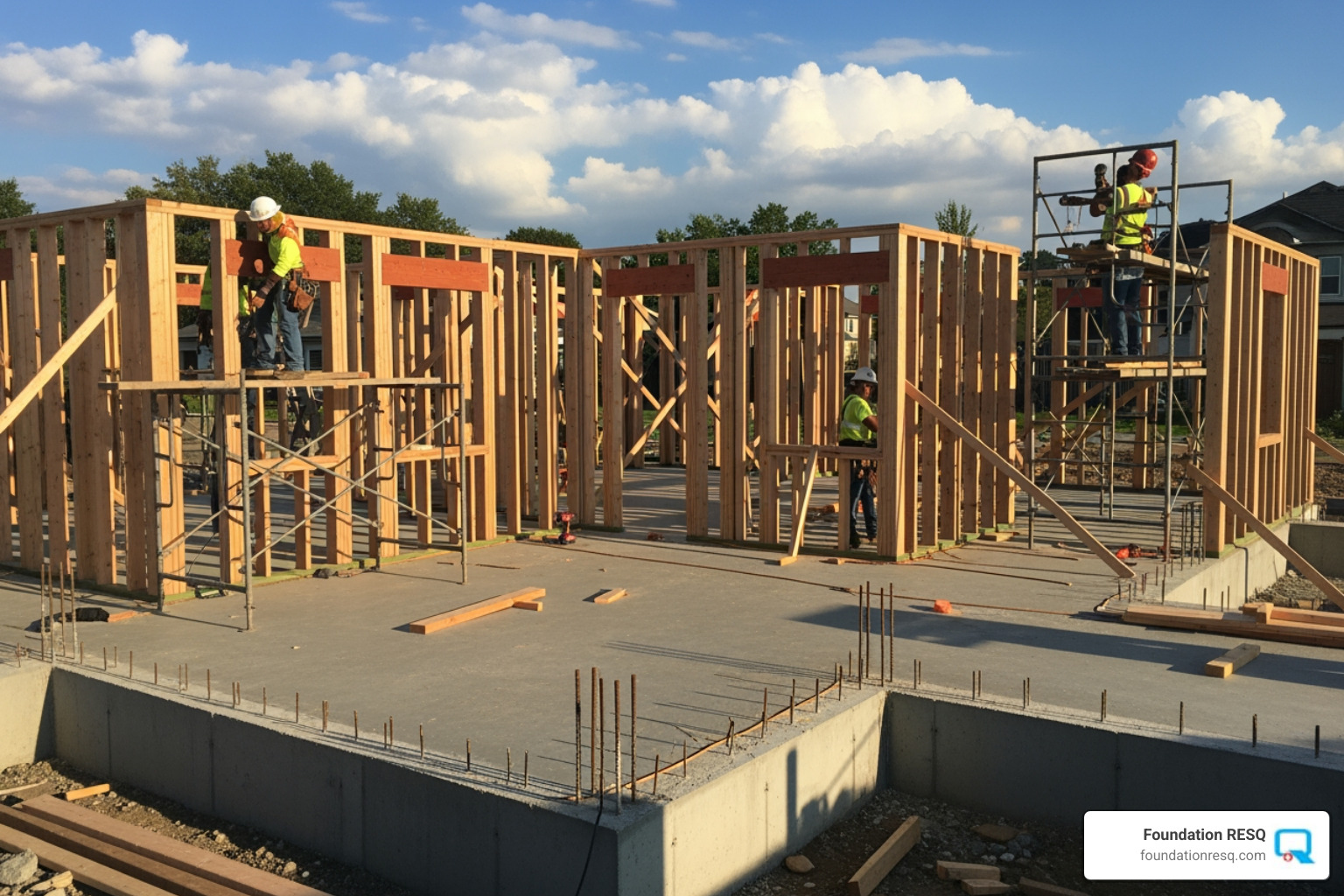
Reconstruction gives your home a second chance when materials are beyond saving. The journey begins with a structural assessment to determine what must be demolished. After careful demolition, we begin rebuilding walls, floors, and roofs with quality materials. Throughout this process, code compliance is our commitment to your safety. In catastrophic cases, this may mean full property reconstruction on your existing foundation.
Key Aspects of the Reconstruction Process
Reconstruction follows a logical sequence, with each phase building on the last.
- Structural Assessment: Our team inspects your foundation, framing, and load-bearing elements to find any hidden damage.
- Demolition and Debris Removal: We methodically remove only what needs to go and haul away all debris, leaving a clean slate for new construction.
- Site Preparation: We grade the land and prepare the foundation area to ensure proper drainage and prevent future water problems.
- Framing and Roofing: We rebuild the skeleton of your home, constructing new walls, floors, and a weather-tight roof system.
- Electrical and Plumbing: We install new wiring, plumbing lines, and HVAC systems that meet current codes and ensure modern comfort and safety.
- Interior Finishes: We turn the construction site into a home with drywall, insulation, flooring, paint, cabinets, and fixtures.
A strong foundation is critical. If yours has been compromised, we have the expertise to fix it. Learn about our Foundation Repair Services to see how we ensure your home stands on solid ground.
When is Reconstruction the Only Option?
Sometimes, trying to salvage a severely damaged structure is impractical and dangerous. Knowing when reconstruction is necessary is vital.
- Compromised Structural Integrity: This is the biggest red flag. When the foundation, main beams, or support walls have severe damage, rebuilding is necessary for safety.
- Extensive Fire Damage: Fire can weaken structural timber and steel beyond repair, even if the damage isn’t visible. Rebuilding these sections is the only safe option.
- Severe Structural Damage from Flooding: Floodwaters can cause buckling floors, cracked foundations, and other serious safety hazards that require reconstruction. According to Allstate, structural damage from flooding can cause these and other issues.
- Foundation Failure: A foundation that has cracked, shifted, or settled unevenly affects the entire home. Our Foundation Repair Services can determine when reconstruction is the wisest path.
- Bowing Walls: While some Bowing Walls can be repaired, severe cases that have progressed too far may require complete rebuilding.
Reconstruction isn’t about giving up on your home—it’s about giving it a proper second chance by creating a safer, stronger structure.
Key Factors in Restoration and Reconstruction Decisions
Deciding between restoration and reconstruction requires a professional assessment. Our expert team conducts thorough evaluations to guide you through this critical decision, considering both immediate and long-term factors.
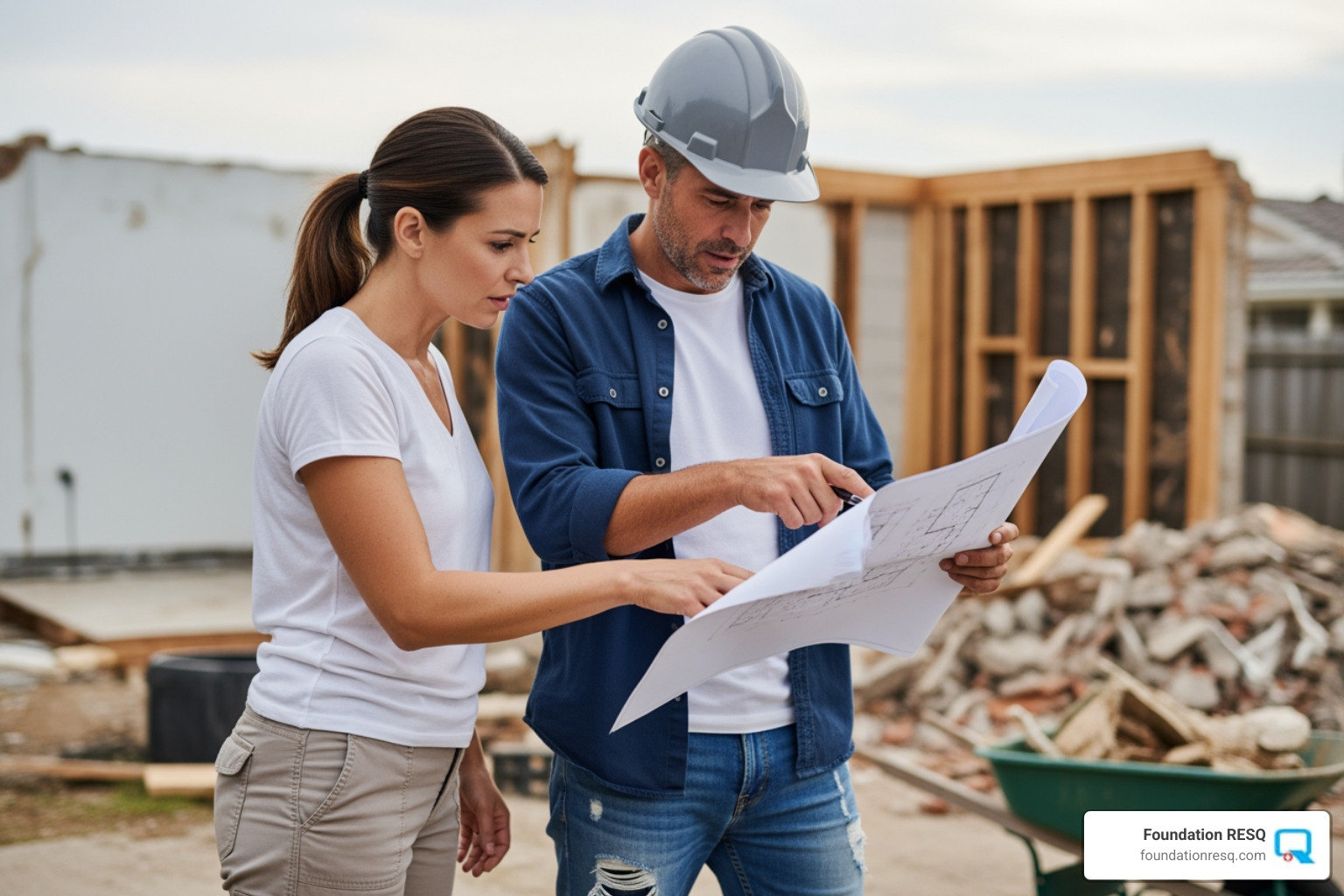
Key factors in the decision include the building condition, safety considerations, your budget and insurance coverage, and local building codes. For some properties, historical significance also plays a role. Each of these helps determine the best path forward for your specific situation.
The Role of Building Condition and Safety
The physical state of your property is often the deciding factor. Our structural integrity assessment is the foundation of this evaluation. We examine your home’s foundation, framing, and load-bearing elements. If these are severely compromised, reconstruction is a necessity for your safety.
We also perform hazard identification, looking for dangers like asbestos or lead paint that may have been disturbed. The extent of damage also guides the decision; minor cosmetic issues are candidates for restoration, while widespread structural damage often requires reconstruction.
Above all, the safety of occupants drives our recommendations. If a property is unsafe to live in or for our crews to work in, reconstruction is the only responsible option. Our professional evaluation provides a detailed assessment and an honest recommendation for the most effective and safest course of action.
Navigating Historical Significance and Code Requirements
If your property has historical value, especially in older areas of Alabama, Florida, and Georgia, there are additional layers to consider. Preserving historic character for properties on historic registers means following strict guidelines. The National Park Service provides comprehensive standards for this work at National Park Services.
In historic preservation, restoration and reconstruction focus on historical accuracy. In disaster recovery, our goal is to make your home safe, functional, and livable again.
Regardless of a home’s age, modern building codes apply to all new work. This ensures your restored or rebuilt home is safer than it was originally. Sometimes, an older building requires significant upgrading for compliance, which can push a project from restoration toward reconstruction. These code requirements might involve adding fire suppression systems or reinforcing structural elements. You can check guidelines for your project with this guide on code requirements.
We steer these complexities daily to provide the best solution for your property, whether it’s a historic gem or a modern family home.
Frequently Asked Questions about Restoration and Reconstruction
When you’re dealing with property damage, you have questions. Here are the answers to the ones we hear most often about restoration and reconstruction services from homeowners in Alabama, Florida, and Georgia.
How long does the restoration or reconstruction process take?
The timeline depends on the extent of the damage. Restoration for issues like a burst pipe or moderate fire cleanup typically takes a few days to a few weeks. Reconstruction is more extensive and can take several weeks to several months, as it involves rebuilding parts of your home.
Factors affecting the timeline include the severity of damage, project scope, permit approvals, and material availability. After our assessment, we provide a realistic timeline so you know what to expect.
Can I stay in my property during the work?
Whether you can stay in your home depends on the project’s scope. For minor, contained restoration work, you may be able to stay. However, for major restoration or any reconstruction project, it is often unsafe and impractical to remain in the home. These projects can create hazardous conditions from dust, chemicals, and utility shutoffs.
Your family’s safety is our top priority. We will never recommend you stay if there’s any risk. Most homeowner’s insurance policies include coverage for temporary housing, and we will advise you on the safest course of action during our initial assessment.
How are insurance claims handled?
Navigating insurance claims can be overwhelming, but our experience is your advantage. As professional restoration and reconstruction specialists, we work with virtually every insurance company and know how to present your claim for results.
Here’s how we help:
- Detailed Documentation: We create comprehensive photo, video, and written reports of all damage.
- Itemized Estimates: We prepare thorough, professional estimates that insurance adjusters respect.
- Direct Communication: We speak directly with your insurance adjuster, answering questions and providing information to speed up approvals.
- Progress Reports: We keep your insurance company updated as work progresses to ensure payments are processed efficiently.
Our goal is to handle the complexities of your claim so you can focus on your family, ensuring you get the fair coverage you deserve for your restoration and reconstruction needs.
Conclusion
When disaster strikes, understanding the difference between restoration and reconstruction is crucial for your recovery. Restoration is the careful work of healing your home, ideal for moderate damage where the structure is sound. Reconstruction is about rebuilding when damage is too severe for repairs, creating a stronger home that meets modern safety codes.
The key to making the right choice is a thorough, professional assessment. At Foundation RESQ, we provide honest, expert evaluations based on years of experience with everything from water damage to the need for Foundation Repair Services.
Our commitment is to affordable, lasting solutions that solve your problems and provide peace of mind. We believe every homeowner deserves to know their home is safe and secure.
Serving communities across Alabama, Florida, and Georgia—from Dothan to Gainesville and Pensacola to Macon—we are here to help. Whether you need targeted repairs, comprehensive Basement Waterproofing solutions can prevent future issues, or major reconstruction, our team is ready.
Don’t let property damage disrupt your life. The sooner you act, the sooner you can return to normal. Contact us today for a free inspection and explore our mold remediation services. We’ll create a plan that fits your needs and budget, changing your property back into the safe, comfortable home you deserve.