
A sump pump can be due for replacement before water reaches the basement. Most last seven to ten years with regular maintenance, while frequently used pumps typically last five to seven years. If an older pump struggles to start, runs constantly, or makes unusual noises, those signs of a failing sump pump may point to a problem that maintenance alone won’t solve.
It’s reasonable to expect a sump pump to work quietly in the background, so changes in performance can be easy to dismiss. But recognizing the signs of a failing sump pump and testing it regularly can help you decide whether it needs cleaning, repair, or replacement before it stops moving water.
This guide covers common warning signs, what can cause them, and practical ways to test and maintain your pump. You’ll also learn how age and recurring problems affect the replacement decision, so you can take a measured approach to protecting your Tallahassee home.
Key Takeaways
- Check the discharge line for clogs or freezing, and make sure water flows away from the foundation.
- Power loss can stop a pump when it’s needed most; regular battery-backup tests help reveal issues early.
- A float switch that sticks, a blocked intake, or water returning to the pit can cause repeated trouble.
- Frequent cycling or continuous running can signal a fault and add strain to the pump, so investigate the cause.
- Test the pump regularly, clear debris, and weigh its age alongside its performance when deciding whether replacement makes sense.
1. Frozen or blocked discharge lines
A pump can start normally yet fail to clear water if its discharge line is blocked. The motor may run, but water cannot travel through a clogged pipe and away from the house. That mismatch is a warning: the pump is operating, but the drainage route isn’t doing its job. A stuck switch can also keep the pump from activating, so note whether you hear it run as water rises.
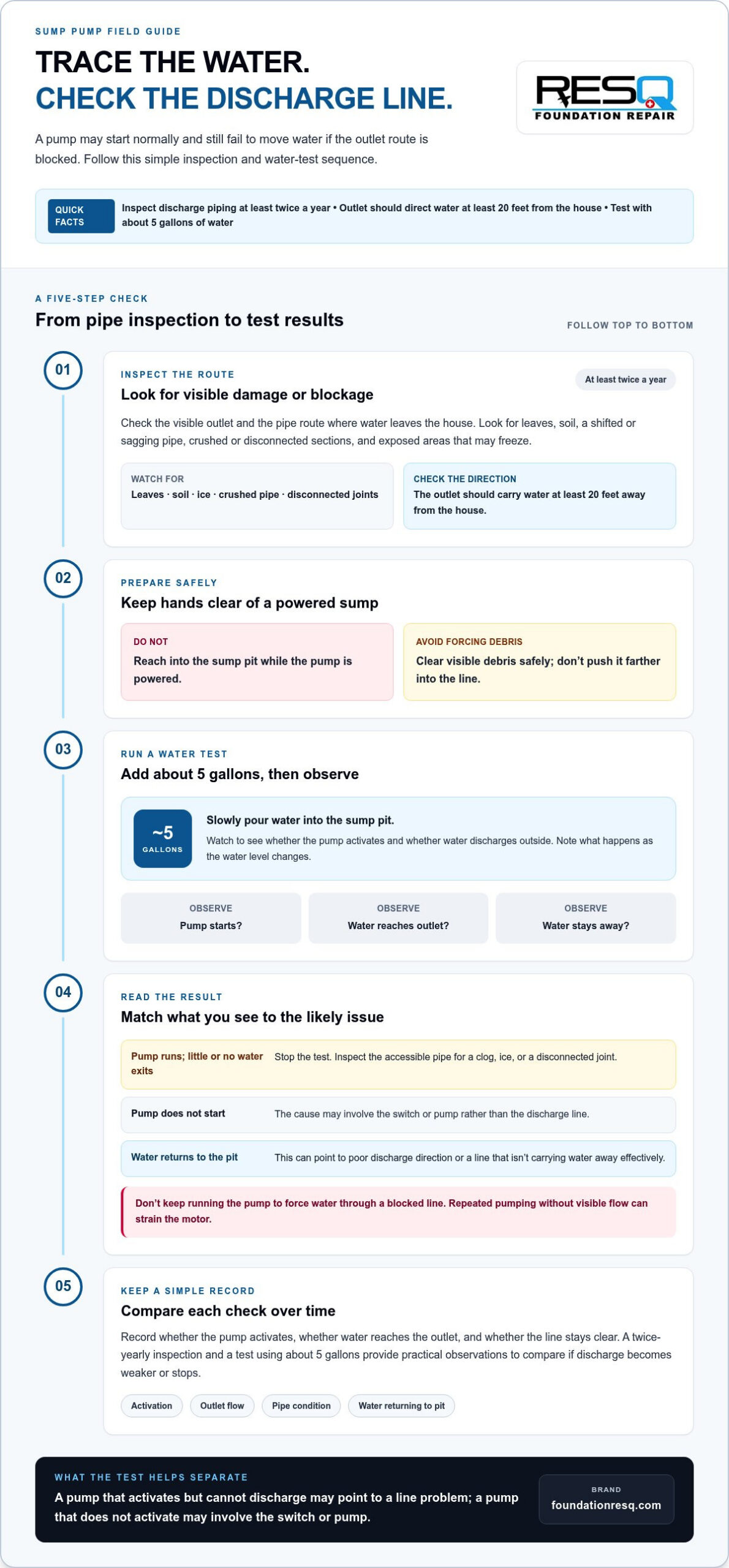
Look for a discharge pipe that has shifted, sagged, or collected leaves, soil, or other debris. In cold conditions, water trapped in an exposed section can freeze and block the flow. If the pump runs but no water emerges at the outlet, inspect the accessible pipe for an obvious blockage. Don’t reach into the sump pit while the pump is powered, and don’t force debris farther into the line.
Discharge-line maintenance helps catch problems before heavy rain tests the system. Inspect the piping at least twice a year, including the visible outlet and the route where water leaves the house. Check that the pipe directs water at least 20 feet away from the house, so discharged water is less likely to flow back toward the foundation. Keep the outlet clear of leaves and soil, and look for crushed or disconnected sections.
A simple water test can show whether the pump and line move water together. Slowly pour about 5 gallons of water into the sump pit, then watch for the pump to activate and water to discharge outside. If the pump starts but little or no water exits, stop the test and inspect the accessible pipe for a clog, ice, or a disconnected joint. If the pump doesn’t start, the cause may involve the switch or pump rather than the discharge line.
Pay attention to what happens after the test. Water that returns to the pit can point to poor discharge direction or a line that isn’t carrying water away effectively. Repeated pumping without visible flow can strain the motor, causing a failure that a clear outlet might have prevented. Don’t keep running the pump to force water through a blocked line. Clear visible debris safely, and address recurring blockages before the next period of heavy rainfall.
These checks help separate a pipe problem from other signs of a failing sump pump. Record whether the pump activates, whether water reaches the outlet, and whether the line stays clear. A twice-yearly inspection and a water test using about 5 gallons give you practical observations to compare over time, especially if discharge becomes weaker or stops.
2. Power outages and battery backups
If a sump pump stops during a storm, check for a power outage, tripped breaker, or unplugged cord, but only from a dry, safe location. If power is unavailable, use an installed, charged battery backup and monitor the rising water level without entering standing water.
A working pump depends on both power and its control switch. Storm damage can knock down power lines, while a tripped circuit breaker or accidentally unplugged pump can also interrupt operation. If other household power is on but the pump remains silent, note the water level and check its power connection only when the area is dry and safe.
A battery backup can keep a sump pump operating during a power interruption, providing short-term protection when the primary power source fails. Its effectiveness depends on the battery’s condition and whether the backup system is connected and ready. A battery that has lost charge may not run the pump when the pit begins filling.
Battery care calls for a calendar reminder. Replace sump pump batteries every two to three years, regardless of condition, and test battery backups annually. Follow the system’s instructions and confirm during the test that the backup can operate the pump. Record the test date and any failure to start, run, or respond as the water level changes.
A generator and a battery backup address the same outage problem differently. A battery backup stores power for the pump, while a generator supplies electricity while operating and connected appropriately. The practical choice depends on the home’s setup, how the pump receives power, and how the system will be maintained. Neither option fixes a clogged line or defective pump.
Watch for changes in cycling during an outage test. If the backup starts the pump but it stops before the water level falls, the battery may be weak, or another pump component may need repair. If the pump doesn’t activate as the water rises, a stuck switch or mechanical fault may be involved. Note what happens rather than repeatedly resetting the system.
Before storm season, inspect the battery backup’s connections for visible damage, then perform its annual test. Keep the pump’s instructions accessible and follow the correct procedure. If the backup fails, arrange a repair before relying on it during the next outage. A record of tests and battery replacements can reveal recurring problems.
Repeated power interruptions or a backup that fails its test call for a closer look at the home’s water protection setup. Review the factors affecting basement water protection, including pump operation, drainage, and the backup power source, before the next storm puts the system under strain.
3. Why do sump pumps fail?
Grinding, humming, or buzzing can signal a mechanical issue, clog, motor malfunction, or debris obstruction. A burning smell or overheating may point to an electrical or motor problem. If unusual noises start, note when they occur and whether the pump moves water. That detail can help distinguish a struggling pump from a pit that keeps refilling.
A high water table or heavy rain can send groundwater into the sump pit faster than the pump removes it. The float switch should respond as water rises, turning the pump on. If the pit refills immediately, inflow may exceed the pump’s ability to discharge water. Watch the level through a complete cycle. Frequent refilling during heavy rain differs from a pump that never activates.
Standing water in the basement can indicate that the pump isn’t moving water out. If the pump runs while the pit remains full, check whether water reaches the discharge outlet and whether the float switch moves freely. Cracks or rust on the pump or its components can also interfere with operation. A pump that doesn’t activate as water rises may have a stuck, broken, or misaligned float switch.
Basement flooding can damage building materials and personal belongings, even when water seems shallow. A few inches of water can significantly damage both, and mold can begin developing within 24 to 48 hours after water damage. If basement water appears, document where it collects and whether the pump is running. That observation helps distinguish active pumping from water accumulating faster than the system can remove it.
Call a sump pump professional when the pit fills but the pump won’t start, water remains despite operation, or the system repeatedly fails. A professional can assess the pump, float switch, discharge path, and drainage conditions together. Seek help promptly after flooding, since wet materials can develop mold within 24 to 48 hours.
Start with safe observations. Check the pit for water, note whether the float switch rises freely, and listen for humming, grinding, or buzzing. Look for visible rust or cracks without reaching into a powered pit. If the pit contains no water, the pump may be improperly installed or disconnected from a drainage system. If water exits but returns toward the house, discharge placement may be contributing to the problem. These clues help identify whether the issue involves the pump, its controls, or water movement around the foundation.
4. Frequent cycling and constant running
A sump pump that starts and stops every few minutes without significant rainfall needs attention. Short cycling can point to an incorrectly sized pump or a float switch stuck between positions. Each restart puts the motor through another operating cycle, while the water level may barely change. Note how often the pump starts and whether rain or groundwater explains the pattern.
A float switch tells the pump when to turn on as water rises and when to stop as the level falls. If the switch sticks in the on position, the pump may run continuously; if it sticks off, the pump may not start. A switch stuck midway can trigger repeated cycling. Observe the float’s movement without reaching into a powered sump pit.
Continuous running can also indicate a defective float, a stuck switch, or a failing pump motor. A pump that runs without lowering the water level may be unable to keep up or may not be discharging water effectively. If it runs too often under normal conditions, it can burn out. Have the cause checked before bad weather increases demand.
A broken or missing check valve can send pumped water back into the sump pit after the pump stops. The returning water raises the level again, prompting another cycle. Between one-third and two-thirds of pumped water can flow back into the pit when the check valve fails. Watch whether the water level rises soon after each pumping cycle ends.
To identify a possible float switch or check valve problem, observe a normal cycle. A float that doesn’t move with the changing water level, or a pump that stays on or fails to start, suggests a switch problem. Water flowing back into the pit after shutdown points to a check valve issue.
Debris in the pit can obstruct a float or interfere with the pump’s intake, so look for visible material affecting movement. A backup system can provide power during an outage, but it won’t fix a stuck switch or mechanical failure. Record whether cycling occurs during dry weather, heavy rain, or both.
Frequent cycling and constant running both warrant investigation, but they have different causes. If the pump starts every few minutes without significant rainfall, note the timing and water level. If it runs continuously, check whether the level falls and water is discharged. These observations help identify whether the issue involves the float, check valve, pump, or water entering around the foundation.
5. Sump pump testing and maintenance
Regular testing reveals whether a pump starts, moves water out, and shuts off as expected. Test sump pumps every 3 to 4 months, and perform a slow bucket-of-water test every year. Add water gradually, watch the float rise, and confirm the pump starts and discharges water. If it doesn’t activate or move water out, stop the test and investigate before relying on it during a storm.
Before testing, inspect the pump’s power connection, pit, and visible components. Disconnect power before cleaning, and follow the manufacturer’s instructions for your model. Remove debris from the sump pit every 6 months; clearing the pit and intake takes about 20 minutes. Debris can interfere with the intake or restrict the float’s movement, so check that the float travels freely after cleaning.
Keep a simple maintenance record with the test date, pump response, and any unusual sound or visible damage. Note whether the water level falls after the pump starts and whether it shuts off when the pit empties. A pump that keeps running, fails to start, or doesn’t discharge water during a test needs attention. Older pumps also need regular maintenance, even when they appear to work normally.
Track the pump’s age alongside its test results. Most sump pumps last seven to ten years with regular maintenance, while frequently used pumps typically last five to seven years. A pump over 10 years old may be nearing the end of its useful life. If an older unit begins struggling, repeated component replacements may be less practical than replacing the pump.
Include the float in your maintenance schedule. Manufacturers commonly recommend replacing a sump pump float every two years. A sticking or worn float can prevent the pump from responding to rising water, even when the motor still works. During each test, confirm that the float moves freely and triggers the pump as water rises. Never force a component that appears damaged.
Battery backups need their own routine: test them annually and replace their batteries every two to three years, regardless of condition. This helps reveal whether the backup can run the pump during power outages. If tests show repeated failures, unusual operation, or an aging pump, get help with your sump pump system before the next storm tests it under pressure.
Foundation ResQ: Foundation repair
Foundation ResQ provides foundation repair for homeowners dealing with structural concerns alongside basement water problems. A sump pump manages water in its pit, but it doesn’t repair foundation cracks or shifting concrete. If moisture appears alongside visible cracks or signs of settlement, a foundation assessment can help identify the separate structural issue.
Foundation ResQ also provides Mold Remediation Services when water damage has led to mold, along with Helical Pier Installation and Push Pier Installation for foundation stabilization. The right remedy depends on the condition affecting the home, not the pump symptoms alone.
For help with foundation concerns in Tallahassee, contact Foundation ResQ or visit foundationresq.com.
Choose a Clear Next Step for Your Home
A pump problem can prompt a closer look at more than the equipment. If signs of a failing sump pump appear alongside moisture, visible foundation concerns, or mold, keep those issues in view as you decide what to address. Separating pump performance from the condition of the surrounding structure helps you focus on the right remedy.
Foundation ResQ provides Foundation repair for structural concerns, Mold Remediation Services for mold issues, and Helical Pier Installation for foundation stabilization. These services address different needs, so the next step depends on what you’re seeing in your home. A clear description of the symptoms and affected areas can help frame the conversation.
Take the next step at a pace that feels right for your situation. Contact Foundation ResQ for help with foundation or moisture-related concerns, and move forward with a clearer plan for protecting your home.
Frequently Asked Questions
How often should a sump pump be replaced?
There isn’t a single replacement interval that fits every sump pump. Most last seven to ten years with regular maintenance, while frequently used pumps typically last five to seven years. Consider replacement when an older unit repeatedly struggles or fails during tests. For example, a pump over 10 years old that no longer moves water reliably may be a stronger replacement candidate than a younger pump with one isolated issue.
Why do sump pumps fail?
Sump pumps can fail because of a faulty float switch, worn motor, rust, cracks, or problems with installation or drainage. For example, a dry pit may indicate that the pump isn’t connected to a drainage system. Water flowing back toward the house can also compromise drainage. Identifying where the problem occurs, in the pit, pump, or drainage route, helps narrow down the cause.
What are the most common signs a sump pump is failing?
Common signs of a failing sump pump include water remaining in the basement, a pump that doesn’t start as the pit fills, and repeated trouble during a test. Grinding, humming, or buzzing can signal a mechanical issue, obstruction, or motor malfunction. Rust or cracks on the unit also deserve attention. Note whether the pump runs, whether water leaves the system, and what sounds occur during operation.
Why does a sump pump run constantly or cycle too often?
A defective float, stuck switch, or failing motor can make a pump run continuously. If it starts and stops every few minutes without significant rainfall, it may be incorrectly sized or have a float switch stuck between positions. Compare its behavior in dry weather and heavy rain. A pattern that continues under normal conditions needs investigation before the motor burns out.
How do you test a sump pump safely?
Keep clear of standing water and electrical connections, and don’t reach into a powered pit. Follow the pump manufacturer’s instructions, then slowly pour water into the pit and watch for the pump to start and discharge it. A test can reveal a pump that doesn’t activate at its set water level or fails to move water out. Test every three to four months, and use a bucket test annually.
How long do sump pumps typically last, and when should they be replaced?
With regular maintenance, a sump pump typically lasts seven to ten years; frequently used pumps often last five to seven. Age alone doesn’t show whether replacement is due, so weigh it against performance. A pump over 10 years old that struggles, fails tests, or needs repeated attention is nearing the end of its useful life. For an older pump with recurring problems, replacement may make more sense than replacing aging components individually.
What are the risks of a failing sump pump, including basement flooding and mold?
A failed pump can leave basement water standing, damaging building materials and belongings. Even a few inches of water can cause significant damage, and mold can begin developing within 24 to 48 hours after water damage. If water enters, keep people away from wet electrical areas, document the affected locations, and address the moisture promptly. Removing visible water alone won’t resolve the source of ongoing moisture.