
A slab leak is a plumbing failure under your concrete floor; foundation damage is a structural problem in your soil, footings, or walls. If water is actively running under your slab, shut off the main line and call a leak detection specialist immediately. If you’re seeing sudden new cracks, sloping floors, or doors that won’t close, get a structural evaluation before you touch the plumbing.
TL;DR:
- Most homes built on slab foundations are susceptible to slab leaks caused by corrosion, poor installation, high water pressure, or tree roots, especially in older homes.
- Slab leaks typically present subtle signs like increased water bills, warm floors, or damp spots, which can be confirmed by turning off all water fixtures and monitoring the water meter.
- Foundation damage shows in structural cracks, sticking doors or windows, and sloping floors, with cracks wider than 1/4 inch or widening over time indicating higher severity.
- Professional diagnosis relies on electronic leak detection, infrared scans, and visual inspection, while foundation issues require crack monitoring and engineer evaluation for active movement.
- Repair options range from trenchless relining or rerouting to slab removal for leaks, and foundation stabilization methods like push piers or polyurethane lifts, with costs often separated from restoration expenses and insurance coverage varying based on cause.
Table of Contents
- Slab Leak vs. Foundation Problems: What’s Actually Different
- What Causes a Slab Leak
- How to Spot a Slab Leak Before It Gets Worse
- Signs That Point to Foundation Damage, Not a Leak
- How Pros Actually Diagnose These Problems
- Slab Leak Repair: Your Options, Ranked by Invasiveness
- Foundation Repair Methods Homeowners Should Know
- What Repairs Actually Cost, and What Insurance Will Cover
- Prevention and When to Actually Call Someone
- How Foundation Rescue Handles Cases That Look Like Both
- Get a Free Inspection Before You Guess at the Fix
- Sources
- FAQ
Slab Leak vs. Foundation Problems: What’s Actually Different
A slab leak happens when a supply or drain pipe embedded under your concrete floor develops a crack, pinhole, or full break. Water escapes into the soil or the slab itself, often for weeks before anyone notices. Foundation damage is a different problem entirely, involving movement in the footings, slab, or foundation walls caused by shifting soil, poor compaction, or drainage failures around the perimeter of the house.
The distinction matters because the fix, the cost, and the risk profile diverge sharply.
- A slab leak is a plumbing repair. Left alone, it causes water intrusion, mold, and warped flooring.
- Foundation damage is a structural repair. Left alone, it causes misaligned doors, cracked drywall, and in severe cases, compromised load-bearing capacity.
- One problem can trigger the other. A slow slab leak can erode soil support under a footing, and settling soil can stress a pipe until it cracks. That overlap is why a proper diagnosis needs to check both systems, not just one.
Since 72.4% of new single-family homes are built on slab foundations, most homeowners will eventually need to know how to tell these two problems apart.
What Causes a Slab Leak
Most slab leaks trace back to the pipe itself, not the concrete around it. Copper lines corrode over decades, especially when the water is acidic or the soil around the pipe is abrasive. Poor original installation, like pipes laid without proper sleeving or bedding, sets up friction points that fail years later. High water pressure accelerates wear on joints and fittings that were never rated for it.
- Corrosion and aging copper or galvanized pipe
- Abrasive or shifting soil rubbing against the pipe over time
- Substandard installation with no protective sleeve
- Water pressure consistently above 80 psi
- Chemically aggressive soil or water reacting with pipe material
- Tree roots growing toward moisture and stressing buried lines
Pro Tip: If your home is more than 20 years old and has copper supply lines under the slab, ask your plumber to check static water pressure at an outside spigot. Anything over 80 psi is quietly aging every joint in your system.
How to Spot a Slab Leak Before It Gets Worse
The signs of a slab leak are usually quieter than people expect. There’s rarely a dramatic burst. Instead, you get small clues that add up.
- Your water bill jumps noticeably with no change in usage.
- A patch of flooring feels warm, which usually points to a hot water line leaking.
- Carpet or tile feels damp or the floor seems to be sinking slightly in one spot.
- You hear hissing or running water when every fixture in the house is off.
- A musty smell lingers in one room with no visible water source.
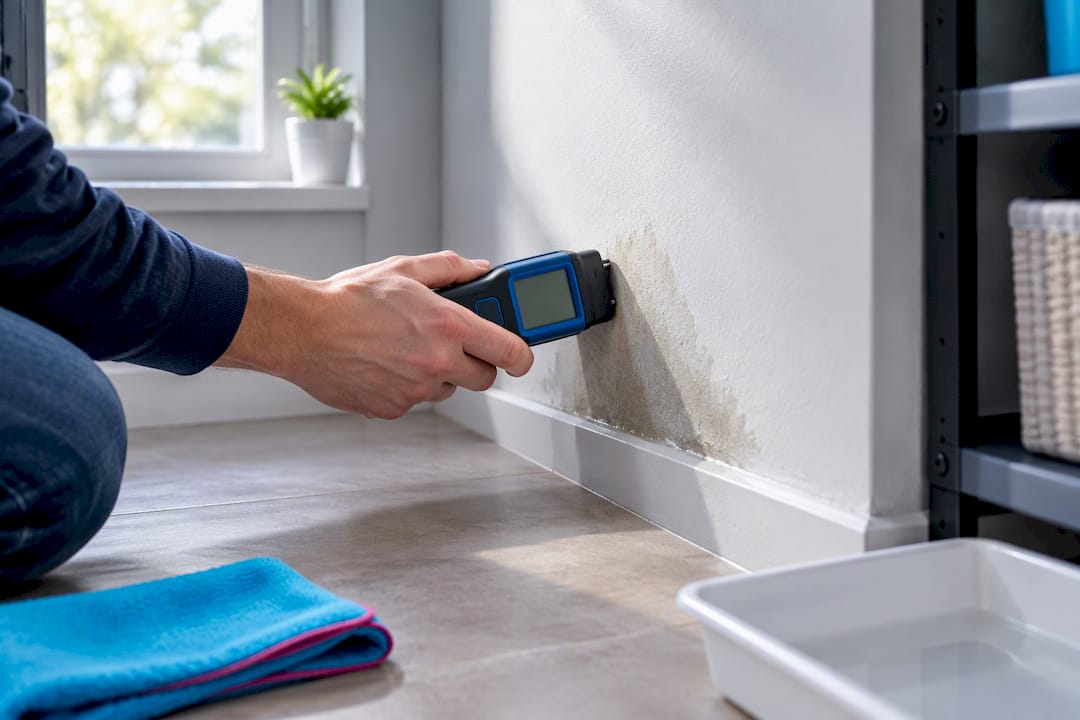
To confirm it yourself, turn off every faucet and appliance, then check your water meter. If the dial keeps moving, water is escaping somewhere in the system. Before you assume it’s the slab, rule out an obvious source, like a leaking water heater, a dripping ice maker line, or bad grading pushing rainwater against the exterior wall.
Signs That Point to Foundation Damage, Not a Leak
Foundation problems show up in the structure, not the utility bill. Watch for cracks in the foundation wall or interior drywall, especially diagonal or stair-step cracks running through masonry joints. Doors and windows that stick without being repainted or swollen by humidity are a classic tell. Floors that visibly slope, gaps opening up between trim and walls, or a noticeable separation where a porch or garage meets the main house all point toward soil movement or footing failure.
- Cracks wider than about 1/4 inch, or ones that grow over a few weeks
- Stair-step cracking in brick or block, not just drywall
- Doors and windows binding on multiple sides of the house
- Uneven or sloping floors you can feel with a marble or level
Not every crack is an emergency. Inspectapedia’s guidance on evaluating structural cracks notes that hairline cracks are often cosmetic and stable, while displacement beyond that quarter-inch threshold, or cracks that keep widening, warrant a structural engineer’s opinion. Context matters too. A crack that’s been the same size for ten years is a different story than one that appeared last month.
How Pros Actually Diagnose These Problems
Plumbers use several tools to pin down a slab leak without tearing up the whole floor: electronic listening devices that pick up the sound of escaping water, infrared cameras that spot temperature differences from hot water lines, pressure testing to isolate which line is losing water, and sometimes a small video camera fed into the pipe itself. Tracer dye and meter isolation tests help narrow things down further before anyone breaks concrete.
Foundation assessment works differently. It starts with a visual inspection of cracks, slopes, and exterior grading, then moves to crack monitoring over time if the movement isn’t obviously urgent. When there’s real settlement or safety risk, a licensed structural engineer needs to inspect and write a report defining the scope of repair.
- Electronic leak detection and infrared scanning for plumbing
- Pressure testing and camera inspection to confirm the exact leak point
- Visual and drainage evaluation for foundation movement
- Structural engineer report when movement is active or severe
Pro Tip: If a leak has been running long enough to soften the soil under a footing, you need both a plumber and a structural engineer involved, not just one. Fixing the pipe without checking the soil underneath can leave a settlement problem undiagnosed.
Slab Leak Repair: Your Options, Ranked by Invasiveness
The method a plumber recommends depends on where the leak is and how much of the slab has to come up.
- Trenchless pipe relining is the least invasive option when the pipe is a good candidate. A new liner is inserted through existing access points, avoiding demolition entirely.
- Rerouting the line above the slab, often through walls or the attic, skips the concrete altogether. It costs more in materials but avoids breaking the floor.
- Targeted tunneling digs under the foundation from outside to reach the pipe directly. It’s more invasive than relining but less disruptive than breaking the interior slab.
- Breaking and replacing a section of slab is the last resort, usually reserved for pipes that can’t be reached any other way. It’s the most disruptive option, and it typically drags flooring, cabinetry, or subfloor repair into the timeline.
Foundation Repair Methods Homeowners Should Know
Structural fixes vary as much as the causes behind them. Push piers and helical piers stabilize a settling foundation by transferring the home’s weight down to load-bearing soil or bedrock, and they’re the standard fix for real settlement. Polyurethane foam injection lifts and levels a sunken slab or walkway without the excavation that older mudjacking methods require, and it’s typically chosen for cosmetic or moderate settling rather than active structural failure.
- Push piers or helical piers for foundation stabilization
- Polyurethane foam lifting for sunken or uneven slabs
- Carbon fiber strips or wall anchors for bowing basement walls
- Epoxy injection for structural crack repair in poured walls
For bowing or cracked foundation walls, carbon fiber strips or steel anchors reinforce the structure without a full rebuild, while epoxy injection seals structural cracks that aren’t actively moving. An engineer defines the scope up front and, ideally, signs off once the work is verified stable.
What Repairs Actually Cost, and What Insurance Will Cover
Total cost breaks into pieces that rarely show up on the same invoice: diagnosis, the plumbing or structural repair itself, and finish restoration. That last piece surprises people the most. Industry guidance consistently separates plumbing repair costs from restoration costs in written estimates, because replacing flooring, cabinetry, or drywall after slab work often costs as much as the repair that made it necessary.
Insurance treats the two problems very differently. A sudden, accidental pipe rupture that causes visible water damage is often covered, but the cost of repairing the pipe itself is usually excluded even when the resulting water damage is paid out. Gradual leaks from wear and tear get denied more often than approved. Foundation settlement fares worse: most standard policies exclude earth movement entirely, which pushes homeowners toward legal or warranty claims depending on the cause and their state’s rules.
- Get a written estimate that separates plumbing or structural work from restoration
- Photograph and document damage before any repair begins
- Review your policy’s language on “sudden and accidental” versus gradual damage
- Ask about endorsements or riders that specifically cover slab leaks
A note on delay: experts have found that waiting until a water bill spikes or flooring is visibly damaged usually turns a small, manageable leak into a much larger repair bill.
Prevention and When to Actually Call Someone
Most of prevention comes down to controlling water, not chasing symptoms after the fact.
- Keep grading and gutters directing water away from the foundation, not toward it.
- Water the soil around your foundation evenly during dry spells so it doesn’t shrink and crack unevenly.
- Have your home’s water pressure checked annually, and install a pressure regulator if it runs high.
- Schedule a plumbing inspection every few years, especially in homes over 15 years old.
- Keep large trees and heavy irrigation at least several feet from the foundation line.
If water is actively running under the slab, shut off the main and call a leak detection specialist that day. If you notice sudden new cracking, a door that jammed overnight, or a floor that’s visibly sloping more than it did last season, treat that as urgent too and get a structural opinion before deciding on any plumbing work.
Pro Tip: The EPA’s mold guidance points out that acting within 24 to 48 hours of finding moisture usually prevents the jump from “damp spot” to full mold remediation. That window matters more than people think.
How Foundation Rescue Handles Cases That Look Like Both
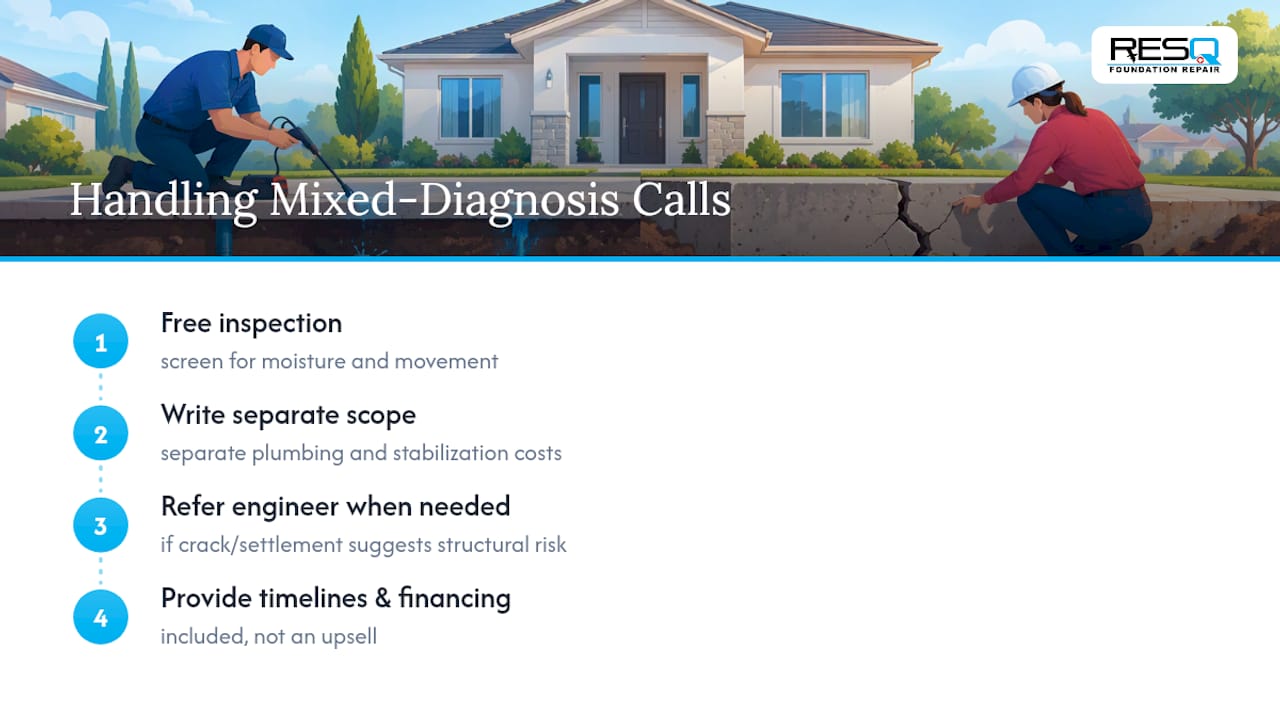
A lot of calls to local foundation repair companies don’t arrive with a clean diagnosis attached. Homeowners see a damp spot and a hairline crack in the same week and don’t know which problem to chase first. Our approach starts with a free inspection that screens for both moisture and structural movement, because the two are connected more often than most homeowners expect.
From there, we write a scope that separates plumbing repairs from any foundation stabilization work, so you know exactly what you’re paying for and why. When a crack or settlement pattern suggests real structural risk, we say so plainly and point toward an engineer’s evaluation rather than guessing. Clear timelines and financing options come standard, not as an upsell.
— Kayle
Get a Free Inspection Before You Guess at the Fix
Trying to self-diagnose a warm floor spot or a new crack from online photos rarely ends well, and DIY leak tests only tell you that water is escaping somewhere, not where or how bad. Some companies offer free inspections that check both plumbing-related moisture and structural movement in the same visit, so customers don’t pay two separate companies to rule each other out.

Technicians walk customers through what they find in plain language and provide a written scope that separates plumbing work from foundation stabilization, so restoration costs never come as a surprise. If your case involves settlement, we’ll tell you when it’s time for foundation settlement repair versus a simpler concrete lifting and leveling fix. When you call to schedule, ask specifically for a documented scope with photos and separated line items for plumbing and restoration. Check our full list of services or book your free inspection today.
Sources
- Are broken pipes under slab covered by homeowners insurance? | Policygenius
- Share of homes built on slabs surges | NAHB
- A brief guide to mold, moisture, and your home | U.S. EPA
- Evaluate Foundation Damage or Movement | Inspectapedia
- Foundation settlement: claims, repairs, and legal options | LawCompensate
FAQ
Is a Slab Leak a Big Deal?
Yes, if it’s ignored. A slab leak left running can soften the soil under your footing, warp flooring, and create mold conditions within days, per EPA guidance on moisture timing. Caught early, it’s usually a straightforward plumbing repair with limited restoration work.
How Expensive Is It to Fix a Slab Leak?
Cost depends on the repair method and how much restoration follows. Trenchless relining and rerouting tend to cost less in demolition but more in labor and materials, while breaking and replacing slab sections often adds flooring or cabinetry costs on top of the plumbing bill.
Will Insurance Pay for a Slab Leak?
It depends on the cause. Sudden, accidental ruptures that cause water damage are often covered, but the cost of repairing the pipe itself is typically excluded, and gradual leaks from wear and tear are usually denied outright.
How Long Does a Slab Leak Take to Fix?
Trenchless relining or rerouting can often be finished in a day or two once the leak is located. A full slab break and replacement takes longer, since it involves demolition, the plumbing repair itself, and finish restoration afterward.
How Do I Know If It’s a Slab Leak or a Foundation Problem?
Watch where the symptom shows up. A rising water bill, warm floor spot, or musty smell with no visible water points to a slab leak. New cracks, sticking doors, or sloping floors point to foundation movement, and Inspectapedia’s crack thresholds can help you judge urgency.